Every year or two, I ask readers to submit questions they want me to answer. That time has arrived once again. Any question. Any subject. Please leave your questions in the comment section or send them to me via email. I will try to answer them in the order received.
I look forward to reading and answering your questions.
Every year or two, I ask readers to submit questions they want me to answer. That time has arrived once again. Any question. Any subject. Please leave your questions in the comment section or send them to me via email. I will try to answer them in the order received.
I look forward to reading and answering your questions.
Long-time reader Geoff asked:
How do you feel the ‘argument from reason’ is going? YouTube is awash with atheist presenters, much of it pretty poor, but there’s a core of really convincing channels, very moderate in approach, and with ever-increasing subscribers. I’m thinking especially of the likes of Genetically Modified Skeptik, Alex O’Connor Cosmic Skeptik, and Rationality Rules. Previously Matt Dillahunty and Atheist Experience was perhaps the main source, but Dillahunty’s abrasive style and the awful quality of the phone-ins surely put many people off, and there was certainly little in the way of developing nuanced arguments.
Anyhow, I feel that the argument from reason is now so overwhelmingly in favour of the atheist case that I feel apologetics is almost dead in the water, but perhaps it’s simply that I’m immersed at ‘the wrong end of the pool’. What do you think?
Go to YouTube these days and you will find a plethora of atheist creators putting out content that challenges Christianity, using philosophical and scientific arguments to do so. YouTubers such as Alex O’Connor, Steven Woodford, Drew McCoy, Matt Dillahunty, and others are well-schooled in philosophy and the various arguments for the existence of God and other arguments used to justify Christian belief. I thoroughly enjoy their videos, although I have reached a similar point to Geoff, that there are no more new arguments to be made; that much like Samson slaying 1,000 Philistines with the jawbone of an ass, these defenders of rationality, skepticism, and reason have slayed virtually every argument used by Evangelical and Catholic apologists to defend the existence of God and the claims of Christianity.
If I have one point of criticism of these atheists it is this: when it comes to theology and the Biblical text itself, they often display a shallow or Fundamentalist understanding of what the Bible says and what Christians really believe. Some of them just regurgitate what they have heard other atheists say, while others lack sufficient education to have complex, informed discussions about the Biblical text and Christianity. Sometimes, I will email them when they make glaring errors, hoping to educate them on the subject in question. Unfortunately, I have yet to have one of them respond to me. If you are going to make content deconstructing what it is that Christians believe, it would be helpful if you actually KNOW what they believe. And Christians are just as bad. They can be woefully ignorant about the Bible and its teachings, and when it comes to church history, ignorance is the norm.
There indeed is a lot of atheist-created content on YouTube and TikTok. Juvenile, elementary-level critiques — long on rhetoric and ridicule — can be found everywhere on social media. I used to challenge such things, but I gave up. Some of the creators are in the “angry atheist” phase of life, so I know that no amount of calm, rational criticism will change their minds. It takes time for wounds to heal.
Have atheists won the day? Perhaps, but there’s still a place for well-spoken, thoughtful atheists to produce content for public consumption. As I have pondered starting a podcast (I know, I know, I have been pondering for so long we are in a new decade) I ask myself, “What can I add to the discussions that atheists and Christians might find helpful?” My thought as of today — subject to change — is to start a podcast that specifically focuses on the Independent Fundamentalist Baptist (IFB) church movement. There’s very little content on this subject, and since my expertise lies here, I thought the IFB might be a worthy subject of a new podcast. While I can intelligently discuss the existence of God and I have a rudimentary understanding of science, a philosopher and scientist (in an educated sense) I am not. I know what I know, and I certainly know what I don’t.
I deconverted sixteen years ago. Since then, I have interacted with countless Christians, especially Evangelicals. It has been years since I have heard a new or original argument for the existence of God and the nature of the Biblical text. I am far less patient these days due to having to answer the same questions, arguments, and challenges over and over and over again. It does get old after a while. I suspect some of the creators mentioned above will one day reach a similar place. Contrary to what Evangelical apologists say, the Bible is not an inexhaustive book. Eventually, there’s nothing more to say on the matter.
Bruce Gerencser, 66, lives in rural Northwest Ohio with his wife of 45 years. He and his wife have six grown children and thirteen grandchildren. Bruce pastored Evangelical churches for twenty-five years in Ohio, Texas, and Michigan. Bruce left the ministry in 2005, and in 2008 he left Christianity. Bruce is now a humanist and an atheist.
Every year or two, I ask readers to submit questions they want me to answer. That time has arrived once again. Any question. Any subject. Please leave your questions in the comment section or send them to me via email. I will try to answer them in the order received.
I look forward to reading and answering your questions.
A reader recently asked:
Do you have a good relationship with all of your kids? Did any of them ever express resentment or say they’re damaged from being raised IFB (due to fear of hell, sexism, homophobia, general shame, etc)? Do you think it’s possible to still spend time with family members who are still hardcore believers when you’re raising your own kid differently without it damaging your kid?
My partner, Polly, and I have six adult children, ages 45, 43, 40, 35, 33, and 31 (on their next birthday). Four of our children are married or living in committed relationships. We have sixteen grandchildren, ranging in age from five to twenty-three. By all accounts, both Polly and I have good relationships with our children and their families. All of our children live within twenty minutes of our home in Ney. Some of them we see once or more every week. For others, it may be a few weeks between visits. Regardless, both Polly and I think we are close to our children and their families. Whether our children think the same, you would have to ask them. As a man who is largely homebound due to chronic illness and pain, I would love to see my children, their spouses, and grandchildren more often. I recognize they have their own lives, jobs, and responsibilities, but I do yearn for more visits and interaction, as does Polly.
What constitutes a “good relationship” depends on the parties involved. I have different experiences and relationships with each of my children. How they view me as their father is theirs to share. As far as I know, my children love and respect me. Over the past two weeks, I have seen all our children — save son #2; and he and I have stayed in contact via texts. On Sunday, our youngest daughter and her three children came over for lunch, as did our oldest son and two of his three children. He and our oldest grandson, Levi, cleaned out our gutters and unplugged the downspouts. Our youngest son mows our grass every week, and then stays for dinner. Last night, I talked with son #3 about a family problem he was having. We spoke for an hour.
Our family is close, and always willing to help us when needed. And we do the same for them. Could we be closer? Sure. Does our family have unresolved conflict or trauma? Sure, as ALL families do. That said, if you really want to know how our children view their relationships with Mom and Dad, you will have to ask them. I cannot and will not speak for them.
This reader also asked, “Did any of them ever express resentment or say they’re damaged from being raised IFB?”
Not towards their parents. They understand why we were IFB and Mom and Dad were devout Evangelical Christians. They don’t blame us as much as they do the Independent Fundamentalist Baptist (IFB) church movement itself. They know we were products of lifelong conditioning and indoctrination. As far as resentment is concerned, I have never sensed resentment from any of our children. The Gerencser family is quite stoic, living “live and let live” lives. Do we talk about the past? Sure. Are apologies made and regrets shared? Yes.
Our children, except Bethany — our oldest daughter with Down syndrome — own their own homes and live on their own. If one of them were a hardcore Fundamentalist Christian, could I still have a good relationship with him or her? I’d like to think so. However, I know sects such as the IFB are exclusionary, reactionary, and narrow-minded. This means that we might not be able to openly and frankly talk with them about certain things. Knowing this, I would do everything in my power to have a good relationship with them. Polly and I deconverted seventeen years ago. Our family remains close,
Our family is far from perfect, but I wouldn’t trade them for all the money in the world.
Bruce Gerencser, 66, lives in rural Northwest Ohio with his wife of 45 years. He and his wife have six grown children and thirteen grandchildren. Bruce pastored Evangelical churches for twenty-five years in Ohio, Texas, and Michigan. Bruce left the ministry in 2005, and in 2008 he left Christianity. Bruce is now a humanist and an atheist.
The Black Collar Crime Series relies on public news stories and publicly available information for its content. If any incorrect information is found, please contact Bruce Gerencser. Nothing in this post should be construed as an accusation of guilt. Those accused of crimes are innocent until proven guilty.
Joshua LeDuc, a pre-K teacher at Bethel United Church of Christ’s “Bethel Buddies” preschool in Evansville, Indiana, recently pleaded guilty to sexually molesting children in his care.
A former Evansville preschool teacher accused in August of molesting a student is behind bars again after prosecutors charged him with two additional child sexual abuse offenses.
Evansville police arrested 21-year-old Joshua Brandon Leduc on Wednesday evening on charges of child seduction, a Level 3 felony, and child molesting, a Level 3 felony. Leduc formerly taught pre-kindergarten classes at Bethel United Church of Christ.
Leduc was arrested and charged with two counts of child molestation in August after he was allegedly recorded by classroom surveillance cameras sexually assaulting a 4-year-old girl, police said.
Leduc was out on bond in that case when he was arrested Wednesday, court records show.
Bethel United Church of Christ terminated Leduc’s employment Aug. 2 after it was made aware of the first allegation, lead pastor Samuel Buehrer told the Courier & Press.
According to EPD Detective Cameron Werne, a second student accused Leduc of molestation in February.
Writing in an affidavit of probable cause, Werne said the 6-year-old victim attended Bethel Buddies, the church’s preschool, from August 2021 to July 2022. During a forensic interview conducted at Holly’s House, a victims’ advocacy center in Evansville, the child reportedly said Leduc touched her inappropriately as she built a puzzle in his classroom.
According to the affidavit, the victim identified Leduc in a randomized photo lineup as the man who molested her.
….
The church informed the Vanderburgh County Department of Child Services in August that Leduc had been accused of molesting a student, according Buehrer. The EPD took up the investigation and spoke to the victim’s mother about the alleged abuse.
In a written affidavit, Werne said he reviewed surveillance footage recorded by a camera in Leduc’s classroom that appeared to corroborate the first victim’s account. The footage, according to Werne, showed Leduc molesting the victim behind a cabinet.
Surveillance footage captured in the school’s hallway also appeared to show Leduc following the victim into a restroom, where he remained with the victim for more than three minutes, Werne wrote.
Buehrer said the church installed cameras in classrooms prior to the August incident in order to protect students and teachers. After the footage showed Leduc allegedly using furniture to block the cameras, Buehrer said the school reorganized classroom layouts.
“We’ve also moved some cameras to what we think might be better locations,” Buehrer said. “We moved the rooms around and the furniture in the rooms to eliminate any blind spots.”
Leduc is currently being held at the Vanderburgh County jail on a $100,000 bond, according to court records. Vanderburgh County Superior Court Judge Robert Pigman set Leduc’s bond during his initial court appearance Thursday morning.
Gray said the EPD encourages any parent who feels their child may have been victimized “to call 911 and report it so it can be investigated.”
Buehrer said the school took a “proactive” approach to improve child safety following Leduc’s first arrest in August.
“It’s painful when these things happen; you never wish them to happen on your watch,” Buehrer said. “We’re just praying for everybody and praying for justice in this case.”
A former pre-kindergarten teacher who stood accused of molesting two students in Evansville pleaded guilty Tuesday, nixing the prospect of a jury trial in the case.
The former teacher, 22-year-old Joshua Brandon Leduc, faced charges of child seduction and three counts of child molesting across two criminal cases, according to Vanderburgh County court records.
Those cases were joined, and a trial had been scheduled to begin this week. The proceedings were called off on Friday when Deputy Prosecuting Attorney Audrey Beckerle and Leduc’s defense attorney, Barry Blackard, informed the court both sides had reached an agreement.
Leduc formally pleaded guilty Tuesday, court filings show, but the terms of the agreement were not listed in public court records as of Tuesday afternoon.
Bruce Gerencser, 66, lives in rural Northwest Ohio with his wife of 45 years. He and his wife have six grown children and thirteen grandchildren. Bruce pastored Evangelical churches for twenty-five years in Ohio, Texas, and Michigan. Bruce left the ministry in 2005, and in 2008 he left Christianity. Bruce is now a humanist and an atheist.
The Black Collar Crime Series relies on public news stories and publicly available information for its content. If any incorrect information is found, please contact Bruce Gerencser. Nothing in this post should be construed as an accusation of guilt. Those accused of crimes are innocent until proven guilty.
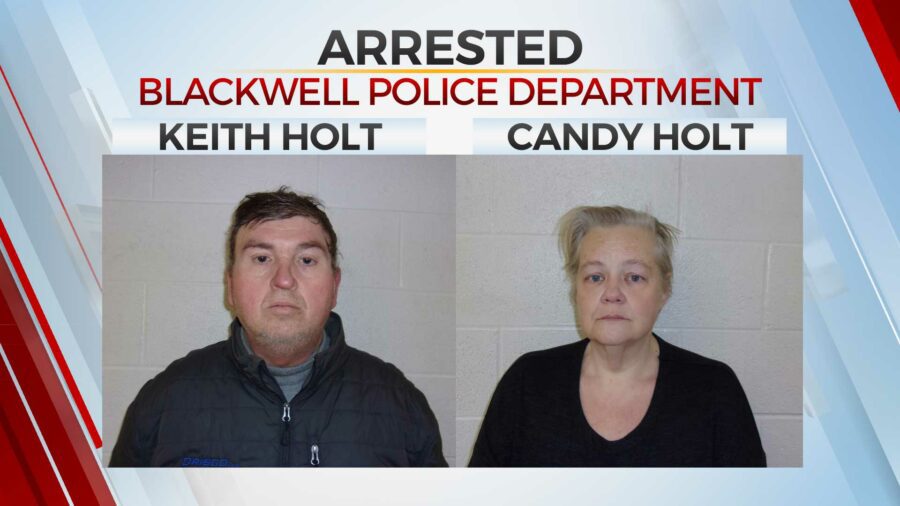
Keith Holt, former assistant pastor (or fill-in pastor) of House of Prayer Church in Blackwell, Oklahoma, and his wife, Candy, stand accused of child abuse and neglect.
Keith Lynn Holt, 57, and Candy Denise Holt, 53, both of Blackwell, are scheduled to appear in Kay County District Court on March 1.
Keith, a former assistant pastor at House of Prayer Church in Blackwell, is facing three felony counts of child abuse and one count of child neglect, while his wife Candy, is facing three felony charges of enabling child abuse and one charge of child neglect.
The pair were arrested by Blackwell police on Jan. 17. (see story)
Police report in the affidavit that the couple were arrested following an investigation that started with the Department of Human Services.
DHS workers report in the affidavit that they received a report that the couple went to Arkansas and left eight children ranging from ages two to 17 home alone.
Officials report they went to the residence and found an adult friend checking on the juveniles.
The next day, Jan. 12, officials returned to the home and made contact with the Holts. The couple reportedly admitted that they went to Arkansas to attend a funeral.
During an investigation, they reportedly stated that the kids have items taken away for punishment and claimed that they do not spank the children. They explained that the two of the teens are biological children of Keith, three of the children are Candy’s nieces and nephews, and that three of the juveniles were left to them in a will.
On Jan. 14, DHS workers report that they received photos showing the 14-year-old with bruising on her face and a video of a juvenile male stating that Keith had punched him and thrown him down the stairs.
After receiving the information, DHS and a police officer went to the home two times. But no one answered.
On Jan. 16, officials returned and Candy answered the door.
A representative of the Dearing House interviewed one of the teens.
The teen’s arms and legs were reportedly covered in bruises. She claimed that Keith hits her with a board. The teen reportedly retrieved a 28-inch-long board from behind the television. The board was reportedly just over two inches wide and about an inch thick.
The teen was interviewed by a Dearing House official. During the interview she reportedly removed her make up, revealing bruising around her left eye.
She alleged that Keith would hit the juveniles with a belt and or the board and would start at the waist and work his way down.
She claimed that Keith threw one of the teens down the stairs and that the couple locked one of the teens in a bathroom for three days with out food or water. The teen said she was able to sneak some crackers and water to the juvenile.
Another teen was interviewed and claimed that Candy does nothing around the house. The teen reportedly said she is responsible for taking care of the three small children and that Keith whipped her on her legs for not having their clothes picked out. The teen reportedly said she was the one locked in the bathroom because the Holt’s believed that she said they were bad parents. The teen reportedly told officials that one time she received 30 swats with the belt from Keith and that he has switched to the board. She claimed that one time Keith swatted one of the females 40 times with the board because Candy couldn’t find her make up and believed the teen took it.
The juvenile male in the video reportedly denied making the tape.
Another juvenile male reportedly told officials that the Holt’s do not hit him because he threatened to hit them back. He backed up allegations made by the other teens.
Another juvenile male reportedly also backed up the claims made by the others and said that the couple leave him alone because he can’t control his anger and that he will hurt them.
The couple were arrested and questioned at the Blackwell police station.
Chief Jay Brewer reports that Candy stated that the kids are honest and that if they said something happened, she believes them. She reportedly spoke of an incident in which Keith spanked one of the juveniles with a belt 16 times and that she had to stop him. She reportedly denied being present for beatings and denied knowing about the teen locked in the bathroom.
Brewer reports that Keith stated that the kids are trustworthy and don’t lie. He reportedly initially denied hitting any of the juveniles since moving to Blackwell but reportedly changed his story. He reportedly admitted to hitting one of the juveniles two times on the buttocks with the board. He claimed that he only whips the children on the buttocks and not the legs and reportedly admitted that he never checked to see of he left bruises on the kids. He reportedly said that it is possible that he hits them so much he doesn’t remember each incident.
Brewer reports that Holt said that he might black out and doesn’t know how many times he hits them.
He reportedly claimed the kids must by lying but doesn’t know what their motivation would be. Holt also reportedly denied locking a teen in a bathroom for three days but admitted that there is a lock outside the upstairs bathroom door.
The couple are being held in the county jail on $100,000 bond and defense attorney Jarrod Stevenson has been appointed to the case.
House of Prayer pastor John Jack released the following statement:
The Blackwell House of Prayer rebukes all statements and actions carried out by Keith Holt. The Bible speaks against child abuse or any mistreatment of children, and we stand firmly by that. The House of Prayer was also never made aware by these children of any indication that this was being carried out.
Really, Pastor Jack? Not one person ever saw a bruise or injury on these children? Never?
Bruce Gerencser, 66, lives in rural Northwest Ohio with his wife of 45 years. He and his wife have six grown children and thirteen grandchildren. Bruce pastored Evangelical churches for twenty-five years in Ohio, Texas, and Michigan. Bruce left the ministry in 2005, and in 2008 he left Christianity. Bruce is now a humanist and an atheist.
The Black Collar Crime Series relies on public news stories and publicly available information for its content. If any incorrect information is found, please contact Bruce Gerencser. Nothing in this post should be construed as an accusation of guilt. Those accused of crimes are innocent until proven guilty.
“While some would have you focus on alarm bells and your greatest fears about what you do not know, I want to encourage you with confidence based on what I do know. I know Jordan to be of the highest character and quality as a man. He is a great husband, a great father, a great teacher. He and his family have the full confidence and support of our church. Please join us in asking that God reveal the full and complete truth regarding these allegations.” (In other words, trust me, my son didn’t do it.)
— Chris Henderson, pastor, and Jordan’s father
Jordan Henderson, a worship pastor at Wellspring Fellowship in Lakebay, Washington, and a fifth-grade teacher at Evergreen Elementary School, stands accused of sexually molesting and groping several school girls.
Pierce County Sheriff’s Office deputies arrested an Evergreen Elementary School teacher on suspicion of first-degree child molestation on April 18, according to a statement from the Peninsula School District.
The teacher is in custody at the Pierce County Jail, the school district said. The district previously placed the teacher on administrative leave after learning about allegations of misconduct.
Attorneys representing a victim identified the teacher as Jordan Henderson. The online Pierce County jail roster lists a person by that name held on suspicion of eight counts of first-degree child molestation.
A public database of K-12 employees maintained by the state of Washington shows a Jordan Henderson employed as a teacher in Peninsula School District since at least 2018-19.
“Based on our initial investigations, we believe that Henderson likely abused many other young women over the years,” attorney Kevin Hastings said in a news release. Hastings, an attorney with Pfau Cochran Vertetis Amala, is representing the survivor of Henderson and her mother. “We anticipate more victims to come forward once news of Henderson’s arrest becomes widespread.”
The law firm’s statement said the victim reported being sexually abused by Henderson while she was his student during the 2022-23 and 2023-24 school years.
A statement from the sheriff’s office said it launched its investigation on Feb. 26, after an Evergreen student reported allegations of “molestation or groping” by a teacher. Detectives served a search warrant on the teacher’s Gig Harbor home and arrested him Thursday, April 18.
The Pierce County Sheriff’s Department (PCSD) initiated the investigation after receiving a report from a student on Feb. 26, alleging inappropriate conduct by a teacher at the school. Acting swiftly, detectives from the sheriff’s office launched an inquiry into the matter.
During the ongoing investigation, the school district took immediate action, removing the accused teacher from his duties at Longbranch Elementary School.
On April 18, following the execution of a search warrant at Henderson’s residence in Gig Harbor, the suspect was arrested on first-degree charges and booked into Pierce County Jail.
The allegations against Henderson have sent shockwaves through the community, particularly among the families of the victims.
In a highly emotional court hearing Friday, parents shared the profound impact of the alleged assaults on their children, with one girl pleading with the judge to ensure her alleged attacker remains behind bars.
“We can’t drive past the school building without her hiding her eyes,” one parent said.
According to probable cause documents obtained by FOX 13 News, Henderson is accused of preying on fourth and fifth graders for years, using his position as an educator to gain the trust of his victims and convince them that the assaults were normal.
He’s accused of rubbing children’s backs, things, behinds and genitals. Court documents say the “brave little girls called Henderson out for the assaults.”
Henderson took advantage of his role as an educator, lying to the children and saying “touching was normal.” He also told the kids “not to tell anyone.”
The victims reported that sexual assaults would happen daily and even interfere with class. One girl stated if she spoke up, Henderson would punish her.
“I ask you, your honor, to consider her piece of mind when considering this evil, evil person,” one family member said.
The courtroom on Friday was filled with members of Wellspring Fellowship Church, where Henderson holds a leadership role alongside his father. The church released a statement expressing support for Henderson, further adding to the complexity of the case.
Despite requests from Henderson’s attorney for release without bail, Pierce County Superior Court Judge Barbara McCinvale set a $100,000 bond and imposed strict conditions, including prohibiting Henderson from being around children other than his own.
My name is Jordan Henderson and I have been the worship pastor here at Wellspring Fellowship since 2011. I moved to the area with my parents (Chris and Susan) in 2000. Music has always been a big part of my life. My parents looked at playing the piano as a subject in school so when I was six I started piano lessons and continued them through college. I also played in wind ensembles throughout my schooling (playing the baritone) and sang lead tenor in an opera at Olympic College. I started playing piano for worship in church when I was 13. In High school I learned the guitar and started playing for church. When I finished high school I went to Olympic college to focus on music and elementary education. From there I attended Northwest University earning my BA in Elementary Education. While at Northwest I met my wife and we were married in August of 2013. We currently live in Gig Harbor where I teach 5th grade at Evergreen Elementary.
Bruce Gerencser, 66, lives in rural Northwest Ohio with his wife of 45 years. He and his wife have six grown children and thirteen grandchildren. Bruce pastored Evangelical churches for twenty-five years in Ohio, Texas, and Michigan. Bruce left the ministry in 2005, and in 2008 he left Christianity. Bruce is now a humanist and an atheist.
The Republican Party is pretty much a monoculture, with little, if any diversity, among its members. Thanks to the influence of fascist, criminally-indicted former president Donald Trump, MAGA (Make America Great Again) policies dominate and control the Republican Party. I suspect there are more than a few Republican politicians who personally despise Trump and the MAGA wing of the Party, but they know that without Trump’s and MAGA’s support, they can’t win. These spineless Republicans know that just one social media post from Trump can sink their election/reelection chances. So they say nothing when Trump espouses policies that are not only hateful, racist, and anti-democratic, they pretend the man is not a narcissist and pathological liar. (All politicians lie, but Trump lies multiple times every day, eight days a week.)
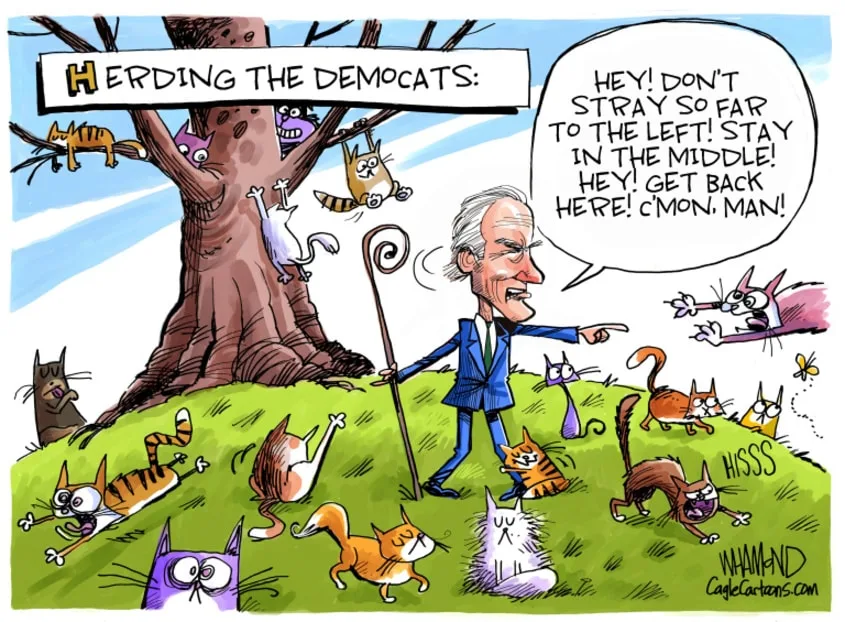
There was a time when the Democratic Party was considered a big-tent political group, but some within the Party are now demanding loyalty to President Joe Biden and any and every policy deemed “Democratic.” Granted, the Democrats don’t have people such as Marjorie “Moscow” Taylor-Green, Matt “Child Molester” Gaetz, Tom Cotton, Ted “Cancun” Cruz, Paul “Nazi” Gosar, Lauren “Hand Job” Boebert, and Josh “The Cowardly Lion” Hawley demanding fealty under pains of political execution, there are those within the Democratic Party who marginalize and denigrate those who dare hold positions contrary to those of the Biden Administration. Democrats such as John Fetterman, Jon Tester, Joe Manchin, Bernie Sanders, and The Squad (Alexandria Ocasio-Cortez, Ilhan Omar, Ayanna Presley, Rashida Tlaib, Jamaal Bowman, Cori Bush, Greg Casar, Summer Lee, and Delia Ramirez) face increasing pressure from mainstream and centrist Democrats to toe the party line. For example, I oppose John Fetterman’s pro-Israel view, but I reject the notion that Fetterman is not a “real” Democrat.
Joe Biden needs the various factions within the Democratic Party to vote for him if he hopes to win the 2024 presidential election. Disparaging and marginalizing pro-Palestinian, anti-war, socialist, or pro-environment Democrats is a sure way to drive these voters to the open arms of the campaigns of Robert Kennedy, Jr., Cornel West, and Jill Stein (or could lead to protest votes for Marianne Williamson). Young voters, in particular, are more likely to be anti-war, pro-environment, and have socialist tendencies. Pretending these people don’t exist will only ensure that Biden goes down to defeat in November. Young voters may not have much real-world experience, but they know hypocrisy when they see it. They “hear” the pathetic challenges from Biden and his feckless cabinet to Israel’s genocidal slaughter of over 34,000 Palestinians in Gaza, while, at the same time, seeing the President and Democrats in Congress give Israel $18 billion to continue its immoral war. These young folks make, as they should, a direct connection between U.S.-funded and supplied bombs, bullets, drones, and missiles and daily reports of bloodshed, violence, and death in Gaza. They see the mutilated bodies of Palestinian children and know that the United States is directly responsible for their deaths.
I am a member of the local Democratic Party’s executive committee. I was elected to this position in March. I made it clear to Party leaders that while I am a proud Democrat, I have policy positions that run contrary to that of the Defiance County and State Democratic Party. I made sure they understood that I was an atheist; a humanist; a pacifist; and a socialist. They knew or should have known, anyway, that I am an outspoken writer who uses this blog and letters to the editor of the local newspaper to advance my cause. I will gladly support the Democratic Party at every level, but I will not silence my voice just to give the Party the appearance of MAGA-like unity. I grew up in a home with a mother who spoke her mind on political issues; and who was unafraid to voice her opinion in public forums. I continue to follow in her footsteps — thirty plus years after her suicide — albeit from the other side of the political aisle.
The Democratic Party has my support, but it does not have my loyalty. I refuse to say the Pledge of Allegiance because it is a loyalty pledge. I am grateful to be an American. I can’t imagine living in any other place than in the good ole USA. That said, I reject demands of political conformity and fealty. Nations and governments come and go. My objective is to work towards making the United States a better place to live. Most of all, I want my six children and sixteen grandchildren to have promising, prosperous, happy futures. When Democratic (or Republican) policies meet my desires and expectations, they can count on my support. When they don’t, the Democratic Party can expect to hear from me. Demands for Party loyalty will be rejected. If the Party’s tent is not big enough for someone like me, that’s their loss, not mine. I will do all I can to promote and advance Democratic policies and candidates, but what I will not do is abandon my political beliefs just so the Party can present to the public a facade of unity. Political debate and diversity are important for the health of the Democratic Party. The moment I’m told to be quiet or tone down my opinions or rhetoric is when I (and scores of other like-minded people) exit the tent.
Bruce Gerencser, 66, lives in rural Northwest Ohio with his wife of 45 years. He and his wife have six grown children and thirteen grandchildren. Bruce pastored Evangelical churches for twenty-five years in Ohio, Texas, and Michigan. Bruce left the ministry in 2005, and in 2008 he left Christianity. Bruce is now a humanist and an atheist.
It’s early spring in northwest Ohio, the year is 1972.
A fourteen-year-old boy is playing with his Lionel trains in the basement of a rented house on Cherry St. in Findlay, Ohio. He loves playing with the trains, a love acquired from working at his dad’s hobby store, G&B Trains.
The boy hears footsteps coming down the basement stairs. It’s his dad.
His dad says, I need to talk to you.
This is strange, the boy thought. Dad never talks to me about anything.
Your Mom and I don’t love each other anymore, says the boy’s dad, and we are getting a divorce.
And just like that, whatever shred of family the boy had was destroyed.
It wasn’t long before the divorce was final.
The boy is in ninth grade, and it is graduation time. His parents both want to come to his graduation but the boy says, I am not going to graduation, and that was that.
Tenth grade. High School. All the ninth graders from Central, Donnell, and Glenwood would join the older students at Findlay High School, making the school one of the largest in Ohio.
The boy’s friends would all be there, his school friends, his church friends, and the boys he played baseball and basketball with.
The boy’s dad remarried — a 19-year-old girl. She has a baby. In a few short years, the boy would be dating women the age of his dad’s new wife. She was never more than dad’s new wife to him. The boy had a mother, and he only needed one of those.
Fall turned to winter, and then one early spring day the boy’s dad says, We are moving to Arizona.
What? the boy thought. You can’t do this to me. All my friends are here. You promised, no more moving. Two and a half years, the longest the boy ever lived in one place, and now he has to move.
Upset, angry, bitter, and no one seemed to care.
On a Saturday in March, 1973, the auctioneer’s voice rings out, and everything but essentials are sold to strangers who came to gawk at household goods. And with auction proceeds in hand, the Gerencsers pile into two cars and move to Tucson, Arizona. Later the finance company would track down the boy’s dad and repossess the cars. When the boy became a man, he then understood why he had to move so suddenly and quickly 1,900 miles from his home.
The boy, despite hating his dad for taking him away from his friends, is excited about the prospect of traveling across the country. So many things to see, so many new experiences to be had.
The Tucson Baptist Temple is a large church pastored by Louis Johnson, a preacher from Kentucky. The boy joins the church and starts attending youth group. But, try as he might he can’t make friends. It isn’t like his church home in Findlay where the boy had all kinds of friends, and even a few girlfriends. He feels very much alone.
With the move, the boy has to ride a city bus to his new school, Rincon High School. Right away he notices that some of the kids from the youth group attended Rincon, but they pretend they don’t know him. He feels quite alone.
Rincon has what is called open lunch. Every day the boy would go outside and sit on the grass and eat his lunch. One day, a beautiful, tall Asian girl comes near the boy and sits down to eat her lunch. She is warm and friendly, and treats the boy as if she has known him for years. And for the next ten weeks, on most days, she eats lunch with the boy from Ohio. Outside of the fat boy everyone made fun of who rode the bus, this would be the only friend the boy would make.
And then came summer, and the boy hopped a Greyhound bus and moved back to Ohio. With the help of his church and friends, the boy can go back to his old school, his old church, with his old friends. Life for the next year is grand, just as if he had never left.
Unfortunately, the boy would have to move to his mom’s home at the end of the school year. This move brought great unrest and turmoil to the boy’s life, but that is a story for another day.
The boy is an old man now, and as he watches a musician on a reality show, he sees a girl that brings to his mind a time long ago when a beautiful young woman took the time to befriend a friendless boy from Ohio. It reminds him that moments of kindness are often remembered for a lifetime.
Bruce Gerencser, 66, lives in rural Northwest Ohio with his wife of 45 years. He and his wife have six grown children and thirteen grandchildren. Bruce pastored Evangelical churches for twenty-five years in Ohio, Texas, and Michigan. Bruce left the ministry in 2005, and in 2008 he left Christianity. Bruce is now a humanist and an atheist.
Ask a Christian for the reason most Americans are Christian and you will likely get some sort of theological explanation, complete with a personal testimony of faith in Jesus Christ. However, is this the reason most Americans are Christians? Is it really all about theology and relationship?
Perhaps there is another explanation.
First, the United States is a Christian nation. Not a Christian nation like theocrats think we are, but Christian nonetheless. Christianity permeates our being as a people. Christian church buildings are everywhere. Our government leaders are overwhelmingly Christian and freely use language that reflects their Christian heritage. Christianity is on full display everywhere we look. We are, indeed, a Christian nation.
Second, there is a cultural form of Christianity that saturates virtually every aspect of our society. Country singers win awards for songs about cheating on a spouse and they thank the Christian God for winning the award. Boxers and MMA fighters beat the shit out of one another and then thank the Christian God for the strength to do what they do. Prayers are uttered at sporting events, players give testimonies to faith in Jesus, and the Christian God is given all the credit for their success. One need not look very hard in America to find Jesus.
Cultural Christianity is all about what people say and not what they do. This is the predominant form of Christianity in America. When asked, do you believe in the Christian God? most Americans will say, Yes! It does not matter how they live or even if they understand Christian doctrine. They believe, and that’s all that matters.
It is this Christian world into which every American child is born. While my wife and I can point to the various conversion encounters we had, we still would have been Christians even without the conversion experiences. Our culture was Christian, our families were Christian, everyone around us was Christian. How could we have been anything BUT Christian?
Practicing Christians have a hard time accepting this. They KNOW the place and time Jesus saved them. They KNOW when they were baptized, confirmed, dedicated, saved, or whatever term their sect uses to connote belief in the Christian God. It’s hard for them to accept that their faith is culturally and socially driven.
Why are most people in Muslim countries Muslim? Why are most people in Buddhist countries Buddhist? Simple. People generally embrace the dominant religion and practice of their culture and tribe; and so it is in America.
It is culture and tribe, and not a conversion experience, that determines a person’s religious affiliation. The conversion experiences are the eggs the Christian chicken lays. Evangelicals, in particular, have built their entire house on the foundation of each person having a personal salvation experience. However, looking at this from a sociological perspective, it can be seen that a culture’s dominant religion affects which religion a person embraces more than any other factor.
Over the course of my life, I have lived in Ohio, Michigan, Texas, Arizona, and California. Every place I lived had its own cultural idiosyncrasies. Let me share a couple of stories with you that illustrate this.
Here in Northwest Ohio, local convenience stores have one or two rows of Dr. Pepper in their coolers. Pepsi and Coke are the dominant brands. When I lived in Elmendorf, Texas, just outside of San Antonio, I would regularly go to the Conoco gas station and buy a bottle of pop. The dominant pop in the cooler was Dr. Pepper. There would be numerous rows of Dr. Pepper and only a couple of rows for Pepsi and Coke. Big Red was another favorite pop and it also had more space in the cooler than Pepsi. Why? Culture.
When I left the church in Elmendorf and moved back to Ohio, I kept in touch with a Hispanic family in the church. They eventually moved to Ohio to be a part of the church I was pastoring. I warned them that they were moving to an area where Anglos dominate the culture. There are no stores here with the foods, vegetables, and fresh tortillas that Hispanics in San Antonio can easily buy at the local HEB grocery store. I did my best to make certain they understood these things.
With great anticipation and excitement, they moved to Ohio. And, two months later, discouraged and depressed, they moved back to San Antonio. Reason? Culture. The differences between the two cultures were too great. Even though they convinced themselves they could adapt, the differences were so vast that it would have required them to stop doing things they had done their entire lives. Such drastic change is hard, if not impossible.
I pastored a Baptist church in Southeast Ohio for eleven years. Appalachian culture dominates the area. I found a huge cultural difference between Northwest and Southeast Ohio. While only 200 miles separate them, the cultures are very different from one another.
One day, a church member brought us a bag of green peppers. He said, Here are some mangos for you from my garden. Mangos? A mango is a fruit that grows on trees. I thought, why is this guy calling green peppers “mangos?” A short time later, we went to the grocery store in nearby Zanesville. As we strolled through the produce section, we noticed the green peppers. The sign above them said “mangos.” Why? Culture.
Culture affects how we live, how we talk, what we eat, and what we do for entertainment. It affects every aspect of our lives. Why should matters of religion be exempt from the influence of culture?
I am an atheist, but I know that my moral and ethical values have been shaped by the culture in which I grew up. I have no problem admitting that some of my moral beliefs come from my Christian upbringing. Growing up in a poor family shaped how I view things such as poverty, welfare, and the place of government in our day-to-day lives. Culture and environment have largely made me who I am today. Even though I am now a godless heathen, I still like some of the trappings of my Christian past. I love listening to Southern gospel music. I enjoy listening to Third Day and other Christian rock groups. I don’t believe one word of the lyrics, but there is something about the music that appeals to me. It is familiar to me, as are many of the other cultural peculiarities by which I am surrounded.
How about you? What cultural peculiarities do you see where you live? How has the Christian culture of America shaped and affected your life?
Bruce Gerencser, 66, lives in rural Northwest Ohio with his wife of 45 years. He and his wife have six grown children and thirteen grandchildren. Bruce pastored Evangelical churches for twenty-five years in Ohio, Texas, and Michigan. Bruce left the ministry in 2005, and in 2008 he left Christianity. Bruce is now a humanist and an atheist.
[This post is about] how many believers try to marry secular science to the Holy Bible.
….
One is written by a holy and divine God who knows how everything came to be. The other is filled with lies, and misinformation, and does not have the Spirit of Truth guiding it. In fact, the latter of the two have kicked God out of the science lab and excluded him from all of their work.
….
The only way for science and the Bible can be compatible, is if the former humbles itself and repents of its sins, and accept Christ as its savior. There is no other way for the two to work together. Secular and bad Christian science only corrupts the revelations of the Bible and keeps the truth from people who need it.
When secular science repents and becomes Christian, then lets God and the Spirit of Truth back into the science labs, classrooms, and so on, then the light of Jesus can shine so that all can see the truth.
Secular science does not have the truth because it is not guided by the Spirit of Truth. It is guided by the deceit and lies from evil. There is no way to yoke the biblical truths to secular science until the latter accepts the biblical truth and Jesus as its savior.
The Bible is never wrong.
— TheologyArcheology: A Site for the Promotion of Scientific and Biblical Ignorance, Unequally Yoked, April 22, 2024
Christians in the Middle East are being persecuted for their faith. ISIS has slaughtered thousands of Christians and Muslims, all because they had the wrong religious belief. Shameless Evangelical preachers and right-wing politicians have used these killings as an opportunity to provoke fear in their followers. These preachers of fear live in a delusional world where being required to bake a cake for a gay couple or giving the same civil rights to LGBTQ people as to heterosexuals is the equivalent of having your head lopped off by ISIS. American Evangelical Christians have a persecution complex, stoked by horror stories about the atheist, secularist, humanistic, socialist horde taking over THEIR country. (Please see The Paranoia and Persecution Complex of the Religious Right.) With great mockery and ridicule, I laugh at American Christians who think they are being persecuted. Those who promote such things deserve the disdain dished out to them by both the religious and non-religious.
That said, the beheading of Christians in the Middle East has American Christians asking if they would be willing to suffer and die for the cause of Christ. Billy Watkins, a Christian and a writer for The Clarion-Ledger had this to say:
I can’t explain why.
Perhaps it doesn’t require an explanation.
But as the calendar quickly moved toward today — Easter Sunday — the more an image flashed in my mind: 20 Egyptian Christians and one other man, forced to their knees on a Mediterranean beach by members of ISIS on Feb. 15 and asked one by one if they believed in Jesus Christ.
Each answered yes, knowing the consequences.
All 21 were beheaded….
…It made me look inside myself, perhaps deeper than I’ve ever looked before.
It made me face the question: If I were in a similar situation, would I have the faith and the courage to look the ISIS cowards in the eye and say, “I believe in Jesus Christ.”
Knowing those would be the last words I ever said. Knowing the torture I was about to experience. Knowing my family and friends would grieve over my death. Knowing this life, which I can only comprehend as a struggling human, would end.
I would like to say yes, I would have the strength.
But do any of us really know until we are put in that situation?
To help me have some comparison for my struggle with this, I reached out to eight friends.
I asked them how they pictured themselves answering that question with a knife to their throats.
Some answered by email, others by Facebook message. Each provided food for thought. And I must commend them for digging deep inside their souls to help provide their answers.
One of the first I received: “This is very hard. I have tears. No, I am crying … I want to scream yes to those butchers. I believe in Jesus Christ!!!! But when I think of never seeing my husband, my family, my grandchildren, my grandchildren to come, I have to pause. More tears … ”
Friend No. 2 wrote, “I believe each Christian would always be ready to say, ‘Jesus Christ is my Lord and Savior.’ However, after watching two beheadings on YouTube, it gave me pause for thought. How could I possibly endure torture and a painful, slow death for my beliefs? My next thought was, ‘But that’s what Jesus did for me. Would he expect any less of me?’ ”
Friend No. 3: “There is a peace I believe God gives you in that situation. Just as Jesus prayed in the garden, twice, to let this cup pass from his wrath … I might say the same prayer, but in the end I would submit to God’s plan.”
Friend No. 4: “This is, of course, an impossible question to answer. Under the circumstances, I cannot imagine what I would do … it is always easier to sit in your living room and be convinced of your own virtues under the proposed circumstance. I also know I can rationalize decisions and I can waffle between what I want I know to be true … I could see this part of me rationalizing that it’s more important for me to live for any or all of the following …” My friend named his wife, children, extended family and church.
“I have so much to live for that lying to people who want to kill me is easily excused … (But) the scenario you describe is no time for rationalizing. It is a test … I hope I would get it … I want to be counted among those who would forgo this life for the better eternity to come.”
“Last point,” he wrote. “Hearing about the death of these 21 men has mattered to me — and not for the reason the killers wanted. It encourages me to live a life worthy of my calling. They died for Christ. May I at least live for him?”
Friend No. 5 wrote, “In facing a gruesome, wicked, evil death, my faith would still be in God. I hope and trust that such a painful ordeal would be ultimately redeemed and used by God for his purposes. Therefore, such a death is not in vain.”
Friend No. 6 was equally sure of his answer: “Faith is all you have left in that situation. To reject your faith would leave you with nothing — even if you lived. I can say unequivocally I would not reject my belief in Christ. If I did, I would be dead even though I lived. The other thing I know is that I would not die passively. I would fight with all my being. I would not let them dictate the terms of my death.”
Friend No. 7: “When you reach the most terrifyingly vulnerable moment of your life, you’re stripped to nothing but the things no can take away … the core beliefs that have driven every decision you’ve ever made. Ultimately, I would rather die outwardly professing my faith, with my death serving as a testament to those beliefs …
“But then I think of my child, of helping teach him those beliefs … If being a coward and lying to save my life means I’ll have the opportunity to raise a Godly man, so be it … Maybe this isn’t the right answer. But doing the right thing often means forgoing interests of the present so you can protect interests of the future.”
Friend No. 8: “Thomas Babington Macaulay wrote, ‘And how can a man die better than facing fearful odds, for the ashes of his fathers, and the temples of his Gods?’
“This world doesn’t afford many civilians the chance to die well for something that matters … it sounds cavalier, but I would be humbled and honored to be put in a situation where I had to choose between my life and the one thing that means most to me — my faith in Jesus Christ … I have a passion for this world, and ultimately the honestly amazing and blessed life that I’ve been given.
“I believe if he brings us to that place of choice, he gives us the grace to handle it if we remember that he is the ultimate source of everything … it’s not the end, it’s the beginning … let me go how he would take me, and let his will be done.”
This is what I believe: If I were put in that situation, I believe Jesus Christ would bathe me with a peace beyond human comprehension…
Those of us who were once Christians have asked the questions that Billy Watkins asks in his article. If it came to it, would we have been willing to die for Christ? Having grown up in a religious culture where persecution was touted as a sure sign of one’s faith, I had moments when I questioned whether I would stand up for Christ no matter what happened. Preaching on the street brought me into contact with people who wanted to do me bodily harm. One man deliberately aimed his truck at me, hoping to run me over. Over the corner curb he came, hoping to silence the Baptist street preacher. Fortunately, he missed.
In the Independent Fundamentalist Baptist (IFB) church, Foxe’s Book of Martyrs is required reading. Written in 1563 by John Foxe, the book is “a polemical account of the sufferings of Protestants under the Catholic Church, with particular emphasis on England and Scotland.” The first edition of the book was titled “Actes and Monuments of these Latter and Perillous Days, Touching Matters of the Church.”
Foxe’s Book of Martyrs is often used to prove that true Christians have always been persecuted for their faith. If the book was made into a movie, many modern-day Evangelicals would refuse to watch it due to its violence and gore.
After the Bible itself, no book so profoundly influenced early Protestant sentiment as the Book of Martyrs. Even in our time it is still a living force. It is more than a record of persecution. It is an arsenal of controversy, a storehouse of romance, as well as a source of edification.
These days, Foxe’s Book of Martyrs is not widely read outside of Evangelical, Baptist, Fundamentalist, Amish, and Mennonite circles. Part of the reason for this is because John Foxe’s credibility has been called into question. Wikipedia states:
The author’s credibility was challenged as soon as the book first appeared. Detractors accused Foxe of dealing falsely with the evidence, of misusing documents, and of telling partial truths. In every case that he could clarify, Foxe corrected errors in the second edition and third and fourth, final version (for him). In the early nineteenth century, the charges were taken up again by a number of authors, most importantly Samuel Roffey Maitland. Subsequently, Foxe was considered a poor historian, in mainstream reference works. The 1911 Encyclopædia Britannica accused Foxe of “wilful falsification of evidence”; two years later in the Catholic Encyclopedia, Francis Fortescue Urquhart wrote of the value of the documentary content and eyewitness reports, but claimed that Foxe “sometimes dishonestly mutilates his documents and is quite untrustworthy in his treatment of evidence”.
In contrast, J. F. Mozley maintained that Foxe preserved a high standard of honesty, arguing that Foxe’s method of using his sources “proclaims the honest man, the sincere seeker after truth. “The 2009 Encyclopædia Britannica notes that Foxe’s work is “factually detailed and preserves much firsthand material on the English Reformation unobtainable elsewhere.” It was typical, however, in the late nineteenth and early decades of the twentieth centuries to treat Foxe’s text as “not to be trusted….If not the father of lies, Foxe was thought to be the master of inventions, and so readers of the Encyclopedia [sic] Britannica were advised and warned.”
Foxe based his accounts of martyrs before the early modern period on previous writers, including Eusebius, Bede, Matthew Paris, and many others. He compiled an English martyrology from the period of the Lollards through to the persecution of Protestants by Mary I. Here Foxe had primary sources to draw on: episcopal registers, reports of trials, and the testimony of eyewitnesses. In the work of collection Foxe had Henry Bull as collaborator. The account of the Marian years is based on Robert Crowley’s 1559 extension of a 1549 chronicle history by Thomas Cooper, itself an extension of a work begun by Thomas Lanuet. Cooper (who became a Church of England Bishop) strongly objected to Crowley’s version of his history and soon issued two new “correct” editions. John Bale set Foxe onto martyrological writings and contributed to a substantial part of Foxe’s ideas as well as printed material.
Foxe’s book is in no sense an impartial account of the period. He did not hold to later centuries’ notions of neutrality or objectivity, but made unambiguous side glosses on his text, such as “Mark the apish pageants of these popelings” and “This answer smelleth of forging and crafty packing.” David Loades has suggested that Foxe’s history of the political situation, at least, is ‘remarkably objective’. He makes no attempt to make martyrs out of Wyatt and his followers, or anyone else who was executed for treason, except George Eagles, whom he describes as falsely accused.”
Sidney Lee, in the Dictionary of National Biography, called Foxe “a passionate advocate, ready to accept any primâ facie evidence”. Lee also listed some specific errors and suggested that John Foxe plagiarized. Thomas S. Freeman observes that, like a hypothetical barrister, Foxe had to deal with the evidence of what actually happened, evidence that he was rarely in a position to forge. But he would not present facts damaging to his client, and he had the skills that enabled him to arrange the evidence so as to make it conform to what he wanted it to say. Like the barrister, Foxe presents crucial evidence and tells a side of the story which must be heard, but his text should never be read uncritically, and his partisan objectives should always be kept in mind.”
By the end of the 17th century, however, the work tended to be abbreviated to include only ‘the most sensational episodes of torture and death’ thus giving to Foxe’s work ‘a lurid quality which was certainly far from the author’s intention’…
…Acts and Monuments was cannibalized for material to warn of the dangers of Papistry and, in Foxe’s name, also to undermine resurgent High Church Anglicanism. The author’s credibility and the text’s reliability became suspect, then, for both Catholic and Anglican Church defenders. Samuel Roffey Maitland, Richard Frederick Littledale as well as Robert Parsons and John Milner, mounted campaigns to disprove Foxe’s findings. Maitland’s and others’ critiques helped to awaken increasing antagonism toward intolerance in the public conscience. Combined with professionalized academic dissociation, left no voices to speak in Foxe’s defence, and reduced Foxe’s historical credibility such that “no one with any literary pretensions…ventured to quote Foxe as an authority.” John Milner, defender of the “old religion” (Catholicism), authored several tracts, pamphlets, essays, and Letters to the Editor: “Dear Sir…”; using all public means available to him for declaring that abuse of Englishmen was occurring “frequently”, ipso edem, the defamation and harassment of Catholics in England – a treatment not similarly visited on Sectarian communities or the Quakers.
Milner’s life project to discredit ‘Foxe’ was polemical—that was the point of arguing: to persuade people to see things as the speaker constructed or, at least, to seeing some merit to his case. Before the Houses of Parliament in the years of Milner’s and others activism, were bills for relieving English Catholics of tax penalties (for being Catholic), having to tithe to the Anglican Church, and relief from imposition of the Oath that stood between any Catholic and a government position.
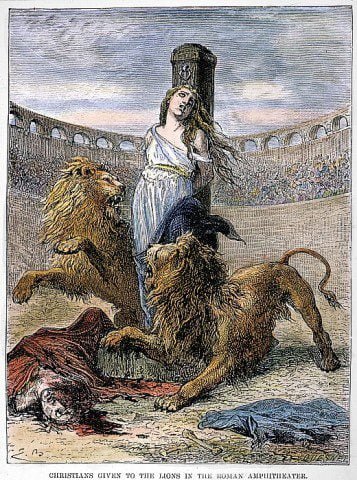
While it is true that Christians throughout the 2,000-year history of the church have been martyred, it is also true that martyrdom stories have been grossly exaggerated, often little more than hagiography. Catholic scholar Candida Moss, former professor of New Testament and Early Christianity at the University of Notre Dame, took a careful look at early Christian martyr stories in her book The Myth of Persecution: How Early Christians Invented a Story of Martyrdom. (You can read my review of The Myth of Persecution here) Here’s an excerpt from my 2013 review:
…While Moss admits that Christians were persecuted on and off throughout the first 300 years of church history, she thoroughly debunks the claim that Christians were always persecuted. In fact, many of the instances of persecution were actually prosecutions…
…Throughout the book, Moss details how many of the source documents for the stories about Christian martyrs were embellished, and, at times, fabricated out of thin air. Even some of the saints revered by the Catholic church have histories that call into question their authenticity. I was quite surprised and delighted that Moss, a professor at a Catholic university, did not shy away from the controversies surrounding the mythic stories of the Catholic church.
Moss also details how some of the ancient martyr stories were actually borrowed from other cultures and religious traditions. There were times when I thought Moss was stretching these connections a bit, but I found the chapter, Borrowing of Jewish and Pagan Traditions, to be quite fascinating…
While Billy Watkins ponders whether he would be willing to lay his neck on the line for Jesus, I want to ponder the notion of a God who asks his followers to die for him. While most of us can readily understand dying for the sake of family or trying to help our fellow man, what are we to make of a religion and a God that puts great value on dying for one’s faith? While Christians will likely say that their martyrdom allows them to give a final testimony to God’s love and grace, I do wonder about a God who could save someone from having their head chopped off and does nothing. What would we think of a man who stood by while his wife or children were violently attacked and killed? Dying for one’s family is recognized by all to be a heroic act. But, dying for a religious belief? Wouldn’t lying and living be better than telling the truth and dying? Unlike the Muslim, the Christian martyr receives no special reward for dying. Why die when you can live?
At the heart of this discussion is the way Christians are conditioned to accept martyrdom. Church members are regaled with stories of Christians dying for their faith. Pastors preach inspiring sermons about the martyrdom stories in the Bible, complete with modern-day illustrations of Christians dying for their faith. Christians are reminded of the greatest martyr of all time, Jesus. If Jesus willingly died for us, shouldn’t we be willing to die for him? says the local Baptist preacher. And all God’s people said, AMEN!
I wonder if these stories would be enthusiastically believed if church members found out many of them are lies or half-truths? Pastors remind their flocks that True Christians® must be willing to die for their faith. These pro-martyrdom pastors subtly suggest that a person who cowers when faced with martyrdom should not expect forgiveness or a home in Heaven when they die. God is the giver and taker of life, and if he wants to have a Christian’s head lopped off, dare anyone object? The Apostle Paul made it clear that God has a right to do whatever he wants with the Christian’s life:
Nay but, O man, who art thou that repliest against God? Shall the thing formed say to him that formed it, Why hast thou made me thus? Hath not the potter power over the clay, of the same lump to make one vessel unto honour, and another unto dishonour? Romans 9:20-21
Well, I object. There is no religious belief worth dying for. I question what kind of God would do such a thing to someone he calls his child? I know I would do everything in my power to keep my partner, children, and grandchildren from being harmed, even if it meant losing my own life. It seems quite perverse to me for a God or a religion to ask or demand someone’s death just so the world can see their faith. Wouldn’t LIVING by faith be a better testimony than DYING for faith?
What I have written here should not be taken as a dismissal of the persecution many Middle Eastern Christians face on a daily basis. I abhor all such killing and fully support efforts to put an end to needless bloodshed. The goal should be for everyone, regardless of belief, to worship freely without the threat of harm or death. The children of Abraham — Christianity, Islam, and Judaism — have histories soaked in the blood of their followers. Perhaps it is time for them to quit trying to subjugate one another. Perhaps it is time to put an end to jihads, crusades, and holy wars. Two thousand years of bloodshed lead me to believe that there must be a better way. Perhaps it is time for peaceful co-existence, leaving it to God to settle matters after death.
As an atheist, I am greatly troubled to see people give their lives for a religious belief. Knowing that the God they are dying for doesn’t exist, I am pained to see them sacrifice everything for nothing. We should weep when we see the young offered up to God as sweet-smelling sacrifices. Is such a God worthy of worship? I think not. Life is worth living, even if it means, in the moment, lying about one’s faith. Christians need to reorder their importance list, moving God down the list behind family. If death comes in protection of one’s loved ones, so be it. But to die for a religious belief, to satisfy the blood lust of the Christian God? Can we even fathom such an abhorrent demand? I know I can’t.
But Bruce, you are not a Christian. How dare you tell Christians what should be important to them! I am not doing so. I am, however, asking them to question their belief in a God who demands his followers be willing to die for him. I am asking them to reconsider what it is that is most important to them. If Christians are still willing to die for their faith/God, fine. But they should not expect me to rejoice over their death or understand their motives.
Bruce Gerencser, 66, lives in rural Northwest Ohio with his wife of 45 years. He and his wife have six grown children and thirteen grandchildren. Bruce pastored Evangelical churches for twenty-five years in Ohio, Texas, and Michigan. Bruce left the ministry in 2005, and in 2008 he left Christianity. Bruce is now a humanist and an atheist.