Tag Archives: Bart Ehrman

What Kind of a Text is the King James Bible?

From the video introduction:

On January 24, 2013, the traveling exhibition Manifold Greatness: The Creation and Afterlife of the King James Bible opened at the William H. Hannon Library at Loyola Marymount University. The keynote talk for the opening: “What Kind of a Text is the King James Bible? Manuscripts, Translation, and the Legacy of the KJV” was presented by Dr. Bart Ehrman, James A. Grey Distinguished Professor of Religious Studies at UNC Chapel Hill and New York Times bestselling author.

In this lecture by Dr. Bart Ehrman, a leading authority on the New Testament and New York Times bestselling author, you will hear why the KJV has received such praise and adoration over the centuries, and then turn to consider aspects of the translation that also need to be considered when assessing its greatness and value:  the archaic language that at times can confuse modern readers; the inferior ancient manuscripts on which the translation was based; and the theological biases that occasionally led the translators to make the biblical text say something other than it originally meant.

An interesting overview of the history of the King James Bible, The video is over an hour long. Enjoy!

Video Link

Bart Ehrman Bought Into a Lie

chick_tract_kjv

or so says David Daniels of Chick Publications:

Bart Erhman bought a huge lie from the start, that only the “originals” were inspired scripture. The important scripture on inspiration,  2 Timothy 3:14-17, makes it clear that the Bible scrolls that Timothy had learned from his youth, copies of copies of copies, were actually scripture and carried that inspiration given by God! Those verses are not talking about some long-ago-perished originals.

Second, Ehrman was taught not to look for God’s preserved words among the thousands of almost identical manuscripts and the Bibles of persecuted believers. He was pushed to try to find God’s words among a handful of contradictory manuscripts written by Greek philosophy-loving “scholars” like Origen —a journey doomed from the start.

But you don’t have to fall by the wayside, as in the tragic case of Bart Ehrman. You can have God’s preserved words in English, the King James Bible, a Book that carries that same inspiration as the originals did —from exact copies and accurate translations. You don’t have to say, “Yea, hath God said?” You can declare, “Thus saith the Lord!” The choice is yours.

What If?

what_if

I am often asked if I think that I might have ended up at a different place in life IF I had been exposed to liberal Christianity rather than Evangelical Christianity?  This is a good question that I have given a lot of thought to.

Recently, Bat Ehrman posted on his blog a post by Jeff Siker, a Christian friend of his.  Siker is a scholar like Ehrman, believes many of the same things that Ehrman believes about the text of the Bible, yet he remains a Christian.

Siker grew up in and trained in a progressive/liberal Christian tradition. Ehrman grew up in and began his training (Moody) in the Evangelical tradition. Siker remains a Christian but Ehrman is an agnostic. Why the difference?

Siker wrote:

But back to faith.  Why do I still believe, even knowing the same historical-critical information that Bart knows?  I think there are several reasons.

First, I never felt betrayed or lied-to by the church in the way that Bart did about the nature of the Bible.  This is why, I think, Bart has left the church behind and I have continued to be active in the church.  (I am reminded of a famous dictum, slightly paraphrased, by the early 19th century Catholic theologian Alfred Loisy: “Jesus proclaimed the coming of the Kingdom of God, but all we got was the church!”)

Second, my educational experience – while conservative – was not fundamentalist.  Whereas Bart’s education ranged from fundamentalist to conservative evangelical, mine ranged from moderate to liberal.

Third, I was able to make the transition (a la Paul Ricouer) from first naivete to second naivete without stumbling.  Namely, I was able to shift from a literal reading of the biblical text and the Christian story to a critical reading of the biblical text and Christian story in a way that did not shatter my faith, but deepened it.

Fourth, and perhaps most important, whereas Bart’s view of human suffering calls into question the very notion of a loving God (and understandably so), my own view of human suffering does not see God as the problem (God as either powerless or uncaring).  Instead, for reasons that are difficult to pin down, I am most struck by what I experience as the graciousness of God.  In the end my faith rests on the firm belief in a God who brings life from death, possibility from impossibility – whether it has to do with Sarah’s barrenness (Rom 4) or the ridiculously wonderful claim that God raised Jesus from the dead.  My reading of the ministry of Jesus is that he trusted in such a God, even to the point of death.  In light of his ministry I believe that we are called to embrace human suffering with the hope and faith that God will transform such an embrace into new life.  Perhaps ironically, I think that’s exactly what Bart is doing with his blog site and his giving all the proceeds from it to causes that precisely address and alleviate human suffering.  So Bart may be a happy agnostic, and I may continue as a believer, but to this day I rejoice in both paths and the ways they have journeyed in friendship.

In his posts Siker writes of Ehrman having a different trajectory than he had.  Ehrman, the devout, Bible believing Evangelical, had a lot farther to fall when he found out the Bible was not as he had been taught, Siker, however, had a gradual trajectory away from his conservative ideas about the Bible.

A gradual decline, like the one Siker experienced, allowed him to grapple with the conflicting ideas about the text of the Bible without causing a loss of faith.  Ehrman, however, experienced a steep decline, one that picked up speed as it moved downward. The result was much more dramatic in Ehrman’s case than it was in Siker’s.

This is the case for many atheists/agnostics who were once Evangelical pastors, professors, or leaders. We found no natural stopping place on our slide into godlessness.

Could it have been different? Maybe.

My parents got saved at Scott Memorial Baptist Church, San Diego, in the early1960’s. From that day forward our family  attended Evangelical churches. My parents adopted extreme right-wing political views and were active in the John Birch Society.   All told, I spent fifty  years in the Evangelical church, twenty-five of those years as a pastor.

It should come as no surprise then that I had the same religious and political views as my parents. When I answered the “call” to preach I went to an Independent Baptist college to get my training. (Moody, Ehrman’s school, was considered liberal) I remained in the Evangelical tradition for most of my time in the ministry. (my doubts about the Bible  began AFTER I left the ministry)

When I learned the Bible was NOT what my parents, pastors, and professors said it was,  I was devastated. I felt lied to. I felt that I had lied to the people I pastored over the years.  Many of the people who read this blog know this feeling well.

So…if my parents had been liberal Presbyterians and liberal Democrats, would the trajectory of my life been different? Probably.

But I will never know. My past is what it is. One good thing that has come  from my past experiences is that I am able to lend a sympathetic ear to those who find themselves in the same place I found myself in a few years ago. Simply put…been there…how can I be of help?

For Further Investigation:

Jeff Siker’s bio

Bart Ehrman’s website

Why I Recommend Bart Ehrman to Evangelical Christians

bart_ehrman-books

Bart Ehrman’s Best Selling Books

I have often been accused of being a Bart Ehrman fan boy and that this clouds my judgment of what Ehrman writes. Do I appreciate the books that Ehrman writes? Sure. But fan boy? Not really. I don’t know Ehrman personally, so there’s really no basis for the fan boy claim any more than for being a Get Fuzzy fan boy because I have read all Darby Conley’s comics. If reading everything an author writes makes one a fan boy, I am a fan boy of a number of authors.

Here is what I know about Bart Ehrman’s books:

  • They are written in a such a way to appeal to the average reader. A person does not need training in Hebrew and Greek to understand what Ehrman is talking about.
  • They are an excellent presentation of the facts about the text and history of the Christian Bible.

Yes, Ehrman can overplay his hand at times, and I don’t necessarily agree with everything he writes. However, Ehrman does a good job of detailing the history of the text and the various problems the text has. These things are widely known and accepted by most Bible scholars, even Evangelical ones.

The beef people have with Ehrman is not over the evidence he presents. Most every Bible scholar agrees with the evidence. It is Ehrman’s conclusions that some Christians object to. (and now that he is a declared agnostic, they object to his godlessness)

For whatever reason, The Way Forward attracts Christians who believe the Bible is the inerrant and inspired Word of God.  They are certain that the text of the Bible is exactly what God meant it to be, perfect and without error.

Some Christians moderate their view a bit, realizing that saying a particular translation of the Bible is inerrant makes one look ill-informed, so they move the inerrancy line to the manuscripts. They will say, I believe the original manuscripts were inerrant.  Of course, the original manuscripts no longer exist, so there is NO way we can ever possibly know what they said.

Some Christians moderate their view further and say, I believe the totality of extant manuscripts provide us with enough data to put together an inerrant Bible.  Never mind that the extant manuscripts differ with one another in thousands of places. How can we ever know which manuscript is the right one?

Some Christians will use words like a faithful translation or a reliable translation to describe their view of the Bible. When pressed, they will usually defend one the above mentioned views of the Bible.

Go to any Evangelical church this Sunday. Stand outside the church and ask each member as they leave the church:

Do you believe that every word in the Bible is factual and true and do you believe the Bible is the inerrant, inspired Word of God?

I guarantee you that most church members will say YES!!

If their pastor has any training outside of a Fundamentalist Bible college, he knows what his parishioners believe about the Bible is not true. He knows there are errors, mistakes, and internal contradictions. He knows there are “problem texts.”

He will likely never admit these things to his congregation (the sin of omission) for fear of causing a problem in the church or causing people to “doubt” God. Pastors know they must maintain the status quo, even though behind the scenes, in the privacy of his study, he is increasingly aware that the text of the Bible has major problems. (if one wants to maintain the belief the Bible is inerrant and inspired)

Back in 2005, I candidated at a Southern Baptist church in Weston, West Virginia. The church really wanted me to come be their pastor and I was interested in coming. (Polly was NOT interested in going to Weston)

The church loved my preaching, loved my vision for reaching greater Weston for Christ, but there was one sticking point. I preached from the ESV (English Standard Version) of the Bible and since there were a few King James Only families in the church, if I was going to be their new pastor I would have to preach only from the King James Version. I told them I couldn’t do that and I didn’t become their pastor. (and Polly said Amen!)

At the pew level, inerrancy is a live and well.

And this is why Bart Ehrman’s books are so important and why I recommend them to most everyone. His books are not stuffy scholarly tomes that only a scribe could love. He writes in a way that the average blue-collar worker with a high school education can understand what he is writing about.  (not that more educated people won’t profit from his books, they will)

When well-meaning Christians come to this blog and start spouting off about what their inerrant, inspired Bible says, I always ask them, have you read any of Bart Ehrman’s books? So far, exactly 0% of such people have read Bart Ehrman. (or any other non-Evangelical scholar for that matter)

I know if they have not read Bart Ehrman or someone like him, it is a colossal waste of time to have a discussion with them about the text of the Bible. Until they are willing to venture outside of the inerrancy box there is no hope of having a meaningful discussion about what the Bible does or doesn’t say.

Some Christian may see my reticence to engage them on this as fear of being showed up or proved wrong.  This is not the case. I am not going to spend time typing answer after answer to questions or challenges when all that is needed is for someone to read a 300 page book.

Once they have read the book (s) THEN we can talk, but not until then.

Here is a list of Bart Ehrman’s books that I think every Evangelical Christian should read:

Misquoting Jesus: The Story Behind Who Changed the Bible and Why
Jesus, Interrupted: Revealing the Hidden Contradictions in the Bible (And Why We Don’t Know About Them)
Lost Christianities: The Battles for Scripture and the Faiths We Never Knew
God’s Problem: How the Bible Fails to Answer Our Most Important Question–Why We Suffer

(you can buy these books for less than 50.00 total at Amazon.com)

For Further Investigation:

Bart Ehrman Blog

Bruce, Do You Believe in Absolute Truth?

absolute_truth

There is no such source of error as the pursuit of absolute truth.
Samuel Butler

A Christian pastor asked:

So Bruce, let me get this straight… You are banking your certainty of your beliefs based on a man who wrote a book(s) – Bart Ehrman? I’m not trying to put words in your mouth, just reading what you state in these posts. And you are saying we “believe” what we believe based on “men” (not God) who wrote some books (the Bible)? Can you tell me, “What is Truth?” Do you believe in absolute truth? Or is all truth relative to the time and person/culture who believes it?

In this post I hope to answer the questions asked in the above comment.

Before I actually answer these excellent questions, I want to first address the perspective I think the Christian pastor is coming from. From what I can tell from comments the Christian pastor has made on The Way Forward, he is Evangelical in belief. If this assumption is wrong he can correct me in the comment section.

What do Evangelicals believe about the Bible?  They believe the Bible is the inspired word of God and, in some form or the other, inerrant. They believe the Bible, along with creation and conscience, is God’s revelation to humankind. They believe the Bible is infallible in everything it addresses. (and Evangelicals fight among themselves concerning exactly what the Bible addresses)  They believe the Bible is THE truth, not A truth. As such, the truth in the Bible is unchanging, absolute truth. (yes, there are Evangelicals who may quibble with the box I have built for them, but I have no time to address every Evangelical outlier)

It is against this backdrop that the Christian pastor asks the above questions. It is important for non-Evangelicals to understand this lest we misunderstand exactly what is being asked.

Truth then, is a religious construct. When an Evangelical uses the word truth they most likely define the word differently than the non-Evangelical. Many atheists, agnostics, and humanists don’t like using the word truth because of its religious implications. I happen to fall into this group.

When I am asked by an Evangelical to define truth I tell them I don’t believe in truth as they understand it.  I do believe in knowledge, observation, evidence, probabilities, and facts. My understanding of the world I live in is deeply rooted in my humanistic beliefs. Since I don’t believe there is a god it necessarily follows that I don’t believe there are religious texts that are divinely inspired by a god.

My understanding of the world comes from observing the world I live in and applying myself intellectually to gain knowledge. In my pursuit of knowledge, I weigh evidence, consider probabilities, and reach a rational, reasoned conclusion. If I am confronted with new or differing evidence, I am free to come to a new conclusion. From these conclusions I can then say this or that is a fact.

I firmly believe humans are capable of using their intellect to come to reasoned conclusions about the world we live in. We have no need of a god or an inspired text to come to reasoned conclusions.

No human knows everything. None of us have the capability to be a human Wikipedia. Over the course of my life, I have a few intellectual pursuits that I have given myself to that have allowed me to gain knowledge that others may not have. There are other things that I have not given myself to, and in these areas I trust (not blindly) those who have given themselves to diligently understanding their area (s) of expertise.

Take science. Up until about 5 years ago, I was illiterate when it came to many of the scientific disciplines. I was a typical Evangelical who believed God created everything, end of story. No need to understand science since God was the divine power and authority behind everything.

Since becoming an atheist, I have developed a thirst for all things science. I have a large stack of science books waiting to be read.  I subscribe to Discovery Magazine and Science Illustrated. I bought a microscope and I want to buy a telescope. Like most everything in my life, I know no middle ground.  I want to learn all I can about science. In doing so this will allow me to better understand the world I live in.

I know, no matter how much I read and study, I will never be as proficient in science as a person who has given their life to it. I will remain a novice, and as a novice I must trust people who are more educated than I am to give me facts about the world I live in. I don’t blindly trust them, but using my intellect I can come to a rational, reasoned conclusion on a particular thing.

Based on what I have written above, to answer the Christian pastor, I don’t believe in truth and I certainly don’t believe in absolute truth. Our understanding is constantly changing and as it changes we are forced to abandon previously held beliefs.  A fact today may, in time, be shown to be incorrect or in need of modification. Unlike the Evangelical who is bound by what the Biblical text says, I am free to change my beliefs when I am presented with new evidence.

Now this does not mean that I think everything is relative. There are things that we can know. (again it is all about probabilities) Can we say that we are absolutely certain? No, because this assumes we have all the possible knowledge about a certain thing. This is why I am agnostic about the existence of a god. Can I know for certain that there is not a god? No. However, based on the available evidence, I can say I don’t think there is a god. I can say, with a greater degree of confidence, that the Evangelical Christian God, as revealed in the Bible, does not exist.

bart_ehrmanNow let me deal with the question about Bart Ehrman. Bart Ehrman has expertise in areas like theology, history, and the original languages of the Christian Bible. While I have some expertise in these areas, Ehrman is far more educated than I am and he has spent his entire life dealing with the issues he writes about in his books.

When an Evangelical asserts that the Bible is the inspired, inerrant Word of God, I usually ask them if they have read anything written by Bart Ehrman. If they have not, I know it is likely a waste of time to engage them.  The Evangelical position on the Bible is intractable, and unless an Evangelical is willing to educate themselves about the Biblical text, there is no hope of meaningful discussion.

Is Bart Ehrman fallible, can he be wrong? Of course. No human being, Jesus included, is infallible. That said, Bart Ehrman, based on the books of his I have read, is someone I trust as an expert on the issues he writes about. If I have a question or disagreement with Ehrman I can contact him and he will likely respond. Such is not the case with the Bible.

The Bible is a book written between two thousand and four thousand years ago. We don’t know who the authors were and none of their original writings are extant. All we have is copies of copies of copies. We have no way of knowing exactly what was written. (this is why claiming the Bible is  inerrant in the originals has no merit)

We can not contact the authors of the various books of the Bible. We have no way of even knowing whether or not the books in what we now call the Bible are the books that should be in the Bible. Perhaps there are books that should be in the Bible that aren’t. We really can’t know these things. We are left to the interpretations and decrees of church leaders and political leaders. For all we know, the gnostic texts might actually be “the Word of God.”

Bart Ehrman  is actually more reliable and accessible than the unknown authors of the Bible. I can read his books and know that I am reading the writing of Bart Ehrman. If there are errors in Ehrman’s books, he can correct them in a future edition.

The Christian pastor asked if I was “banking your certainty of your beliefs based on a man who wrote a book(s)?”  Yes and no. Yes, I trust Bart Ehrman and I give careful attention to what he has written.  But above Bart Ehrman, I trust my intellectual ability  to come to a rational, reasoned understanding of the claims of Christianity and the Bible.  I recognize no higher authority than humankind.

And, is not the Christian banking the certainty of their beliefs based on what men wrote in books? The Bible, stripped of the supernatural claims Christians make for it, is nothing more than a book written by anonymous authors centuries ago.

I hope I have adequately answered the Christian pastor’s questions.

My Journey From Evangelicalism to Atheism

In my last post I wrote:

Once I found out the Bible was not an inspired, inerrant text, my Evangelical house of cards came tumbling to the ground.

Several Christian bloggers have taken this statement to mean that once I no longer believed in the inspiration and inerrancy of the Christian Bible, I then became an atheist.

While it is true that once I came to see  the Bible was not inspired, not inerrant, and not infallible I abandoned the Evangelical faith, I did not immediately turn to atheism.

My journey from Evangelicalism to Atheism was a long, arduous, and painful one.

My journey actually began when I was still a Christian pastor. Long before I questioned the authority of the Bible, I began to have doubts about Christianity itself. Being a pastor for twenty-five years will do that to you. For the last few years in the ministry, I became increasingly discouraged with the state of Christianity in America. The Christian church was rife with internecine warfare, in direct contradiction to Jesus’s command that the world would know we were his followers by the love we had for one another.

During this time, I abandoned my conservative, Republican political views and began to embrace a liberal political view. As my politics move leftward so did my theological views. I was sympathetic towards the emerging, emergent church movement and I appreciated the work of men like Brian McLaren, Jim Wallis, and Tony Campolo. (and Catholic writers Thomas Merton and Dorothy Day, along with Gandhi)

Towards the end of my ministry, I was a closet liberal pastoring conservative, Evangelical churches. I became quite catholic in my view of other Christians. I was willing to embrace Catholics as  fellow Christians and my view on abortion and homosexuality changed from anti to pro.

During this time, I still held on to the belief that the Bible was the inspired, inerrant Word of God.

2003 marked the end for me as far as the ministry was concerned. For a  couple of years, I candidated at churches here and there, but I found no church I was willing to go to or was willing to have me. (one church wanted me to be their pastor but I had to commit to only using the KJV of the Bible. I could not do this.) (read The Disaffected Years, 2004-2008)

As time went on, Polly and I decided to look for a church we could call home, a church that we could use our talents to help the church and advance the kingdom of God. Over the course of three years we visited over one hundred churches. What we found confirmed our worst fears about the Christian church, and in November of 2008 we attended church for the last time. (read Wilderness Wanderings, 2002-2012)

Once I stopped attending church, I turned my attention to my theological beliefs. What did I really believe? The first belief to go was my belief that the Bible was inspired and inerrant. (Bart Ehrman was extremely helpful at this juncture) Once free of the notion that the Bible was a supernatural text inspired by a supernatural God, I turned my attention to the core teachings of Christianity.

As I took a fresh, new look the the teachings of Christianity, I came to the conclusion that I could no longer believe what the Bible said about God, the divinity of Jesus, his virgin birth and resurrection from the dead. Simply put, I could no longer embrace the fundamentals of Christianity as truth. While I still think a man by the name of Jesus lived in Palestine, I no longer think this man was God. He lived and he died, end of story.

I took Bart Ehrman’s suggestion and I changed how I read the Bible. Instead of trying to read the Bible though a particular theological lens, I allowed each book and author to stand on its own.  All of a sudden, the Biblical text looked completely different.  The Bible says, Let US make man in our image. Instead of straining this text through Trinitarian theology, I let it stand on its own. I came to the conclusion that the Bible reveals to readers many Gods, rather than the Three in One God of Christianity. ( I saw a progression from polytheism to monotheism)

As I took a careful look at the New Testament, again without making any attempt to harmonize the competing passages of Scripture, I came to the conclusion that there are several different Christianities in the Bible. I found that the Christianity of Jesus is quite different from the Christianity of Paul. A case could also be made for Peter and James having their own distinct versions of Christianity.

When I look at the natural world with all its wonders, I can fully understand how a person might conclude that a deity of some sort created everything. However, affirming that A God created the universe is far different from affirming that the Christian God, the God revealed in the Bible, created the Bible. I came to the conclusion that there was not a rational way for me to get from A GOD to THE GOD of Christianity. Such a belief required faith, a faith I did not have.(read, You Must Believe in A GOD before you can choose THE GOD.)

From this intense, painful study of the Bible and the literature of other religions, I came to the conclusion that the Christian God does not exist. While I am agnostic concerning  whether or not a deity of some sort exists, I decided that, based on how I live my day to day life, I am an atheist.

Most every day, I get an email from a well meaning Christian who wants to know what “hurt” I suffered to cause me to leave Christian faith. Other email writers suggest I must be angry, bitter, or burnt-out. None of these people can imagine someone looking at the Bible and the claims of the Christianity and coming to the conclusion that the Christian Bible is just a book and that the Christian God does not exist.

While I will readily admit to being burnt-out  and having spells of anger and bitterness, at the end of the day, my defection from Christianity is rooted in an intellectual pursuit that led me from Evangelicalism to atheism.

For me, it has always been about the Bible.

Did Jesus Exist? by Bart Ehrman, A Book Review

This entry is part 5 of 12 in the seriesBook Reviews

did_jesus_exist

I am delighted to review Dr. Bart Ehrman’s latest book, Did Jesus Exist? The Historical Argument for Jesus of Nazareth. The book was sent to me by the publisher.

Anyone who reads this blog knows I am a big fan of Bart Ehrman. When I began to move away from Christianity Ehrman’s books were extremely helpful. They forced me to confront my beliefs about the English Bible and the underlying Greek and Hebrew text. I was also forced to consider that many of the ideas I had about Christianity and its history were either complete fabrications or an admixture of truth and error.

I have stated many times that any Evangelical Christian who honestly reads Bart Ehrman’s books can no longer say, I believe the Bible is the inspired, inerrant, infallible Word of God. They might be able to hang on to some form of progressive or liberal Christian belief but Ehrman’s books are an axe to the root of Evangelical Christianity.

Ehrman’s latest book, Did Jesus Exist?, is 368 pages long. As he has in the past, Ehrman writes in a manner easily understood by the non-scholar. I am sure, he will be faulted, like he is every time he comes out with a new book, for not having enough footnotes or endnotes, but Ehrman knows who is target audience is and he does not weigh them down with copious notes that only the scholars among us would appreciate. The bibliography does list 45 authors and 66 books, with both authors who believe Jesus existed and those who don’t amply represented. Anyone wanting to research this matter further will find plenty of books listed in the bibliography to help them with their research.

I am not a scholar, at least in the sense the word is used in the Did Jesus Exist debate. I was a Christian for 50 years. I spent 25 years pastoring Evangelical churches in Ohio, Texas, and Michigan. I have a rudimentary Bible College education. While in college I received no training in Hebrew or Greek.  I was taught a narrow, truncated version of Christian church history. What knowledge I gained about Hebrew and Greek and Christian church history came from tens of thousands of hours spent in the study.

As a pastor, I was largely self-taught and books became my education. Over time, I came to trust certain authors.  This is what most non-scholars do. We decide which authors, which experts we are going to trust. We do this all the time in virtually every sphere of life in which we are not an expert. However, when it comes to the Bible, it seems everyone is an expert.

I am not a expert. I am not a novice but I am certainly not a university and seminary trained scholar. I am also at the place in life age-wise and health-wise that my ability to improve my academic lot is limited. I read and study as much as I can. As I do this, I again look for authors that I can trust. Dr. Bart Ehrman is one such author.

In Did Jesus Exist? Ehrman states several times that history is not a science. There is no test to prove that Jesus existed. The historian must look at the available evidence and come to a reasonable conclusion. From those conclusions, we end up with probabilities. The main question that Ehrman asks is, is it probable that Jesus existed? Based on the available evidence Ehrman says, Yes, Jesus existed.

Ehrman states in the introduction that his goal is not to convince mythicists (those who don’t believe Jesus existed) of the folly of their view. He writes :

I do not expect to convince anyone in that boat. What I do hope is to convince genuine seekers who really want to know how we know that Jesus did exist, as virtually every scholar of antiquity, of biblical studies, of classics, and the Christian origins in this country and, in fact, in the Western world agrees. Many of these scholars have no vested interest in the matter. As it turns out, I myself do not either. I am not a Christian, and I have no interest in promoting a Christian cause or a Christian agenda. I am an agnostic with atheist leanings, and my life and views of the world would be approximately the same whether or not Jesus existed. My beliefs would vary little. The answer to the question of Jesus’s historical existence will not make me more or less happy, content, hopeful, likable, rich, famous, or immortal.

But as a historian I think evidence matters. And the past matters. And for anyone to whom both evidence and the past matter, a dispassionate consideration of the case makes it quite plain: Jesus did exist. He may not have been the Jesus that your mother believes in or the Jesus of the stained-glass window or the Jesus of your least favorite televangelist or the Jesus proclaimed by the Vatican, the Southern Baptist Convention, the local mega-church, or the California Gnostic. But he did exist, and we can say a few things, with relative certainty, about him.

In any event, I need to admit that I write this book with some fear and trepidation. I know that some readers who support agnostic, atheist, or humanist causes and who typically appreciate my other writings will be vocal and vociferous in rejecting my historical claims. At the same time certain readers who have found some of my other writings dangerous or threatening will be surprised, possibly even pleased, to see that here I make common cause with them. Possibly many readers will wonder why a book is even necessary explaining that Jesus must have existed. To them I would say that every historical person, event, or phenomenon needs to be established. The historian can take nothing for granted. There are several loud voices out there, whether you tune into them or not, who are declaring that Jesus is a myth. This mythicist position is interesting historically and phenomenologically, as a part of a wider skepticism that has infiltrated parts of the thinking world and that deserves a clearheaded sociological analysis in its own right. I do not have the skills or expertise to provide that wider analysis, although I will make some brief remarks about the broad mythicist phenomenon in my conclusion. In the meantime, as a historian I can show why at least one set of skeptical claims about the past history of our civilization is almost certainly wrong, even though these claims are seeping into the popular consciousness at an alarming rate. Jesus existed, and those vocal persons who deny it do so not because they have considered the evidence with the dispassionate eye of the historian, but because they have some other agenda that this denial serves. From a dispassionate point of view, there was a Jesus of Nazareth.

Did Jesus Exist?  has three parts:

  1. Evidence for the Historical Jesus
  2. The Mythicists’ Claims
  3. Who Was the Historical Jesus?

In the first chapter Ehrman gives a brief history of the mythicist view and its relevant present-day authors. Later in the book he will come back to these authors and give their views more careful consideration. Ehrman looks at the mythicist claims of such men like Robert M Price, Richard Carrier, Frank Zindler, Thomas L. Thompson, Earl Doherty, George A. Wells,  Acharya S, D.M. Murdock, Timothy Freke, and Peter Gandy.

In chapter two Ehrman talks about the non-Christian sources for the life of Jesus. Ehrman makes it clear that there is no hard, physical evidence for Jesus.  There is no archeological evidence. There are no writings from Jesus. Does this mean the Jesus did not exist? Hardly.

Ehrman writes:

This is not much of an argument against his existence, however, since there is no archaeological evidence for anyone else living in Palestine in Jesus’s day except for the very upper-crust elite aristocrats, who are occasionally mentioned in inscriptions (we have no other archaeological evidence even for any of these). In fact, we don’t have any archaeological remains for any non-aristocratic Jew of the 20s CE, when Jesus would have been an adult. And absolutely no one thinks that Jesus was an upper-class aristocrat. So why would we have archaeological evidence of his existence?

We also do not have any writings from Jesus. To many people this may seem odd, but in fact it is not odd at all. The vast majority of people in the ancient world could not write, as we will see in greater detail. There are debates about Jesus’s literacy, if of course he lived. But even if he could read, there are no indications from early sources that he could write, and there is no reference to any of his writings in any of our Gospels. So there is nothing strange about having nothing in writing from him. I should point out that we have nothing in writing from over 99.99 percent of people who lived in antiquity. That doesn’t mean, of course, that they didn’t live. It means that if we want to show that any one of them lived, we have to look for other kinds of evidence.

Ehrman spends a good bit of time talking about the non-Christian sources for the life of Jesus. He talks about:

  • Roman references: Pliny the Younger, Suetonius, and Tacitus
  • Jewish sources: Josephus

Mythicists often claim that the passage in the writings of Josephus that makes mention of Jesus was not written by Josephus, that it was added by a Christian years later. Ehrman charts a path between the extremes of yes, Josephus wrote this and no, he didn’t by suggesting that the passage in question had been embellished.

Ehrman writes:

The big question is whether a Christian scribe (or scribes) simply added a few choice Christian additions to the passage or whether the entire thing was produced by a Christian and inserted in an appropriate place in Josephus’s antiquities.

The majority of scholars of early Judaism, and experts on Josephus, think that it was the former–that one or more Christian scribes “touched up” the passage a bit. If one takes out the obviously Christian comments, the passage may have been rather innocuous, reading something like this:

At this time there appeared Jesus, a wise man. He was a doer of startling deeds, a teacher of people who receive the truth with pleasure. And he gained a following both among many Jews and among many of Greek origin. When Pilate, because of an accusation made by the leading men among us, condemned him to the cross, those who had loved him previously did not cease to do so. And up until this very day the tribe of Christians, named after him, has not died out.

If this is the original form of the passage, then Josephus had some solid historical information about Jesus’s life: Jesus was known for his wisdom and teaching; he was thought to have done remarkable deeds; he had numerous followers; he was condemned to be crucified by Pontius Pilate because of Jewish accusations brought against him; and he continued to have followers among the Christians after his death.

As can be expected, Ehrman spends considerable time detailing why the gospels must be considered as historical sources. Ehrman does a good job defending the view that that gospels are a historical source and certainly are appropriate for use in determining whether or not Jesus existed. Mythicists like to reduce the gospels down to one gospel, Mark, and Ehrman makes short work of the folly of such an argument.

Ehrman concludes his chapter on The Gospels as Historical Sources with this:

The evidence I offer in this chapter is not all there is. It is simply one part of the evidence. But it is easy to see why even on its own it has proved to be so convincing to almost every scholar who ever thought about the issue. We are not dealing with just one gospel that reports what Jesus said and did from some time near the end of the first century. We have a number of surviving gospels—I name seven—that are either completely independent of one another or independent in a large number of their traditions. These all attest to the existence of Jesus. Moreover, these independent witnesses corroborate many of the same basic sets of data—for example, that Jesus not only lived but that he was a Jewish teacher who was crucified by the Romans at the instigation of Jewish authorities in Jerusalem. Even more important, these independent witnesses are based on a relatively large number of written predecessors, gospels that no longer survive but that almost certainly once existed. Some of these earlier written texts have been shown beyond reasonable doubt to date back at least to the 50s of the Common Era. They derive from locations around the Mediterranean and again are independent of one another. If historians prefer lots of witnesses that corroborate one another’s claims without showing evidence of collaboration, we have that in relative abundance in the written sources that attest to the existence of the historical Jesus.

But most significant of all, each of these numerous gospel texts is based on oral traditions that had been in circulation for years among communities of Christians in different parts of the world, all of them attesting to the existence of Jesus. And some of these traditions must have originated in Aramaic-speaking communities of Palestine, probably in the 30s CE, within several years at least of the traditional date of the death of Jesus. The vast network of these traditions, numerically significant, widely dispersed, and largely independent of one another, make it almost certain that whatever one wants to say about Jesus, at the very least one must say that he existed. Moreover, as we will now see, there is yet more evidence.

In chapter four Ehrman talks about the evidence for Jesus from later sources outside the gospels. He briefly talks about Josephus and Tacitus but he spends the bulk of this chapter giving evidence for Jesus’s existence from Christian sources like:

  • Papias
  • Ignatius of Antioch
  • 1 Clement
  • The book of Acts
  • The writings of Paul

Ehrman writes:

As a result of our investigation so far, it should be clear that historians do not need to rely on only one source (say, the gospel of Mark) for knowing whether or not the historical Jesus existed. He is attested clearly by Paul, independently of the Gospels, and in many other sources as well: in the speeches in Acts, which contain material that predates Paul’s letters, and later in Hebrews, 1st and 2nd Peter, Jude, Revelation, Papias, Ignatius, and 1 Clement. These are ten witnesses that can be added to our seven independent Gospels (either entirely or partially independent), giving us a great variety of sources that broadly corroborate many of the reports about Jesus without evidence of collaboration. And this is not counting all of the oral traditions that were in circulation even before the surviving written accounts. Moreover, information about Jesus known to Paul appears to go back to the early 30s of the Common Era, as arguably does some of the material in the book of Acts….

In chapter five Ehrman talks about two key data for the historicity of Jesus:

  • Paul’s association with Simon Peter and Jesus’s brother James.
  • The crucifixion of Jesus.

Ehrman writes:

Paul indicates that he received some of these traditions from those who came before him, and it is relatively easy to determine when. Paul claims to have visited with Jesus’s closest disciple, Peter, and with his brother James three years after his conversion, that is around 35—36 CE. Much of what Paul has to say about Jesus, therefore, stems from the same early layer of tradition that we can trace, completely independently, in the Gospels.

Even more impressive than what Paul says about Jesus is whom he knew. Paul was personally acquainted, as I’ve pointed out,with Peter and James. Peter was Jesus’s closest confidant throughout his public ministry, and James was his actual brother. Paul knew them for decades, starting in the mid 30s CE. It is hard to imagine how Jesus could have been made up. Paul knew his best friend and his brother.

Paul also knew that Jesus was crucified. Before the Christian movement, there were no Jews who thought the Messiah was going to suffer. Quite the contrary. The crucified Jesus was not invented, therefore, to provide some kind of mystical fulfillment of Jewish expectation. The single greatest obstacle Christians had when trying to convert Jews was precisely their claim that Jesus had been executed. They would not have made that up. They had to deal with that and devise a special, previously unheard of theology to account for it. And so what they invented was not a person named Jesus but rather the idea of a suffering Messiah. That invention has become so much a part of the standard lingo that Christians today assume it was all part of the original plan of God as mapped out in the Old Testament. But in fact the idea of a suffering Messiah cannot be found there. It had to be created. And the reason it had to be created is that Jesus—the one Christians consider to be the Messiah—was known by everyone everywhere to have been crucified. He couldn’t be killed if he didn’t live.

In chapters six and seven, spanning almost a hundred pages, Ehrman talks about, and discredits, the claims of those (mythicists) who say Jesus did not exist. He returns to the writings of the mythicists I mentioned earlier.

What claims do mythicists make? Ehrman gives four claims that mythicists make:

Claim 1: The Gospels are Highly Problematic as Historical Sources.

  • We do not have the original texts of the gospels
  • We do not know the authors of the gospels
  • The gospels are filled with discrepancies and contradictions
  • The gospels contain non-historical materials
  • The stories in the gospels are filled with legendary material

Claim 2: Nazareth Did Not Exist.

Claim 3: The Gospels are Interpretive Paraphrases of the Old Testament.

Claim 4: The Nonhistorical “Jesus” is based on Stories About Pagan Divine Men.

In chapter seven Ehrman homes in on mythicist claims that Jesus was a mythical being. He asks and answers several questions:

  • Did the earliest Christians invent Jesus as a Dying-Rising God, based on Pagan myths?
  • Was Jesus invented as a personification of Jewish Wisdom?
  • Was Jesus an unknown Jew who lived in obscurity more than a century before Paul?
  • Was Jesus crucified in the spiritual realm rather than on earth?
  • Did Mark, our first Gospel, invent the idea of a historical person, Jesus?

Ehrman’s answer to each of these questions is NO!

The final part of the book asks the question, Who was the historical Jesus? If Jesus existed who was he?

Ehrman makes clear that we must differentiate between the the historical Jesus and the Jesus who Christians claim was born of a virgin, worked miracles and rose again from the dead. Before the supernatural claims can be addressed we must first determine if Jesus existed. We can believe Jesus existed without believing Jesus was born of a virgin, worked miracles, and rose again from the dead. The former is a matter history can decide. The latter is a matter of theology, of faith.

According to Ehrman, who was Jesus? After reading the book, I would summarize Ehrman’s view like this:

Jesus was born in relative obscurity in the town of Nazareth. His parents were poor and his father was a common laborer. As an adult Jesus became a disciple of John the Baptist, and over time became an Jewish apocalyptic prophet. He was crucified by the authority on Pontius Pilate.

In the final part of the book Ehrman has a lot to say about the apocalyptic proclamations of Jesus and his apocalyptic activities. He makes a compelling case for Jesus, the apocalyptic prophet.  I plan to write several posts in the future about several interesting points Ehrman makes about Jesus and the works he did during his three years of public ministry.

I have no doubt that the diehard mythicists who frequent Fallen From Grace will not be convinced by Bart Ehrman’s, Did Jesus Exist? I can only hope they will read the book and it will force them to add a bit of nuance and temper to their claims. I also hope their wilder claims will die the swift death they deserve.

For the rest of Fallen From Grace readers I hope the book will be instructive and will provide ammunition when debating with Evangelical Christians about the inerrant, inspired, infallible Word of God.

For Christian readers of Fallen From Grace (yes, I know you are out there) the book is likely to be offensive, instructive, or affirming depending on how you open you are and how you view the Bible itself.  I can only hope this book will be widely read in Christian circles.

As our family gathered together to watch Ohio States go down in flames to Kansas last night, I told them that I thought Did Jesus Exist? was Bart Ehrman’s best book. (and I have all of them) While Ehrman spends a good bit of time dealing with mythicist claims he also spends a lot of time detailing how we should read the Bible and judge its historical reliability. I dare say if an Evangelical Christian is willing to read the book with an open mind they will never view the Bible or Jesus the same again.


Who is Dr. Bart Ehrman?

Bart D. Ehrman is the author of more than twenty books, including the New York Times bestselling Misquoting Jesus, God’s Problem, Jesus, Interrupted, and Forged. Ehrman is the James A. Gray Distinguished Professor of Religious Studies at the University of North Carolina, Chapel Hill, and is a leading authority on the Bible and the life of Jesus who has been featured on a variety of top media outlets.

The Cognitive Dissonance of Educated Fundamentalists

Cognitive Dissonance

Cognitive dissonance is a discomfort caused by holding conflicting ideas simultaneously. The theory of cognitive dissonance proposes that people have a motivational drive to reduce dissonance. They do this by changing their attitudes, beliefs, and actions. Dissonance is also reduced by justifying, blaming, and denying. The phrase was coined by Leon Festinger in his 1956 book When Prophecy Fails, which chronicled the followers of a UFO cult as reality clashed with their fervent beliefs. It is one of the most influential and extensively studied theories in social psychology. A closely related term, cognitive disequilibrium, was coined by Jean Piaget to refer to the experience of a discrepancy between something new and something already known or believed.

Experience can clash with expectations, as, for example, with buyer’s remorse following the purchase of an expensive item. In a state of dissonance, people may feel surprise, dread, guilt, anger, or embarrassment. People are biased to think of their choices as correct, despite any contrary evidence. This bias gives dissonance theory its predictive power, shedding light on otherwise puzzling irrational and destructive behavior. (Wikipedia)

Christian Fundamentalism

Fundamentalism is strict adherence to specific theological doctrines usually understood as a reaction against Modernist theology. The term “fundamentalism” was originally coined by its supporters to describe a specific package of theological beliefs that developed into a movement within the Protestant community of the United States in the early part of the 20th century, and that had its roots in the Fundamentalist–Modernist Controversy of that time.The term usually has a religious connotation indicating unwavering attachment to a set of irreducible beliefs (Wikipedia)

The Christian fundamentalist has an unwavering attachment to a set of irreducible (not able to be reduced or simplified) beliefs. These beliefs are often called the “faith once delivered to the saints.” (Jude 1:3) These beliefs include doctrines like:

  • God created the universe
  • The deity of Jesus Christ
  • The virgin birth and sinless life of Jesus Christ
  • The triune nature of God
  • The atoning death and resurrection of Jesus Christ
  • The sinfulness of humankind and the need for personal salvation
  • The final judgment of humanity  by God
  • A literal heaven and hell/a new heaven and a new earth, with all of humanity, after death, living eternally in one place or the other
  • The Second Coming of Christ
  • The inspiration and infallibility of the Bible

Every Christian fundamentalist sect generally adheres to the above doctrines. They may explain them in different ways and they may have other “fundamentals” they believe are part of the “faith once delivered to the saints”, but most all Fundamentalists willingly embrace the above doctrines.

It is for this reason that I consider Evangelicalism to be a fundamentalist subset of Christianity. Evangelicals HATE to be called fundamentalists BUT their beliefs betray them. Granted, they are not social fundamentalists like Independent Fundamentalist Baptists (IFB) but they are every bit as much theological fundamentalists as IFB adherents. (and fundamentalists can be found In EVERY sect, including sects like the Roman Catholic Church, The Episcopal Church, The United Church of Christ, and the Greek Orthodox Church)

My wife’s uncle pastors the Newark Baptist Temple, a hard-core IFB church. He has been the pastor of the church for over 40 years. The church is associated with colleges like Pensacola Christian College and Bob Jones University, two hard-core fundamentalist institutions.

My wife and I attended the Newark Baptist Temple for about a year or so when we were first married.(the late 1970’s)There are many fine people at the church, people we have known for decades. The church is considered by most to be a middle/upper middle class church. A large number of the members have college educations. (though many of them have degrees from Christian institutions) Over the years, the church has had members who were doctors, nurses, lawyers, business owners, engineers, public school teachers, etc. Educated people.

How do we square the hard-core fundamentalism of the church with the education many of the members have? Education has always been considered an antidote for fundamentalism. The more educated a person becomes the less likely it is they will be a fundamentalist. How do we explain the disconnect between fundamentalist beliefs and the education a person has?

Every time I watch Rod Parsley on TV (and I do occasionally for entertainment) I am reminded that in his congregation of thousands are many well-educated people. People who have been educated at secular, public and private institutions. Smart people. People who worked very hard to attain the degrees they have. Yet, they are members of a church that is pastored by a whacked-out, bizarre, hard-core fundamentalist charismatic pastor who thinks he is a prophet with a special anointing from God. Granted, Parley is a great orator (and I personally love hearing him preach) but his beliefs, while fundamentalist, go far beyond core fundamentalist beliefs.

How do we square the hard-core fundamentalism of the church and the whacked out beliefs of Pastor Rod Parsley with the education many of the members have?

Before I answer this question there are several issues we must consider first. The answer to this question is not a simple……well Bruce, they are a bunch of idiots. No one in their right mind believes this stuff. Truth is, tens of millions of educated people whole-heartedly embrace fundamentalist beliefs.

Many people come into Christian fundamentalism through a radical adult conversion experience. Their lives are a mess, falling apart at the seams. Maybe they are addicted to drugs or alcohol. Maybe their marriage is on the rocks. Maybe they are in trouble with the law. The reasons for seeking God and deliverance are myriad. During my time in the ministry I saw hundreds of adults have a radical adult conversion experience. They were indeed “born again.” (John 3, 2 Corinthians 5:17)

Their lives change overnight. They become a “new creation in Christ.”  New life has been breathed into every aspect of their life. They have the same educational background after being converted but their point of view has been radically altered. As a new convert they are hungry for truth and they are part of a church that has a pastor who says, “listen to me, I have the truth. The truth is found right here in the Bible, the Word of God.”

The educated, new fundamentalist convert pushes his past education into the back recesses of his mind. All that matters, for a time, is knowing God better. After all, look at what Jesus did for them! (and we err if we neglect to consider the power of the conversion experience) The convert might spend years immersing themselves in the teachings of the Bible. Their bookshelves, RSS reader, and browser bookmarks are dominated by writers who reinforce the truth their fundamentalist pastor is teaching them.

Over time one of two things will likely happen. The educated fundamentalist convert will go one of two ways and understanding this helps explain WHY there are educated fundamentalists.

Over time,some educated fundamentalist converts settle into their church and become like the vast majority of church members, passive and compliant.  The newness of their conversion experience has worn off and they have to come to realize that their “deliverance” by Jesus wasn’t as complete as they first thought it was.  The pastor warned them that this could happen. The convert is encouraged to pray and read the Bible more. But, try as they might, the education they pushed back into the recesses of their mind starts to reassert itself.  The convert begins to have doubts or questions. When these doubts or questions are verbalized the convert is told that the Devil is trying to destroy their faith and they just need to “hang on to Jesus.”

The educated fundamentalist convert continues to have doubts and questions. Cognitive dissonance sets in.  The convert decides to leave the Christian fundamentalist sect that birthed him into Jesus. Perhaps another church, another sect will have answers for his questions. He wants to reconcile the cognitive dissonance he has so he uses the very skills his education taught him. He studies. He reads. He analyzes.  Over time….he begins to have a radically different view of Christianity than the one he was taught in the fundamentalist church. Maybe he embraces liberal Christianity. Maybe he becomes a universalist or a deist. Or maybe he finally admits that whatever his conversion experience might have been, he can no longer square the beliefs of Christianity with what he knows to be true. In that moment an agnostic or atheist is born. (or a skeptic, a humanist)

Perhaps he is outgrown Jesus and Christianity. While he is grateful for the deliverance he found through the fundamentalist Christian church he can no longer intellectually embrace their belief system. The fundamentalist pastor who helped bring him to saving faith in Jesus Christ likely warned him about following after the wisdom and philosophies of the world. (Colossians 2:8, 1 Corinthians 1:20,1 Corinthians 3:19) The pastor no doubt encouraged the convert, turned doubter, to run to the foot of the cross and stay there.  The pastor’s attempts at damage control failed and the educated fundamentalist convert is now considered:

Little children, it is the last time: and as ye have heard that antichrist shall come, even now are there many antichrists; whereby we know that it is the last time.They went out from us, but they were not of us; for if they had been of us, they would no doubt have continued with us: but they went out, that they might be made manifest that they were not all of us. (1 John 2:18,19)

Over time, other educated fundamentalist converts take another path. They recognize the cognitive dissonance that exists between their fundamentalist religious beliefs and the college education they received. Instead of responding to doubts and questions with inquiry they set out to “prove” that their education and religious beliefs can be reconciled. Result? Groups like Answers in Genesis and The Institute for Creation Research. There are thousands of writers and websites dedicated to making science and religion and archeology/history and the Bible mesh with one another. The result is often farcical and embarrassing.

Some within this group wisely realize that attempting to reconcile science with their fundamentalist beliefs is a fool’s errand. So they compartmentalize their thinking. They convince themselves that matters of faith and matters of science exist on two separate planes. They convince themselves that religion and science are attempting to answer different questions and have no connection with each other.

It is not uncommon to find fundamentalist Christians in this group believing Genesis 1-3 accurately describes how God created the world and, at the same time, believing in evolution. I can only imagine the mental gymnastics that must take place a person to hold such a view. I couldn’t do it but I know a number of people who do. One moment they can be talking reasonably and rationally about evolution and the next thing you know they are talking about a God who created the world in six days or six indeterminate periods of time. (for many years, fundamentalist Christians who used the Scofield Reference Bible saw a study note about the Gap Theory,C. I. Scofield’s attempt to embrace evolution and Genesis 1-3)

I know many educated, fundamentalist pastors and educators who have made it their life’s mission to reconcile the ever-pressing claims of science, geology, archeology and history with the Bible. They are considered the “educated ones” the “defenders of the the faith.” They provide the laity with sufficient enough answers to allay their doubts and fears. Their answers, coupled with faith are enough..

Other educated, fundamentalist pastors and educators I know, and a host of not-very-educated pastors and educators, think that Satan is chancellor of the American educational system. They are suspect of ALL secular education. They encourage church embers to reject ANYTHING that is contrary to the explicit, literal teachings of the Bible. No matter what science, geology, archeology and history says……..the Bible trumps all. Sadly, this thinking dominates the majority of fundamentalist churches.

I still think that education is the antidote for fundamentalism. If I can get a fundamentalist to step outside of their theological rut and read books that challenge their sincerely held beliefs there is hope. If I can get a pastor or fundamentalist church member to openly and completely read books written by the likes of Bart Ehrman or John Loftus I have high hopes that  their fundamentalist mindset can be changed. Even a little Barth or Nietzsche can go a long ways in moving a person off the fundamentalist  path. Any movement leftward is progress.

I know many of us have a hard time wrapping our minds around educated people who are also fundamentalists. They exist, and I hope this post helps a bit in explaining how a person can be educated, while at the same time embracing fundamentalist beliefs.

The Divinity of Doubt by Vincent Bugliosi, A Book Review

This entry is part 3 of 12 in the seriesBook Reviews

divinity_of_doubt

The publisher, Vanguard Press,  sent me a  review copy of  Vincent Bugliosi’s latest book Divinity of Doubt, The God Question. Divinity of Doubt is 272 pages (338 pages with chapter notes and index) long and is Bugliosi’s attempt to establish agnosticism as the only valid choice in the God debate. Bugliosi neatly divides views about God into three categories: organized religion, agnosticism, and atheism.

Bugliosi spends significant time, in fact the entire book save 3 chapters, dismantling and shredding Christianity. He makes it clear that he does not believe the Christian God exists. He dismisses the rest of the major religions of the world in a chapter titled Hey ,Look at Us. We are Just as Silly as They Are. Bugliosi makes it clear that the world would be far better off if much of organized religion died a quick death.

Bugliosi’s critique of Christianity is standard atheistic fare. Long time atheists and agnostics will bore quickly when reading  Divinity of Doubt. I found myself saying yeah,, yeah , yeah I agree. Ok, next.  That said Bugliosi’s book is a great primer on the theological and textual issues the Christian church faces.  This would be a great book to give to someone who is considering leaving Christianity.

Bugliosi is rightly critical of those who believe in certainty but he himself often appeals to theological certainty when he writes about  what  bible scholars believe concerning this or that theological or historical issue.  He often makes it sound like bible scholars are unified when it comes to the textual and historical problems of the Christian bible, when, in fact, unity is a word rarely used to describe bible scholarship. Proof? Consult the true God of this world Google and you will quickly find out that virtually every aspect of the Christian religion is endlessly debated. Christians can’t even agree on basic things like God, communion, baptism, or how a person becomes a Christian.

I was astounded that Bugliosi did not mention Bart Ehrman one time. (I did not read the chapter notes so there is a small possibility Ehrman makes an honorary appearance there) Ehrman is clearly the most popular and most read theologian of the 21st century. His books are a devastating critique of Christianity and Bugliosi not mentioning Ehrman’s books is troubling. (not that Ehrman would have necessarily added anything to the book. Bugliosi comes to many of the same conclusions as Ehrman.)  In passing I  should note that Bugliosi incorrectly states that William Lane Craig is a Catholic apologist. Craig is actually an Evangelical Christian apologist. .

Bugliosi spends several chapters on the subject of evolution, creationism, and intelligent design. He admits he is not a scientist but this does not keep Bugliosi from diving right in anyway.  Bugliosi writes:

But apart from science, I have problems with the Big Bang theory. For one thing, I simply cannot even begin to imagine how at some tiny point in time and space, some microorganism, or what have you, self exploded and created the universe, though I obviously am in no position to challenge this theory…But I do know that whatever they are, they are something, and that is the big problem. It would seem that no one can actually believe that the Big Bang exploded out of nothing, completely empty space, which would be an impossibility. It had to have exploded out of something. And no matter how small or subatomic that something is, the question is who put that something there? If it wasn’t the creator, and how did it come into existence? Remember, nothing can create itself because if it did, it would proceed itself, an impossibility.

Unlike Bugliosi, I confess not only am I quite deficient when it comes to matters of science, I also have no intentions of exposing my ignorance to those who are experts in science. I will leave it to my readers who are well-schooled in science to deal with Bugliosi’s claims. I will stick to  the Bible and theology.

In a chapter titled Atheism and Its Current Leading Prolocutors Bugliosi deals with the subject of atheism. Bugliosi  focuses only on  the writings of Richard Dawkins, Sam Harris, and Christopher Hitchens. For some unexplainable reason Bugliosi assumes that if he reads the books of  Big Three of the Atheist movement (he ignores Daniel Dennett)  he has adequately surveyed the necessary material to make a proper judgment concerning atheism.  As a result Bugliosi paints a truncated, incomplete picture of atheism. His book would carry far more weight with atheists IF he had broadened his horizons and referenced books written by atheists, agnostics, humanists, and skeptics who offer a different viewpoint than Harris/Hitchens/Dawkins.

Bugliosi hates the certainty he sees in the writings of Harris/Dawkins/Hitchens. Bugliosi wrongly assumes that these thee authors are the face of atheism and that their beliefs are the beliefs of all atheists. Bugliosi rightly contends that no one can know for certain whether or not there is a God yet he discounts atheists who say just that. Dawkins admits that a person can not with certainly know whether or not a God exists. Dawkins states “God almost certainly does not exist” and Bugliosi takes this to be a disingenuous statement. Why?

Atheism is all about probabilities. Does God exist? I don’t know. Is it probable God exists? No. Is it likely God exists? No. Does the Christian God, as taught in the Bible, exist? No.  Rare is the atheist who says with certainty that no God exists. In fact Bugliosi proves in his book that he is every bit as much an atheist as most of the atheists I know. Bugliosi would have been better informed about atheism if he would have, at a bare minimum read the WIKI on atheism.

In the future, I hope Bugliosi will broaden his horizons when it comes to atheism.I have profited greatly from  the books of Richard Dawkins, Sam Harris, and Christopher Hitchens. That said,   there are many other authors like Michael Shermer, Richard Carrier, Hector Avalos, David Eller, S.T. Joshi, A.C. Grayling, Paul Kurtz, Bart Ehrman, and Scott Aiken/Robert Talisse who have written significant books about atheism and humanism that I have found quite helpful, books, it seems, that Bugliosi paid no attention to. Bugliosi also fails to mention the books by John Loftus, Why I Became an Atheist and The Christian Delusion, two books that are very helpful in laying the foundation of modern atheism.

If you are a confirmed atheist or agnostic Divinity of Doubt will not plow any new ground for you and it certainly does a poor job at surveying the current, popular atheist scene. The book is bombastic at times and the biggest defect in the book is how Vincent Bugliosi views himself.

Bugliosi says this about himself:

I seem to naturally—and not as a result, I can assure you , of any special intelligence at all—see what’s in front of me completely uninfluenced by the trappings of reputation, hoopla, conventional wisdom, and so on, put on it by others.

I suspect some readers of Divinity of Doubt will not be able to get beyond Bugliosi’s naïve view of himself. As I read what Bugliosi said about himself I found myself wanting to toss the book in the corner where I store all the books I have read by authors filled with self-importance.(Granted my sensitivity to this stems from a lifetime in a religious movement dominated by arrogant, self important preachers) I didn’t toss the book and I am glad I didn’t.  I had to remind myself that sometimes you have to get beyond the messenger and listen to the message. Forget Bugliosi’s character flaws. Is what he preaches the truth? The answer is Yes, especially when dealing with Christianity.

I  heartily  recommend Divinity of Doubt, especially for people who considering leaving the Christian faith. The book should be helpful to Christians who are questioning the tenets of the Christian faith. Divinity of Doubt answers many of the questions pastor’s hope their members never ask.

I close this review with Bugliosi’s own words concerning religion:

I can say with relative confidence (because what I’m saying, at least it would seem, has to be true) that there is only one necessary religion that has any merit to the people who inhabit this earth, and that’s the Golden Rule: “Do unto others what you would want them to do unto you” (from the Beatitudes of the Sermon on the Mount [Matthew 7:12]). To treat others as you would want them to treat you is the highest, most noble form of human behavior and the basis of all morality. No matter what some papal encyclical says; no matter what some bishops’ conference says; no matter how many sacraments of the Catholic church there are, or chapters and verses in the bible, or thick and complex books by theologians, or Sunday school classes and sermons by pastors; no matter how many heated arguments there are about God, Jesus, and religion; no matter how many pilgrimages there are to Mecca, Jerusalem, and other holy places; no matter how many thousands of hours Jewish scholars struggle over the meaning of the Torah; no matter how many multimillion-dollar churches and synagogues and grand cathedrals to Christ are constructed, nothing can ever change that simple reality…..

If we must have religion, the seminal test as to the value and merit of any religion worth its salt has to be not what you believe, but what you do—that is, how you treat your fellow man. Yet in the thousands upon thousands of books, and billions upon billions of words that have been written, particularly about Christianity and the bible, what percentage of these books do you think are devoted to the only thing that counts—the Golden Rule?

To these words this atheist says Amen.

Search for other books written by Vincent Bugliosi

Is it Important to Have Full Disclosure about the Bible?

DagoodS writes the following on the Thoughts From a Sandwich blog:

Apologia is a defense—it has come down to finding something—anything—that can possibly support one’s position, and as long as that bare fact exists (regardless of any other), then one can hold their position. The moon is moving away from the earth? Bam—the world must be young. Ignore any other dating methods, or any problem with Young Earth Creationism—cling to any fact in support of one’s position and believe.
Getting the right belief (regardless of how one gets there) is what is important. Not the support of the position.

Apologists do not give full disclosure, because the important consideration—what one believes—is already firmly in place. Any facts supporting it are merely props—icing on the cake, as it were.

Apologists have a vested interest in maintaining the status quo.  When Bart Ehrman asked William Lane Craig if the Bible has errors, Craig’s answer, or should I say non-answer, is all about maintaining the Evangelical  illusion on an inerrant Bible. Craig KNOWS, if he is honest about the available data , there are errors in the Bible but to publicly admit such a thing would cause a huge problem within Evangelicalism. Better to deceive people every Sunday than give them them the truth about the Bible,

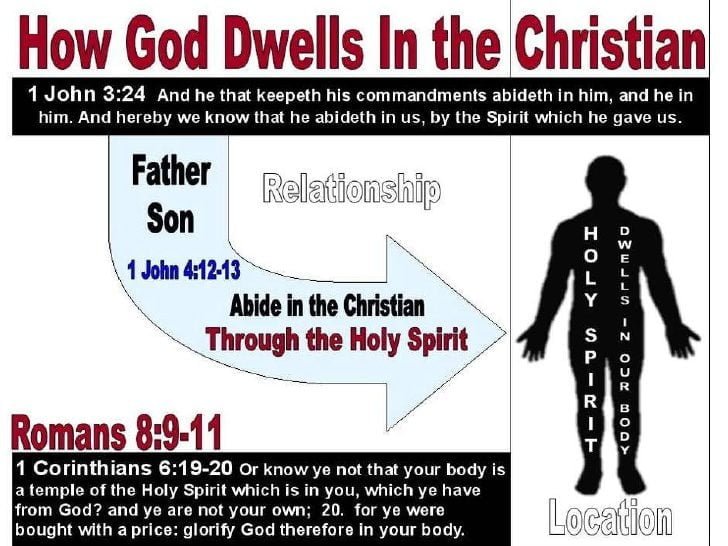
I would think that Christians would be able to handle anything thrown their way that contradicts Christian orthodoxy. The Holy Spirit lives within every believer, so certainly God living within a person should be sufficient protection against the evils of someone like Bart Ehrman.

The truth is, the Christian apologist KNOWS that MOST Christians know so little about the Bible that they would have great difficulty defending any of the basic, cardinal doctrines of the faith. The Church is filled with well meaning people, ignorant of their faith, but certain the Bible they hold in their hands is the truth, the inerrant, infallible, inspired truth.

And the apologist doesn’t plan to tell them any differently.

If you have not seen the Ehrman-Craig Debate here it is: