Originally posted in 2020. Edited, updated, and revised.
A boy dreams of being a major league baseball player someday. His parents were both athletes in their younger years, having had some success at the high school and college levels.
As a youth, he grows quickly, seemingly always a head taller than everyone else. He seems more agile than others his age. He is fast on his feet, quick with his mind, and excels at baseball.
Tee-Ball. Little League. Pony League. High School Baseball. College Baseball.
At every level, he excels.
Finally, his big day comes.
A Major League baseball team makes him their number-one draft pick.
It’s not long before he works his way through the minor leagues, and two years after being drafted he makes his major league début.
He is an instant sensation, quickly showing everyone that he is an all-star in the making.
One night, during a game where he went 4-4, hit a home run, drove in 3 runs, and stole a base, the TV broadcaster explains the greatness of this talented baseball player: He has a God-given talent to play like he does.
Nary a person will question such an utterance.
It seems if people excel in life, it is because God has blessed them or God has given thema special dose of talent.
Few are the people who excel in life. Most of us have a few things we are good at, and we try to nurture those things the best we can. We know we will not be remembered for any great feat, nor will the record books make any mention of us. We live, we love, we die, and then we are forgotten.
It would seem that God doesn’t want most of us to be standouts or superstars. God only has a chosen few he blesses with God-given talent.
How does the nontheist explain the baseball player mentioned above? If it is not God-given talent, what is it?
Genetics.
Home environment.
Passion.
Hard work.
Training.
Coaches.
Scouts.
Luck.
All of these are better explanations than God-given talent.
We demean people when we reduce their hard work to something a God allegedly gives them. Here’s what I know: the few things I am good at in life are the result of my diligence, commitment, and hard work. Granted, these things come easily for me, BUT I still work hard to cultivate and improve the talents I have. I suspect it is the same for you too.
I am all for giving credit to whom credit is due. However, God is not on the credit list.
The all-star baseball player helps propel the home team to the World Series. The team handily wins the series and the little boy, now a grown-up all-star player, is voted the series’ most valuable player.
As he is interviewed after the last game of the series, he says “I want to thank God . . .”
And I say to myself or the TV, No, I want to thank YOU. Thank you for playing hard. Thank you for hustling on every play. Thank you for working hard every day to be the very best player you could be.
This subject reminds me of my all-time favorite TV prayer. In the movie Shenandoah, Jimmy Stewart uttered the following prayer at the dinner table:
Lord, we cleared this land. We plowed it, sowed it, and harvested. We cooked the harvest. It wouldn’t be here, we wouldn’t be eatin’ it, if we hadn’t done it all ourselves. We worked Dog-bone hard for every crumb and morsel. But we thank you just the same anyway, Lord, for this food were about to eat. Amen.
And all the atheists said AMEN.
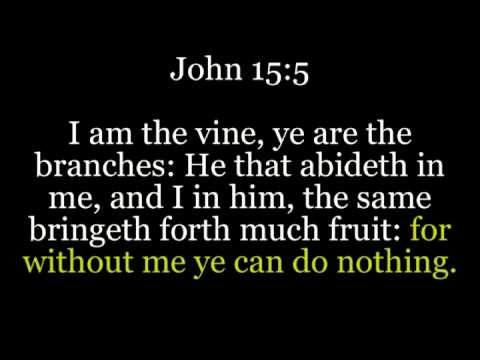
Many Christians have been taught that without God/Jesus they can do nothing. Their very breath and motor skills come from God. God feeds them, clothes them, gives them a job, gives them a spouse, gives them children, and gives them, well, gives them everything. Jesus said in John 15:5, without me ye can do nothing. Many Christians take this verse to mean that without Jesus they can do absolutely NOTHING. Technically, they don’t really believe this. After all, they do sin. Does God give them the power and ability to sin? Well, that’s different, Bruce. Sin comes from Satan or the flesh. God, who created everything and gives us the breath of life and the ability to exist, gets the credit for the good, but not the bad, right? Good=God, Bad=Satan and the Flesh. But, if God is sovereign, if he is the creator of everything, isn’t he also responsible for sin and the bad things that happen? I thought God has the whole world in his hands and the universe exists because of him?
I am all for giving credit to whom credit is due. If someone can show me God did this or that or God gave so-and-so talent, then I will gladly give God the credit. One question, though. Which God? How do we know it is the Christian God handing out the talent? Does the Christian God put a Made by Jesus label on those he gives talent to? So many questions . . .
Bruce Gerencser, 69, lives in rural Northwest Ohio with his wife of 48 years. He and his wife have six grown children and thirteen grandchildren. Bruce pastored Evangelical churches for twenty-five years in Ohio, Texas, and Michigan. Bruce left the ministry in 2005, and in 2008 he left Christianity. Bruce is now a humanist and an atheist.
Your comments are welcome and appreciated. All first-time comments are moderated. Please read the commenting rules before commenting.
Originally posted in 2015. Edited, corrected, and updated.
CERTAINTY
The fact, quality, or state of being certain: the certainty of death.
Something that is clearly established or assured.
SYNONYMS certainty, certitude, assurance, conviction. These nouns mean freedom from doubt. Certainty implies a thorough consideration of evidence: “the emphasis of a certainty that is not impaired by any shade of doubt” (Mark Twain). Certitude is based more on personal belief than on objective facts: “Certitude is not the test of certainty” (Oliver Wendell Holmes, Jr.). Assurance is a feeling of confidence resulting from subjective experience: “There is no such thing as absolute certainty, but there is assurance sufficient for the purposes of human life” (John Stuart Mill). Conviction arises from the vanquishing of doubt: “His religion . . . was substantial and concrete, made up of good, hard convictions and opinions. (Willa Cather).
Ah yes, Certainty.
One of the linchpins of Evangelical Christianity is certainty.
I KNOW in whom I have believed, said the Apostle Paul in 2 Timothy 1:12.
I have a KNOW–SO salvation, a line spoken by countless Baptist preachers on Sunday mornings.
Doubt is of the Devil.
Saved or Lost.
Heaven or Hell.
Truth or Error.
Infallibility.
Inerrancy.
A supernatural God who wrote a supernatural book that speaks of supernatural salvation.
You can know for sure_______ (fill in the blank with a theological premise).
If you died today would you go to Heaven?
If there is one error in the Bible then none of it is true.
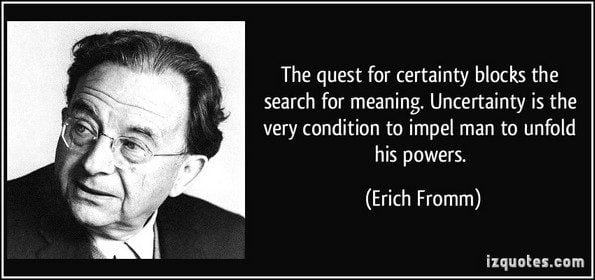
Yet, for all the Christian-speak about certainty, real life suggests that certainty is a myth.
We live in a world of chance, ambiguity, and doubt.
Will I die today?
Will I have a job tomorrow?
Will I be able to walk a year from now?
What does the future hold for my spouse, children, and grandchildren?
Climate change?
War?
Environmental degradation?
Pandemics?
Who will win the Super Bowl?
Will my garden flourish?
Will I get lucky tonight?
Life is anything but certain.
Evangelical Christians offload the uncertainties of this life to a certain future in Heaven with Jesus. No matter how uncertain the present is, Evangelicals can, with great certainty, KNOW Heaven awaits them.
One problem though . . .
No one KNOWS for sure there is a Heaven.
No one has been to Heaven and returned to Earth to give us a travel report (and those who say they have are either lying or out to make a quick buck).
The Heaven most Evangelicals believe in isn’t even found in the Bible. Most Christians have a mystical, fanciful, syrupy, non-Biblical view of Heaven.
Grandma really isn’t in Heaven right now running around praising Jesus. According to the Bible, Grandma is presently rotting in the grave awaiting the resurrection of the dead.
I don’t know if there is a Heaven.
I have my doubts, lots of doubts.
I’m inclined to think Heaven is a state of mind. Or West Virginia.
We all want to believe life matters.
Many of us want to believe that there is more to life than what we now have.
We want to believe there will someday be a world without pain, suffering, or death.
But, what if there is not?
What if this is it?
What if we truly only have hope in this life?
Should we not make the most of what we have NOW?
Perhaps we should take seriously the Bible’s admonition not to boast about tomorrow because we don’t know what the day will bring.
Heaven will wait.
Live.
You and I are given one life and it will soon be past.
Live.
Bruce Gerencser, 69, lives in rural Northwest Ohio with his wife of 48 years. He and his wife have six grown children and thirteen grandchildren. Bruce pastored Evangelical churches for twenty-five years in Ohio, Texas, and Michigan. Bruce left the ministry in 2005, and in 2008 he left Christianity. Bruce is now a humanist and an atheist.
Your comments are welcome and appreciated. All first-time comments are moderated. Please read the commenting rules before commenting.
Originally posted in 2015. Edited, updated, and expanded.
The Bible gives some pretty good advice about counting the cost in Luke 14:28-30:
For which of you, intending to build a tower, sitteth not down first, and counteth the cost, whether he have sufficient to finish it? Lest haply, after he hath laid the foundation, and is not able to finish it, all that behold it begin to mock him, Saying, This man began to build, and was not able to finish.
Who starts a building project without first counting the cost? The key phrase here is counting the cost. Every choice we make has a consequence. I think a loose definition of Newton’s Third Law of Motion applies here: for every action, there is an equal and opposite reaction. Foolish is the person who does not consider the consequences of saying for the first time to family, friends, colleagues, and acquaintances, I AM AN ATHEIST.
When I left Christianity and the ministry in 2008, my wife came along with me. Polly was a few steps behind, but close enough that we could hold hands. We spent many hours reading books and having long discussions about the past, the Bible, and Christianity in general. Dr. Bart Ehrman was nightly pillow talk for many months. When we finally came to the place where we said to one another “We are no longer Christians,” we knew that telling our family, friends, and acquaintances would cause a huge uproar. What should we do?
Polly decided to take the quiet approach, keeping her thoughts to herself. When asked, she would answer and try to explain, but if people didn’t ask, she felt no obligation to out herself. She still operates by that principle. There are people she works with who likely think she still goes to church on Sunday and is a fine Christian woman. Several years ago, a woman Polly had worked with for 20 years asked her if she was going to church on Easter. Polly replied, no. Her co-worker then asked, So do you go to church? Polly replied, No. And that was that. I am sure the gossip grapevine was buzzing. Did you know Polly doesn’t go to church? Why, her husband was a pastor! And they don’t go to church? Never mind that the woman asking the questions hadn’t been to church in over a decade. She stays home, watches “Christian” TV, and sends money to the TV preachers she likes.
I took the nuclear approach. I wrote an open letter to my friends, family, and former parishioners. This was totally in character for me. I am an all-in kind of guy. In Dear Family, Friends, and Former Parishioners, I wrote:
I have come to a place in life where I can no longer put off writing this letter. I have dreaded this day because I know what is likely to follow after certain people receive it. I have decided I can’t control how others will react to this letter, so it is far more important to clear the air and make sure everyone knows the facts about Bruce Gerencser.
I won’t bore you with a long, drawn-out history of my life. I am sure each of you has an opinion about how I have lived my life and the decisions I have made. I also have an opinion about how I have lived my life and the decisions I made. I am my own worst critic.
Religion, in particular Baptist Evangelical and Fundamentalist religion, has been the essence of my life from my youth up. My being is so intertwined with religion that the two are quite inseparable. My life has been shaped and molded by religion and religion touches virtually every fiber of my being.
I spent most of my adult life pastoring churches, preaching, and being involved in religious work to some degree or another. I pastored thousands of people over the years, preached thousands of sermons, and participated in, and led, thousands of worship services.
To say that the church was my life would be an understatement. As I have come to see, the Church was actually my mistress, and my adulterous affair with her was at the expense of my wife, children, and my own self-worth.
Today, I am publicly announcing that the affair is over. My wife and children have known this for a long time, but now everyone will know.
The church robbed me of so much of my life and I have no intention of allowing her to have one more moment of my time. Life is too short. I am dying. We all are. I don’t want to waste what is left of my life chasing after things I now see to be vain and empty.
I have always been known as a reader, a student of the Bible. I have read thousands of books in my lifetime and the knowledge gained from my reading and studies has led me to some conclusions about religion, particularly the Fundamentalist, Evangelical religion that played such a prominent part in my life.
I can no longer wholeheartedly embrace the doctrines of the Evangelical, Fundamentalist faith. Particularly, I do not believe in the inerrancy of Scripture nor do I accept as fact the common Evangelical belief of the inspiration of Scripture.
Coming to this conclusion has forced me to reevaluate many of the doctrines I have held as true over these many years. I have concluded that I have been misinformed, poorly taught, and sometimes lied to. I can no longer accept as true many of the doctrines I once believed.
I point the finger of blame at no one. I sincerely believed and taught the things that I did and many of the men who taught me were honorable teachers. I don’t blame those who have influenced me over the years, nor do I blame the authors of the many books I have read. Simply, it is what it is…
The backlash from my letter was immediate and severe. Keep in mind I was not yet an atheist. All I said was that I could no longer embrace the teachings of Christianity. I was agnostic when it came to the God question. I still had lots of doubts and questions.
The reaction of my family and Polly’s family was the hardest to bear. For the most part, they said nothing. To this day, some family members, including Polly’s late parents, have not said one word to us about our defection from Christianity. It’s like there’s a huge elephant in the room that no one can see but us. Sixteen years of silence.
My friends and fellow pastors took to writing me letters, sending me emails, visiting me, preaching about me, and having prayer meetings focused on praying me back into the fold. The level of nastiness and judgmentalism was overwhelming. During this time, a long-time friend and parishioner turned pastor came to see me. I wrote about his visit in A Letter to a Friend. In the letter I wrote:
You got my letter.
I am certain that my letter troubled you and caused you to wonder what in the world was going on with Bruce.
You have been my friend since 1983. When I met you for the first time, I was a young man pastoring a new Church in Somerset, Ohio. I remember you and your dear wife vividly because you put a $100 bill in the offering plate. Up to that point we had never seen a $100 bill in the offering plate.
And so our friendship began. You helped us buy our first Church bus. . .You helped us buy our Church building. . . In later years you gave my wife and me a generous gift to buy a mobile home. It was old, but we were grateful to have our own place to live in. You were a good friend.
Yet, our common bond was the Christianity we both held dear. I doubt you would have done any of the above for the local Methodist minister, whom we both thought was an apostate.
I baptized you and was privileged to be your pastor on and off over my 11 years in Somerset. You left several times because our doctrinal beliefs conflicted, you being an Arminian and I being a Calvinist.
One day you came to place where you believed God was leading you to abandon your life work, farming, and enter the ministry. I was thrilled for you. I also said to myself, “now Bill can really see what the ministry is all about!”
So you entered the ministry and you are now a pastor of a thriving fundamentalist Church. I am quite glad you found your place in life and are endeavoring to do what you believe is right. Of course, I would think the same of you if you were still farming.
You have often told me that much of what you know about the ministry I taught you. I suppose, to some degree or another, I must take credit for what you have become. (whether I view it as good or bad)
Yesterday, you got into your Lincoln and drove three plus hours to see me. I wish you had called first. I had made up my mind to make up some excuse why I couldn’t see you, but since you came unannounced, I had no other option but to open and the door and warmly welcome you. Just like always . . .
I have never wanted to hurt you or cause you to lose your faith. I would rather you not know the truth about me than be hurt in any way.
But your visit forced the issue. I had no choice.
Why did you come to my home? I know you came as my friend, but it seemed by the time our three-hour discussion ended, our friendship had died and I was someone you needed to pray for, that I might be saved. After all, in your Arminian theology there can be no question that a person with beliefs such as mine has fallen from grace. . .
During the first few months after my initial letter, I heard from Laura Hardman, the wife of Evangelist Don Hardman. She bared her fangs and let me know that it was quite evident to her that I NEVER was a Christian.
Almost two years ago I sent my friends, family and former parishioners a letter concerning my decision to deconvert from Christianity. I wish I could say my letter was well received. I wish I could say that people told me they supported my decision. I wish I could say I have been treated in a kind and respectful manner.
But I can’t.
A longtime friend of mine, Bill Beard, pastor of Lighthouse Memorial Church, drove over three hours to my home to talk (argue) with me about my deconversion. He and I had been friends for over 25 years.
Laura Hardman, wife of Evangelist Don Hardman, wrote me a scathing letter telling me that I never was a real Christian, I had been friends with the Hardmans for over 20 years. I wrote them back and I have not heard from them since.
Friends of mine for over 40 years, missionaries with Child Evangelism Fellowship, wrote to me and told me I was under the influence of Satan. They sent me literature to read. I returned it with a letter of my own. They never wrote back.
I stumbled upon a forum discussion about me. They were discussing what to do about Bruce.
I have received numerous emails from former parishioners telling me of the error of my ways. Some of them are deeply troubled about how this could happen. How could their pastor now be an agnostic who doesn’t believe in the Bible or God?
A few former parishioners took it upon themselves to tell me their conclusions about me. Many of them mentioned my reading habits. They told me I read too many books and they suggested I just read the Bible.
Two former parishioners wrote to tell me that though they disagreed with me, they loved me and were my friend. I really appreciated their love and friendship.
I hear bits and pieces of the gossip about me that is floating around Bryan and Defiance — people questioning whether or not I was ever a Christian. Some raise issues about my mental stability. One thing they never do? Talk to me personally.
My adult children have to field questions at work and college about their apostate father. Once again, the questioners never talk to me personally.
It is not much better on the family front.
Silence is how family has decided to deal with me. It’s like I never wrote the letter about deconverting from Christianity. Behind the scenes there is a lot of gossip about me and what to do about the Bruce matter. Last Christmas, the patriarch of the family, a pastor of 40 plus years, was intent on confronting me about my apostasy. I am grateful my mother-in-law quashed his plan to confront me. It would have been ugly. I mean ugly.
Polly decided that we could no longer do Christmas at her parent’s home. The stress and undercurrent are such that it is impossible to “enjoy” time with the family during the Christmas holiday (we do go to visit when the extended family is not there).
I wish I could tell you that I came through all of this unscathed, but I can’t. I decided to seek out a counselor two years ago. I knew I needed to talk to someone about the pain and deep wound I was carrying as a result of my defection from Christianity. I still see a counselor every few weeks. His work with me has been extremely helpful and has enabled me to move forward and away from the past. The scars remain. The viciousness of people who say they are followers of the man who said turn the other cheek and love your enemy has scarred me. Every time a Fundamentalist spews his bile on this blog, I am reminded of the deep wound I carry. I am also reminded that I am glad to be free from such an ugly, vile, and vicious belief system and way of life.
So how are things now?
Some family members are still silent. Perhaps they will never ask, inquire, or attempt to engage me in a discussion. I think some people are intimidated by me, so they avoid the elephant in the room. Others fear I might cause them to doubt or lose their faith, so they avoid all contact with me. I have come to accept this. I wish they would talk to me, but I know I can’t force the issue.
All of my Christian friends have abandoned me. I don’t blame them. I have come to see that our friendship was held together by fidelity to certain beliefs. Remove the beliefs and the friendship dissolves. If I came back to the Christian faith, I would instantly have dozens of friends. I would be lauded as the Preacher reclaimed From the Devil’s Clutches. Hmm . . . there is money to be made . . .
If I had to do it all over again, would I do it the same way? Would I write THE letter? Probably. My experiences have given me knowledge that is helpful to people who contact me about their own doubts about Christianity. I am often asked, what should I do? Should I tell my spouse? Should I tell my family, friends, or coworkers?
My standard advice is this: Count the cost. Weigh carefully the consequences. Once you utter or write the words I AM AN ATHEIST, you are no longer in control of what happens next. Are you willing to lose your friends, destroy your marriage, or lose your job? Only you can decide what cost you are willing to pay.
I know there is this notion that “Dammit, I should be able to freely declare what I am,” and I agree with the sentiment. We should be able to freely be who and what we are. If we lived on a deserted island, I suppose we could do so. However, we are surrounded by people. People we love. People we want and need in our life. Because of this, it behooves (shout out to the KJV) us to tread carefully.
I hope some of you will find this post helpful. My deepest desire is to help you on your journey. I am hoping that my walking before you can be of help to you as you decide how best to deal with and embrace your loss of faith.
This blog is here to remind those struggling with leaving Christianity or who have already left Christianity, YOU ARE NOT ALONE.
Bruce Gerencser, 69, lives in rural Northwest Ohio with his wife of 48 years. He and his wife have six grown children and thirteen grandchildren. Bruce pastored Evangelical churches for twenty-five years in Ohio, Texas, and Michigan. Bruce left the ministry in 2005, and in 2008 he left Christianity. Bruce is now a humanist and an atheist.
Your comments are welcome and appreciated. All first-time comments are moderated. Please read the commenting rules before commenting.
When I started attending Evangelical churches in the late 1950s, hymns, hymns, and only hymns were the songs of the church. In the 1960s, southern gospel music started to influence what was sung on Sunday mornings. From there came the Gaither era, the contemporary Christian music era (CCM), and finally the praise and worship era. Drums, guitars, praise teams, and worship leaders are standard fare in churches now. The Great Generation tends to not like it, millennials think it is boring, and baby boomers say, FINALLY, rock music in the church.
Over the last eight years I spent in the ministry, the churches I pastored used a blended worship approach. We’d sing hymns, but we also sang a lot of praise and worship songs. My three oldest sons played bass and guitar, so they became the church band. At the time, I thought it was wonderful, but now that I am years removed from singing love songs to Jesus, I have a far different opinion.
Just for fun, I clicked the Praise and Worship channel on Rdio — a now defunct music streaming service. I listened to many of the songs we sang years ago, mixed in with new praise and worship songs. As I listened to the instrumentation, I couldn’t help but notice how the songs stirred my emotions. It’s the instrumentation that gives the syrupy, Jesus-is-your-boyfriend lyrics their sexual appeal. I thought, these songs are love-making songs. And that is exactly why so many Christians love them. Hymns generally appeal to the intellect. Praise and worship music makes no pretense of appealing to the intellect. The music is meant to agitate emotions, putting listeners in a frame of mind that makes it easy for Jesus to “commune” with believers.
Many praise and worship songs are little more than aids for spiritual masturbation. Often, the lyrics are shallow and repetitive, focusing on self and not God. Some of the lyrics are so shallow that just by swapping a few words, you can change the song from a love song to Jesus to a love song to your boyfriend, girlfriend, or spouse, Take the song (Trading My Sorrows) Yes Lord by Matt Redman. The next time you are making love to your significant other, speak or sing these lyrics, changing the word Lord to the name of your partner:
We say yes lord yes lord yes yes lord Yes lord yes lord yes yes lord Yes lord yes lord yes yes lord amen
Make sure you sing it loudly so the neighbors will know it is your lucky night. 🙂
The draw of praise and worship music is its emotional appeal. Visit a local we are the hippest church in town and observe the effect the music has on parishioners. All around you will be people dreamily lost in the love of Jesus. Some will be so enthralled that they begin making love to Jesus, not caring a bit that they are participating in the equivalent of a YouPorn video. It’s emotional sex with your clothes on.
On one hand, the effect this music has on parishioners reflects the power of music to move our emotions. When Polly and I attended a Darius Rucker concert years ago, both of us noticed the emotional connection attendees made with the music. Both of us were stirred emotionally by Rucker’s songs. The problem with praise and worship music is that it is sold as a medium to get closer to God. Countless Evangelicals go to church on Sunday to get their emotional fix. Forget the sermon. They are there to wrap their arms around Jesus and do a slow dance with the King of Kings and Lord of Lords. It is in this highly emotional state that parishioners are open to whatever their pastor is selling that day. While worship leaders will likely object and say that the music prepares believers to hear from the Lord, I am convinced the music is used, whether purposely or ignorantly, to weaken psychological defenses and make it easier for parishioners to “hear” what the pastor, uh I mean God, is trying to tell/sell them.
The music puts parishioners in an altered state. This is by design, and any pastor or worship leader who tells you differently is lying. Even with hymns, the songs can elicit a specific emotional response. The ebb and flow of the average worship service is a highly designed and scripted affair meant to achieve a certain goal. If this is not true, why don’t churches start their services with the sermon? Instead, the music is used to open the hearts (minds) of listeners to whatever their pastors are going to say. By manipulating emotions, pastors have a greater chance to get those under the sound of their voice to do what they want them to do. Again, if this is not so, why do most pastors and worship leaders choose songs that perfectly dovetail with the sermon? Why not take requests from the floor if what song is sung doesn’t matter?
But it does matter. And it is not just the music. Modern church services have turned into tightly scripted affairs. Sound, lighting, and program structure are used to set the mood; no different from me coming home and finding the lights dimmed, candles lit, rose petals on the floor, and the sweet voice of Karen Carpenter quietly wafting through the air. The former is meant to help the parishioner get lucky with Jesus. The latter is meant to remind Bruce that sometimes the ballgame doesn’t come first. 🙂
Even in Independent Fundamentalist Baptist (IFB) churches — a sect known for hating contemporary music — certain songs are used to elicit emotional responses from the congregants. The goal is the same regardless of the style of music. Through emotional manipulation, the words of pastors are more easily received. In most cases, little harm is done. But, sometimes, by manipulating the hearers’ emotions, the songs lead congregants to make decisions or do things they wouldn’t have ordinarily done. Those slobbering IFB preachers were right about secular music. Certain “Satanic” songs can lower inhibitions and pave the way for a romp in the sack with your boyfriend/girlfriend. Such evil! But what they don’t tell you is that certain “godly” songs can lower inhibitions too, and pave the way for a romp in the sack with Jesus.
Bruce Gerencser, 69, lives in rural Northwest Ohio with his wife of 48 years. He and his wife have six grown children and thirteen grandchildren. Bruce pastored Evangelical churches for twenty-five years in Ohio, Texas, and Michigan. Bruce left the ministry in 2005, and in 2008 he left Christianity. Bruce is now a humanist and an atheist.
Your comments are welcome and appreciated. All first-time comments are moderated. Please read the commenting rules before commenting.
Recently, an Evangelical woman named Kelly Benson left the following comment on the post titled, An Open Letter to Pastor Tom Hauser, Global River Church (written by my friend Suzanne). I have edited Benson’s comment due to her lack of proper spelling and punctuation use:
I’m a member of Global River church. I’m not going to blast you for putting this up. It’s how you feel and your experiences. I don’t know [the] full detail of what happened, but I can tell you it’s not like that now. I don’t know how it was then, I know, speaking from personal experience, I have been set [free] from [demonic] oppression by Global River Church. This is what [I’ll] say: that my God, your God, my Jesus, and your Jesus, are a God of second and third [or so] chances. They [God? The Church?] don’t give up on you, and maybe this experience [of yours] had to happen to you to make you see [that] he [Suzanne’s husband, Jim] needed a doctor. Maybe, I don’t know. I just know we are no longer [affiliated with] the Vineyard [denomination]. We have come a long way from [where?] we are now. [We] always have been God fearing and God loving, and whatever your experience, I hope you get to see God in his true light and majesty. [If you do,] you will never go back. It [God’s love] is the most amazing love there is. God bless you always, and I hope you’re in his love now.
I will leave it to Suzanne to respond to Benson’s statements about Global River Church. I want to focus on several claims Benson makes about God, Jesus, and second/third chances.
First, Benson assumes that her God and Suzanne’s God are one and the same; that her God is the one true and living God. However, as anyone who has studied Christianity in general and Evangelicalism in particular, I know Christians worship a plethora of deities. Ask a group of Evangelicals to define and describe “God” and you will end up with numerous answers. The Bible says that there is one Lord, one Faith, and one Baptism, but a close examination of Evangelicalism reveals many Lords, many Faiths, and many Baptisms. Benson does what many Christians do. She assumes that her personal beliefs and experiences apply to everyone.
Benson claims that if you see God in his true light and majesty you will never go back. Yet, countless readers of this blog testify that they have seen God in his true light and majesty, yet they came to a place in their lives where they realized that the God whom they thought they saw and experienced was a myth. People can and do walk away from Christianity. Pastors, evangelists, deacons, missionaries, Sunday school teachers, Christian school teachers, Christian college professors, and other people whose lives were wholly committed to following Jesus are now unbelievers today. As studies continue to show, Evangelicalism is bleeding adherents left and right. Instead of spouting cheap cliches, Benson might want to focus on why so many devoted followers of Jesus are exiting the church stage left.
I want to focus in conclusion on Benson’s claim that God is a God of second and third chances. This is a claim often made by Christians, but is it true?
Benson presupposes the existence of her peculiar version of God, and that her God gives people second and third chances when they break his law or disobey him. There’s no possible way for her to know whether this claim of hers is true. By faith, she believes that it is, but it is impossible for her to know for sure.
If we go to the Biblical text, we can find numerous instances where God did not give people second or third chances. Take Judas. Did God give him a second chance? No. Or Uzzah — the man who steadied the Ark of the Covenant with his hand and God struck him dead for touching the Ark? Or Ananias and Sapphira? Both of them told a lie before the church about the sale of property, and God struck them dead on the spot. In Genesis 1-3, we find Adam and Eve breaking the law of God by eating fruit from the tree of knowledge. Did God give them (or the human race) a second chance? No. Did God give Lucifer and his fellow angels who rebelled against him and were cast out of Heaven a second chance? No.
I could go on and on with illustrations from the inspired, inerrant, infallible Word of God, proving that Benson’s deity is as Richard Dawkins suggests:
The God of the Old Testament is arguably the most unpleasant character in all fiction: jealous and proud of it; a petty, unjust, unforgiving control-freak; a vindictive, bloodthirsty ethnic cleanser; a misogynistic, homophobic, racist, infanticidal, genocidal, filicidal, pestilential, megalomaniacal, sadomasochistic, capriciously malevolent bully.
And if someone suggests that they worship Jesus or the God of the New Testament, may I remind them that Jesus is God, and that he is the same yesterday, today, and forever; that the book of Revelation records the violence, carnage, and bloodshed Jesus will one day pour out on billions of people — many of whom never had a first chance, let alone a second chance.
Benson and her fellow church members are likely decent people who grant others second and third chances. However, the God they worship is not.
Bruce Gerencser, 69, lives in rural Northwest Ohio with his wife of 48 years. He and his wife have six grown children and thirteen grandchildren. Bruce pastored Evangelical churches for twenty-five years in Ohio, Texas, and Michigan. Bruce left the ministry in 2005, and in 2008 he left Christianity. Bruce is now a humanist and an atheist.
Your comments are welcome and appreciated. All first-time comments are moderated. Please read the commenting rules before commenting.
Evangelicals want everyone to believe that they worship Jesus; not just any Jesus, either. Their Jesus is the one and only Lord of Lords and King of Kings. Their Jesus is special and unique, unlike the Jesus worshiped by Mormons, Jehovah’s Witnesses, Roman Catholics, or revered by Muslims and other non-Evangelical sects.
Both songs reference Jesus, yet the Jesus of Sovereign Grace Music, and that of Bill and Gloria Gaither are very different from one another. Sovereign Grace is Calvinistic, whereas the Gaithers belong to an Arminian sect. The Jesus of the Calvinists and the Jesus of the Arminians are two very different Sons of God. Oh, outwardly they appear the same, but doctrinally they are very different. Mere semantics? I think not. Evangelical sects build complex systems of theology around their peculiar versions of Jesus. These beliefs can’t help but color how believers view the Savior of the world (to the Gaithers) or the Savior of the elect (to the Calvinists). And it’s not just Evangelicals who do this. Liberal/progressive Christians have a very different Jesus from that of Independent Fundamentalist Baptists (IFB). Which Jesus is the right one? How could we possibly know who possesses the Jesus who alone can save us from our sins?
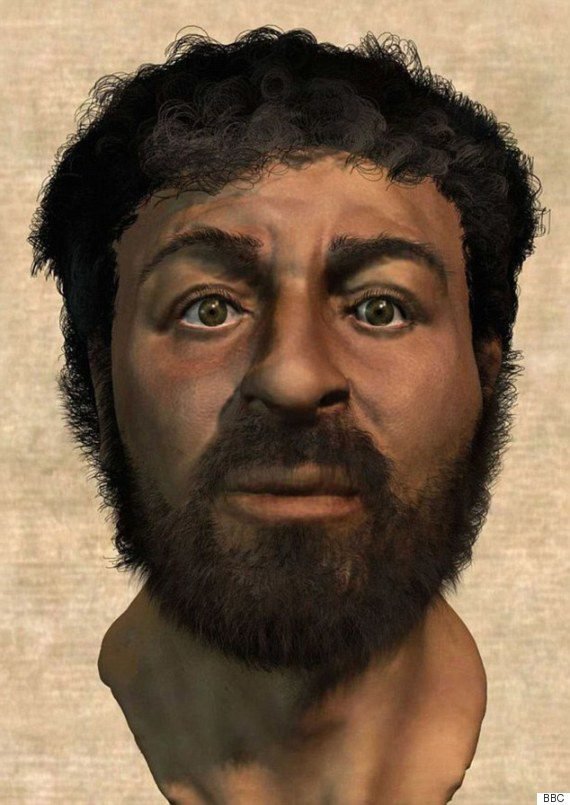
Worse yet, individual churches, pastors, and congregants shape and mold Jesus into their own version of the Son of God. Instead of there being one Jesus for all, there are countless Jesuses, each eerily looking like their creators.
The next time you have a discussion with an Evangelical who is preaching “Jesus” to you, perhaps it would be interesting for you to ask them “which” Jesus? Ask them how their Jesus compares to the one found within the pages of Matthew, Mark, Luke, and John. Any cursory reading of the Bible reveals that whomever and whatever the Jesus of the gospels might have been, he bears little resemblance to the Jesuses of today. And that’s okay. Is that not the power of religion; its ability to adapt, change, and transform over time? All I want is for Evangelicals to admit, in particular, that Jesus is NOT the same yesterday, today, and forever; that he is a chameleon of sorts.
I find it amusing when Evangelicals attempt to assert that their Jesus alone is the “right” Jesus, and that all other Jesuses are false. Take our Fundamentalist friend Spaniard VIII. In a post titled, Satan Is After You To Destroy You, Sp8 gives “examples of a false Jesus Christ that comes from the teachings of demons through false religions.”
Sp8 believes that he worships the one true Jesus. He even gives a checklist for readers to follow to determine if they are worshiping a demonic Jesus, Do you believe that (my answers in parentheses):
Jesus is not God (yes)
Jesus didn’t die on the cross (no)
Jesus didn’t rise from the dead (yes)
Jesus wasn’t perfect (yes)
Jesus was not born from a virgin (yes)
Jesus was not the Son of God (yes)
Jesus is not the only way to Heaven (yes)
Jesus is another god apart from the Father (yes)
A denial of the Trinity, the Father, the Son, and the Holy Spirit all three being Yahweh (yes)
Oh my God! I just learned that I believe in a false Jesus! I have been deceived by Satanic forces out to send me to the Lake of Fire for eternity. Hey, I did answer the question “Jesus didn’t die on the cross” correctly. I am of the opinion that we have sufficient historical evidence for the execution of Jesus on a Roman cross (and, no, I don’t want to debate this issue). This claim makes rational sense to me. However, the rest of Sp8’s assertions are faith claims. Sp8 just wants us to take his word for it that he worships the right Jesus. Doubt this naked assertion of his? Burn in Hell!
There’s no such thing as a monolithic Jesus. Two thousand years of Christian church history, along with the establishment and proliferation of thousands of contradictory Christian sects, have birthed countless Westworld-like Jesuses, each programmed to look, believe, and act like their creators.
Which Jesus, if any, do you worship?
Bruce Gerencser, 69, lives in rural Northwest Ohio with his wife of 48 years. He and his wife have six grown children and thirteen grandchildren. Bruce pastored Evangelical churches for twenty-five years in Ohio, Texas, and Michigan. Bruce left the ministry in 2005, and in 2008 he left Christianity. Bruce is now a humanist and an atheist.
Your comments are welcome and appreciated. All first-time comments are moderated. Please read the commenting rules before commenting.
I grew up in Independent Fundamentalist Baptist (IFB) churches in the 1960s and 1970s. I later attended an IFB college — Midwestern Baptist College in Pontiac, Michigan. Next to evangelizing the lost, preaching against “sin,” and trumpeting the soon return of Jesus, IFB preachers love to talk about cults.
The IFB church movement generally believes themselves to be God’s true church. Some preachers — called Landmark Baptists or Baptists Briders — believed they could, much like Roman Catholics, trace their church’s lineage back to Jesus and the New Testament. While most IFB preachers will grudgingly admit that some other Christian sects include True Christians®, many non-IFB groups are labeled cults. Seventh Day Adventists? Roman Catholics? Mormons? Church of Christ? Charismatics? Pentecostals? Jehovah’s Witnesses? Calvinists? Cults, the lot of them.
As an IFB pastor, I thought it important to teach church members about the teachings of cults. Sunday School was a perfect place to introduce teaching about cults. Congregants loved learning about cults. After all, learning about the heretical beliefs of cults only reinforced the notion that their pastor and church had the “right” beliefs. What was never considered was the fact that Christianity itself is a cult, as is the IFB church movement.
My teaching presupposed that my interpretation and understanding of the Bible were equivalent to the faith once delivered to the saints. Thus, it was easy to “prove” that certain sects were cults. Just compare their beliefs to mine. See! There’s all the evidence you need to prove that baby-baptizing, Virgin-Mary-worshiping Catholicism is a cult. That’s why I could go to a town of 1,600 people that had two Catholic churches, a Methodist Church, a Lutheran Church, and a Church of Christ, and start a new church — a true New Testament Baptist congregation. I was convinced that I knew the truth, and I was duty-bound to deliver the residents of Somerset and Perry County of the hold cults had on their souls. Especially those fish-eaters.
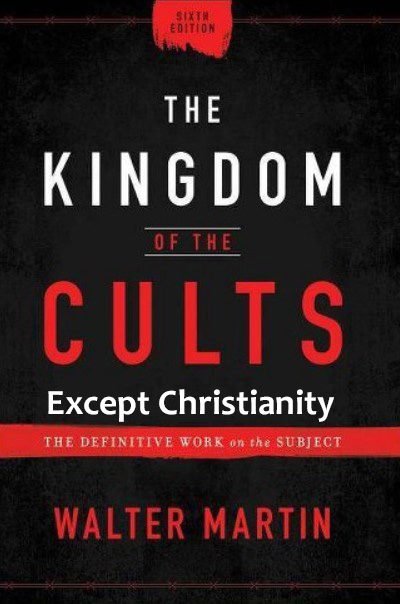
People raised in IFB churches have likely read or heard of Walter Martin’s seminal work, The Kingdom of the Cults. This book takes a prominent place on the bookshelves of many IFB preachers. It was a necessary tool in the raging war against cults. Ironically, Martin did not believe the Seventh Day Adventist Church was a cult.
Two stories come to mind from my days as a cult-busting preacher. One year, I had been teaching on Mormonism. During the class, a visitor stood up and challenged what I was teaching. Unbeknownst to me, this man had gotten wind of my teaching and decided to visit our church so he could put in a good word for Mormonism. Needless to say, his attempt to set me straight didn’t go well. My retort was simple, THE BIBLE SAYS! That was always my answer when my preaching or teaching was challenged.
Later in my ministry, as pastor of Our Father’s House in West Unity, Ohio, a Seventh-Day Adventist man and wife attended our church. They were friends with a couple who periodically attended Our Father’s House. By this time, I was much more open-minded towards other sects. In fact, the front doors of our church building said, “The Church Where the Only Label that Matters is Christian.” I was friends with the local Church of Christ preacher, and a member of the local ministerial group — a cardinal sin back in my IFB days.
I believed, at the time, that this Seventh-Day Adventist couple genuinely wanted “Christian fellowship.” One Sunday evening, I learned differently. I don’t remember what I had preached on that night, but afterward, as was my custom at that time, I asked if there were any questions? The Seventh-Day Adventist man stood up and started condemning my preaching. I was shocked by his behavior. I told him that he was wrong to assume that we believed what we did out of ignorance. We went back and forth for a few moments, and then I put an end to our “discussion.” This couple never came back. I suspect that they were there to infiltrate and evangelize instead of to bond over food, fun, and fellowship.
Both of these confrontations troubled me, not because I thought my beliefs were wrong, but because I never dreamed of visiting a different church so I could evangelize or set them straight. Back in the 1980s, I preached a series of messages about the Church of Christ, showing that they were a cult that preached a false gospel. On Mondays, I would make cassette copies of the sermons and mail them to Church of Christ preachers in a four-county area. This, of course, provoked all sorts of outrage. I received several cassette sermons in the mail from Church of Christ preachers. Their sermons were their attempt to expose the Baptists as a cult! How dare they! I was a member of True Church®. In the 1800s, the Baptists expelled Campbellites — Alexander Campbell and his father Thomas Campbell were the founders of the Church of Christ (along with Barton Stone) — from their midst for heresy. Cults, the lot of them.
What I never considered is that I too was a cultist; that Christianity, in general, was a cult. According to the TheSage Dictionary, a cult is a system of religious beliefs and rituals; cultists are followers of an exclusive system of religious beliefs and practices. Pretty well describes Christianity in general, and the IFB church movement in particular, does it not? I could see the “cult” in every sect but my own.
Want to enrage Evangelical/IFB preachers? Call them cultists. Out will come their Bibles, proof-texts, and evidence that “proves” that their brand of Christianity is that which was founded by Jesus, John the Baptist, and the Apostle Paul. Blinded by arrogance and hubris, they cannot see that their sects and churches are cults too.
To these True Christians® I say: by all means, continue to fight among yourselves. Keep waging internecine warfare against each other. Keep slinging words such as cult or heretic. You are doing good work, exposing the bankruptcy of your beliefs.
Bruce Gerencser, 69, lives in rural Northwest Ohio with his wife of 48 years. He and his wife have six grown children and thirteen grandchildren. Bruce pastored Evangelical churches for twenty-five years in Ohio, Texas, and Michigan. Bruce left the ministry in 2005, and in 2008 he left Christianity. Bruce is now a humanist and an atheist.
Your comments are welcome and appreciated. All first-time comments are moderated. Please read the commenting rules before commenting.
The Bible is clear on this subject. The inspired, inerrant, infallible Word of God that millions of Evangelicals SAY they believe says:
Be ye not unequally yoked together with unbelievers: for what fellowship hath righteousness with unrighteousness? and what communion hath light with darkness? And what concord hath Christ with Belial? or what part hath he that believeth with an infidel? And what agreement hath the temple of God with idols? for ye are the temple of the living God; as God hath said, I will dwell in them, and walk in them; and I will be their God, and they shall be my people. Wherefore come out from among them, and be ye separate, saith the Lord, and touch not the unclean thing; and I will receive you. (2 Corinthians 6:14-17)
2 Corinthians 6:14-17 is not an ambiguous or hard-to-interpret passage of Scripture. It means exactly what it says. Believers (Christians, followers of Jesus) should not be unequally yoked (joined) together with unbelievers. The Bible describes marriage this way: “Therefore shall a man leave his father and his mother, and shall cleave unto his wife: and they shall be one flesh.” (Genesis 2:24)
One would think that bought-by-the-blood, Bible-believing Evangelicals would, because of their love for Jesus, obey what God has commanded. God calls on every single Christian to be just like Tim Tebow: a virgin until the day they marry a fellow believer of the OPPOSITE sex.
But, in another, all-too-typical, example of the fact that Evangelicals only believe the Bible when it fits their lifestyle and ignore it or explain it away when it doesn’t, the Christian Partner for Life website (website is no longer active) gives this advice:
Finding your husband or wife can be quite a process. Often, whether through school or elsewhere, we meet people in our lives who are not committed Christians. A common question that we receive is: “Is it OK to date someone who is not committed to Christianity?” While many advisors and ministers that we encounter have said definitively “NO,” we think it is important to have a more secular view of the situation. If you have a great connection with someone, and they would potentially want to explore raising your future family with predetermined beliefs, we see no reason to object . . .
We believe that marrying a non-Christian or a non-practicing Christian is not a definitive “no” answer, as is commonly taught. Would you rather stay single or marry a loving and wonderful person who is agnostic of Christian beliefs? If this future partner is devoted to you and has a great moral compass, we think the possibility of marriage should very much exist. If a relationship is based upon love, trust and mutual respect, there is a good chance that a marriage will succeed, regardless of religion.
The caveat to this question becomes whether your future spouse is willing to raise a family the way that you would like to. Would your future spouse be open to raising your children as committed Christians? If so, we think that a relationship could work . . .
In other words, ignore the Bible.
The Bible says that nonbelievers are dead in trespasses and sin. Unbelievers are at variance with God, vain in their imaginations, and haters of God. Unbelievers are really bad people, After all, their father is the Devil himself.
Yet, John at Christian Partner for Life says: “If this future partner is devoted to you and has a great moral compass” then perhaps it would be okay to marry them. How can unbelievers have a great moral compass? According to the Bible, they can’t.
Here’s what I think . . . unbelievers are hotter . . . and baby, when it comes to chasing after hotness, let the Bible be damned darned.
All silliness aside, John’s post at Christian Partner for Life is just another reminder that Evangelicals, for all their bluster about the Bible being truth, really don’t believe it.
Now for MY marriage advice for unbelievers.
Actually, the Bible gives some pretty good advice here. In most circumstances, it would be unwise for an unbeliever to marry an Evangelical. Unless the believer is willing to live as an unbeliever, then it is probably not a good idea to marry someone who doesn’t believe in or worship God. I can hear the howling now. Evangelicals everywhere are screaming, HOW DARE YOU EXPECT A BELIEVER TO DENY THEIR FAITH AND LIVE AS AN UNBELIEVER!! I bet it seemed okay to most Evangelicals when John proposed the very same thing when he suggested making sure the unbeliever would be willing to raise future children as believers. Evangelicals seem to always expect OTHERS to compromise so they can be true to their beliefs, but they rarely seem to be able to compromise their beliefs for the sake of others. The message is clear: my beliefs matter, yours don’t.
Generally, it is a bad idea for an unbeliever to marry an Evangelical, especially if their prospective marriage partner’s family is Evangelical too. If you marry anyway, you are sure to have conflict over issues such as:
Baptizing or dedicating your children
Attending church
Tithing
Praying over meals
Having family devotions
Cursing
What entertainments to participate in
What movies to watch
Sex
You will also likely subject yourself to a life of “I am praying for you” and subtle attempts to win you to Jesus.
It is almost impossible for Evangelicals to NOT talk about their faith — nor should they be expected to. This is why the Bible actually gives sound advice about an unequal yoke.
Contrary to the aphorism opposites attract, successful marriages are usually built on the things that the husband and wife have in common. While my partner of almost forty-six years and I are very different people, we do have many things in common. We cultivate our common values and beliefs, and with things we differ on, we leave each other free to pursue those things alone.
Over time, the things a couple differs on can become something both like or agree upon. When Polly and I married she was a sports atheist. I was a jock. I mean, I was one of THOSE kinds of guys. I played sports year-round for the first ten years of our marriage. Age, knee problems, and a busy ministerial life finally ended my sports-playing career. Polly made a good faith effort to enter into my world. For a long time, her ignorance of sports was quite amusing, but bit by bit she became conversant in sports-talk. I did not reciprocate. I still do not know how to sew or put the toilet seat down.
We still have a lot of things that we do not hold in common, and that’s okay. But, the bedrock of our marriage of almost forty-six years is the values, beliefs, and likes we share. I believe it would be very hard for an Evangelical and an unbeliever to find common ground to build a successful marriage. It’s not impossible, but it is extremely hard.
On this issue, I am much more of a Bible believer than John at Christian Partner for Life. Granted, I see the principle taught in Scripture from an atheist perspective these days, but it still is good advice. When it comes to the foundational issues of life and the philosophies we live by, having a common mind is always best. Certainly, compromise is possible, but willingly chucking your beliefs (whatever they might be) for love will usually leave you disappointed, and it may land you in divorce court.
If you are in an unequally yoked marriage or relationship, how do you make it work? Please leave your thoughts in the comment section.
Bruce Gerencser, 69, lives in rural Northwest Ohio with his wife of 48 years. He and his wife have six grown children and thirteen grandchildren. Bruce pastored Evangelical churches for twenty-five years in Ohio, Texas, and Michigan. Bruce left the ministry in 2005, and in 2008 he left Christianity. Bruce is now a humanist and an atheist.
Your comments are welcome and appreciated. All first-time comments are moderated. Please read the commenting rules before commenting.
If you are unfamiliar with the Independent Fundamentalist Baptist church movement, please see The Anatomy of the IFB Church Movement for more information.
Below is a list of words and phrases used in IFB churches. IFB churches and pastors have a lingo that may sound strange to the uninitiated, so I hope this list will help.
Guide to Words and Phrases used in IFB Churches
Inerrancy of the Bible
The Bible, often the King James Bible, is inspired, infallible, and without error, perfect in all it says and teaches. Some IFB churches believe that even the italicized words added by the translators are inspired.
Inspiration of the Bible
The Bible, in its original writings, was breathed out by God. God directed (moved) the writers of the Bible in such a way that their words were the exact words God wanted to be written down. Some within the IFB Church movement believe that the King James Bible is just as God-inspired as the original writings. Others believe God has preserved his Word throughout history, and the King James Bible is the only Bible for English-speaking people.
The Second Coming of Jesus Christ
Someday, perhaps today, Jesus Christ will come in the clouds and rapture all the Christians off the face of the earth. Then, all the unbelievers will face seven years of tribulation as described in the book of Revelation. Jesus will then return to earth, bind Satan, and establish his millennial kingdom. During the millennium, the raptured Christians will remain in heaven while Jesus rules the earth with a rod of iron. At the end of the millennium, Satan will be loosed for a season and God will defeat him. Then God will judge everyone, destroy the heavens and earth, and make all things new. (This is an abbreviated form of what IFB churches believe about the Second Coming.)
Pastoral Authority
The pastor, called by God, is in charge of the church. He is called by God to speak the words of God to church members. Most IFB churches are pastored by one man. Often, the pastor has the final say on everything. Typically, the longer a preacher pastors a church, the more control he has.
Pastoral Succession
Many IFB churches have pastors who have been in that position for years and even decades. As these preachers age and their children grow up, it is not uncommon for the pastor’s children to be hired as church staff. In some cases, the pastor’s son or son-in-law becomes the pastor-in-waiting. The church becomes a possession, a franchise that is passed down from generation to generation.
Soulwinning
Proverbs 11:30 says The fruit of the righteous is a tree of life; and he that winneth souls is wise. Most IFB churches actively evangelize their community. They believe they are commanded by God to go into all the world and preach the gospel to every creature, even if people don’t want to hear it. Much like Jehovah’s Witnesses, IFB church members often evangelize door-to-door and hand out tracts. They believe God holds them personally accountable for the souls of those they could have witnessed to and didn’t. Ezekiel 33:7-9 says:
So thou, O son of man, I have set thee a watchman unto the house of Israel; therefore thou shalt hear the word at my mouth, and warn them from me. When I say unto the wicked, O wicked man, thou shalt surely die; if thou dost not speak to warn the wicked from his way, that wicked man shall die in his iniquity; but his blood will I require at thine hand. Nevertheless, if thou warn the wicked of his way to turn from it; if he do not turn from his way, he shall die in his iniquity; but thou hast delivered thy soul.
Altar Call
The altar, located at the front of the church, is the place where the unsaved and saved alike come to do business with God. Often the church has trained altar workers who help those who come forward during the altar call (public invitation). In IFB churches, the altar is similar to the Catholic confessional.
Backsliding
Since IFB churches believe Once Saved, Always Saved, they must account for when members become worldly or stop doing what is expected of them. Such members are called backsliders. IFB pastors spend significant amounts of time trying to get backsliders to live as good Christians should. A good Christian attends church every time the doors are open, reads and studies the Bible daily, prays without ceasing, tithes and gives offerings, evangelizes the lost, and follows the church social code/standards. Congregants who don’t are considered, backslidden, worldly, or carnal.
Standards
Standards are rules that every IFB church member is expected to obey. Standards are often developed, based not on direct commands from the Bible, but upon inferences drawn from particular Bible verses. Every IFB church has its own standards. IFB churches fuss and fight over standards, and often a church will refuse to fellowship with other IFB churches that don’t have the same basic standards as they do. (Please see The Official Independent Baptist Rule Book.)
Separation
Separation is the abstaining from people, actions, and things that are considered worldly. What is worldly is defined by what the pastor says the Bible says is worldly. What is worldly varies from church to church. Worldly can be generously defined as anything the pastor thinks is a sin or could cause someone to “stumble” or have a bad testimony.
Head of the Home
The husband is the boss and the decider of everything pertaining to the family. IFB churches are hierarchal and complementarian when it comes to marriage and family.
Right Hand of Fellowship
When new members are welcomed and admitted into the church membership, they are given the right hand of fellowship. Many congregations have new members stand at the front of the church so every church member can come by and shake their hand or hug them. This is a great opportunity for pervert Deacon Bob to cop a feel.
The Call
The “call” is when God speaks to a man’s heart, telling him to be a pastor, evangelist, or missionary. The man called by God makes his calling publicly known before the church, often at the close of the Sunday morning church service.
Preacher Boy
A preacher boy is a young boy, most often a teenager, called by God to be a preacher. Preacher boys often have favored status in IFB churches. Many IFB pastors pride themselves in how many boys have been called to preach under their ministry. This is very similar to a man passing his seed on.
Faith Promise
Faith Promise is a method used by some IFB pastors to extract money from church members. Most often, faith promise is associated with mission giving. Church members are asked to make a promise of X amount of dollars for missions, and by faith they are to expect God to give them the money for the offering. And when God fails to come through? Congregants are expected to give anyway, even if it caused financial harm.
Prayer Meeting
Prayer meeting is a time when prayer requests are gathered and members or the pastor prays over them. It is also known as the midweek gossip hour. It is a golden opportunity for gossips to share dirt about sinful family members or backslidden Christians — all in the name of “praying” for them.
Stewardship
Stewardship is a method used by some IFB pastors to extract money from church members. Some pastors preach a series of messages on being good stewards (caretakers) of the money God has given each church member. The objective is to get people to give more money to the church.
Revival
A revival is a time when a special speaker, often called an evangelist, comes to the church and preaches each night for a consecutive number of days — usually three to seven days. Many IFB church members make spiritual decisions during the nightly revival altar calls.
Carnal/Worldly Church Members
Christians who don’t live according to the teachings of the Bible — as interpreted by the pastor. Such people are “saved” — barely.
The Lord Has Laid Upon My Heart
A personal opinion or interpretation of the Bible that a Christian thinks is straight from God himself.
This is not an all-encompassing list. If there are other words and phrases you think would be a good addition to this list, please leave them in the comments (and make sure you define them).
Bruce Gerencser, 69, lives in rural Northwest Ohio with his wife of 48 years. He and his wife have six grown children and thirteen grandchildren. Bruce pastored Evangelical churches for twenty-five years in Ohio, Texas, and Michigan. Bruce left the ministry in 2005, and in 2008 he left Christianity. Bruce is now a humanist and an atheist.
Your comments are welcome and appreciated. All first-time comments are moderated. Please read the commenting rules before commenting.
Repost from 2015. Edited, rewritten, and corrected.
Millions upon millions of voices all clamoring at the same time, all uttering the same thing . . .
God says . . .
The Bible (God) says . . .
God is leading me to say . . .
God is telling me to tell you . . .
One Lord, One Faith, One Baptism, right?
Get a Baptist and a Catholic in the same room and let them duke it out over One Baptism. Infant baptism, adult convert baptism, or both?
Father, Son, Holy Ghost, and these three are one. Surely everyone agrees? Not me, says the Oneness Pentecostal or the Apostolic.
Baptism saves. It doesn’t save. No, it’s water baptism plus speaking in tongues as evidence of Holy Ghost baptism that saves.
Communion is the Lord’s Supper, Baptists say. Other Christians say it is the Eucharist. Is it really the body of Christ (transubstantiation), is it kind of the real body of Christ (consubstantiation), or is it a memorial? Wine? Welch’s grape juice? Pepsi and Ritz crackers?
Pre-, Mid-, Pre-wrath-, Post-rapture, and tribulation.
Pauline or Peterine. Or maybe James is right when he says faith without works is dead?
The Old Testament law is still for today.
No, it’s not.
Yes, it is, but only the Ten Commandants.
No, only Nine Commandments, and maybe the verses on tithing. Got to pay my bills, you know.
Only the words in red matter.
Only what Paul writes matters.
Did Paul write Hebrews?
Did Moses write the Pentateuch?
God created the universe in six literal twenty-four-hour days. No, a day with the Lord is as a thousand years. No, God created the earth with apparent age. No, God used evolution to create our biological world.
Eternal Security. No, perseverance of the saints. No, preservation of the saints.
Can a Christian lose his salvation (fall from grace)?
Can I get my lost salvation back? Yes! No! It depends!
Hell.
Annihilation.
Purgatory.
Sixty-six books in the Protestant Bible. Catholics, Mormons, and Orthodox count differently, but they aren’t Christians, so who the Heaven cares how many books are in their Bible?
So when you say:
God says . . .
The Bible (God) says . . .
God is leading me to say . . .
God is telling me to tell you . . .
Pray tell, why should we believe you?
How do we know that you have the faith once delivered to the saints?
Can you even answer the most basic of questions?
What is salvation? How is a person saved?
By grace?
By faith?
By works?
By faith, plus works?
By faith, plus works, and staying true to the end?
I can choose?
I can’t choose?
God chooses me?
I choose God?
Baptism saves?
Baptism doesn’t save?
You argue endlessly among yourselves, like toddlers fighting over a toy or Donald Trump and Mike Pence fighting over a Kentucky Fried Chicken drumstick.
The Bible SAYS!
God SAYS!
Our church SAYS!
Our confession SAYS!
Our catechism SAYS!
The Pope SAYS!
The Pastor SAYS!
There is one TRUE church and it is ours, countless denominations and churches say.
With us, and Heaven is your home. Against us, and you fry. Choose right, lest ye die and burn forever!
Your lack of unity is the indictment against you.
Your lack of a singular voice is clear to all who can see beyond the threats of Hell and promises of Heaven.
You should not then be shocked when you try to tell non-Christians God says or the Bible says and they smile and turn a deaf ear.
Oh wait, they are deaf because God made them that way.
And he said, Unto you it is given to know the mysteries of the kingdom of God: but to others in parables; that seeing they might not see, and hearing they might not understand. (Luke 8:10)
It’s God’s fault.
Bruce Gerencser, 69, lives in rural Northwest Ohio with his wife of 48 years. He and his wife have six grown children and thirteen grandchildren. Bruce pastored Evangelical churches for twenty-five years in Ohio, Texas, and Michigan. Bruce left the ministry in 2005, and in 2008 he left Christianity. Bruce is now a humanist and an atheist.
Your comments are welcome and appreciated. All first-time comments are moderated. Please read the commenting rules before commenting.
This cookie is set by X to identify and track the website visitor. Registers if a users is signed in the X platform and collects information about ad preferences.
2 years
personalization_id
Unique value with which users can be identified by X. Collected information is used to be personalize X services, including X trends, stories, ads and suggestions.
2 years
external_referer
Our Website uses X buttons to allow our visitors to follow our promotional X feeds, and sometimes embed feeds on our Website.