Thirty years ago — I was thirty-eight — I pastored Our Father’s House in West Unity, Ohio. As Polly and our children will attest, I was a busy preacher, a workaholic who rarely took time off from the ministerial grind. In the summer of 1995, I started feeling tired all the time. I wasn’t sleeping. My muscles ached. I wondered, “What is wrong with me?”
I sought out the care of a primary care doctor in Defiance, Ohio, who gave me a half-assed exam, drew no blood, and decided that my real problem is that I was depressed over my mom’s death FOUR YEARS EARLIER! That, of course, was so far from the truth that it wasn’t funny. I told this medical school reject that I wasn’t depressed. My body hurt, and I needed to figure out why.
The next year, I saw a primary care doctor in Bryan, Ohio. This man is still my doctor to this day. After months of examinations, tests, and research, he concluded that I have fibromyalgia. The past thirty years have proven this diagnosis to be true. Over the years, other diagnoses were added to my chart: gastroparesis, endocrine pancreatic insufficiency, osteoarthritis, and degenerative spine disease — all incurable. All doctors can do for me is treat my symptoms — to varying degrees of success.
There are other health problems that I have given up on. I have been to numerous specialists, each concluding that they don’t know what’s wrong with me. I asked one doctor what I should do next. All I got was a shoulder shrug and an “I don’t know.” My primary care doctor told me that I am an enigma to him. I am oh-so-special, right?
Americans want to believe that doctors are miracle workers. They are not. Skilled, competent practitioners of medicine? You bet. But miracle workers they are not. They all have patients like me, people they can’t do much for much for. This is especially true for chronic pain sufferers. I saw a neurosurgeon last week. More surgery may be on the horizon, though I am weighing whether I want to have it. I asked him about the severe neuropathic pain in my legs. Unbearable, at times, to say the least. He bluntly told me, “No, there’s really nothing that can be done for your pain.” Of course, I already knew that. I know my body inside and out. When doctors tell me something I don’t know, I go home and research the hell out of the subject. I know that there’s not much that can be done for neuropathic pain. Live with it, or die. Some days, the latter seems preferable.
I have an EMG (electromyography) scheduled next week. The neurosurgeon wants to see if he can pinpoint the locus of my neuropathic pain. I am not optimistic that anything will come from this, but since I have never had an EMG on my legs, I thought it would be a good idea to have the test done. Maybe a miracle diagnosis awaits, right?
Bruce Gerencser, 69, lives in rural Northwest Ohio with his wife of 48 years. He and his wife have six grown children and thirteen grandchildren. Bruce pastored Evangelical churches for twenty-five years in Ohio, Texas, and Michigan. Bruce left the ministry in 2005, and in 2008 he left Christianity. Bruce is now a humanist and an atheist.
Your comments are welcome and appreciated. All first-time comments are moderated. Please read the commenting rules before commenting.
Over the past four months, an Evangelical woman named Terri has sent me more than fifty emails and commented over one hundred fifty times. I asked her five times to please stop emailing me. I also let her know that many of her comments were unhelpful, and, at times offensive. Did this stop her from emailing me? No.
Terri is friendly and polite, but she lacks all sense of personal boundaries and respect. If someone politely asks you not to do something, yet you repeatedly do it anyway, that reveals a lack of respect. Terri will deny being disrespectful or not honoring boundaries, but most readers will likely conclude that sending me fifty emails and leaving one hundred fifty comments — many of which were sent after I asked her to stop — is excessive. Include the comments I didn’t approve, and the total nears two-hundred.
I don’t understand this kind of behavior, mainly because I have never emailed- or comment-bombed someone. What’s the point? I suspect Terri thinks she is duty bound to “share” the truth — her personal interpretations of the Bible — with me, even if I know a hell of a lot more about that Bible, theology, and church history than she does. She likely believes God wants her to share the gospel and the love of God with everyone, even those who have told her they are not interested in what she is peddling. I wish Terri and other Evangelicals would stop behaving like this, but I fear it’s pathological. “Bruce is headed for Hell, and needs Jesus,” zealots think, and God dammit, they are going to irritate the hell out of me regardless of whether I ask them to stop. In their minds, my personal discomfort is the price I must pay for the “good news.” Little do they know or care that their behavior is actually driving me away from Christianity, and I suspect that thousands of the people who read this blog will say the same.
Several days ago, Terri sent me the following email:
Bruce! Just wanted to encourage you here…
Want to encourage me? Send me bags of cash or mind your own business. I told Terri several times that I was not interested in what she had to say about my health. She has no relevant expertise other than the ability to do a web search, so there is no reason I should pay attention to her anecdotal stories and personal opinions. It is evident Terri either doesn’t understand how sick I am or doesn’t care. Or she could be one of those Christians who thinks it is their calling in life to “fix” people. I regularly see a primary care doctor, neurologist, endocrinologist, dermatologist, gastroenterologist, and a podiatrist. I have had a full-day work-up for multiple sclerosis (MS) at Toledo Hospital and a comprehensive examination for fibromyalgia at the University of Michigan. These and other medical professionals treat me for gastroparesis (lack of proper bowel function), endocrine pancreatic insufficiency (pancreas doesn’t produce digestive enzymes), peripheral neuropathy (nerve pain), fibromyalgia (which causes widespread muscle pain and fatigue), degenerative spine disease (think, my spine is literally falling apart), Morton’s neuroma (nerve inflammation in both feet), high blood pressure (well managed), diabetes (well managed), increasing memory loss (early-stage dementia? God, I hope not.), tinnitus, vision problems (my vision flipped from nearsightedness to farsightedness), bladder and bowel incontinence, and four bouts of basal/squamous cell skin cancer.
Most of these diseases are incurable. All that my doctors can do is encourage me and treat my symptoms. My primary care doctor — who has been treating me for almost thirty years — admits that I am his enigma — perplexing, challenging, difficult to treat.
I live with constant pain, from my head to the bottom of my feet. I require a cane to get around home, and a wheelchair or walker when I (rarely) have the opportunity to go to town. I have lost more than one hundred pounds, and I am plagued with frequent bouts of nausea and vomiting. And then comes nighttime; you know when most people go to sleep. I too lie down to sleep, but it takes me HOURS to fall asleep — with narcotic pain medication and cannabis — thanks to horrible pain from my neck and spine to my legs. Sure, if I took a lot more Hydrocodone and cannabis, my pain would be less, but I would sleep all the time, and this blog you are reading would be no more. I must choose between the two.
Typically, I get up in early afternoon. After getting up, I use the bathroom, dress, and wait for Polly to come home from work at 3:20 pm. We talk a bit, eat dinner, and then I watch a sports news program. Afterward, if I have any steam left, I start to write. I usually have three to five hours to maintain this blog and publish content. Some days (increasingly so) I don’t have the physical wherewithal and mental acuity to meaningfully write. On these days, I spend the night reading, watching TV, and listening to podcasts. If I am able, I try to do household chores or take care of smaller projects around the house. Three years ago, I reignited my love for post-war Lionel O-gauge electric trains. I threw myself into the project, hoping to build a train layout in an upstairs room for my grandchildren and I to enjoy. Sadly, it’s been almost two years since I navigated the stairs to work on the 12′ by 12′ layout.
Knowing these things, do you really think I want to receive medical advice from you, especially when you have no relevant expertise nor do you know me will enough to invade my personal space to give me advice? Readers such as Carolyn, my editor, Zoe, ObstacleChick, Geoff, Ben, or Troy, to name a few, have been my friends for a long time. They have invested a lot of time in reading my writing and supporting my work. None of them offers me unsolicited medical advice. At best, they might send me a link to an article, asking me if I had seen it, but that’s it. They know what I need is love, respect, and understanding, and not uneducated, unprofessional medical advice.
a beautiful thing happened in our city a few months ago…a man who lived alone, and who was an atheist, became very sick. He was all alone, no family to take care of him, and so he decided to pray for 3 days straight. At the end of it, he found himself healed!! He’s doing great now!!
This story sounds like a sermon illustration; a fictional story meant to prove a point. If this really happened, I would love to interview the man. I want to know what sickened him. Did he take medication or see doctors? Who was the doctor, so I can interview him too. I want to know if he thinks this man was miraculously healed.
Further, how does Terri KNOW it was her God who healed this man? Satan, a divine healer too, could have healed the man. How does she know that the man was healed as the direct result of three days of non-stop prayer? All we have is a story told by an Evangelical Christian who has spun other fantastical stories before this one. I didn’t believe those stories, and I don’t believe this one either. My unbelief can be easily remedied by providing sufficient empirical evidence to justify the healing claim. I am ready to start a betting pool on whether this evidence will be forthcoming. My money is on “no!”
Terri refuses to accept that most of my physical maladies are incurable. All doctors know to do is treat my symptoms. I have had major surgery twice, five outpatient surgeries, and endured several experimental procedures. There’s not anything else that can be done for me (though I may need surgery on my spine again). So I understand the compulsion some Christians have to offer unsolicited medical advice or prayers. That said, I have made my desires clear, so this unwanted email tells me that what I want or need doesn’t matter to Terri.
God is no respecter of persons…if He did it for him, He will do it for others, too. That’s hope!!
Which God? If the woman who sent me the email worships the Christian deity, I ask again, which Christian God since there are so many? Terri knows I am an atheist, so God talk has no effect on me other than to irritate and annoy me. That’s why Evangelicals are typically given one opportunity to comment. I approve ALL first-time comments, but I encourage Evangelicals to say all they need to say in their first comment. Preach away, but you will likely only have one opportunity to put in a good word for Jesus. I gave Terri a lot of space to spread her viewpoint, but eventually I had enough. I asked her to write one final comment, which I would turn into a post. No edits, no moderation. Say what you want, but that’s it. What did Terri do? She sent me a link to a video she wanted me to post. I, of course, refused.
I love it when Evangelicals say that “God is no respecter of persons,” when the Bible reveals a deity that is very much so, starting with God initially choosing the Jews as his covenant people over the Gentiles. The doctrines of election and predestination also show that God is certainly a respecter of persons.The Bible is littered with examples of the triune God playing favorites.
Further, I am an atheist, so claims of God’s existence fall on deaf ears. Personal testimonies and subjective experiences have no power to explain the existence of the Evangelical deity. These are faith claims, a faith I do not, nor will ever, have.
Does the Bible reflect a God who heals people with respect to who and what they are? Of course not. If God is no respecter of persons and prayer can affect healing, why do MOST Christians go through life unhealed? Churches are filled with praying sick people.
Having said all of that, I will make a wager with Terri’s God. “Jesus, you supposedly healed a sick atheist, so I know you can heal me. If you heal me, I will immediately profess faith in you and spend the remaining days of my life worshipping and serving you. I will shutter this blog, and do all I can to preach the gospel.” The ball is in Jesus’ court. “Heal me, Jesus, and I am yours. If not, I will continue on in my atheist ways, confident that you are a myth, a figment in the imagination of countless Christians.” Think Jesus will heal me? Imagine what a trophy I would be if Jesus healed me, leading to me confessing faith in him. I won’t hold my breath, stop taking medications, or cancel my doctor’s appointments. Stupid I am not. If I have learned anything in my sixty-eight years of life, it is this: Jesus is not the Great Physician and prayer is worthless outside of giving the appearance you are doing something meaningful for people, when you actually are not.
I hope Terri “hears” me. Same goes for others who think my health problems are opportunities for them to put in a word for Jesus. I am NOT interested, and the more you ignore my wishes, the farther you drive me away from Christianity. As of the writing of this post, I can’t think of one reason why I would ever want to become a Christian again. I know I will receive several emails/comments threatening me with judgment and Hell. Whatever — such threats have no effect on me — and I mean none.
Saved by Reason,
Bruce Gerencser, 69, lives in rural Northwest Ohio with his wife of 48 years. He and his wife have six grown children and thirteen grandchildren. Bruce pastored Evangelical churches for twenty-five years in Ohio, Texas, and Michigan. Bruce left the ministry in 2005, and in 2008 he left Christianity. Bruce is now a humanist and an atheist.
Your comments are welcome and appreciated. All first-time comments are moderated. Please read the commenting rules before commenting.
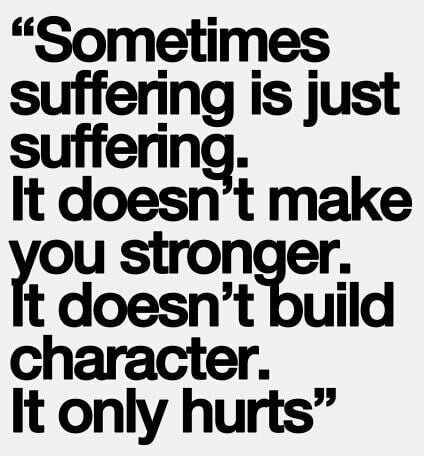
I have been told countless times over the past twenty years, what doesn’t kill you will make you stronger. Is this a true statement? Not from my perspective. Two-plus decades of chronic pain and suffering have not made me stronger. Over the years, I have been diagnosed with and treated for (in order of severity): degenerative spine disease, peripheral nerve pain, gastroparesis, exocrine pancreatic insufficiency, osteoarthritis, diabetes, and high blood pressure. I have also been treated for basal cell and squamous cell skin cancer three times, with another treatment forthcoming due to a cancerous growth on my left forearm.
My first battles with health problems date back to the 1980s. Primarily immune system problems, I ended up in the hospital with mononucleosis in 1991. What is called a “kissing disease” for teenagers, for adults, mono is a serious disease that can kill you. I was so sick that I had a 104-degree temperature, my liver and spleen were swollen, as were my lymph glands, and my adenoids and tonsils were pure white from infection. The internist treating me said that there was little he could do for me; that it was up to my body to fend for itself. I eventually recovered. All told, I lost over fifty pounds and was unable to preach for two months. One oddity to come out this is that my normal body temperature is now 97.0 degrees. (Good luck trying to explain to a nurse that 99 degrees is the equivalent of 100.6 degrees — you know, a fever.)
Suffering is part of the human experience. All of us will suffer at one time or another in our lives, and our suffering is unique to each of us. Can suffering make us stronger? Sure, it can, but that doesn’t mean it necessarily does. I know that for me, I don’t see anything redemptive in my suffering. I don’t have pain-free days — ever. I have bad days, less bad days, and days when I want to kill myself. My mobility is greatly diminished, and I am prone to nasty falls. Life is what it is, and I accept that this is life until I die. No magic surgeries or miracle drugs await me. What DOES await is life, and I do what I can to make the most of it.
Has chronic pain and suffering made me a better man? Maybe. I am more empathetic towards the suffering of others. As a fellow sufferer, I understand what they are going through. However, I am more inclined to think that pain and suffering have turned me into a broken man; a man who silently pleads for a day, just one day, without pain. I have found that the only pain-free times in life were when the anesthesiologist told me to count back from ten as I fell asleep.
Please don’t tell a chronic pain sufferer that their suffering is making them stronger. You can’t know this, so instead of pretending you are a mindreader, how about (gently) embracing their suffering with love, kindness, and compassion?
Bruce Gerencser, 69, lives in rural Northwest Ohio with his wife of 48 years. He and his wife have six grown children and thirteen grandchildren. Bruce pastored Evangelical churches for twenty-five years in Ohio, Texas, and Michigan. Bruce left the ministry in 2005, and in 2008 he left Christianity. Bruce is now a humanist and an atheist.
Your comments are welcome and appreciated. All first-time comments are moderated. Please read the commenting rules before commenting.
This cookie is set by X to identify and track the website visitor. Registers if a users is signed in the X platform and collects information about ad preferences.
2 years
personalization_id
Unique value with which users can be identified by X. Collected information is used to be personalize X services, including X trends, stories, ads and suggestions.
2 years
external_referer
Our Website uses X buttons to allow our visitors to follow our promotional X feeds, and sometimes embed feeds on our Website.