Last Friday, my surgeon called and asked me to come see him at 1:30 pm today so we could go over the recent biopsy results of the fluid removed from the mass in my chest. In early December, I had a huge cyst that spanned from my breast/collarbone to my sternum/underarm drained and biopsied. The interventionist radiologist removed 360cc of fluid. I IMMEDIATELY felt relief — all praise be to Asclepius.
The nurse came out to the waiting area and called my name. Someone new. “Where’s MY nurse . . . dammit, I have no time to train a new one,” I thought.
Into the room, we went. I could hear my doctor talking to another patient next door. He seemed in a good mood, but then he always seemed that way.
The nurse took my blood pressure and pulse. Then she asked, “Are you in pain today?”
If there is one question that raises my hackles, it is this one. “Can’t you read my chart? See right there where it says the patient has fibromyalgia, osteoarthritis, nerve pain, and is on narcotic pain management. Pay attention.”
For a brief snarky second, I wanted to say, “Praise Jesus, I went to a Benny Hinn Miracle Meeting® on Saturday, and God healed me of everything except the cyst that is growing again in my chest.” Instead, I said, “Yes, I am always in pain.”
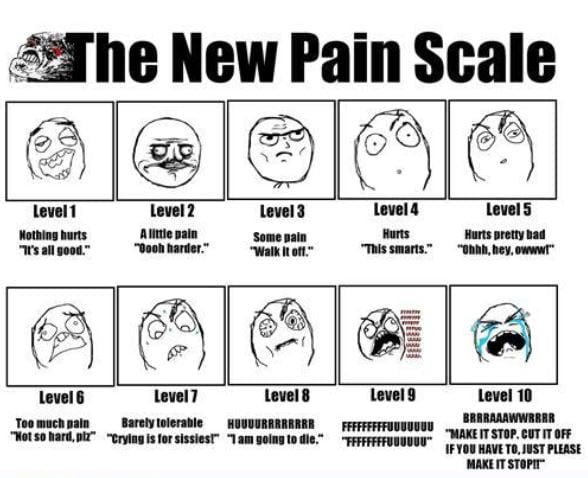
Then the nurse asked me another question that I despise answering, “On a scale of one to ten, what’s your pain level?”
I replied, “I hate pain charts. Pain charts are subjective, a waste of time.”
I got the “look,” you know that look that says, “Give me a fucking number so I can enter it in the proper box on your chart.”
I replied, “six.”
Hell, it could have been ten or three or twelve. By what standard am I being asked to judge the level of my pain? Such a silly way to determine pain levels and what, if any, treatment is appropriate.
The surgeon entered the room with a medical student in tow. We traded a bit of chit chat and then moved to discussing the biopsy results and his recommended course of treatment. I told him the cyst had returned and was growing larger by the day. I stood up and had him feel the cyst. I turned to the medical student — a woman — and asked her if she would like to feel the cyst. She said, “yes,” and proceeded to put her hand above my right breast. The surgeon had her feel above the left breast too so she knew what normal felt and looked like.
The surgeon told me that removing the cyst could be a difficult operation due to its proximity and depth. His suggestion was for the radiologist to drain the cyst again and then inject it with a sclerosing agent. Hopefully, this procedure will stop the fluid from accumulating again.
The surgeon asked Polly and I if we had any questions. Both of us said, “no.” He then asked Polly how she was doing and if she was scheduled to see him soon (he is the doctor who will be reversing her colectomy). Polly answered in the affirmative. The surgeon and his student left, and my regular nurse came in to talk to me about scheduling the procedure. Hopefully, I will have it done in the next fourteen days.
The surgeon? He had left the office after seeing me and quickly made his way across the street to the hospital. Waiting for him was a young girl who needed emergency surgery.
What is your opinion of pain charts? Please share your thoughts in the comment section.
Bruce Gerencser, 69, lives in rural Northwest Ohio with his wife of 48 years. He and his wife have six grown children and thirteen grandchildren. Bruce pastored Evangelical churches for twenty-five years in Ohio, Texas, and Michigan. Bruce left the ministry in 2005, and in 2008 he left Christianity. Bruce is now a humanist and an atheist.
Your comments are welcome and appreciated. All first-time comments are moderated. Please read the commenting rules before commenting.
My health is very much a part of my story. It is impossible for readers to understand where I have come from and where I am today without me telling them about my struggles with chronic pain, fibromyalgia, and osteoarthritis. Over the past decade, I’ve not been shy about sharing with readers my health history. Unfortunately, in doing so, I have opened myself up to unsolicited medical advice from people who have diagnosed me from afar. In recent years, I have received emails, letters, telephone calls, texts, packages, and personal visits from people who are certain they know the cure for what ails me.
One woman — a former church member — would stop by my house every few weeks hoping to sell me super-duper, cure-all shakes that she was certain would return me to perfect health. I had to hide in my bedroom and have Polly lie to her about my availability. After months of attempts to evangelize me, the woman finally took the hint and stopped. At the time, she was on the shakes. Today? She has abandoned this miracle cure and continues to face debilitating health problems.
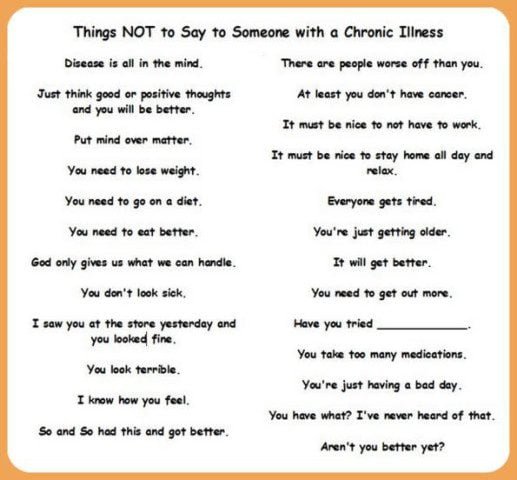
Well-meaning people have told me that this or that drug, this or that supplement, reiki, spinal adjustment, surgery, acupuncture, iridology, yoga, chakra alignment, mindfulness, homeopathic concoctions, essential oils, Native American rituals, magnets, diets — need I go on? — would infallibly cure me. Today, I received in the mail a list of books from a blog reader — some of which I have read — that, if followed, would supposedly put an end to my chronic pain. The gist of the books is this: your pain is all in your head.
I go out of my way to avoid interaction with readers when they put on lab coats and play doctors. I either ignore them altogether or I quickly say “thank you” and change the conversation. Yet, it seems no matter how many times I say, PLEASE DO NOT OFFER OR SEND ME UNSOLICITED MEDICAL ADVICE, people continue to ignore my request and offer advice anyway. What is it that says to some readers that they are free to disrespect me as a person? Is there anything ambiguous or unclear in PLEASE DO NOT OFFER OR SEND ME UNSOLICITED MEDICAL ADVICE? Do some readers think I am stupid or ignorant or lacking competent medical care?
I get it. I am the kind of writer who has swung open the door of his life, inviting such advice. However, I have politely asked that people not give me unsolicited medical advice. How hard can it be for readers (and family members) to respect my wishes and leave me alone? Can they not see that their tactics are no different from those used by Jehovah’s Witnesses or evangelizers from Independent Fundamentalist Baptist churches? “Sir, we are here today to offer you something that will change and transform your life!” Never mind the fact, that I am not ignorant about what they are peddling, be it Jesus or a “cure” for Fibromyalgia.
Let me be clear. I am under the care of a team of competent medical professionals. I am well-educated concerning my afflictions. Unless researchers come up with new treatments, I am going to die “Just as I am.” I have resigned myself to the fact that a combination of what ails me will eventually lead to my demise. And I am okay with that. I do what I can to manage my symptoms. If I read of something that “might” be helpful, I bring it up to my primary care doctor. In the twenty-three years he has cared for me, he has NEVER said no to me; never refused an off-label drug or treatment that “might” alleviate my pain and suffering. “Let’s try it and see if it works.” My orthopedic doctor treats me in a similar manner. He knows, based on x-rays, CT scans, and MRIs, that I have arthritis from head to toe. He knows that surgery is not a good option for me, so he does what he can to alleviate my pain. The scans tell him that the pain is not in my head.
I know that writing this post and making it prominently available will do little to stop certain readers offering unsolicited medical advice. It is not like I can ban them or anything. As long as I have a widely read blog and make it easy for people to contact me, I am going to receive emails, letters, telephone calls, texts, packages, and personal visits from pretend doctors. That doesn’t mean, however, that I can’t bitch about it. Praise Loki for the power of bitching, amen? Amen!
You may be thinking, “These people [people who offer unsolicited medical advice] sound irritating, sure, but why are you making such a big fuss? They’re just trying to help!”
Of course, I get that they’re trying to help, and in some cases, it really is just a pet peeve that I’ll politely accept or decline and move on. But the thing is that constant unsolicited advice, questioning, and imploring to try something different becomes very invalidating. You don’t just hear a helpful tip to try, you hear that you aren’t trying hard enough, that using medication to treat your condition means that you’re giving up or aren’t willing to seek out a non-medicinal alternative. You hear that all of the work that you and your doctors have done, the tests, the procedures, the trial and error of different combinations of medications and treatments aren’t enough, and that you need to try a different path. You hear that if you did give these suggestions a shot in the past, you didn’t try long or hard enough, you weren’t following it correctly, or you bailed and took “the easy way out.”
It is frustrating to constantly hear the message that not only are you not trying hard enough to improve your own health, but that you and your doctors are not the most knowledgeable about your medical and lifestyle needs. A stranger or acquaintance took it upon themselves to say that they know more about your condition from a bit of Googling and a few books than your doctor with their experience and education, and you with your everyday, lived experience of actually having the medical condition. It is emotionally damaging to not only hear that you aren’t living with your disease correctly, but to always have to educate others on why their unsolicited advice is unwanted and harmful. Unfortunately, they usually just they reply that you’re overreacting and become offended that you won’t take their suggestion. This only adds to the emotional pain, and very often, the physical pain of a medical condition that can be triggered by stressful situations.
My message is this: please, please do not give advice when it is not specifically requested. If someone wants information about your lifestyle, your choice, or your product, they will ask you and they will do the research. If you do give advice and somebody says that they aren’t interested or asks you to stop, just respect their wishes. Nobody should be coerced into trying something they don’t want to try, and if you push forward with your advice, not only would they not listen, but they may become stressed, hurt, and invalidated by your inability to respect their wishes.
Trust that disabled and chronically ill people and their medical teams are the most knowledgeable about their own health and their medical and lifestyle needs. Trust that they will seek out you or the proper sources if they’re interested in what you have to offer. And out of respect for disabled and chronically ill people everywhere, please stop forcing your unsolicited advice upon those who don’t want it.
I would rather spend the rest of my days banging my head against a wall than to continue trying to explain to people that their essential oils and kale will not cure me. OK, I’m being dramatic, but not as much as you might think!
If you’re anything like me, when you first became chronically ill (if you’re reading this as someone who’s sick), you possibly went through a naive stage early on in your illness. The stage where you believed the random person in an elevator who’s known you for two whole minutes who said that snake oil was God’s gift to the ill, or your aunt’s cousin’s brother’s half-sister who swears by this new detox where you only eat eggs for a month and every illness ever will be reversed, or some crap like that.
But seriously, there was a period of time at the beginning of me being sick that I desperately held onto the belief that I had control and would get better, so I tried anything and everything anyone presented to me. The worst was this “joint juice” concoction my dad ordered off an infomercial that tasted worse than words can describe. Yuck.
After awhile, it became something I did out of spite. Eventually there were few things left that I hadn’t tried, but when someone offered me something new, I would try it to prove to them how wrong they were.
When people constantly offer up these things, especially after I’ve spent time telling them my story, it doesn’t come off as helpful. I know, I know. People generally mean well. Sure. I’d like to say I believe that. But there’s condescension there almost always. And disbelief. And disrespect. It’s a smack in the face. It’s basically people saying to me that I just must not be doing enough or else I’d be better.
We as humans don’t like to lose control. We don’t. I certainly don’t. It’s not fun. We try to control every aspect of our lives. We love to plan out how every minute of everyday is meant to be spent and we think we can control that.
But the truth is, we can’t control everything. We cannot always control our bodies and our health. I know it’s scary to realize this, but it’s true. And I think that’s a big reason why one of the most common reactions people have to finding out that I’m chronically ill is to give me advice (that I didn’t ask for) on how to get better (from my incurable diseases). They want to help, but they want even more to keep up the illusion of control in their world. They’d rather believe that it’s essentially my fault that I’m not better because I’m not doing something right, because I don’t have the proper self-control, than to acknowledge the lack of control we have over our lives.
So what all of this unsolicited advice says to me is, “I didn’t listen to anything you just said because I’m scared of facing our lack of control and my mortality. I think you just don’t know what you’re talking about. I know better.”
That’s the truth of it. So the next time you’re thinking about offering up unsolicited advice to someone who’s chronically ill, it’s probably best to just…not.
Thank you for your love, kindness, and support. Many of you have come alongside me and brought understanding and encouragement during difficult times. It is enough for me to know that people care.
About Bruce Gerencser
Bruce Gerencser, 62, lives in rural Northwest Ohio with his wife of 41 years. He and his wife have six grown children and twelve grandchildren. Bruce pastored Evangelical churches for twenty-five years in Ohio, Texas, and Michigan. Bruce left the ministry in 2005, and in 2008 he left Christianity. Bruce is now a humanist and an atheist. For more information about Bruce, please read the About page.
Are you on Social Media? Follow Bruce on Facebook and Twitter.
Thank you for reading this post. Please share your thoughts in the comment section. If you are a first-time commenter, please read the commenting policy before wowing readers with your words. All first-time comments are moderated. If you would like to contact Bruce directly, please use the contact form to do so.
Donations are always appreciated. Donations on a monthly basis can be made through Patreon. One-time donations can be made through PayPal.
I begin each day with pain. No matter how much medication I take, pain, from the bottom of my feet to the top of my head, is ever with me. There’s never a day when pain is not front and center, demanding attention. Afternoon turns to evening. Hopefully, I have felt strong enough to sit down in my office and write a few words for this blog. As I type this post, my hands remind me that osteoarthritis is my ever-present “friend.” Someday, I will push the keyboard away and say to the pain, “you win.” Not today, but no promise that tomorrow won’t be the end of my run. I fear what happens to me when I quit; when I say, “I have had enough.”
By the time the clock says 10:00 pm in the eastern time zone, my body says, “enough! I shan’t go any farther!” Two decades of struggling with fibromyalgia have taught me to recognize when it’s time to surrender for the day. “Wave the white flag, Bruce, and live for another day,” I tell myself. As I slump into my recliner, turn on Pardon the Interruption, and adjust the sound, tears come to my eyes. “Why live another day, knowing that tomorrow will be no different from today?” No matter how much I try to think happy thoughts and “put mind over matter,” reality reminds me that it is a bitch, a taskmaster with no concern for my suffering and pain. “Tough shit, Bruce. This is your life, deal with it.”
I hear the front door open. It’s Polly coming home from work. The clock strikes 2:30 am. We trade pleasantries, ask questions of one another, eat a snack, and finish the day off with The Daily Show. Now it’s time for the final act of the day, bedtime. I drag my pained, fatigued body to my side of the bed, plug my iPad into the wall charger, put on my Bluetooth headphones, and run one of the video streaming apps — usually Hulu. Of late, I am re-watching the Los Angeles police drama Southland. Polly touches me gently on my back and says, “good night.” I reply, “I love you.” Polly will quickly fall to sleep, but not me. Sleep for me will not come until pain and sleep medications do their work — that is, IF they do their work. Some nights, this process takes an hour. Other nights, it takes two, maybe three hours for sleep to win the victory.
And then, I do this all over again. There’s never a day without pain and fatigue. Never. I am not sure my family and friends understand this. Oh, they try, but for people who have not lived with never-ending, unrelenting chronic pain, there’s no frame of reference for them. How can someone “understand” that which they have not experienced? I photographed a local high school basketball game tonight — the first game of the season. As I entered the building, a school official said to me (and Bethany), “how are you folks doing tonight?” His voice rang with happiness and enthusiasm. He was what I call “chipper.” Before I could “think” of how I wanted to answer him, I blurted out, “do you really want to know?” His face told me that he was not expecting THAT answer. I quickly rescued him from the uncomfortableness of the moment. “Let me give you the standard human answer, “I’m fine. I am always fine!” And with that, I made my way to the gymnasium. Of course, I am not “fine.” I am sure some of you might be thinking, “Bruce, if you are not “fine,” why did you shoot the basketball game? “Why not stay home, rest, and take it easy?” Truth be told, it doesn’t matter where I am or what I do, I can’t escape the pain. Might as well try to do something I love to do than sit around and lose a few more brain cells watching TV. I know of only two “solutions” for my pain: death or pharmaceutical fog, neither of which I am willing to entertain. At least not today, anyway.
Knowing that the pain will never go away does give me a sense of certainty. I can’t escape the pain. All I can do is to choose what to do and where to go. Well-meaning people will say to me, “Bruce, I saw you at the store today. You must be feeling better!” “No, I am not feeling better. I feel like shit. My body feels like it has been hit by a truck — twice,” I have said to no one, ever. Instead, I pretend the well-wisher is oh-so perceptive. That’s the nature of the chronic pain game. Better to live a lie than burden (and bore) people with the truth. Rare is the person who really wants to know and understand how you are feeling. And that’s okay. I really don’t want to know about your hemorrhoids either.
Tomorrow begins the holiday season for the Gerencser family. Polly, along with our daughters, daughters-in-law, and granddaughters, will gather at our home to make pies — pumpkin, cherry, apple, and pecan — for Thanksgiving. If anything can temper my pain, it’s food, family, and football. If anything can give me a reason to punch the time clock for another day, it’s Polly, my children, and grandchildren. For them, I’m thankful.
Addendum:
The girls popped the first four pumpkins pies in the oven today and started cooking them. Fifteen minutes into the process, the power went out! We were without electricity for eight hours. We’ve had high winds today, and this led to an outage. Pie day was moved to our youngest daughter’s home. Just another story to add to Gerencser family Thanksgiving lore.
I hope you and yours have a wonderful Thanksgiving!
About Bruce Gerencser
Bruce Gerencser, 62, lives in rural Northwest Ohio with his wife of 41 years. He and his wife have six grown children and twelve grandchildren. Bruce pastored Evangelical churches for twenty-five years in Ohio, Texas, and Michigan. Bruce left the ministry in 2005, and in 2008 he left Christianity. Bruce is now a humanist and an atheist. For more information about Bruce, please read the About page.
Are you on Social Media? Follow Bruce on Facebook and Twitter.
Thank you for reading this post. Please share your thoughts in the comment section. If you are a first-time commenter, please read the commenting policy before wowing readers with your words. All first-time comments are moderated. If you would like to contact Bruce directly, please use the contact form to do so.
Donations are always appreciated. Donations on a monthly basis can be made through Patreon. One-time donations can be made through PayPal.
Warning! Bathroom talk ahead. If you can’t bear to read about bodily functions, it might be best if you stop reading after the story about the baseball game.
I am physically disabled. Due to muscle and joint problems — which have left me with increasing debility and pain — I always walk with a cane or use a wheelchair. Anyone who has ever seen me walk can immediately tell that I have physical problems. When entering the grocery store, people will often wait until I make it to the door and then walk in behind me. If I see that this is happening, I usually say, oh no, you go ahead. I am a slow-moving vehicle. We all have a laugh and they quickly walk through the door.
Slow-moving vehicle — that describes me well. I can’t run, bend forward more than forty to sixty degrees, and I am prone to falling, especially when I hit raised sidewalks or miss seeing that there is a step ahead. Fortunately, I have not broken anything. I have, however, pulled neck, back, and hamstring muscles, along with injuring my shoulders, knees, and ankles. Often, the greatest injury comes when I try to keep myself from falling; that moment where I tense up my body and try to stay balanced. On more than a few occasions, I have kept myself from crashing to the ground, only to be unable to get out of bed the next day because I pulled this or that muscle or wrenched this or that joint. Such is life …
It would be easy for me to throw in the towel and resign myself to never going out in public again. I have all the physical reasons necessary to justify becoming a full-time couch potato. Of course, giving in only hastens my death. I know I need to be as active as possible, so I push myself to do things that cause physical exertion and pain. Athletes often wear shirts that say No Pain, No Gain. I remember living out that mantra as a young man when I played baseball and basketball; and even as an adult athlete — well into my thirties. Today, it’s lots of pain, period.
I am now sixty-one years old. I know there is coming a day when I won’t be able to carry out even the limited things I now do. Every year brings decreased mobility. I struggle psychologically with watching my wife do many of the things I used to do. I find it embarrassing to watch Polly weed-eating the yard or doing other physical activities that were once my domain. There are times I feel less of a man when Polly does these things, but I know she’s doing them because she loves me. There are times she will do things only to make sure that I CAN’T do them, knowing that I will try to do them, causing myself increased suffering and pain.
Today, I went to a nearby golf course to shoot photographs for a local high school golf team. Two years ago, I started shooting high school sports. I take the photos free of charge. I see it as a way to give back to the local school district and to provide parents with professional quality photographs of their athlete children. I know parents appreciate the photos, and on the back end it has driven some paying business my way.
I arrived at golf course around 3:30 PM. This was my first time shooting a golf match. I was nervous about how best to photograph the golfers, what aperture and shutter speed to use, and how much walking I would need to do. As always, my sidekick, my twenty-nine year old daughter with Down syndrome, was with me. I talked to the coaches, learning how the players would play the course. I thought, man I really need to rent a cart. (I always pay my own freight, be it tickets or golf cart rentals.) I went in the clubhouse to inquire about a cart, only to find out none was available.
As I exited the clubhouse, a man came up to me and said, Bruce, is that you? I paused for a moment, and then he gave me his name. He was my last pastor, a young United Methodist cleric whom I really liked. He and I had numerous conversations about theology, history, and life. Both he and his wife were delightful people to be around. I thought he and his family had moved away a couple years ago, but discovered they still lived in the area and their two oldest sons were on the golf team. We had a delightful talk, and I was reminded of how much I missed talking to him.
While we were talking, several golfers finished their round and returned their carts. The wife of my former pastor said, Bruce, you ought to see if they have a cart for you. Good idea, I thought. I went into the clubhouse and inquired as to cart availability. The girl taking care of cart rentals said, yes, two carts just came in. I told her, great! I am here to photograph the match for __________ school. She had me sign the rental sheet, and then said the cart would be free of charge. Come to find out, unbeknownst to both of us, the owner/manager of the course had promised my cart to one of the coaches.
I took the key for the cart, and off I went to the tee for the first hole and the green for the ninth hole. I had planned to drive to the other holes, hoping to catch all the school’s players in action. One of the coaches told me that the groups were staggered, so everyone one of them would eventually end up either driving off the tee for the first hole or putting on the green of the ninth hole.
As I was standing, waiting for match to begin, I chatted with one of coaches, the aforementioned pastor and his wife, and a photographer for the local newspaper. This was the first time the coach and I had any sort of extended conversation — light chit-chat as we awaited the start of the match. As we were talking, the manager/owner came up and joined our group. He let it be known that my cart was the coach’s cart. I replied, no it is mine. He said, no it’s not. Did you pay for it? That cart belongs to the coach. I reserved it for him. Confused, I replied, the girl up at the clubhouse gave me the cart. I am here to photograph the match for ______________. The manager/owner, with a stern face, replied, I didn’t know that. No apology, no sorry for the misunderstanding or let me see what I can work out.
The coach let it be known that he was fine with me having the cart. Once I determined I could do what I needed to do without the cart, I went to the coach and said, here you can have the cart, I’ll be fine. The coach knew I was disabled. He coaches several other sports I have photographed. He said, are you sure? I replied, yep, and then made a joke about having a stroke and his name being the last words on my lips.
After an hour or so, I found myself quite fatigued, so I decided to call it a day. I went to the clubhouse to let the girl who handles the rentals know that I had given the cart to _____________. I then told her that the owner/manager thoroughly embarrassed me in public. I explained to her what happened and recounted what he said. She had no idea the cart was reserved for the coach (who, by the way, said if he got a cart he would chauffeur me from hole to hole). She asked if I wanted to talk to manager/owner. Still angry over his words, I replied, no, he’s an asshole and that’s all I need to know. She profusely apologized, but I stopped her, saying, hey it wasn’t your fault, it was his. As is often the case, low-level employees feel the brunt of criticisms over things they had nothing to do with. I always make sure to let them know that my ire and dissatisfaction is directed at the offender, and not them.
Several weeks ago, Polly and I, along with Bethany, attended a Toledo Mud Hens/Louisville Bats baseball game. Two of our sons and their children were also at the game. I was quite fatigued before the start of the game, and by the end — due to the heat and humidity — I felt quite distressed physically. Thanks to my failure to take care of myself and drink enough fluids, I began to notice the symptoms of heat exhaustion. The game was nearing its conclusion, but there were fireworks afterward and we wanted to see them. I turned to Polly and said, We really need to go. I’m sorry, but I really feel sick: light-headed, clammy, weak.
I told my children I wasn’t feeling well, and then we made the long, arduous climb to the concourse. By the time I reached the peak of Mount Kilimanjaro, I was short of breath and could hardly walk. I had a momentary thought of telling Polly that I needed medical attention, but I thought, we are parked close by, and I if I take it slowly — as a turtle “running” across the road — I will make it to our car.
I finally made it to the exit, thinking, I made it. All I have to do cross the street, walk a couple of hundred of feet, and sweet, wonderful, life-saving air conditioning awaits me. I noticed a Toledo police officer was blocking the street and forcing people to walk elsewhere (due to the fireworks). I thought, the car is right there. I can see the ship on the horizon, deliverance draws nigh.
Polly was walking behind me with Bethany, and unbeknownst to me, she decided to walk to the corner and cross the street. I went up to the officer and said, I am really, really sick. I would like to cross the street here so I can quickly get to the car. He replied, what’s wrong with you? At that moment, I wanted to, with what meager strength I had left, scream at the officer. Instead I told him I was really sick; that I felt weak and clammy. If the officer had bothered to LOOK at me, he would have noticed that I was profusely sweating; that my shirt, ball cap, and pants were soaked with sweat; that I was walking with f-u-i-c-k-i-n-g cane. Instead, he replied, if you are so sick, how come no one is helping you? I turned, thinking Polly was behind me, only to find out she was half a city block away, crossing the street at the crosswalk. I told the officer, that my “help” was at the street corner. Look I am really, really sick, I said. I just need to get to my car. The officer looked at me with a stern face, one that said, I don’t believe a word you are saying, and said, Go on… (meaning cross the street). For a brief moment, I thought about dropping over in the street from exhaustion, thus proving the point that I really was sick. Instead, I slowly motored on, reaching the car just as Polly arrived with the keys. She unlocked the doors, and I collapsed into the passenger’s front seat. Polly quickly started the car and turned on the air conditioning. I stripped off my sweat-filled shirt and hat and tossed them into the back seat. I made it, I told myself, knowing that I had pushed myself too hard and that I could have collapsed from heat exhaustion. Lesson learned — maybe.
Last weekend, Polly and I, along with Sinnuh (my latest nickname for Bethany, a corruption of the word Sinner, from the hit TV show on the USA Network) went to the Henry County Fair. We planned to tour the grounds and then watch the tractor pull. We found good seats and settled in to watch turbocharged, fuel-injected 1,800 horsepower machines see how far they could pull a weight sled. A perfect night for me: loud tractors and the smell of alcohol fuel; much like the smells at the dirt tracks I frequent.
An hour or so into the show, I felt THAT. I said to myself, no, please God no, not THAT!As is God’s custom, he was nowhere to be found. I turned to Polly and said, I need to use the bathroom. She replied, okay. I told her, not that kind of using the bathroom. I am all cramped up. She looked at me with lugubriousness, knowing how fearful I was of using public bathrooms to take a shit. This, by far, is the one thing I fear the most. Dirty toilets, single-ply toilet paper, lack of privacy, did I mention dirty toilets? I get distressed just thinking about having to use a public toilet.
I always try to make sure my bladder and intestinal tract are empty before I go to a public event. When I left the house, I thought I was good to go, or better put good not to go. Unfortunately, I will occasionally have what I call the mother of all shits — an experience I don’t wish on anyone. I can “feel” when one is coming on, and that’s exactly what I felt at the tractor pull.
As I stood to make my way down to the concourse, I let out a big fart. I am sure the people behind me thought, OH MY GOD. I, one the other hand, was grateful that it was gas and not fecal matter. Built back in the days when privacy and handicapped access were not important, the bathrooms were under the grandstands. I knew using the toilet was going to be an adventure; adventure as in having to spend the day with Donald Trump. Not g-o-o-d.
Waves of cramps let me know that I better find the bathroom soon. I entered the bathroom, looked at no one (it’s a man thing) and made my way to the farthest stall. Finally, I thought, I made it. I quickly dropped my pants, checked the toilet seat for pee, and boom all of Polly’s wonderful cooking — and three crunchy tacos from Taco Bell — exited my body. The stall door had no latch, so as I sat there doing my business, I held the door shut with the handle of my cane. I hoped that the busy kids who entered the bathroom would see my cane and not try to expose Santa in all his glory.
I sat there for a few minutes, reading emails on my phone and letting my muscles relax. I stood up to wipe my ass, only to find out that the toilet paper was the cheapest single-ply toilet paper you could buy. Awful stuff. A sure guarantee that you will end up with shit on your fingers. Worse yet, the stall walls only came half way up my chest. Here I was, leaning against the plywood stall wall so I could wipe my ass — which is an ordeal in and of itself — looking as if I was peering over into the next stall, breaking the cardinal man-club rule: no looking. (Due to a loss of mobility, cleaning up after defecating is quite challenging. The doctor suggested Polly could help. I told him point blank, my wife is never going to wipe my ass. NEVER! I would rather be dead than have her do that for me!) Finally, I pulled up my pants, only to find out that my suspenders were wet and stained from lying on the pee-soaked floor. After a few moments of reflective cussing, I got myself together, ready to watch the next class of tractors.
Just as I was getting ready to exit the stall, my bowels said, oh no you don’t big boy. A sluggish meal had finally made it to my sphincter muscle and it was demanding exit. I thought, @#$%#@, really? Yes, really. And so, knowing the sluggish meal would not wait, down went my pants, down went my ass on an undersized, low-profile toilet, and down went the last contents of my bowel. I once again read my email and approved comments as I waited for the physical calm to come. Finally, it arrived, and I stood, gathered up a long strand of single-ply toilet paper, tripled it over, attempted to make my ass look presentable, pulled up my pants, zipped them, pulled my pee-stained suspenders over my shoulders, and exited the stall. I made my way back to the grandstand, telling Polly that I had the mother of all bowel movements, and that my pants and suspenders will definitely need washed. We looked at each other, smiled, laughed a bit, realizing that this was just another day in the life and times of Bruce Gerencser.
I recently asked readers to submit questions to me they would like me to answer. If you would like to submit a question, please follow the instructions listed here.
Paul asked, “Bruce, how is your health?”
The short answer is “fine.” When people ask me about my health, I usually use “fine” or one of my other discussion killers such as “super-duper,” “I’m on top of the world,” or “so far so good.” These rejoinders are, of course, lies, but as most people with pervasive health problems know, most people who inquire about how you are feeling are just trying to be polite. They really DON’T want a head-to-toe rundown of all that ails you. My wife’s aunt asked me the other day how things were for me. I replied with “fine,” and then I added, “you really don’t want to know about my hemorrhoids, do you?
Paul, on the other hand, sincerely wants to know how I am doing health-wise. The remainder of this post will detail the day-to-day struggles I have with chronic illness and unrelenting pain.
Where-oh-where do I begin? Let me start with the big-ticket health problems. First, I have fibromyalgia. This remains the overarching problem that dominates my life day-in and day-out. With fibromyalgia, I have fatigue and widespread muscle spasms and pain. I was first diagnosed with fibromyalgia in 1997. Second, I have osteoarthritis in my spine, neck, hands, shoulders, and feet. In other words, everywhere. Third, I have high blood pressure, which is treated with medication. Fourth, I am diabetic. Currently, I take two different diabetes medications.
Adding to these things is the fact that I was treated for skin cancer twice over the past year. I see a dermatologist every six months to atone for the youthful sin of repeated blistering sunburns as a child. Several months ago, I found out that I have two Morton’s neuromas and bursitis in my left foot. The best way I can describe the pain is having your foot hit with a hammer — repeatedly. Because I am diabetic, I am unable to have the foot surgically corrected. I have chosen to live with the pain instead of risking the loss of my foot from surgery complications.
Recent months have brought increasing nerve pain in my legs. This, by far, is the biggest problem I face, because it affects my ability to sleep. It is not uncommon for me to take two to three hours to fall asleep, and even then I rarely sleep through night, thanks to pain and a weak bladder. If there’s one aspect of my health that leaves me wanting to die, it’s nerve pain. Narcotics help, but the pain never goes away. I mean n-e-v-e-r.
Doctors continue to monitor a lesion I have on my pancreas. So far, I am cancer-free. I will likely have to have lesion biopsied again next year.
I continue to battle depression. My depression is primarily driven by my health problems. When pain levels are severe, so is my depression. I had been seeing a counselor, but he and I have become good friends, and this, unfortunately has ruined our professional relationship. My last two visits were spent talking about politics and Donald Trump. I am looking for a new counselor, but so far, I have not found a local counselor who is not faith-based.
The sum of these things and a niggling list of other things I won’t mention have severely limited my ability to get around. Most days, I walk with a cane. Some days, especially when what we are doing requires a lot of walking, I use a wheelchair. Over the past year I have noticed that my ability to walk is slowly declining. I continue to push myself, but I sense there is coming a time when my walking days will be over.
Most days, I have a short window where I feel good enough to write, work in the office, edit photographs, etc. I do what I can. There are times when I push myself too hard — an unwise move — and when that happens I often end up in bed for several days.
I want to conclude this post with a few please do not do these things:
Please do not ask me if I have tried _____________. I am under the care of competent doctors whom I trust with my medical care. They know my body far better than you.
Please do not tell me you are praying for me. I understand praying might be your way of showing empathy, but telling an atheist you are praying for him is not helpful. If you MUST pray, I don’t want to know about it.
Please do not read into what I have written in this post. I am not suicidal, and if I become suicidal I doubt your email will stop me from ending my life.
Please do not try to “encourage” me with rah-rah, happy-as-a-seal-with-a-ball words. I do not find such words helpful or motivational. I am just not built that way. I am a pessimist, a grinder who stoically embraces what life brings my way. I have always been this way.
Please do not ask me about my diet. I actually eat a lot of vegetables, fish, and all the things you are sure I don’t eat.
Please do not ask me if I am taking this or that supplement or drug. Over the past twenty years, I have tried dozens of medications and supplements. Every time a paper is published that says ________________ might help fibromyalgia patients, I ask my doctor what he thinks. More often than not, we give it a try.
Many people think that every health problem can be “fixed.” I’m here to tell you that such a belief is as every bit as fantastical as believing Jesus resurrected from the dead or Mary, the mother of Jesus, was a virgin. I am a realist. I accept life as it is and do what I can each and every day to make a meaningful difference in the lives of others. I hope I do so through my writing, photography, and operating the TV remote for Polly.
About Bruce Gerencser
Bruce Gerencser, 61, lives in rural Northwest Ohio with his wife of 40 years. He and his wife have six grown children and twelve grandchildren. Bruce pastored Evangelical churches for twenty-five years in Ohio, Texas, and Michigan. Bruce left the ministry in 2005, and in 2008 he left Christianity. Bruce is now a humanist and an atheist. For more information about Bruce, please read the About page.
Bruce is a local photography business owner, operating Defiance County Photo out of his home. If you live in Northwest Ohio and would like to hire Bruce, please email him.
Thank you for reading this post. Please share your thoughts in the comment section. If you are a first-time commenter, please read the commenting policy before wowing readers with your words. All first-time comments are moderated. If you would like to contact Bruce directly, please use the contact form to do so.
Donations are always appreciated. Donations on a monthly basis can be made through Patreon. One-time donations can be made through PayPal.
Today, I attended the Fairview vs. Spencerville High School Tournament basketball game. I arrived at the venue seventy-five minutes before the doors opened. I asked the parking lot attendant to point me to the handicapped parking spaces nearest the gymnasium. He had me park in the handicapped spots in front of the main entrance. Indeed, this allowed me a short, easy path to my seat.
After the game, attendees were required to exit via the doors opposite of where I entered. When I realized that this path was going to take me away from where I was parked, I asked a man handling crowd control to tell me the best way to get to where I was parked. I told him exactly where I was parked. Instead of allowing me (or anyone else who parked in the front handicapped spaces) short, easy access to my parking space, he told me I had to exit the far side of the building. He then said, and I quote, “it’s not too far away, you can walk it.”
First, how did he know what “not to far away” was for me? There was a reason I parked where I did, and I expected to be able to return to my vehicle via the same path I entered the venue. Second, how did he know I could walk it? Did he have magic powers that enabled him to divine my handicap and physical abilities? Not wanting to press the matter further, I walked the long hallway to the far exit and exited the building. I then had to walk around the building to the front where my car was parked. Needless to say, I was exhausted by the time I reached my vehicle.
I am writing this letter to make you aware of this issue, asking that you please address my concerns with the relevant people. In the future, if people parking in handicapped spaces are expected to exit the far side of the building, then the parking spaces should be on that side. If the parking spaces remain at the front of building, then handicapped attendees parking in them should be able to exit the venue the same way they entered.
Thank you for taking the time to read my letter.
Bruce Gerencser
345 East Main Street
Ney, Ohio 43549
I received a prompt reply from Miller City’s athletic director. She assured me the matter would be looked into and changes made so handicapped people don’t face this or similar problems in the future. I appreciated Deb’s thoughtful reply. As of the writing of this post, I have not heard back from the OHSAA.
I am a professional photographer. During the winter months, I attend local high school basketball games. I take numerous photographs, sharing them with the players and their families on Facebook. On a few occasions, I have even made a few bucks off my work. I thoroughly enjoy watching high school sports (both boys’ and girls’), so attending the games and photographing them provides a brief respite for me as I struggle with chronic pain and disability.
This past season, I attended thirty or so games. It’s tournament time now, so opportunities to see local teams play are becoming fewer and fewer. I have grandchildren in the Tinora and Stryker school districts, and my oldest granddaughter plays for Stryker, so I try to attend as many Tinora and Stryker games as I can. I live in the Fairview school district, so I try to attend their games as well. During the latest holiday season, I donned my red stocking hat as I attended games, leading to countless adults calling me Santa Claus, and more than a few children wondering if I was the “real” Santa. (Seriously, if I was Santa Claus, would I be spending winters in Ohio? Not a chance!) Bit by bit, high school players I have photographed have struck up conversations with me. I have learned much about high schoolers through these conversations. Attending games gives me opportunities to get out of the house, even when I don’t want to. As people with chronic pain and illness will tell you, they have to battle the tendency to want to curl up in a corner and be left alone. In my case, I know it’s good for me to be out and about, even if it causes my pain levels to rise.
In 1997, I was diagnosed with Fibromyalgia. Since then, the list of my afflictions continues to grow. I daily battle unrelenting chronic pain from the top of my head to the bottom of my feet. Over the weekend, I was sitting in my recliner watching TV with lover, friend, and caretaker, AKA Polly. All of a sudden, my left foot felt like it had been repeatedly hit with a hammer. My toe, if you can imagine this, was pulled back to about the ten o’clock position. For thirty or so minutes my foot throbbed with pain. I tried to walk, but I couldn’t. Finally, the pain subsided, the tears dried, and I returned to watching TV. Just another day in the life of a chronic pain sufferer. You never know what you’ll face on any given day.
I also have osteoarthritis in my neck, hands, hips, shoulders, upper back, lower back, knees, and feet. In other words, Uncle Arthur is my constant companion. Throw in high blood pressure, diabetes, incontinence, and bowel problems . . . well, life is grand. It is what it is. I embrace every day as it comes, grateful that I am still among the living.
When I attend public events such as the aforementioned basketball game, I plan my day carefully. I always arrive at least an hour early. This allows me to get parking close to the entrance, and it helps me avoid dealing with rude and inconsiderate people as they push and shove their way towards their seats. Arriving early also allows me to find seating that accommodates my handicap. At basketball games, I prefer to sit on the first row at floor level. I haltingly walk with a cane, so it is best for all involved that I don’t attempt to walk up or down bleachers. I have fallen on more than a few occasions. I suspect if three-hundred-and-fifty-pound Bruce Gerencser landed on someone it would cause serious harm. I do all I can to avoid contact with others.
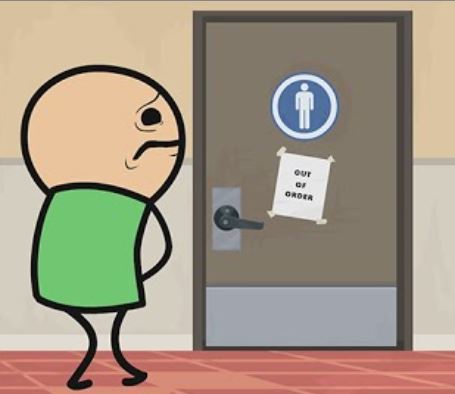
Seating, of course, is not my only concern. I also have to contend with access to concession stands and bathrooms. I try to go to the concession stand when there are not a lot of people in line. Bathrooms provide a unique and, at times, harrowing experience. Public school bathrooms are supposed to be ADA compliant, but older schools are not required to follow the code. On several occasions I have had to back into stalls, shut the door, and then turn around just be pee. Zeus help me if my bladder is screaming, Gotta go NOW! Accidents happen, and all I can do is hope that no one notices the dark wet stain on my blue jeans. And going #2, as my grandchildren say? I avoid that like the plague. Everything from small stalls, cheap single-ply toilet paper, and my suspenders coming loose, conspire to make taking a dump — another euphemism for defecation which my grandchildren use — a nightmare.
I write all this to give some context as to why someone saying to me, “It’s Not Too Far Away, You Can Walk it” is a big deal. The last thing I need is for someone to dismiss my disability — even if the person does so innocently — because he was in a hurry, or just following the “rules.” I have learned that the only way for disabled people to be heard is for them to shout loudly above the noise of the crowd. In my case, shouting loudly means writing letters, emails, or blog posts. By doing so, I hope that people will be educated about the difficulties the disabled face when attending public events.
Cookie Consent
We use cookies to improve your experience on our site. By using our site, you consent to cookies.
This cookie is set by X to identify and track the website visitor. Registers if a users is signed in the X platform and collects information about ad preferences.
2 years
personalization_id
Unique value with which users can be identified by X. Collected information is used to be personalize X services, including X trends, stories, ads and suggestions.
2 years
external_referer
Our Website uses X buttons to allow our visitors to follow our promotional X feeds, and sometimes embed feeds on our Website.
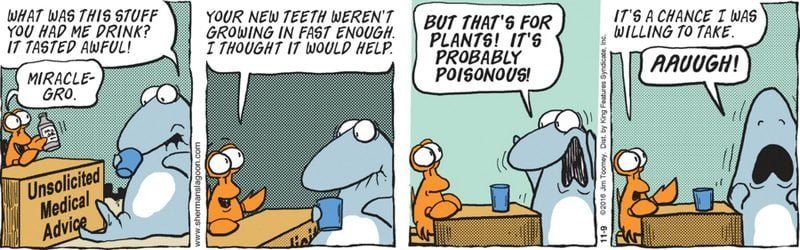 I know that writing this post and making it prominently available will do little to stop certain readers offering unsolicited medical advice. It is not like I can ban them or anything. As long as I have a widely read blog and make it easy for people to contact me, I am going to receive emails, letters, telephone calls, texts, packages, and personal visits from pretend doctors. That doesn’t mean, however, that I can’t bitch about it. Praise Loki for the power of bitching, amen? Amen!
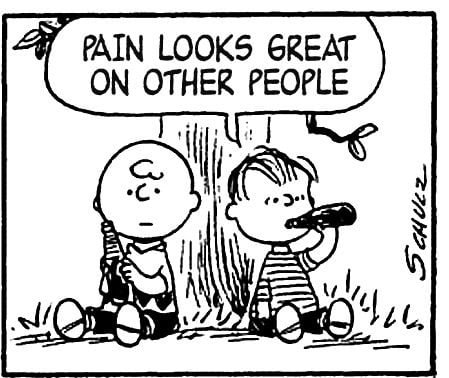


 What follows is a letter I wrote several days ago to the athletic director at