Category: Life

  • My Thoughts on the Complicity of Rural America in the Election of Donald Trump

    donald trump

    I am appalled, as are tens of millions of other Americans, by the fact that Donald Trump won the 2016 presidential election. I voted for Bernie Sanders during the primary season, believing that his progressive views were (are) the best way forward for the United States. Sanders’ inability to connect with older, rural, white Americans, and the Democratic National Committee’s attempt to derail him, doomed Sanders’ candidacy. While many Bernie supporters think that he would have beaten Trump had he received the nomination, I am of the opinion that this is little more than wishful thinking. Yesterday, I cast my ballot for Hillary Clinton primarily because I thought (and still do) that a Trump presidency will be disastrous for America. I was willing to overlook Clinton’s scandal-plagued career and her connection to Wall Street because I believed at the time (and still do) that electing Donald Trump would send the United States careening down a path that could lead to world war. A Clinton presidency would likely have been more of the same, a sameness that I could, if need be, stomach for four more years. As a progressive and a liberal, I’ve come to see that neither political party represents me. In 2008, swept up by promises of hope and change, I believed that Barack Obama would bring fundamental change to America. By 2012, I realized that idealistic hope and change had been swallowed up by an obstructionist Congress, lobbyists, big banks, and Wall Street. While President Obama talked a good game, his allegiances were still with corporate America. This became clear in the aftermath of the housing bubble collapse, when the Obama justice department failed to prosecute those who caused the collapse. The political élite ignored how angry middle America was over the pain and suffering caused by the last major recession. Having been ignored for decades, these older, white, Christian Americans see in Donald Trump a man who is willing to stand up for them; someone who speaks their language and empathizes with their pain; someone who doesn’t see them as deplorable. These are the people who swept Donald Trump into the White House. The majority of baby boomers and older people voted for Trump. Over eighty percent of Evangelicals cast their vote for the Republican nominee. Most of these people were never going to vote for a Democrat, so there is literally nothing that Trump could do that would turn them away from voting for him.

    Next year, I will be 60 years old. Outside of a few years in California in the 1960s and Arizona and Michigan in the 1970s, I have spent my life living in Ohio. I have watched Ohio turn from a union-strong democratic state to a solidly red state where virtually every major political office is held by a Republican. As an Evangelical Christian and pastor, I was pleased to see Ohio move to the right. I suppose that, if I were still an Evangelical, I would be actively involved in trying to turn back the social progress of the past eight years. I have no doubt that I would have been working to criminalize abortion, shove gays back into the closet, reinstitute marriage as between a man and woman, force transgenders to use the bathroom that corresponded to their birth sex, and above all, I would been working to establish God and the Bible as the absolute authority in matters public and private. Fortunately, for me, my political and social views began to change in the late 1990s. While I was still conservative in many ways, my views began to creep leftward as I realized how hurtful and harmful many of my views were. By the time I left the ministry in 2005, I had moved to the far left of the evangelical tent, and had I not ultimately lost my faith I am sure I would now be a liberal Christian.

    I now find myself quite alone in a sea of ravenous Evangelical Republicans. I know that there are numerous area residents who feel as I do. What do we do, now that our fellow citizens decided to elect a xenophobic, misogynistic, race baiting man unfit for public office? I live in Defiance County Ohio. Seventy-one percent of registered voters voted yesterday. Sixty-four percent of them voted for Donald Trump. Twenty-nine percent voted for Hillary Clinton. In nearby Fulton, Henry, and Williams counties, the splits were pretty much the same. Even worse, in Paulding County, seventy-two percent of people voted for Donald Trump, while Hillary Clinton received twenty-three percent of the vote. In nearby Putnam County, eighty percent of voters voted for Trump. A measly fifteen percent voted for Clinton.

    While most rural Northwest Ohio counties have unemployment rates below state and national levels and jobs are plentiful, the fact is that much of the area has not yet recovered from the housing collapse. Yes, jobs are plentiful, but wages are not. My wife works for a large manufacturing concern who is having a hard time attracting new employees. If you find yourself looking for a job that starts out at $10 or $11 an hour, then move to rural Northwest Ohio. Housing is relatively cheap, as are groceries. If jobs are plentiful and housing and food are affordable, why do so many local residents still fear the future? One of the reasons is that wages are stagnant, and for those who work in local factories, after they reach a certain wage level all they receive are token, often laughable wage increases. The same workers have had to absorb scandalous increases in insurance costs. When my wife started with her employer in 1997, her insurance plan had a $300 deductible and a $1,200 maximum out-of-pocket. Today, her insurance plan has a $3,750 deductible and a $6,000 maximum out-of-pocket. During this time span, the amount that she pays for insurance premiums has gone up over 200%. Outrageous costs such as these are dragging many rural Americans right out of the middle class.

    The housing collapse destroyed local property values. While values have improved in recent years, they are still below what they were in the 2000s. My wife and I bought our house in 2007 at the height of the boom market. Over the past 10 years we have made $25,000 of improvements on our home, including a new roof, windows, doors, and major inside remodeling. Yet, if we sold our house today, I doubt that it would bring much more than $10,000 over what we paid for it. Three houses across the street from us have sold in the last two years. All of the sellers were forced to reduce their prices in order to sell their homes. That said, housing prices are cheap, often hundreds of thousands of dollars cheaper than similar homes in cities and on the East and West Coast.

    During the Obama administration, environmental regulations have been used to saddle local residents with increasing water and sewer costs. In nearby Defiance, residents are having to deal with water and sewer bills that could, when all the forced EPA mandates are met, reach $200 a month. While the EPA is absolutely right to force Defiance to stop dumping shit in local waterways, I do understand the frustrations of local residents who are forced to pay ever-increasing utility bills without any meaningful wage increases. The small community I live in had to install a sewer system for similar reasons. Fortunately, the project was shovel ready and the village received over $1 million of TARP money to pay for the new system. If the village of Ney had not received this money, our water and sewer bills would be much more like those of Defiance.

    Rural Northwest Ohio is religiously dominated by Evangelical, mainline Lutheran, Methodist, and Catholic churches. These sects are decidedly white, conservative, anti-abortion, anti-homosexual, and Republican. They are an aging population who think that the 1950s were the best times of their lives. Farms dot the landscape, and the latest election results show that farmers overwhelmingly voted for Donald Trump, even though, if Congressional Republicans have their way, drastic cuts will be made to farm programs.  Quite frankly, the only thing that will turn rural areas such as this one towards a more progressive path is for there to be a lot of funerals. Until grandma and grandpa die off, rural Northwest Ohio will continue to be a bastion of Republican values. I will do what I can to be a voice that counters their delusions, and I know many others will do the same, but we do not have sufficient numbers to make a meaningful difference in the short-term. Our best approach is to begin helping the millennial and gen-x generations find their political feet. Both the Democratic and Republican parties attempted to co-opt younger Americans for political gain. These young voters bought into Barack Obama’s message of hope and change. Eight years later, many of these same voters believe that the two-party system is broken beyond repair. It is for this reason many young Americans supported Bernie Sanders, hoping that he would split off from the Democratic Party and run an independent campaign. Disheartened by Sanders’ pragmatic refusal to do so, many of these disillusioned young voters stayed home on election day, allowing idealism to trump pragmatism. It remains to be seen if the millennial and gen-x generations will continue to support the two-party system, or will instead opt to burn the house to the ground and start a political revolution. I think Bernie Sanders is right when he says what America really needs is revolution. Perhaps after four years of being ravaged by an orange-skinned monster, America will be ready for a real hope-and-change revolution.

    I am often asked why I continue to live in rural Northwest Ohio. Why would an atheist with socialistic/progressive/liberal values continue to live in an area dominated by God’s Only Party? The short answer is that this is where my children and grandchildren live, but there is more to my living here than just my love for family. First, I was born here. My father’s parents were Hungarian immigrants who settled in this area, operating a hundred-acre farm until both of them died in the 1960s. Both my mom and dad were raised on the farm. While my dad was raised in Ohio, my mom spent most of her younger years on a farm in Missouri. My rural country roots run deep. Polly and I recently celebrated our thirty-eighth wedding anniversary. We have spent most of our married years living among rural people. The slow, lazy hum of rural life suits us. Good schools surround us and we have few of the fears that many city-dwellers face. While we lock our doors and cars out of habit, if we didn’t it is likely that nothing would happen. We know our neighbors, even though we have little in common with them. We are surrounded by wildlife and greenery, and the shores of Lake Erie and Lake Michigan are but short drives away. We know little of traffic jams, and when we go to the big cities of Toledo and Fort Wayne to indulge in that which only they can provide, we are always glad when we return home; and that’s the key word…home. Yes, I am angry that my fellow country folk played a big part in electing Donald Trump. I totally get the anger that many of my blue state friends have towards rural America. Their anger is warranted, but I hope they will remember that not every country hick or hillbilly is a Republican. This is my home, and I will, from my little corner of the universe, do what I can to make sure that Donald Trump is a one term president and that his harmful policies are kept from fruition. As disheartened as I am today, I know that I cannot remain silent. If my goal remains a better future for my children and grandchildren, then I owe it to them to muster what strength I can to defeat political ideologies that want to roll back progress. Throwing feces and writing screaming blog posts will gain me nothing. I must do what I’ve always done, and that is to be a loud voice for progressive values and the humanist ideal.

  • Better to Try and Fail Than Not Try at All?

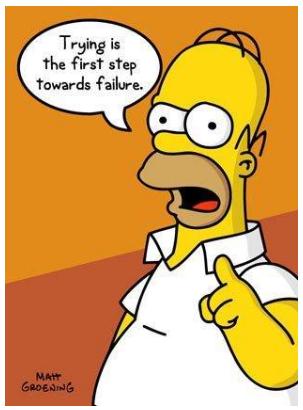
    failure-homer-simpson

    People who suffer with chronic illnesses are often accused of giving up or giving in. Irrational hyper-optimism has so infected the American psyche, that those who embrace their lives as they are often are looked down upon. Put mind over matter; never give in; be pro-active, always hope for a better tomorrow; these and other cheap clichés are often recited to the chronically ill, implying that their illnesses are somehow their own fault. If they would just take this drug, have this treatment, or see this doctor, then all would be well. An unwillingness to do these things is often viewed as laziness or giving in. Often, people take their own experiences and project them onto others, thinking that their outcomes would be the same for everyone if they would just follow the same course of treatment. People who think in this manner can often oppress and hurt chronic-illness sufferers, even when they don’t intend to do so. A recent health-related dust-up on social media has left me wondering if I should continue to write about my health problems and my battle with chronic pain. While I find writing about these things to be psychologically and physically helpful, sometimes the responses from readers can undo any of the health benefits gained from the writing.

    I’ve repeatedly been told that I need to keep trying; that it is better to try and fail than not try at all. While I am sure people who say this to me mean well, I wonder if they have ever considered how such cheerleading can actually hurt those who are struggling just to make it to another day. I was diagnosed with Fibromyalgia 18 years ago. Since then, the laundry list of health problems I have has continued to grow. No matter how many doctors I see, how many tests I have, or how many different drugs I try, I still wake up every morning in pain. I know that there is no cure on the horizon. No magic potion is going to undo the damage done by two decades of fighting with the medical equivalent Mohammed Ali.

    I have moments when I pretend that I can ignore my body and do what I want. Thanks to a decade of medical treatment, we are swimming in medical debt. Because of changes in our medical insurance, twenty-five to thirty percent of our income is spent on medical bills — mostly mine. I find it almost unbearable to watch Polly walk out the door every day, knowing that 25% of that day’s earnings will go towards my medical expenses.

    Recently, I once again ignored reality and decided that I would get a job so I could help pay the medical bills. I need employment that will allow me to sit while I work and take frequent breaks. Showing up for an interview in a wheelchair or haltingly walking with a cane usually results in the interviewer telling me, thanks for applying. We will keep your application on file. So, as I did recently with an interview with Meijer, I pretended that I am not a cripple. And just like that they offered me a job. Would they have offered me the job if I was in a wheelchair or walk with a cane? I doubt it. I’m sure if I told them that I have arthritis of the spine and can only stand for 15 or so minutes at a time, they would have politely told me that they had no job for me. Yes, the law says employers must accommodate the handicapped, but in the real world a 60-year-old cripple has little chance of winning a job over a healthy 25-year-old. Discrimination against the handicapped and older prospective employees happens without employers ever saying a word. I try to remember back when I was young man responsible for hiring employees for the various companies I worked for. Young and able-bodied were always preferable to old and crippled. In the case of Meijer, they are so desperate for workers, that they were willing to hire a broken-down old man such as I. As my orientation day drew near, Polly and I had a heart-to-heart talk about whether I could really do this job. Mentally, I told myself, sure, I can do this. But, knowing that I can’t stand for longer than 15 minutes at a time means that it’s impossible for me to work the floor or run a cash register at Meijer. Polly, who knows better than anyone (including myself) what I can and can’t do finally persuaded me to not take the job. As is often the case when it comes to my health, she has a lot more sense than I do. I can deceive myself into thinking that I can do something, when Polly knows I can’t. This is not me giving up or giving in as much as it is accepting things as they are.

    After turning down Meijer, I decided to try my hand at a work-from-home job with Amazon. I entered training with grand ambition, thinking that I had finally found something that I could do. Amazon’s training was quite extensive and grueling, yet I passed all the exams and was in the top five percent of my class of 650. Based on several conference calls with other new hires and management, I determined I was by far the oldest man in my group. Most of the new hires were in their twenties and thirties, as were many of the members of management.

    Encouraged by Polly and my counselor, I continued to slog through the training even though I was worried about remembering everything I had learned. Both of them told me they were sure I could do the job.  After completing the  training, I was deemed a newly-minted customer service representative — ready to start taking live calls. I thought, I know I can do this. A part of me knew better, but all I could think of was our increasing debt, so I pushed my better judgment aside and answered my first call. The call started well — a man wanting to know why his order hadn’t been delivered — and then what I feared would happen, did. I couldn’t remember what I needed to do next. My mind literally froze — covered with a pain-laden, fatigued cloud. The customer became frustrated with me and hung up. After emotionally regrouping from my failure,  I took another call only to have continued cognitive problems. I could not remember what I needed to do. This customer, instead of hanging up on me started screaming, so much so that I hung up on her. After this call, I mentally collapsed, knowing that I was unable to do what the job required. Several days later, Amazon and I agreed that it was best if I resigned, and so I did.

    The Amazon catastrophe has caused great psychological damage and pain. Pushed to the very edge of the abyss, my thoughts turned to suicide. While the suicidal thoughts faded after a couple of days, the assault on my mind remains the same. It’s hard not to feel worthless, that I am little more than a burden on my wife and family. They will certainly tell me that I am not, but it’s hard not to think that I am. This is usually the point where well-meaning people interject one of their cheap clichés about making lemonade when life gives you lemons. I am always polite when people say one of their Oprah-like maxims, but there are days when I want to tell them, until you’ve walked in my shoes, shut the fuck up.

    If you’ve noticed in recent months that the volume of my writing has diminished, now you know why. Things are better than they were a month ago, but I’m far from being ready to tackle another job opportunity. I do have thoughts of trying to make some money using my photography skills. In particular, I am considering starting a real estate photography business. Several of my children have recently bought homes, and the common denominator with all the homes they looked at was that the property photographs were terrible. I mean a-w-f-u-l. I plan to send out letters to local realtors offering to do their property photography. Several years ago, I applied for such a job with a local realtor only to be told by her that I was so overqualified that she didn’t believe I would keep the job for long. I tried to explain to her that she need not worry about that, but her mind was made up.

    I hope this new business venture will prove to be viable and profitable. If it’s not, we will be forced  to make some serious cuts in our budget. Hoping for a better day doesn’t change the fact that there are bills to pay. It used to be that it was easy to work out payment plans for medical debt, but now the physicians group my doctors are a part of will only make a payment arrangements for up to 12 months. After that, they demand you borrow the money to pay the debt. Last year, we had to borrow $5,000 to pay for my previous round of tests and procedures. While I’m not ready to throw in the towel, the daily pressure of these things makes it hard to focus on a better tomorrow. For those who have walked a similar path, you know what I’m talking about.

    [signoff]

  • Chronic Pain and a Football Game

    tinora-vs-ayersville-2016

    It is a beautiful Friday night in rural Northwest Ohio. Football weather — the time of year when I go to local high school football games with my sons. While none of my grandchildren is old enough to play football, I do enjoy watching young men battle it out on the gridiron, each hoping to be that night’s victor.

    On this Friday, the game of choice is Ayersville vs. Tinora — billed as THE must-see game. I arrive early at the field so I can secure a good seat. Second row up, 50 yard line, perfect for viewing and photography. As always, I have brought my camera, hoping to shoot a few keepers before the darkness of the night forces me to stop.

    I am the first person in the stands, but not for long. Soon the bleachers start to fill. By game time, late arrivers will be forced to stand along the fence that cordons off the stands from the field. I smile as I think of those who will have to park great distances away from the stadium. The early bird gets the best seat, I think to myself, and Bruce Gerencser is ALWAYS early.

    I soon settle into my seat. I sit, thinking of nothing but how nice the weather is for a September football game. By the time the Ohio High School Athletic Association crowns its divisional champions, the weather will have turned cold and snow will blanket the landscape. Today, I will enjoy the warmth of the sun and the balmy breeze that make it a perfect night for a football game.

    Eyes closed and head tilted slightly towards the sun, I bask in the nothingness of the moment; that is, until my state of mindfulness is rudely interrupted by an elementary school boy. A younger family with children arrived a few minutes ago, taking up seats several rows above mine. Their restless son, unable to contain his energy, jumps from his row to mine, landing on the metal stands with a big thud. My seat bounces as his feet hit my row, causing me to abruptly return to reality. Not thinking, I said, quite loudly JESUS! Better than a swear word, right? The mother is offended by my utterance, choosing to ignore how her son actions in using the stands as a trampoline might affect others.

    The young family soon moves to different seats. Did my taking the Lord’s name in vain cause them to move? I don’t know. Not that I care. As the stands continue to fill, an elderly man and his forty-something son make their way into the bleachers. I always sit on the end of the row. This allows me to control who sits next to me and it also allows me to stand up and move when people need to go to the bathrooms or concessions. I know I am a big guy, and not wanting a night filled with lap dances, I prefer to stand up and move into the common aisle so people can get by me.

    Sitting on the end of the row has its disadvantage too. Over the years, I have been repeatedly beaten with purses, coolers, and the like as people make their way to their seats. Some people say sorry, but most often they ignore their personal assaults on my body. I accept that this is the price I pay for sitting near the common aisle. Tonight is no different. As the father and the son make their way up to their seats, both of them plow into me as if I didn’t exist. Soon they settle into their seats right in back of mine. This begins what will be a night-long beating from both of them. I have suffered many such beatings before, so I smile, grit my teeth, and say nothing. I am still the polite Christian, I think to myself. I want to tell my oppressors, Dammit, PLEASE stop hitting me. But I say nothing, choosing instead to slide forward on my seat, hoping that the extra distance will keep me clear of their feet and knees.

    The son brought with him an oversized stadium seat, a seat so large that my son asks him to move it so he can sit next to me. My sons are far less “Christian” than I am these days and are quite willing to ask people to remove themselves from their personal space. The man quickly complies, but as he does, his metal-framed chair smashes into my back, causing my pain-wracked body to scream its objection. Before I can turn towards the man and give him my really, asshole? face, he slaps me hard on the back twice and says, sorry ’bout that.

    I can feel my face flushing with anger. I want to tell the man what I think about his assaults on my body and personal space, but I say nothing, choosing instead to weakly say, that’s okay. It’s not okay, I tell myself, but what’s to be gained by telling this man what I really think? My grandchildren are sitting next to me, and their friends’ families sit nearby. What will they think of me and our family if I give this man the verbal lashing he so richly deserves?

    I reach for my pain medication, taking a double dose, choosing to suffer in silence. I am here to watch the game, my inner Bruce says. Ignore this asshole. Half time arrives and the game of the year is a blowout. The Tinora stands are quiet, shocked by the beat-down Ayersville is putting on the home team. With four minutes left in the game, I decide to leave, hoping to escape the throng that will soon pour from the stands.

    I gingerly make my way down the stands to the walkway that leads to the parking lot. I walk haltingly, relying on my cane to keep me from falling over. Free from the man who assaulted me, I wrongly assume that I am safe from further indignities. As I walk slowly to my car, filled-with-life teens run into me. With a quick sorry uttered to a stranger, these youths continue to playfully run, hoping to catch friends. I don’t blame them for running into me. I remember when I was their age. I had little thought of others and how my actions might affect them. I don’t, however, have the same sympathies for the adults who rush by me, hoping to beat the traffic. Surely, they know better, I think to myself. By the time I reach my car, I have been run into countless times. I feel as if I have been forced to run a gauntlet. I unlock the car door, open it, and slowly pull myself into seat. I sit for a few moments, a tear of exhaustion in my eye. I can’t do this anymore, I tell myself.

    In a few moments, my mind and body settle down enough for me to start the car and head for home. Several hours later, I text my son: “Tinora vs. Holgate next Friday. Want to go?”

  • We’ve Only Just Begun

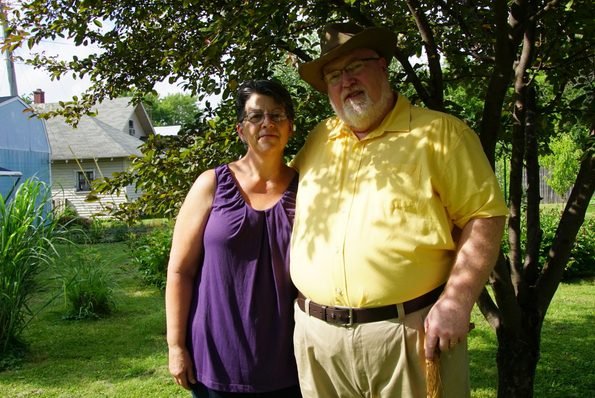
    bruce and polly gerencser 2015
    Bruce and Polly Gerencser, Summer 2015

    Forty years ago, a young man from the flatland of rural northwest Ohio moved to Pontiac, Michigan to study for the ministry. Also enrolled at Midwestern Baptist College was a young woman who hailed from Bay City, Michigan. What follows is their story.

    The young man packed his worldly goods into his beater of a car, and waving goodbye to his Mom, drove out of the trailer park, turned east on U.S. Hwy 6 and set a course for Pontiac, Michigan. His mother had kissed him goodbye, letting the young man know how proud she was that he was the first Gerencser to go to college. He pushed her away, uncomfortable with her display of affection, a behavior he would one day regret. The young man thought, finally, away from the craziness and the drunkard husband.

    Two-and-a-half hours later, the young man turned off of Golf Drive onto the driveway for Midwestern Baptist College. He stopped his car in front of the dormitory so he could unload his belongings and move them to his assigned dorm room — room 207. On that day, the young man wore a maize and blue shirt with the number 75 on the front and the word REV on the back. This shirt was a gift from a young woman who hoped the young man would remember her. He didn’t, knowing that enrolling at Midwestern would provide him ample opportunity to meet attractive Fundamentalist women. He would soon learn that a wide-open field of romance would quickly fade in the beauty of a dark-haired, beautiful young woman.

    Shortly after classes began in the fall of 1976, the young man and young dark-haired woman began flirting with one another. At first, they sent flirtatious notes, often meeting up for card games in the dormitory kitchen. While both of them would briefly date other people, by the end of September, the young man and young woman decided to give dating one another a try.

    They were an odd match. The young woman was quiet and reserved, rarely speaking more than a few words. The young man, on the other hand, was a talker, and opinionated. He lived life in the fast lane, serving Jesus, yet pushing the lines of Fundamentalist decorum and acceptability. Years later, the young woman would tell him that she was drawn to his wildness — her bad boy.

    Midwestern Baptist College — a Fundamentalist institution founded by Dr. Tom Malone, the pastor of nearby Emmanuel Baptist Church  — had strict rules concerning dating and male/female interaction. Dating couples were only allowed to date on Saturday evening and after Sunday night church. Couples were required to double-date, and all dates had to be approved by dorm supervisors. Couples were not permitted to travel beyond a ten-mile radius from the college. Coupled were not permitted to have any physical contact with each other. Breaking this rule would result in being campused — meaning that offending couples were not allowed to date off campus. Repeated infractions led to being kicked out of school.

    The young man and young woman quickly found that keeping the six-inch rule — the width of a songbook — was impossible. Fearing expulsion, they sought out other dating couples that also found the no-contact rule a strain on their relationships. On date nights, the young man and young woman could now snuggle close to one another and hold hands. As with all young couples with raging hormones, their desire for physical intimacy increased as time went along. Yet, fearing being discovered and expelled, the young man and young woman — for three months — didn’t kiss.

    Christmas of 1976 found the young man visiting the young woman at the home of her parents in Newark, Ohio. The young woman’s father was a preacher — a recent graduate of Midwestern. Her father was the assistant pastor of the Newark Baptist Temple — an Independent Fundamentalist Baptist church pastored by the young woman’s uncle, Jim Dennis.

    One evening, the young woman’s mother asked her to retrieve their clothing from the laundry room. The young man followed along, and it was there, in an apartment laundry room, the young couple kissed one another for the first time. Many kisses would follow, but neither of them would ever forget that one brief moment where they were able for the first time to express their love for one another.

    Love for one another? Yes, their relationship quickly moved from casual to serious, culminating in the young couple’s engagement on Valentine’s Day 1977. A quarter-carat diamond engagement ring was purchased from Sears and Roebuck for $225, sealing their commitment to marry in July of 1978. Little did they know that the young woman’s mother would do everything in her power to foil their plans, going so far as to tell her daughter that she forbade her to marry the young man. He comes from a divorced family, her mother said, and divorce is hereditary.

    After a year of pressuring the young couple to abandon their plans, the young woman’s mother relented and consented to the wedding — not that she had any other option. For the first time, the young woman stood up to her mom, telling her that she planned to run off and get married if she continued to oppose her marriage to the young man.

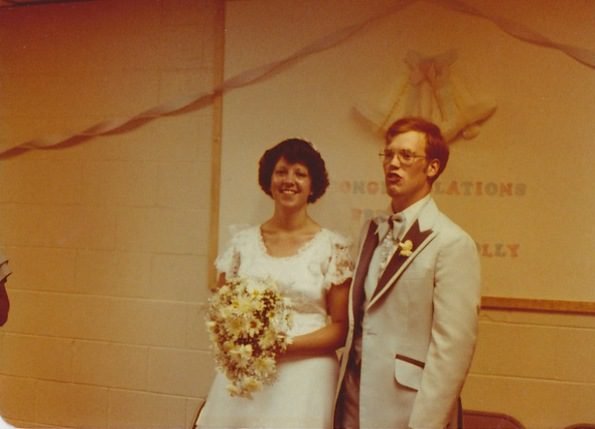
    Polly and Bruce Gerencser, Wedding July 1978
    Polly and Bruce Gerencser, Wedding July 1978

    July 15, 1978, was a hot and humid day. There was no air conditioning at the Newark Baptist Temple, not that this mattered to the young couple. Their special day had finally arrived, the day when they would become Mr. and Mrs. Bruce Gerencser. Their friends from college, along with family members and church members, filled the pews to witness the joining of the young man and young woman in holy matrimony. Songs were sung, vows were exchanged, and then, with a kiss for luck, they were on their way, innocent of where their life together would take them.

    Six weeks after their wedding, the young man came home from work and was met with the news, I’m pregnant. Nine months later, the first of the young couple’s six children was born in Bryan, Ohio. After almost three years at Midwestern, the young couple was forced to drop out of college and move to the Bryan – the birthplace of the young man. This would be the first of many moves for them. Over the next thirty-eight years they would move numerous times, living in dozens of rental houses.

    Life was not easy for the young married couple. Ignorance about how to manage money quickly led to all sorts of problems. Years later, the young man, now a seasoned Baptist preacher, would remark, it took us a few years to figure out that you had to pay the electric bill to keep the lights on. They faced numerous problems, wondering if their marriage would survive – thus proving the young woman’s mother right: divorce is hereditary. Survive they did, and here on July 15th they will celebrate their thirty-eighth wedding anniversary.

    The young couple walked out of the Newark Baptist Temple, cheered on by family and friends — two innocents wondering what fate would hold for them. Six children, one with Down Syndrome. Poverty. Moves to Michigan, Texas, Arizona, and Ohio. Bankruptcy. Health problems. Constant struggles to survive, living on poor wages and food stamps. Leaving the ministry and losing faith. Yet, despite stresses that often cause marriage failure, the commitment and love of the young couple endured. Seasoned by adversity and failure, the pair — now nearing their 60th birthdays — continue to honor the vows they made to one another years ago.

    Later today, the ageing couple will celebrate their wedding anniversary with a meal at a fancy restaurant and a night of watching races at a local dirt track. They will make jokes with another, promising hot, torrid sex before the night is over. And more than likely, once they arrive home, they will each give the other the look, the one that says, I’m tired, maybe tomorrow. Climbing into bed, they will turn to one another — just as they have thousands of times before — and say, I love you. The young woman, now with gray hair and weathered skin, will quickly fall to sleep, leaving the young man to his thoughts; thoughts of a well-lived life, of love and commitment and adversity and failure. But thoughts, most of all, of the fact that he is the luckiest man alive.

    Soon the young man — now with a white beard and failing health — will gently run his fingers through his sleeping love’s hair, pondering the life they have shared together. His mind will likely return to a basement laundry room and the moment where he realized that the young woman in his embrace was his one and only. Forty years later, she remains not only his wife and lover, but also his best friend and confidante. Life is good, he will say to himself as he drifts off to sleep, hoping that come morning he will have one more opportunity to say, I love you.

  • Victoria Wilson Says Birthing Babies is All About Jesus

    praise jesus

    My wife and I have six children, ages 23, 24, 27, 32, 35, and 37. Polly had all of the children vaginally, without epidurals. Over the years, I have stood in the background and watched as Polly traded birthing war stories with other mothers. Mothers love to talk about length of labor, epidurals, methods of birth, breast feeding vs. bottle, cloth vs. disposable, and various other things that only those who have been to war can talk about. For the record, Polly breastfed and used cloth diapers for all our children. Do these stories make her some sort of Super Mom? Hell yes, they do. Due to living in poverty — thanks Jesus — Polly had to do without. Sure, she would have loved to use Pampers, but we couldn’t afford them. Sure, there were times bottle feeding would have given Polly a break, but we couldn’t afford formula. Yes, it would have been nice for Polly to have been pampered at an upscale obstetrician’s office, but we couldn’t afford it. Instead, Polly went to the local state-funded clinic for care — often waiting hours to see her doctor. If awards were given for Suffering for Jesus, Polly would surely receive the highest honor. To this day I applaud her willingness to soldier on, while at the same time hanging my head in shame, knowing that my dear wife deserved far better.

    In a July 6, 2016 The Gospel Coalition article titled, Moms, Jesus is the Hero of Your Birth Story, Victoria Wilson rebuked women for the stories they tell one another about the births of their children. You see, according to Wilson, Jesus should get all the praise, honor, and glory. Suggesting that women had anything to do with their babies births is pride. Wilson wrote:

    During my first pregnancy, I drank the birth junkie Kool-Aid poured out by my foremothers. I practiced relaxation techniques and did my Kegel exercises. I read childbirth books and watched an inordinate number of water births. The contractions came, and I never asked for pain medications. I had a natural birth. And I was proud of it. In fact, I recall asking my husband if he made sure our family knew that I did it naturally.

    After my “successful” natural birth, I felt a real sense that I had earned my stripes. Friends began to ask me how I had achieved this task, and I reveled in answering their questions. My husband quietly observed this trend for months. He saw my desire to walk alongside new mothers and eventually suggested I become trained as a birth doula.

    But my husband, being a godly man, also notice an unsavory characteristic developing: pride.

    How did such pride exhibit itself? I would judge the birth experiences of other women. I might have congratulated the new mom, but I was truly convinced that I had the better accomplishment.
    ….

    My professional circles [Wilson is a doula] place great emphasis on the “innate strength” and “goddess-like beauty” of a woman’s body. It is tempting to get caught up in their excitement. But worshiping creation rather than the Creator is sin. God pours out wrath on “all ungodliness and unrighteousness of men” who “exchanged the truth about God for a lie and worshiped and served the creature rather than the Creator” (Rom. 1:18, 25). Why would we worship our own bodies when the God who made them demands exclusive praise?

    When Wilson asked her husband if she could at least take a little bit of pride in her successful labor and delivery, her worship leader husband replied, “No, babe. No. You can’t abide the tiniest bit of sin.”

    Wilson concluded her article with a call to repentance:

    I pray you will examine your motives and consider how you have been telling your children’s birth stories. Have you written yourself in as the main character? Have you been robbing God of any glory? Have you missed opportunities to communicate the gospel?

    Learning who God is shows us who we are not. God, not birthing women, is the Creator and giver of life. If you’ve been claiming responsibility and praise for giving life to your children, repent.

    I have no doubt that many of the mothers who read this blog will find Wilson’s words to be, not only offensive, but outrageous. Wilson lives in a make-believe world where Jesus is given credit for everything. If women have an “easy” birth, praise Jesus! If women have a “hard” birth, praise Jesus! and remember pain in childbirth is due to original sin. No matter the scenario, in Victoria Wilson’s world all the praise and honor goes to Jesus — a single man who never had sex with a woman or watched his wife go through great suffering to bring another vile sinner into the world.

    Here’s what I know: for the Gerencser family, all the praise, honor, and glory belong to a strong woman who endured suffering, pain, poverty, and neglect as she carried her children to term. This strong woman washed thousands of cloth diapers and was the primary caregiver for six children. Her busy pastor husband — the head of the home, as Jesus ordained — rarely helped with childcare. From the early morning hours to late into the night, this strong woman nursed her babies, never complaining about a lack of sleep. There was never a time someone named Jesus showed up to give this strong women a respite. Day in day out, for two decades, this strong women was a wonderful example of a mother who loved her children.

    So what do you think of Wilson’s groveling before Jesus? Please share your thoughts in the comment section.

  • The Calming Effect of a Power Outage

    power outage

    Power outage.

    No worries, the battery backup will keep me connected to the life-giving force of my existence–the internet.

    No internet either?

    Dammit, I have things to do.

    I NEED the internet.

    Blog.

    Facebook.

    Messenger.

    Twitter.

    Email.

    My digital life has come to a standstill.

    Dammit!

    In the stillness of the moment, I begin to hear sounds that are normally drowned out by the buzz, hum, and whir of electronics, appliances, and fans.

    A frog in the distance croaks out its mating call.

    Crickets chirp, reminding me that summer will, in a few months, fade into fall.

    A finch chirps as it eats seed from the bird feeder.

    A block away, children are playing, their laughs and loud voices echoing my way.

    Cars, one after another, make their way past my home.

    A feral cat wanders into the yard, meowing as it stops to eat from the communal food dish.

    The wind is silent, save for an occasional rustling of the backyard crabapple leaves.

    I wonder, why is there no power?

    A huge storm rumbled through Northwest Ohio last night, dumping lots of rain and downing numerous trees. Could this be the reason the power is off?

    Perhaps a transformer failed or a car hit an electric pole.

    Regardless of the why, I sit here typing, hoping to finish this post before the battery on my laptop dies.

    In the quietness of the moment I am reminded that the sum of life is not Facebook shares, Twitter retweets, blog comments, and emails. While I have no desire to forsake modernity and its digital wonders, the sounds I now hear remind me that life continues, with or without Thomas Edison’s greatest invention — electricity.

    It’s been an hour now…

    A light breeze is now blowing and the lone frog has been joined by a chorus of other frogs hoping to get laid tonight. As dusk nears, I can hear other birds singing their songs. The mourning doves have arrived for their late feeding.

    I feel calm, relaxed.

    I think I will read a book.

    The power needs to go off more often.

  • Tim Minchin Addresses 2013 University of Western Australia Graduating Class

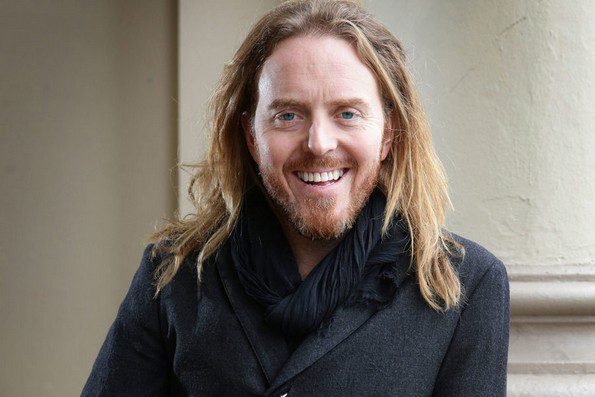
    tim minchinIn 2013, atheist Tim Minchin received an honorary doctorate from the University of Western Australia (UWA). The video that follows is Minchin’s address to UWA’s 2013 graduating class. I hope readers will take the time to listen to Minchin’s address. In fact, if you have friends or family members who are graduating from high school or university, I encourage you to make them aware of this video. Minchin imparts nine simple, yet profound thoughts about life. Minchin, ever the comedian, challenges young adults to live life with passion, knowing that day will come when they will be dead.

    Video Link

    Transcript

    In darker days, I did a corporate gig at a conference for this big company who made and sold accounting software. In a bid, I presume, to inspire their salespeople to greater heights, they’d forked out 12 grand for an Inspirational Speaker who was this extreme sports dude who had had a couple of his limbs frozen off when he got stuck on a ledge on some mountain. It was weird. Software salespeople need to hear from someone who has had a long, successful and happy career in software sales, not from an overly-optimistic, ex-mountaineer. Some poor guy who arrived in the morning hoping to learn about better sales technique ended up going home worried about the blood flow to his extremities. It’s not inspirational – it’s confusing.

    And if the mountain was meant to be a symbol of life’s challenges, and the loss of limbs a metaphor for sacrifice, the software guy’s not going to get it, is he? Cos he didn’t do an arts degree, did he? He should have. Arts degrees are awesome. And they help you find meaning where there is none. And let me assure you, there is none. Don’t go looking for it. Searching for meaning is like searching for a rhyme scheme in a cookbook: you won’t find it and you’ll bugger up your soufflé.

    Point being, I’m not an inspirational speaker. I’ve never lost a limb on a mountainside, metaphorically or otherwise. And I’m certainly not here to give career advice, cos… well I’ve never really had what most would call a proper job.

    However, I have had large groups of people listening to what I say for quite a few years now, and it’s given me an inflated sense of self-importance. So I will now – at the ripe old age of 38 – bestow upon you nine life lessons. To echo, of course, the 9 lessons and carols of the traditional Christmas service. Which are also a bit obscure.

    You might find some of this stuff inspiring, you will find some of it boring, and you will definitely forget all of it within a week. And be warned, there will be lots of hokey similes, and obscure aphorisms which start well but end up not making sense.

    So listen up, or you’ll get lost, like a blind man clapping in a pharmacy trying to echo-locate the contact lens fluid.

    Here we go:

    1. You Don’t Have To Have A Dream.

    Americans on talent shows always talk about their dreams. Fine, if you have something that you’ve always dreamed of, like, in your heart, go for it! After all, it’s something to do with your time… chasing a dream. And if it’s a big enough one, it’ll take you most of your life to achieve, so by the time you get to it and are staring into the abyss of the meaninglessness of your achievement, you’ll be almost dead so it won’t matter.

    I never really had one of these big dreams. And so I advocate passionate dedication to the pursuit of short-term goals. Be micro-ambitious. Put your head down and work with pride on whatever is in front of you… you never know where you might end up. Just be aware that the next worthy pursuit will probably appear in your periphery. Which is why you should be careful of long-term dreams. If you focus too far in front of you, you won’t see the shiny thing out the corner of your eye. Right? Good. Advice. Metaphor. Look at me go.

    2. Don’t Seek Happiness

    Happiness is like an orgasm: if you think about it too much, it goes away. Keep busy and aim to make someone else happy, and you might find you get some as a side effect. We didn’t evolve to be constantly content. Contented Australophithecus Afarensis got eaten before passing on their genes.

    3. Remember, It’s All Luck

    You are lucky to be here. You were incalculably lucky to be born, and incredibly lucky to be brought up by a nice family that helped you get educated and encouraged you to go to Uni. Or if you were born into a horrible family, that’s unlucky and you have my sympathy… but you were still lucky: lucky that you happened to be made of the sort of DNA that made the sort of brain which – when placed in a horrible childhood environment – would make decisions that meant you ended up, eventually, graduating Uni. Well done you, for dragging yourself up by the shoelaces, but you were lucky. You didn’t create the bit of you that dragged you up. They’re not even your shoelaces.

    I suppose I worked hard to achieve whatever dubious achievements I’ve achieved … but I didn’t make the bit of me that works hard, any more than I made the bit of me that ate too many burgers instead of going to lectures while I was here at UWA.

    Understanding that you can’t truly take credit for your successes, nor truly blame others for their failures will humble you and make you more compassionate.

    Empathy is intuitive, but is also something you can work on, intellectually.

    4. Exercise

    I’m sorry, you pasty, pale, smoking philosophy grads, arching your eyebrows into a Cartesian curve as you watch the Human Movement mob winding their way through the miniature traffic cones of their existence: you are wrong and they are right. Well, you’re half right – you think, therefore you are… but also: you jog, therefore you sleep well, therefore you’re not overwhelmed by existential angst. You can’t be Kant, and you don’t want to be.

    Play a sport, do yoga, pump iron, run… whatever… but take care of your body. You’re going to need it. Most of you mob are going to live to nearly a hundred, and even the poorest of you will achieve a level of wealth that most humans throughout history could not have dreamed of. And this long, luxurious life ahead of you is going to make you depressed!

    But don’t despair! There is an inverse correlation between depression and exercise. Do it. Run, my beautiful intellectuals, run. And don’t smoke. Natch.

    5. Be Hard On Your Opinions

    A famous bon mot asserts that opinions are like arse-holes, in that everyone has one. There is great wisdom in this… but I would add that opinions differ significantly from arse-holes, in that yours should be constantly and thoroughly examined.

    We must think critically, and not just about the ideas of others. Be hard on your beliefs. Take them out onto the verandah and beat them with a cricket bat. Be intellectually rigorous. Identify your biases, your prejudices, your privilege.

    Most of society’s arguments are kept alive by a failure to acknowledge nuance. We tend to generate false dichotomies, then try to argue one point using two entirely different sets of assumptions, like two tennis players trying to win a match by hitting beautifully executed shots from either end of separate tennis courts.

    By the way, while I have science and arts grads in front of me: please don’t make the mistake of thinking the arts and sciences are at odds with one another. That is a recent, stupid, and damaging idea. You don’t have to be unscientific to make beautiful art, to write beautiful things.

    If you need proof: Twain, Adams, Vonnegut, McEwen, Sagan, Shakespeare, Dickens. For a start.

    You don’t need to be superstitious to be a poet. You don’t need to hate GM technology to care about the beauty of the planet. You don’t have to claim a soul to promote compassion.

    Science is not a body of knowledge nor a system of belief; it is just a term which describes humankind’s incremental acquisition of understanding through observation. Science is awesome.

    The arts and sciences need to work together to improve how knowledge is communicated. The idea that many Australians – including our new PM and my distant cousin Nick – believe that the science of anthropogenic global warming is controversial, is a powerful indicator of the extent of our failure to communicate. The fact that 30% of this room just bristled is further evidence still. The fact that that bristling is more to do with politics than science is even more despairing.

    6. Be a teacher

    Please? Please be a teacher. Teachers are the most admirable and important people in the world. You don’t have to do it forever, but if you’re in doubt about what to do, be an amazing teacher. Just for your twenties. Be a primary school teacher. Especially if you’re a bloke – we need male primary school teachers. Even if you’re not a Teacher, be a teacher. Share your ideas. Don’t take for granted your education. Rejoice in what you learn, and spray it.

    7. Define Yourself By What You Love

    I’ve found myself doing this thing a bit recently, where, if someone asks me what sort of music I like, I say “well I don’t listen to the radio because pop lyrics annoy me”. Or if someone asks me what food I like, I say “I think truffle oil is overused and slightly obnoxious”. And I see it all the time online, people whose idea of being part of a subculture is to hate Coldplay or football or feminists or the Liberal Party. We have tendency to define ourselves in opposition to stuff; as a comedian, I make a living out of it. But try to also express your passion for things you love. Be demonstrative and generous in your praise of those you admire. Send thank-you cards and give standing ovations. Be pro-stuff, not just anti-stuff.

    8. Respect People With Less Power Than You

    I have, in the past, made important decisions about people I work with – agents and producers – based largely on how they treat wait staff in restaurants. I don’t care if you’re the most powerful cat in the room, I will judge you on how you treat the least powerful. So there.

    9. Don’t Rush

    You don’t need to already know what you’re going to do with the rest of your life. I’m not saying sit around smoking cones all day, but also, don’t panic. Most people I know who were sure of their career path at 20 are having midlife crises now.

    I said at the beginning of this ramble that life is meaningless. It was not a flippant assertion. I think it’s absurd: the idea of seeking “meaning” in the set of circumstances that happens to exist after 13.8 billion years worth of unguided events. Leave it to humans to think the universe has a purpose for them. However, I am no nihilist. I am not even a cynic. I am, actually, rather romantic. And here’s my idea of romance:

    You will soon be dead. Life will sometimes seem long and tough and, god, it’s tiring. And you will sometimes be happy and sometimes sad. And then you’ll be old. And then you’ll be dead.

    There is only one sensible thing to do with this empty existence, and that is: fill it. Not fillet. Fill. It.

    And in my opinion (until I change it), life is best filled by learning as much as you can about as much as you can, taking pride in whatever you’re doing, having compassion, sharing ideas, running(!), being enthusiastic. And then there’s love, and travel, and wine, and sex, and art, and kids, and giving, and mountain climbing … but you know all that stuff already.

    It’s an incredibly exciting thing, this one, meaningless life of yours. Good luck.

    Thank you for indulging me.

  • Nancy Campbell’s “Vision” for Her Children and Grandchildren

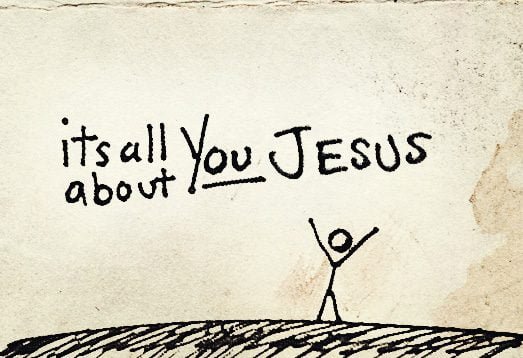
    all about jesus

    According to the Above Rubies website, Nancy Campbell is an “internationally known author, speaker, and authority on Biblical Motherhood and Family.” Campbell preaches the old-time Fundamentalist  gospel of patriarchy — a world in which women marry, obey their husbands, bear lots of children, and keep the home. Recently, in a post titled A Higher Vision, Campbell detailed her vision for her children and grandchildren. Here’s what Campbell had to say:

    I want children who love God above all else.
    I want children who are growing into the likeness of Christ.
    I want children who love righteousness and abhor evil.
    I want children who have a biblical mindset and stand for God’s truth.
    I want children who will not compromise godly standards.
    I want children who will not be tainted by the spirit of this world.
    I want children who will not give in to the lust of the flesh, the lust of the eyes, and the pride of life, but who will pursue the will of God.
    I want children who love God’s Word and love to pray.
    I want children who will blaze across this world with the gospel and message of truth.

    Amen.

    As you can see, Campbell’s vision for her progeny focuses on the Evangelical God and the Bible. Like many Evangelicals, her vision is singular and blinkered, making Campbell blind to the wonders of the world outside the narrow confines of the Christian box. All that matters to Campbell is that her children and grandchildren turn out to be good little Christians who follow the approved way of life.

    I too have children and grandchildren, and like Campbell I have a vision for them. However, my vision is far different from that of Campbell’s:

    I want children who think for themselves.
    I want children who enjoy life.
    I want children who treat others with respect.
    I want children who love their families.
    I want children who value hard work and enjoy the fruits of their labors.
    I want children who aren’t afraid to stand against bigotry and racism.
    I want children who will live every moment to its fullest, realizing that life is short.
    I want children who value fun, pleasure, and relaxation.
    I want children who will travel far and wide, enjoying the wonders of earth.
    And most of all, I want children who are happy.

    Amen.

    Campbell’s vision is one of exclusion, whereas my vision is one of inclusion. Campbell’s vision focuses on right beliefs and obedience, whereas my vision focuses on embracing and enjoying life. Campbell’s vision sees the goal as a room in God’s celestial kingdom, where my vision sees the goal as a life well lived. Campbell envisions life as that of Pilgrim in John Bunyan’s The Pilgrim’s Progress. Trudge on dear Pilgrim, remembering that Heaven awaits you IF you make it to the end. What a sad way to live life, squandering the too-short time we have on earth.

    I have more of a Dixie Chicks way of looking at life. In 1998, the Chicks released the single Wide Open Places. I think the song aptly describes how those of us who are rooted in there here and now view life:

    Who doesn’t know what I’m talking about
    Who’s never left home, who’s never struck out
    To find a dream and a life of their own
    A place in the clouds, a foundation of stone

    Many precede and many will follow
    A young girl’s dream no longer hollow
    It takes the shape of a place out west
    But what it holds for her, she hasn’t yet guessed

    [Chorus]
    She needs wide open spaces
    Room to make her big mistakes
    She needs new faces
    She knows the high stakes

    She traveled this road as a child
    Wide eyed and grinning, she never tired
    But now she won’t be coming back with the rest
    If these are life’s lessons, she’ll take this test

    [Repeat Chorus]
    She knows the high stakes

    As her folks drive away, her dad yells, “Check the oil!”
    Mom stares out the window and says, “I’m leaving my girl”
    She said, “It didn’t seem like that long ago”
    When she stood there and let her own folks know

    [Repeat Chorus]
    She knows the highest stakes
    She knows the highest stakes
    She knows the highest stakes
    She knows the highest stakes

    Video Link

    Wide open spaces, that’s what I hope my children and grandchildren find as the meander their ways through this life. Who knows what might lie ahead. Campbell wants to keep her children and grandchildren safe within the confines of the Evangelical box. (Please see The Danger of Being in a Box and Why it Makes Sense When You are in it and What I Found When I Left the Box) While there is great comfort and security that comes from knowing everyone is safely in the box, this is no way to live and enjoy life. That’s what Evangelicalism does. It confines people for life in Bible Prison, safe from the evil, sinful world. Humanism, however, opens wide the gate and says, You are FREE! Enjoy life. Embrace all that it has to offer, knowing that we don’t know what tomorrow might bring. Life is like the steam rising from a radiator on a cold winter’s day. It quickly dissipates into the air and then it is gone (James 4:14).  Solomon was surely right when he said:

    There is nothing better for a man, than that he should eat and drink, and that he should make his soul enjoy good in his labour
    ….
    All go unto one place; all are of the dust, and all turn to dust again. Who knoweth the spirit of man that goeth upward, and the spirit of the beast that goeth downward to the earth?
    Wherefore I perceive that there is nothing better, than that a man should rejoice in his own works; for that is his portion: for who shall bring him to see what shall be after him?
    ….
    Then I commended mirth, because a man hath no better thing under the sun, than to eat, and to drink, and to be merry: for that shall abide with him of his labour the days of his life, which God giveth him under the sun.
    ….
    For to him that is joined to all the living there is hope: for a living dog is better than a dead lion. For the living know that they shall die: but the dead know not any thing, neither have they any more a reward; for the memory of them is forgotten. Also their love, and their hatred, and their envy, is now perished; neither have they any more a portion for ever in any thing that is done under the sun. Go thy way, eat thy bread with joy, and drink thy wine with a merry heart; for God now accepteth thy works. Let thy garments be always white; and let thy head lack no ointment. Live joyfully with the wife whom thou lovest all the days of the life of thy vanity, which he hath given thee under the sun, all the days of thy vanity: for that is thy portion in this life, and in thy labour which thou takest under the sun. Whatsoever thy hand findeth to do, do it with thy might; for there is no work, nor device, nor knowledge, nor wisdom, in the grave, whither thou goest.

    Let me conclude this post with the advice I give on the ABOUT page of this blog:

    You have one life. There is no heaven or hell. There is no afterlife. You have one life, it’s yours, and what you do with it is what matters most. Love and forgive those who matter to you and ignore those who add nothing to your life. Life is too short to spend time trying to make nice with those who will never make nice with you. Determine who are the people in your life that matter and give your time and devotion to them. Live each and every day to its fullest. You never know when death might come calling. Don’t waste time trying to be a jack of all trades, master of none. Find one or two things you like to do and do them well. Too many people spend way too much time doing things they will never be good at.

    Here’s the conclusion of the matter. It’s your life and you best get to living it. Some day, sooner than you think, it will be over. Don’t let your dying days be ones of regret over what might have been.


  • A Song for Polly and All of Us Who Are Still in Love With Our One and Only

    polly 2013

    Despite the many challenges Polly and I have faced over the past 40 years, we, amazingly, still love each other. We began life together as two naïve young people mutually infatuated with one another. As most couples who have been married a long time will tell you, deep, abiding love takes time to grow. Young love is often focused on the physical, but as couples age, their love for one another becomes more complex. Certainly, the physical is still important, but love is so much more than biological needs and urges. As people age, they change. We get up in the morning, look in the mirror, knowing that the youthful beauty and virility of 40 years ago is waning. It’s not that I don’t think Polly is beautiful — I do — but she is much more than just a pretty face. She is my friend and confidant. She’s the hand on the till when my life is spinning out of control. I am there for her and she is there for me. Oh, we still fuss and fight, often over the same things we fought about 30 years ago. Each of us is still as irritating to the other. But love forged in the fires of human experience sees beyond the irritations and personality quirks. Some days we don’t like each other very much. That’s life. Loves sees beyond the moment, reminding us that we have been privileged to experience a life that many will never know.

    There are times when I feel guilty over being happily married. I correspond with people whose marriages are on the rocks thanks to their loss of faith. I wish I could wave a magic wand over their marriages and make them whole again, but I know I can’t. Stress and loss often reveal cracks in marital relationships. Sadly, many marriages don’t survive when one party says I no longer believe. Similar to the loss of a child, losing Jesus can and does cause great heartache and often leads to marital conflict. Some couples find a way to make things work, others can’t find a way to build a bridge from loving Jesus together to one partner not believing God exists. For whatever reason, Polly and I were able to walk away from Christianity together. While our reasons for deconverting are different, both of us number ourselves among the godless. Sometimes, people will suggest that Polly is some sort of lemming blindly following her husband. I think there are members of her family who sincerely believe that once I am dead Polly will return to Christianity. The fact that they think this reveals that they have likely never understood Polly. She’s quiet and reserved, and people often mistake her demeanor for passivity. Nothing could be farther from the truth. She is, in every way, just as committed as I am to living according to the humanist ideals. And it is this commitment that continues to strengthen our marriage.

    I usually listen to Spotify when I write. Today, I am in a country mood. What follows is a song by Jon Pardi that aptly expresses the love I have Polly. I hope she enjoys it, and I hope you do too.

    Video Link

    Lyrics

    I wanna sweep you off your feet tonight
    I wanna love you and hold you tight
    Spin you around on some old dance floor
    Act like we never met before for fun, ‘cause

    You’re the one I want, you’re the one I need
    Baby, if I was a king, ah, you would be my queen
    You’re the rock in my roll
    You’re good for my soul, it’s true
    I’m head over boots for you

    The way you sparkle like a diamond ring
    Maybe one day we can make it a thing
    Test time and grow old together
    Rock in our chairs and talk about the weather, yeah

    So, bring it on in for that angel kiss
    Put that feel good on my lips, ‘cause

    You’re the one I want, you’re the one I need
    Baby, if I was a king, ah, you would be my queen
    You’re the rock in my roll
    You’re good for my soul, it’s true
    I’m head over boots for you

    Yeah, I’m here to pick you up
    And I hope I don’t let you down, no, ‘cause

    You’re the one I want, you’re the one I need
    Baby, if I was a king, ah, you would be my queen
    You’re the rock in my roll
    You’re good for my soul, it’s true
    I’m head over boots for you

    You’re the one I want, you’re the one I need
    Baby, if I was a king, ah, you would be my queen
    You’re the rock in my roll
    You’re good for my soul, it’s true
    I’m head over boots for you

    I wanna sweep you off your feet tonight
    I wanna love you and hold you tight
    Spin you around on some old dance floor


  • Facing Life and Death Without God

    life

    Christianity offers its followers the promise of life after death. No matter how difficult and painful this life is, Christians are promised wonderful lives after death living with Jesus and their fellow Christians in a perfect, pain-free heaven. While I wonder how heavenly it is to spend your life prostrate before God worshiping him, Christians live in the hope that someday they will take possession of a room in the Father’s house, built especially just for them. (John 14) Without the promise of life after death in heaven, I wonder if most Christians would still be willing to forgo the pleasures of this life? While some Christians would argue that living according to the laws, teachings, and precepts of the Bible is still a good way to live, I suspect most Christians — without the promise of eternal life and bliss — would quickly abandon their houses of worship, joining people such as myself at the local pub or the church of the NFL. After all, even the apostle Paul said, If in this life only we have hope in Christ, we are of all men most miserable. (1 Corinthians 15:19) Evidently, Paul thought that in this life only Christianity had little to offer. And so Sunday after Sunday, Christian preachers promise parishioners a home awaits them in heaven. According to the Bible, God promises some day to give Christians the desires of their hearts. Wait. Does that mean there will be booze, porn, cigars, dirt track racing, and hunting in heaven? Will heavenly citizens spend their days playing Nintendo or Xbox games? Will God really give Christians the desires of their hearts? Hmm, this got me thinking about the whole going-to-heaven thing. I know a con job when I hear it. What better way to get people to buy what you are selling than to promise them that they will have a wonderful life if they will just sign on the dotted line. A wonderful life, that is, someday, after you have made the 666 monthly payments and died.

    Atheism offers no such promises. Atheism is rooted in a humanistic and secularist view of the world. No promises of a divine life in the sweet by and by. Life is hard, and then you die. No promises of blessings in this life or the life to come. Some have argued that atheists have a cold, sterile outlook on life. To some degree this is true. Atheists are realists, knowing they only get one shot at life— best get to living it. Life is what we make it, and even when hard times come (and they will most certainly come), atheists find a way to make the most of it. I could spend my days whining and complaining about my health problems, but what good would that do? Instead, I turn my pain and suffering into a platform for helping others. I can look at the five decades I spent in the Christian church and say, what a waste, but I choose to use these experiences as an opportunity to help others. I know that this is the only life I have, and it is up to me to make the most of it. Spending time wondering about what might have been accomplishes nothing. As my family has heard me say many times, it is what it is. Sure, if there were some magical way to redo certain things from my past I might do it. But maybe not. Polly and I will celebrate our 38th wedding anniversary this July. We met at a Fundamentalist Bible college. If nothing else good came out of our past, both of us would say — on most days — that our relationship was the best thing about our years in Evangelicalism. I would not want anyone to follow the same path we did, yet we do have six wonderful children and 11 awesome grandchildren. They indeed are the bright spots of the years we spent working in God’s coal mine. I have learned, or perhaps I am learning, to reflect on the good of the past, and use the bad things to fuel my writing and my attempts to help others avoid similar paths.

    I will celebrate my 59th birthday in June. I have lived 12 years longer than my mother and five years longer than my dad. There are days when my body is so overwhelmed with pain that I wonder if I can live another day. The means of my demise are always nearby, yet despite my suffering I choose to live. Why? Because this is the only life I will ever have. I only have one opportunity to love Polly, Jason, Nathan, Jaime, Bethany, Laura, Josiah, my grandchildren, my brother and sister, and Polly’s mom and dad. I know that when I draw my last breath, there will be no family circle meeting in the sky — sorry Johnny! This is why I want to live each and every day to its fullest. This is not a cliché to me. This life matters. My wife, children, grandchildren, son-in-law, daughters-in-law, siblings, extended family, and friends matter to me. I know that I am only going to see them and enjoy their company in this life. There are places I want to go to and see. I want to enjoy and experience the fullness of what it means to be human. And since casting off the shackles of religion, I have been free to drink deeply of the human experience. No longer fearful of God’s judgment or hell, I am free to see, touch, taste, and hear the things I desire. Yes, there is that dirty word that dare not be spoken in Evangelical churches — desire. I spent way too many years denying passions, desires, wants, and needs, all for the sake of God, Jesus, the church, and the ministry. No more. It is wonderful to do something just because I want to. I do not have to pray about it or see if the Bible approves of it. Bruce approves, end of discussion.

    When I write posts such as this, there are always a few horse-bridled Christians who let me know that there is coming a day when I will regret not bowing to the will of the S&M master, Jesus. Someday Bruce, Evangelical zealots tell me, God is going to make you pay for your attacks on Christianity. Someday, God is going to judge you for your wanton living and rejection of the Bible. Sometimes, I think Christians such as these people relish the day when God is going to give atheist Bruce Gerencser an eternal ass-whipping. I am sure they will be standing among the crowd cheering and saying to God, hit him again! He deserves it, Lord.

    I have been blogging now for going on nine years. I left Christianity in 2008, and since then countless Evangelicals — along with a few Catholics — have attempted to win me back to Jesus through the use of Pascal’s Wager. The basic premise is this, Bruce, what if you are wrong? Good question. Since I am not infallible, nor do I have at my disposal the sum of all human knowledge and experience, all I can do is make reasoned, knowledgeable decisions based on the evidence at hand. I can tell readers this much: I have been wrong many, many times. Not only that, I have made enough mistakes that if you piled them up they would reach to the International Space Station. I am, after all, a feeble, frail, and at times contradictory, human being. I can, like all people, be led astray by my passions, judgments, or incomplete information. I am not immune to irrationality and cognitive dissonance. However, when it comes to Christianity and its promises of eternal life in heaven or judgment in hell, it is my educated opinion that the claims of Christianity are false. Trying to get me to choose Jesus just in case I am wrong makes a mockery of intellectual inquiry (and Christianity). Having spent most of my adult life in the Christian church and 25 years studying and preaching the Bible, I think it is safe to say that I know a good bit about Christianity. I cannot remember the last time that some Christian presented me with something I have not heard before. I am not being arrogant here — as I am sure some Christians will allege. I spent decades reading and studying the Bible — devouring countless Christian books. I immersed myself in Christianity and its teachings, so when I say I am no longer a Christian because I think the claims of Christianity and the Bible are false, my conclusions — unlike many Christian opinions of atheism — come from an educated, reasoned, well-thought-out position. Do I know everything there is to know about Christianity? Of course not, but I sure as hell know more than most the Christians (and preachers) I come in contact with on a day-to-day basis. My point is this: I am an atheist today, not out of ignorance, but because I weighed Christianity in the balance and found it wanting.

    If Christians come up with new evidences for the veracity of their claims — and I doubt they ever will —  then I will gladly consider them. Until then, I am content to number myself among the godless. And when I die, I hope to leave this life knowing that I did what I could to be a help to others. I hope, on the day that my ashes are scattered along the shores of Lake Michigan, that my family and friends will speak well of me. I hope that none of them will have to lie, but that they will truly believe that my good works outweigh the bad. This is why I think that is important to finish well. I am sure Polly and my children have less-than-complimentary stories they could tell at my wake, but I hope, because I have made a concerted effort to be a better man, that they will share stories about a good man who just so happened to be an atheist.

    I am often asked if I fear death. Yes and no. Since no one has died and come back to life — including Jesus — I do fear the blackness that awaits. There are been those times, late at night, when I have pondered being alive one moment and dead the next; going to sleep and never waking up. But this fear does not overwhelm me. I know that I cannot do anything about dying. It is, to quote the Lion King, the circle of life. We are born, we live, we die. End of story. All I know to do is to live a good life and be a good husband, father, grandfather, friend, and fellow citizen of earth. I have had the privilege of living at this time on humanity’s calendar, and when it comes time for me to draw my last breath, I hope my dying thoughts will be those of love. Love of family, love of friends, love of writing, love of photography, and love of all those who have made my life worth living. Will that not be what all of us desire? To love and to be loved? As dying pushes away all the minutia of life, what remains is love. For me, that will be enough.