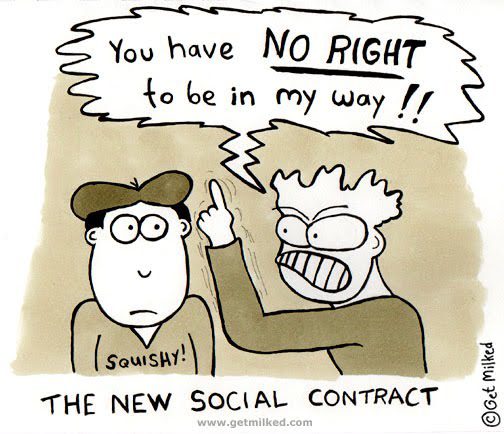
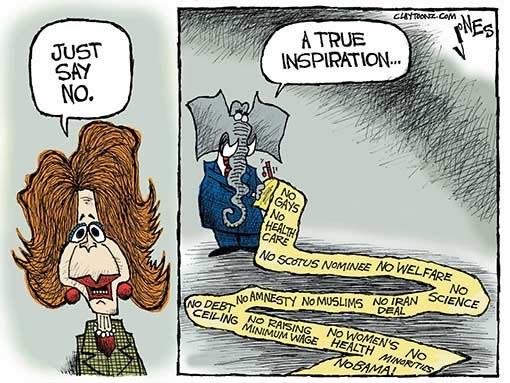
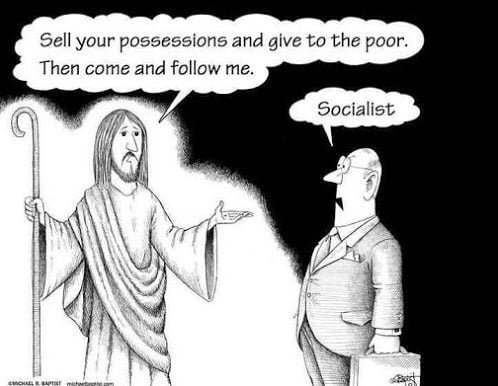
Electric vehicles, LED lighting, and recycling will do very little, if anything, to meaningfully combat global climate change.
Bonus: Americans will not do anything unless you make them.
Leave your hot thoughts in the comment section.
Bruce Gerencser, 69, lives in rural Northwest Ohio with his wife of 48 years. He and his wife have six grown children and thirteen grandchildren. Bruce pastored Evangelical churches for twenty-five years in Ohio, Texas, and Michigan. Bruce left the ministry in 2005, and in 2008 he left Christianity. Bruce is now a humanist and an atheist.
Your comments are welcome and appreciated. All first-time comments are moderated. Please read the commenting rules before commenting.
Over the weekend, Silicon Valley Bank collapsed, putting billions of dollars in customer deposits at risk. The Federal Deposit Insurance Corporation (FDIC) insures deposits up to $250,000. This means that deposits over $250,000 could be lost, causing harm to depositors. All of a sudden, libertarian venture capitalists and entrepreneurs — people who despise regulation and handouts/bailouts — are pleading for the Biden Administration to come to the rescue and bail out SVB.
Derek Thompson, a writer for Current Affairs, had this to say:
Silicon Valley Bank was widely used, as you might expect, by tech industry startups (as well as a bunch of California winegrowers), and startup types are not generally known for their belief in generous government handouts to those screwed by the free market. But libertarians quickly become socialists when they’re the ones who end up on the losing end of one of capitalism’s frequent crises. Billionaire Mark Cuban swiftly went from denouncing regulators to asking “Where were the regulators?” Tech industry leaders immediately started calling for the FDIC to ditch its $250,000 cap on guaranteed deposits and guarantee everything including the nearly $500 million that Roku held at SVB. Venture capitalist David Sacks said it was unfair for depositors to be punished for opening a bank account at an institution that failed, and that he wasn’t asking for a bailout but merely for the government to “ensure the integrity of the system.” CNBC reported on those noting “the irony as some VCs with notoriously libertarian free-market attitudes are now calling for a bailout.” (At Slate, Edward Ongweso Jr. has more on the “tantrum” thrown by venture capitalists who demanded that the government step in when SVB went under.)
One of those notorious for his “free-market attitudes” is Larry Summers, the former Clinton treasury secretary and Jeffrey Epstein associate. Summers has previously had harsh words for those advocating a bailout for underwater student loan debtors. But when it came to Silicon Valley Bank, Summers said that the government should step in and “this is not the time for moral hazard lectures or for lesson administering or for alarm about the political consequences of ‘bailouts.’”
If the technological innovation coming out of Silicon Valley is as important as venture capitalists insist, the past few days suggest they haven’t been very responsible stewards of it. The collapse of Silicon Valley Bank late last week may have resulted from a perfect storm of ugly events. But it was also emblematic of a startup ecosystem and venture-capital apparatus that are too unstable, too risky, and too unmoored from reality to be left in charge of something as important as the direction of our technological development.
As the startups that make up Silicon Valley Bank’s customer base scrambled to figure out whether they would be able to make payroll, a group of extremely online venture capitalists spent four days emoting on Twitter, ginning up confusion and hysteria about the threat of a systemic risk if depositors didn’t get all their money back, pronto. All weekend, they screamed that there would be an economic collapse, that they were concerned about the workers, that the Federal Reserve was responsible, that-that-that … until finally, on Sunday evening, they got what they wanted: the government promising full account access to all Silicon Valley Bank depositors.
By now, it is relatively clear what happened at Silicon Valley Bank. A pandemic bull run inflated the value of tech startups and the funds of investors, resulting in a tripling of deposits at the regional bank that specializes in the industry’s fledgling companies, from $62 billion at the end of 2019 to $189 billion at the end of 2021. SVB wanted to put that money to work, so it bought up U.S. Treasury and mortgage bonds that would take years to mature but serve as a relatively safe place to park its cash—as long as interest rates didn’t rise. They did rise, however, multiple times.
For over a decade, low interest rates have allowed venture capitalists to accumulate huge funds to give increasingly unprofitable firms with unrealistic business models increasingly larger valuations—one 2021 analysis found that not only were 90 percent of U.S. startups that were valued over $1 billion unprofitable, but that most would remain so. Give metens of billions of dollars and a $120 billion valuation and someday, somehow, I will replace every taxi driver with gig workers paid subminimum wages—or robot taxis paid no wages—while charging exorbitant fares for rides, increasing pollution, and adding to traffic. Or not, and I will sell off all the science-fiction projects I’ve promised, but still fail to make a profit.
Over the last year, rising interest rates to combat inflation have meant less free money for science-fiction projects, pressuring investors to change their entire approach and actually fund realistic ventures at realistic valuations with realistically sized funds and deals. Drops in valuations meant smaller checks, which meant smaller deposits at Silicon Valley Bank, and more and more withdrawals as startups ran out of cash themselves. It also meant the bonds SVB bought were now worth less than when purchased, so they’d have to be sold at a loss to generate some liquidity, so that clients could withdraw their deposits.
….
This was dramatic, but in fact it should have calmed down everyone who had money there—SVB serviced every level of the tech ecosystem, from venture capitalists who stashed their Smaugian hoards there to startups that kept operational cash or payroll or reserves there. The FDIC, after all, has a clear protocol for this that it reiterated in a statement Friday morning: Get all the federally insured depositors their money by Monday, search for a buyer of the bank over the weekend, and if none was found, then auction off the bank’s assets and segments of operation.
And yet what followed were increasingly baffling online tantrums from prominent investors who either didn’t seem to understand the well-established process or were trying to shift blame for the momentary crisis onto anyone they could.
Early Saturday morning, the famous activist investor Bill Ackman used his Twitter Blue subscription to pen a 649-word rant predicting an economic apocalypse if every single depositor was not made completely whole. Mark Cuban expressed frustration with the FDIC insurance cap that guarantees up to $250,000 in a bank account as being “too low”; he also insisted the Federal Reserve buy up all of SVB’s assets and liabilities. Rep. Eric Swalwell, a California Democrat, joined the chorus, tweeting that “We must make sure all deposits exceeding the FDIC $250k limit are honored.”
That’s what federal regulators spent the weekend doing, invoking something called the “systemic risk exception” in order to get every depositor their money. (Stockholders in SVB will take a bath, and the institution’s leadership were all fired.)
And yet you still saw famous venture capitalists like PayPal co-founder and Elon Musk buddy David Sacks begging the Federal Reserve to force a merger or a bailout, then insisting he was not asking for a bailout while again asking for a bailout. This may have seemed a bit strange considering Sacks’ previous disparaging of handouts (specifically to Ukraine) and reactionary vitriol for liberalism itself. But then again, Sacks is a longtime associate of investor Peter Thiel, who believes in free markets but not in competition—in capitalism so long as the rules are attuned to satisfy his own interests first and foremost. It was Thiel’s Founders Fund, by the way, that helped kick off the bank run that sank SVB in the first place.
….
Venture capitalists tout themselves as investors who take on big risks by finding value—they provide capital to entrepreneurs lacking the revenue or credit to get traditional financing, but whose big ideas promise to change the world (and make some money along the way). In their self-conception, they would be entitled to white-glove service from the federal government in the wake of this massively inconveniencing event.
The reality, however, is that VCs are herd animals. The industry is overconcetrated—enmeshed, as Geri Kirilova at venture capital firm Laconia Group puts it—and structurally drives capital into a few well-connected hands who pile it into larger funds, cut it into larger checks, and hand it off to a tightly knit network of entrepreneurs and startups. This overreliance on established actors or social networks may seem like a shortcut when you’re risk-averse or unable (and unwilling) to vet every single prospective investment, but it has at times left venture capitalists unable to weed out well-connected or charismatic charlatans.
In a comprehensive case study of the VC industry, UC Davis law professor Peter Lee argues that these are structural deficits that fundamentally undercut venture capital’s ability to actually provide social utility. But venture capital isn’t just wearing blinders. It uses capital as a weapon to crush the competition and corner a market. It works to rewrite laws and regulations, as VC-backed firms tried to do for the gig economy and the crypto industry. Sometimes that means lobbying, as the industry did in the 1970s and 1980s to achieve reforms that cut capital gains taxes, made stock-based compensation attractive, and loosened pension regulations that give VCs access to new funds (and secure a massive subsidy from the government). Being loud and emphasizing their role in creating value has worked for VCs in the past. This past weekend was another example.
What does all of this have to do with SVB? By all accounts, SVB was the beating heart of the valley. In 2015, the New York Times reported that it serviced 65 percent of “all existing start-ups and many of the most prominent venture capital firms.” The bank’s collapse came out of a panic and a bad bet on interest rates, but it got into this situation because everyone involved seems to have helped build a risky system. VCs required portfolio companies to bank with SVB, SVB offered mortgages and wealth management services to VCs, and if SVB offered services similar to other banks serving Silicon Valley, then it likely made the terms of those deals incredibly attractive. First Republic Bank, for example, gave Mark Zuckerberg a mortgage at an interest rate that was below inflation—essentially offering a loan for free.
The risk introduced to SVB by overreliance on low interest rates in both its depositor base and portfolio investments is the same risk embedded in the core of the venture capital model. Profligate fundraising and investment have operated on the assumption that money would be cheap, allowing it to make increasingly exotic bets. Venture capitalists have had a decade of negative to zero real interest rates to build the future through their intrepid noses for value, so what did they give us? We got benefits largely limited to the realm of consumer goods and services, like cheap on-demand delivery and ride-hail (so long as you ignored the exploitation that powered them) and cheap streaming services (until they began hiking prices), namely. But what were the costs? Startups that revolutionized the militarization of our border and our migrant deportation operations, helped weaponize robots, offered A.I. services that exploit invisible underpaid workers in the Global South, and roiled urban transit, rental, and restaurant markets. These projects and others generated billions for investors who got in on an early fundraising round, but they also degraded the quality of life for people across the world.
Here’s the title for the Current Affairs article: Every Libertarian Becomes a Socialist The Moment The Free Market Screws Them. Ain’t that the truth?
Biden, of course, plans to make SVC whole, adamant that it is not a bailout. Sure, Joe, sure. And when more banks fail, as they most certainly will, their bailouts will deplete the FDIC fund. Then what? Biden will be forced to use taxpayer money to rescue failed banks.
Perhaps, we should be asking why SVB failed to start with. The very libertarians demanding socialistic remedies for SVB’s failure are the very same people who promoted and facilitated the repeal of the Glass-Steagall Act and the gutting of the Dodd–Frank Wall Street Reform and Consumer Protection Act. Both Republicans and Democrats are complicit in the current spate of bank failures. They removed the regulatory guardrails meant to keep banks from failing. Will capitalists and the political class learn anything from SVB’s failure? Of course not. Regulation is the only solution to financial mismanagement. Congress should immediately restore the Glass-Steagall Act and restore Dodd-Frank to health. They won’t, because way too many of them are suckling on the corporate teat.
In the real world, libertarianism is a failed political philosophy. It fails the moment corporations fuck up and need taxpayers to bail them out. SVB will be made whole because not doing so would harm far more people than rich venture capitalists, bankers, stock brokers, and entrepreneurs. That’s what happened in 2008, and will continue to happen until we realize the financial sector will only do what they are made to do.
Bruce Gerencser, 69, lives in rural Northwest Ohio with his wife of 48 years. He and his wife have six grown children and thirteen grandchildren. Bruce pastored Evangelical churches for twenty-five years in Ohio, Texas, and Michigan. Bruce left the ministry in 2005, and in 2008 he left Christianity. Bruce is now a humanist and an atheist.
Your comments are welcome and appreciated. All first-time comments are moderated. Please read the commenting rules before commenting.
Rank-and-file rail workers voiced frustration and anger late Monday after Joe Biden—a self-described “pro-labor president”—urged Congress to pass legislation forcing unions to accept a contract agreement without any paid sick days, a step that would avert a looming nationwide strike and deliver a win for the profitable railroad industry.
“By forcing workers into an agreement which doesn’t address basic needs like healthcare and sick time, President Joe Biden is choosing railroads over workers and the economy,” said Ross Grooters, an engineer and co-chair of Railroad Workers United, an inter-union alliance that supports public ownership of the national rail system.
Another worker was more blunt in a text message to labor reporter Jonah Furman: “Words cannot express how fucking livid I am at this administration… people in power, LIKE HIM, would rather screw workers than stand up to fucking robber barons.”
While Congress could put forth legislation that would improve the tentative White House-brokered contract deal announced in September, Biden made clear he wants lawmakers “to pass legislation immediately to adopt the tentative agreement between railroad workers and operators—without any modifications or delay—to avert a potentially crippling national rail shutdown.”
That agreement, which has been rejected by more than half of the country’s unionized rail workforce, does not include a single day of paid sick leave and would only allow three penalty-free days off per year for medical visits. But even that time off is heavily constrained: It’s unpaid; can only be taken on a Tuesday, Wednesday, or Thursday; and must be scheduled at least 30 days in advance.
“These agreements were rejected because the quality of life rail workers and their families have today is abysmal,” Ash Anderson, a member of the Brotherhood of Maintenance of Way Employes Division (BMWED)—one of the unions that voted against ratifying the tentative deal—wrote on Facebook. “There were no provisions to improve the quality of life for rail workers, who continue to be exploited by companies that are earning record-breaking profits while their service suffers and they cut their workforce to the bone.”
Anderson continued:
I just want Americans to see the stories of these men and women, the stories of their families. I want Americans to recognize that these workers are being driven out of their chosen profession by the continued harsh conditions, callous discipline, long hours far from home, and basic lack of respect and dignity in the work that President Biden just stated was too important to allow to stop, regardless the cost.
The railroads’ record profit margins are safe, their exorbitant stock buybacks and shareholder returns are secured. Americans will have all the conveniences available this busy shopping season. Rail workers will work sick to make sure it’s all done, because that’s what they have to do.
Shortly following Biden’s statement, outgoing House Speaker Nancy Pelosi (D-Calif.) announced her chamber will move this week to take up legislation requiring rail workers to accept the tentative deal and denying them their right to strike. Without a contract deal or congressional action, a strike could begin early next month.
Echoing Biden, Pelosi insisted that lawmakers are “reluctant to bypass the standard ratification process” and declared that “we must recognize that railroads have been selling out to Wall Street to boost their bottom lines, making obscene profits while demanding more and more from railroad workers.”
“But,” the Democratic leader added, “we must act to prevent a catastrophic nationwide rail strike, which would grind our economy to a halt.”
The White House’s intervention answers the call of rail giants and corporate lobbying groups—including the powerful U.S. Chamber of Commerce—that have been pushing for and banking on congressional action as contract talks remain at a standstill, with rail companies refusing to drop their opposition to workers’ basic sick leave demands.
Rail unions had originally pushed for 15 days of paid sick leave, a policy that rail companies estimated would cost around $688 million a year—less than what billionaire Warren Buffett, the CEO of BNSF Railway’s parent company, added to his net worth in a single day last week.
The unions have since moved down to asking for four paid sick days, but rail companies remain opposed even as they rake in huge profits and enrich their executives and shareholders. The Lever reported in September that “the CEOs of five of the largest railroad conglomerates have been paid more than $200 million in the last three years, and company shareholders have been boosted by nearly $200 billion in stock buybacks and dividends over the last dozen years.”
Matthew Weaver, a carpenter with BMWED, toldThe New York Times that Biden’s decision to step in and force workers to accept a contract agreement opposed by a majority of rail union members “seems to cater to the oligarchs.”
“All of rail labor is going to suffer because of this,” said Weaver.
Grooters of Railroad Workers United argued that Congress “should ignore White House shortsightedness and introduce the labor-friendly version of a railroad bill”—but it’s not yet clear whether progressive lawmakers in the House or Senate will attempt to force amendments to the tentative agreement.
Sen. Bernie Sanders (I-Vt.), an outspoken supporter of rail workers, told reporters Monday that any legislation preventing a strike must guarantee workers sick leave.
Citing unnamed sources, CNNreported late Monday that “following House passage, Senate action could occur later this week or next.”
“The Senate is expected to have the votes to break a filibuster on the bill to avert a potential railway strike, according to those sources,” the outlet noted. “There are likely to be at least 10 Republicans who will vote with most Senate Democrats to overcome a 60-vote threshold. The only question is how quickly the bill can come to the floor since any senator can object, dragging out the process and delaying a quick vote.”
“Sources are watching Vermont Sen. Bernie Sanders closely to see if he upends an effort to get a quick vote,” CNN added. “A Sanders spokesman declined to comment.”
Bruce Gerencser, 69, lives in rural Northwest Ohio with his wife of 48 years. He and his wife have six grown children and thirteen grandchildren. Bruce pastored Evangelical churches for twenty-five years in Ohio, Texas, and Michigan. Bruce left the ministry in 2005, and in 2008 he left Christianity. Bruce is now a humanist and an atheist.
Your comments are welcome and appreciated. All first-time comments are moderated. Please read the commenting rules before commenting.
Polly and I have been married for forty-four years. We are blessed to have six children and thirteen grandchildren. In 2004, we moved back to Ohio from Yuma, Arizona so we could be closer to our children. We had moved to Yuma for health reasons. My sister thought the weather would be better for me. She graciously bought a home for us to live in, charging us rent well below the market rate. It was, by far, the biggest and nicest house we have ever lived in.
I started working for Allegro Medical, managing their Yuma office. I also managed the network and serviced the computers for my sister’s husband’s cardiology practice. Additionally, Polly and I cleaned the practice’s offices. By this time, my fibromyalgia had progressed to an ever-present reality, leaving me in pain and frequently tired and fatigued. This would be the last full-time job I would hold.
We lived in Yuma for seven months. We visited scores of churches, never finding a place to call home. While we thoroughly enjoyed the time we spent with my sister and her husband, after seventh months, we decided to move back to Ohio. Why? We missed our children. While I would have been better off physically (and economically) staying in Yuma, the emotional pull of home was too much to overcome. In September of 2004, we moved to Newark, Ohio — the home of Polly’s parents.
After living in Newark for ten months, we packed up our belongings and returned to rural Northwest Ohio. After living in Bryan and Alvordton for a bit, in 2007, we bought a fixer-upper in Ney — where we live today. All of our children and grandchildren live within thirty minutes of our home. All of them are gainfully employed and all of them except one own their own homes. Our grandchildren are enrolled in schools in four different local school districts. Polly and I are both in the sunset years of our lives. We knew when we moved to Ney that this would be our last move. This is home.
I am known locally for my atheism and liberal/socialist politics. I have written numerous letters to the editors of the Defiance Crescent-News and the Bryan Times. I have a unique name, so when locals talk about “Bruce Gerencser,” they are talking about one person: me. Out of eight billion people, I am the only “Bruce Gerencser.”
As my children and wife can attest, I have always been outspoken, a passionate crusader, and defender of others. This was true when I was an Evangelical pastor, and it is true today. Because I am so well-known locally, my children over the years have been accosted by people who disagree with me and want them to defend something I have written or said. This has happened at the local community college and their various places of employment.
I told my children that they are free to say that they don’t know me. I don’t want them to have to carry my burden. When locals accost me in public or flip me off as they drive by my house, I understand that this is the price I must pay for being who and what I am. I just wish that people wouldn’t expect my children to defend me. I am not hard to find. My email address, street address, and blog are but a click or two away. Why not go to the source instead of going after my children? So far, none of my children has disowned me. 🙂
Some of our grandchildren are now high school age. Two of them are in eleventh grade, another in ninth grade, and two of our granddaughters are in middle school. They, too, must now bear the burden of being Bruce Gerencser’s grandchildren. Several of my grandchildren have had teachers and administrators ask if they are related to me — and not in a good way. It seems that my letters to the editor and infrequent blog posts on local issues irritate the hemorrhoids of some teachers and administrators. Instead of talking to me directly, they quiz my grandchildren. To what end? Are they judging my grandchildren based on something I have written, never considering that they might not agree with me? You see, in the Gerencser family, we are freethinkers. Family members hold a variety of opinions, many of which I disagree with. I don’t expect my children or grandchildren to toe some sort of ideological line. I am a passionate, opinionated, educated curmudgeon. I make no apologies for being who I am.
I recognize that my liberal/progressive politics, socialism, pacifism, atheism, and humanism are out of step with the beliefs of most local residents. Evangelicalism and right-wing Republican politics rule the roost. Seven out of ten voting locals voted for Donald Trump in 2016 and 2020. Not one Democrat holds a local political office. Often, Republican candidates run unopposed. Why should Democrats bother to run for office, knowing it is impossible for them to win.
When your religion and your political party have dominated the local scene for what seems like forever (I am old enough to remember when union Democrats were major players in local politics) you forget that there might be people who think differently from you. Or maybe you don’t care. This is the case for a history/government teacher at Defiance High School.
Last week, one of my granddaughter’s teachers decided to go after me by name while she was sitting in his class. He has mentioned my letters to the editor to her before, but this time he took class time to personally attack me. What upset him, you ask? My letter to the editor about the feral cat problem in Defiance. (Please see Letter to the Editor: Defiance Has a Feral Cat Problem, Mayor Mike McCann Says Killing Them is the Solution.) This teacher thought my letter was silly, suggesting that I should find better things to do with my time. His behavior was inappropriate, but not surprising.
Evidently, this teacher didn’t read any of my letters on religion, atheism, humanism, politics, war, marijuana legalization, sexual abuse, and other issues. He evidently is also unaware of my blog and my weighty writing on a variety of subjects. For whatever reason, he wanted to publicly take me down a notch or two.
Part of me wants to make an issue of his boorish behavior, but I have my grandchildren to think of. I don’t want them to be judged or harmed for something I have said or written. If that ever becomes the case, then I will stop writing. I don’t think that will ever happen. My older grandchildren are proud of the work I do, even when they don’t always agree with me.
I do want to make an offer to the teacher in question:
Invite me to one or more of your classes to talk to them about my political, religious, and social views. I will gladly answer any questions they might have.
I will publicly debate you on any issue — even the designated hitter rule for Major League Baseball. Please have your people contact my people and we will set it up.
It’s easy to take cheap swipes at an old man from the safety of your high school classroom. I am more than happy to defend and debate my beliefs anywhere, any time.
Bruce Gerencser, 69, lives in rural Northwest Ohio with his wife of 48 years. He and his wife have six grown children and thirteen grandchildren. Bruce pastored Evangelical churches for twenty-five years in Ohio, Texas, and Michigan. Bruce left the ministry in 2005, and in 2008 he left Christianity. Bruce is now a humanist and an atheist.
Your comments are welcome and appreciated. All first-time comments are moderated. Please read the commenting rules before commenting.
Remember all outrage over Evangelical cake decorators and photographers being “forced” to decorate cakes for same-sex couples or take photographs for their weddings? I am of two minds on these issues. I generally think businesses should be free to serve or not serve whomever they want. If I were an atheist photographer, I should be able to discriminate, choosing not to photograph Evangelical weddings. Same goes if I was a gay cake decorator — I should be able to choose whom I want to serve. I shouldn’t be forced to decorate cakes for heterosexual Evangelical couples. My inner libertarian says I should have the right to choose with whom I want to do business.
My inner socialist and progressive, says that if a person opens a business, he or she agrees to play by the applicable rules and laws: Civil Rights Act; Equal Opportunity Employment Act; Americans with Disabilities Act; building codes; health codes; employment laws; tax laws; and specifics codes and laws that govern particular types of businesses. Don’t like these laws, rules, and codes? Tough shit. These things are the price of admission. Want to operate a business? You must play by the rules. Thus my inner libertarian must submit to the needs and demands of an ordered society governed by the rule of law.
The same goes for Evangelical doctors and pharmacists who refuse to treat certain people, prescribe certain drugs, perform certain procedures, or fill certain prescriptions because doing so is contrary to their religious beliefs. Again, tough shit. If you agree to accept employment, you are expected to play by the rules.
Thanks to unprecedented accommodations to people of faith, Christians (and Muslims and Mormons) now think their jobs, schools, and communities, in general, should cater to them; that their religious beliefs take precedence over the rights of others or their participation in what is commonly called the social contract.
Personally, I don’t have a problem with businesses accommodating the sincere beliefs of their employees. I say “sincere.” We know that Evangelicals routinely lie about their “sincere” beliefs when they don’t want to do something. During the pandemic, anti-vax Evangelicals lied about their religious beliefs so they could get religious exemptions from COVID-19 vaccinations. (For the record, I am opposed to ALL exemptions for vaccinations.) Evangelical preachers often lie about their religious objection to social security so they can be exempted from paying social security taxes. That’s exactly what I did in the 1980s, and I know other preachers who did the same.
Evangelicals are generally anti-government. They love sticking it to the man. That’s why so many of the 1/6/2021 insurrectionists were Evangelicals. What better way to stick it to Biden, the Democrats, and the state than trying to overthrow the government? Why are most private religious schools Evangelical? Why are most home-schooling families Evangelicals (or conservative Catholics)? By withdrawing their children from public schools (and society, in general), Evangelicals are using their libertarian ideology to tell government that they “will not have this man rule over us.”
Here’s the funny thing . . . Evangelicals only want these alleged freedoms and rights for themselves. As you well know, Christian Nationalism is on the rise in the United States, and around the world. Millions and millions of Evangelicals believe that the United States is a Christian nation, founded according to the teachings and principles of the Bible — even though history teaches no such thing. Many Evangelicals want to see Christianity codified into law. They want the Bible to be the law of the land. In their minds, either the separation of church and state is a myth or it was only meant to protect Christians from government encroachment. Recently, I have noticed an uptick in Evangelical writers and speakers saying that the separation of church and state does not guarantee separation FROM religion; that the United States is, by default, a Christian nation, and atheists, agnostics, and other unbelievers should not expect to have freedom from religion.
Recently, Jorge Gomez, senior writer for First Liberty Institute, took to the Christian Post to whine about “woke” Chase Bank canceling the bank account of the National Committee for Religious Freedom. I have no idea why Chase canceled NCRF’s account. What strikes me as funny is Gomez’s outrage over Chase making a decision to not do business with NCRF, yet he thinks Evangelical cake decorators, photographers, and other business owners should have the absolute right to discriminate against LGBTQ people. I suspect Gomez would be fine with Chase not doing business with adult entertainment businesses, escort services, and marijuana retailers. You see, Gomez wants preferential treatment for Evangelicals. He wants different rules for his tribe.
A society only works if we all play by the same rules. Sadly, many Evangelicals (and others too) don’t want to play by mutually agreed-upon laws and rules. When we disagree with a law or a rule, we can either use the political process to change it, refuse to obey it, risking punishment, appeal to the courts for redress, or turn to violence to get our way. What I fear we are seeing today is that when a group of people believe (or know) the political process no longer works or the courts are unwilling to give them what they want, they turn to rebellion and violence. I fear this is where we now are: a dangerous day and hour when it is considered justifiable to beat an old man with a ball-peen hammer, threaten to murder the vice president of the United States and the Speaker of the House, scream at school boards, invade the U.S. Capitol — causing death, physical harm, and property damage — and violently threaten people with physical harm. I have no doubt that we are headed toward violence in the streets; not a civil war, necessarily, but local pockets of tribal violence. We are armed to the teeth, and if the Insurrection taught us anything it is this: given the right circumstances and provocations, people can and will do anything, including murdering their neighbors. One need only look at Germany in World War II, the Tutsi genocide in Rwanda in 1994, or countless acts of violence and murder perpetrated during war, including the United States’ wars to see how this plays out.
People of good will must use non-violence to turn back our tribal tendencies. Social media makes it easy for all of us to congregate according to tribal designation. Certainly, it is natural for us to do so. However, when the only people we see, hear, and interact with are just like us, we can be easily led astray; we can easily engage in behaviors we might not normally engage in. Sometimes, we can turn to violence, and when that happens, our society collapses. When tribe is all that matters, it is easier to cause harm to “others.” I live on Main St. in Ney, Ohio. The other day, I looked at the voter registration records for voters who live on Main St. My wife and I are the only registered Democrats. Worse, it is well-known in town that we are atheists. Our front yard has three progressive, pro-choice signs. Last Thursday, the village had its annual trick-or-treat. I can only imagine how irritated some parents were as they walked by our house with their children. How dare we expose their kiddies to God-hating evil? Locals know I am the guy who writes letters to the editor of the newspaper “attacking” (their word) their religion or politics. Is it a stretch of the imagination to think that given the right circumstances, some of God’s chosen ones might try to destroy our signs (they have been stolen before), cause property damage, or even physical harm? When tribal passions are engaged, who knows what might happen.
Evangelicals are so drunk with political power, having abandoned the gospel as a means of societal transformation, that they will not rest until they have taken Christian Nationalism to its logical conclusion: the obeisance of non-Christians to Jesus and the Bible — actually, to their peculiar interpretation of the Bible. Those who refuse to bow to the Evangelical God will be punished and ostracized — much like Japanese-Americans and communists/socialists were in World War II. As Hitler’s Germany and the Tutsi genocide taught us, neighbors can and will turn on their neighbors if they deem them a threat, or even if they merely belong to the “wrong” tribe.
Bruce Gerencser, 69, lives in rural Northwest Ohio with his wife of 48 years. He and his wife have six grown children and thirteen grandchildren. Bruce pastored Evangelical churches for twenty-five years in Ohio, Texas, and Michigan. Bruce left the ministry in 2005, and in 2008 he left Christianity. Bruce is now a humanist and an atheist.
Your comments are welcome and appreciated. All first-time comments are moderated. Please read the commenting rules before commenting.
“It happened gradually, and then it happened suddenly, as Hemingway would put it,” Pete Hegseth explained.
Hegseth is a best selling author, and co-host of Fox and Friends Weekend. His co-author, David Goodwin is president of the Association of Classical Christian Schools. They write that educational reformer John Dewey advocated progressive teaching in the 1920’s. And in 1935, after they fled Nazis Germany, Marxists from the Frankfurt School of Social Research introduced their views to students at New York’s Columbia University.
“These were all atheists. These were all socialists, or almost all of them were and their goal was social change, and they knew the schoolroom was the place they could do it. And it started with the removal of God,” Hegseth said.
David Goodwin believes the biggest change sidelining Christian education occurred when the U.S. Supreme Court, under Chief Justice Earl Warren, removed God from the classroom.
“They gradually took prayer out of school, they then took the Bible out of school, and they then forbid really any teaching of Christian instruction in school, ” explained Goodwin. “But that was the kind of the capstone of a long effort. It wasn’t the beginning, it was really the end.”
Also, Goodwin and Hegseth contend that progressives intentionally replaced classical Christian education with American nationalism.
“We look at our Pledge of Allegiance – at least we do as conservatives and patriots and say, ‘Hey, that’s a great thing under God.’ Well, the original pledge was written in the late 19th century by a socialist who ultimately wrote it without under God, because the pledge was meant to shift kids away comfortably from God at the center of the class, from the cross, at the center to the flag at the center of the classroom, which was an easier sell to parents at the time,” Hegseth explained. “And now, of course, fast forward to today, and they’re happy to get rid of the flag.”
So, do Hegseth and Goodwin believe that America’s elites possess a well-devised spiritual strategy that transcends politics?
“You see, we fight in terms of politics now and may win incremental battles here or there. What the left understood is they had to go to the heart of what made us who we are. What do we value? What’s our vision of the good life? What do we consider our virtues?” Hegseth explained. “And when they targeted that, they targeted at the foundation of who we really are, really the current underneath the top waters of the stream of cultures, the top waters, the current is paideia underneath, and they targeted that.”
Bruce Gerencser, 69, lives in rural Northwest Ohio with his wife of 48 years. He and his wife have six grown children and thirteen grandchildren. Bruce pastored Evangelical churches for twenty-five years in Ohio, Texas, and Michigan. Bruce left the ministry in 2005, and in 2008 he left Christianity. Bruce is now a humanist and an atheist.
Your comments are welcome and appreciated. All first-time comments are moderated. Please read the commenting rules before commenting.
Back in 1987, World magazine published an article by veteran journalist Garry John Moes that asked, “Is there a connection between Socialist doctrine and the homosexual rights movement?”
That striking lead disturbed me. While the article presented clear evidence that there is, in fact, such a connection, it didn’t answer a corollary question: Why is there a connection between homosexuality and socialism?
Why, for instance, did Plato endorse both socialism and homosexuality? Why, today, are many homosexuals — and others in the LGBTQIA+ movements — also socialists?
Back then I set out to answer that question in another article in World titled “Denial of Distinction: Socialism’s Roots and Sexual Deviance.” Its lessons are even more relevant today than they were 35 years ago.
….
A fundamental biblical doctrine revealed here is that there are real, abiding, basic distinctions in this world. Some religions — Hinduism and Buddhism, animism and spiritism — believe that all is fundamentally one, that there are no distinctions at the root of reality. Not Biblical Christianity. For the Bible, one is not two; evil is not good; light is not darkness; bitter is not sweet.
When God’s vineyard becomes indistinguishable from the wild vines around it, He tears down its hedge or wall. He will not permit a false distinction to remain. That is why God insists that evil and good, light and darkness, sweet and bitter not be confused with each other.
To those who deny such distinctions — who say that the Church can be like the world, who obscure the distinction between good and evil — to them, God says, “Woe to those who are wise in their own eyes, and clever in their own sight!” As if to say, “They may be wise in their own eyes, but not in Mine. I am the Judge before whom they must stand. They may overlook distinctions, but I will not!”
What joins socialism with homosexuality and all forms of sexual perversion? They all run against, consciously or subconsciously, of the biblical doctrine of fundamental distinctions.
Biblical thinking recognizes a distinction between Church and world. The church is God’s private property, “a people for God’s own possession” (1 Peter 2:9), and it has a hedge or wall of doctrines and ethics built around it to distinguish it from the world. It must not do what the world does, but must perform God’s judgments and statutes, in which it finds life (Leviticus 18:3-5).
Just as the Bible insists that God has property in the Church, so it insists in the commandment, “Thou shalt not steal,” that people have property that must be distinguished from everyone else’s property. Socialism denies that distinction, claiming that everything belongs to everyone. In so doing, it breaks down a wall of distinction by which God orders reality, and to avoid chaos it reverts to another kind of order: totalitarianism. The Bible also insists that property is a just reward for work, not to be divided equally among all people regardless of their contribution to its production (Luke 19:12–26; 2 Thessalonians 3:10). Again, socialism denies this fundamental distinction, insisting on an impossible equality of economic condition.
What of sexuality? The Bible insists that God made man male and female, and that the distinction must be upheld. Neither adultery (Deuteronomy 22:22), nor fornication (Deuteronomy 22:23-29), nor transvestism (Deuteronomy 22:5), nor homosexuality (Leviticus 18:22), nor bestiality (Leviticus 18:23), let alone transgenderism, may be condoned among the people of God. Adultery and fornication, polygamy and polyandry, and polyamorism, deny the distinction between one’s spouse and all other members of the opposite sex. Homosexuality and transgenderism deny the distinction between male and female. Bestiality, with its religious roots in polytheistic evolutionary doctrines of the origin of the world and mankind, denies the distinction between human beings and animals.
Socialism and all forms of sexual perversion have this in common: they attack fundamental distinctions God has built into creation. Where they come into closest ideological contact is in denying the exclusivity of certain relationships. Socialism denies the exclusivity of property as belonging to one person or family and not to others. Sexual perversion denies the exclusivity of sexual relations to marriage between one male and one female.
Distinctions are fundamental to biblical thought: distinctions of order and chaos, light and darkness, good and evil, animal and human, female and male, saved and damned, Church and world, holy and unholy. So are distinctions of work and sloth, individual and community, private and communal property, freedom and slavery, lawfulness and unlawfulness, variety and uniformity.
Each in its own way — socialism and sexual perversion — denies such distinctions. They rebel against the fundamental orders of God’s creation. They must not be countenanced among God’s people — now, any more than 35 years ago.
Bruce Gerencser, 69, lives in rural Northwest Ohio with his wife of 48 years. He and his wife have six grown children and thirteen grandchildren. Bruce pastored Evangelical churches for twenty-five years in Ohio, Texas, and Michigan. Bruce left the ministry in 2005, and in 2008 he left Christianity. Bruce is now a humanist and an atheist.
Your comments are welcome and appreciated. All first-time comments are moderated. Please read the commenting rules before commenting.
I am politically progressive and liberal. I make no attempt to hide my democratic socialistic tendencies. I am a registered Democrat and a supporter of Bernie Sanders. I am an inconsistent pacifist. I am of the opinion that the United States has not fought a just war since the two world wars. And even with these wars, the United States, with its immoral nuclear bombings of Japan and its firebombings of Germany, has shown itself to be as violently ruthless as its enemies. The same goes for the United States’ use of napalm during the Vietnam War. (Please read Napalm: An American Biography by Robert Neer.) Americans love to think of themselves as kind, goodhearted people who only resort to violence when backed into a corner, when in fact the United States, thanks to its colonialist, imperialistic, and nationalistic tendencies, is a nation whose history is steeped in the blood of innocents. (Please read The Dominion of War: Empire and Liberty in North America 1500-2000 by Fred Anderson and Andrew Cayton.)
Prior to the turn of the 21st century, I was a registered Republican — the party of my tribe and religion. The reasons I am no longer a Republican are many. Let me list a few of them. These statements reflect my understanding of the Republican Party at the national level. I realize that not all Republicans believe/support the positions that follow.
The Republican Party is and I am not:
Pro-life
Pro-Christian
Pro-gun
Pro-NRA
Pro-war
Pro-Israel
Pro-big business
Pro-Chamber of Commerce
Pro-dark money political contributions
Pro-unrestricted campaign contributions
Pro-charter schools
Pro-unregulated religious schools
Pro-Pledge of Allegiance
Pro-Christian nationalism
Pro-American expansionism
Pro-American imperialism and colonialism
Pro-military as the world’s policeman
Pro-Patriot Act(s) and other government intrusions into privacy
And Best Hits of the Republican Party keep on playing.
And if these things aren’t enough, Republicans committed the biggest political crime of the modern era — electing Donald Trump president. And . . . four years later, knowing that Trump was a criminal who caused the deaths of thousands of people from COVID-19, and was unfit for office, Republicans tried to elect him again.
From 2016 to today, what have we learned about the Republican Party? With lips dripping with the blood of injustice, unfairness, and unequal protection under the law, the Republican Party has waged an all-out war against LGBTQ people, people of color, and anyone else who doesn’t fit in their narrow, defined ideological box. Whatever moderate, centrist politicians that once existed in the Republican Party no longer exist. Republicans are now the party of Trump, the fomenters of insurrection, culture warriors intent on turning the United States into a violent theocratic state.
It is for these reasons, and others, that I could NEVER, EVER be a Republican. They are the antithesis of everything I believe and stand for.
Readers should not assume from this post that I am pro-Democrat. I am not. I held my nose and voted for Hillary Clinton in 2016 and Joe Biden in 2020 for one simple reason: they weren’t Donald Trump. Neither Clinton nor Biden was my first, second, or third choice. (I voted for Bernie Sanders both times in the primaries.) Currently, I am considering leaving the Democratic Party, registering as an independent voter. I’m done with voting for the “lesser of two evils.” The Democratic Party is weak, feckless, and cowardly, given over to extremism instead of getting things done for the American people. Is there no whack-a-doodle position too extreme for Democrats? Evidently not. In many ways, extremists in the Democratic Party are not much different from right-wing extremists in the Republican Party. The two-party system is irreparably broken, controlled by corporate money and career politicians. The “house” needs to be razed so a just, equitable system can be built. The upcoming midterm elections will go a long way in helping me decide whether I am finally done with the Democratic Party. Here in Ohio, both at the state and local level, the Democratic Party is as dead and missing as Jimmy Hoffa.
Maybe none of this will matter. If warmongers in the Republican and Democratic Parties have their way, we could be living in a nuclear wasteland by Christmas. Thinking a war with Russia is “winnable,” and the use of tactical nuclear weapons will show the world we are still the only true superpower, our political leaders are leading us down a path that leads to heartache and devastation. Coming soon will be a push to expand funding for the military and security industrial complexes. To some degree, this already happened before the war in Ukraine. I can only imagine how much money the people who allegedly “keep us safe” and “fight them over there so we don’t have to fight them over here” will be clamoring for now that we are sending billions of dollars in military aid to Ukraine and NATO. Nothing like a military conflict — and make no mistake about it, we are waging war against Russia and Belarus — for the bottom line.
Bruce Gerencser, 69, lives in rural Northwest Ohio with his wife of 48 years. He and his wife have six grown children and thirteen grandchildren. Bruce pastored Evangelical churches for twenty-five years in Ohio, Texas, and Michigan. Bruce left the ministry in 2005, and in 2008 he left Christianity. Bruce is now a humanist and an atheist.
Your comments are welcome and appreciated. All first-time comments are moderated. Please read the commenting rules before commenting.
The liberal Christian would almost certainly be a better fit with my stance on most political issues than the conservative atheist. That would be a compelling reason to select them. But of course, the conservative atheist would not be a victim of the sort of superstition afflicting the liberal Christian. That would be appealing, especially considering how rare this is. So who would I choose if I had to pick one?
My answer to this question reveals something about my priorities. Were I to say that I’d pick the conservative atheist, it might mean that atheism was more important to me than most political issues. And picking the liberal Christian might mean that atheism was a lesser priority for me than these political issues. I suppose there could be other explanations for these decisions that wouldn’t necessarily support either of these interpretations.
So which candidate would I pick? I’d pick the liberal Christian. It might not be an easy decision, especially if this was someone who seemed to be actively promoting Christianity during the campaign. But I think I’d be much more likely to pick the liberal Christian because I’d be a lot more interested in how the person would govern than what they believed about gods.
I’m with Jack on this one. As a liberal/progressive/socialist/pacifist, I am always going to vote for the liberal or progressive candidate. Currently, I am a registered Democrat, having voted for Democratic candidates since 2000. From 1976 to 2000 I always voted Republican, except in 1976 when I voted for born-again Democrat Jimmy Carter.
These days, I am what I call a disaffected Democrat. It remains to be seen how I will vote in 2022 and 2024 — if I am still alive, that is. If I am dead, I will leave it to Polly to cast my vote. 🙂 I am somewhat of a reactionary voter. I voted for Hillary Clinton in 2016 and Joe Biden in 2020 for one simple reason: they weren’t Donald Trump. Neither were my first, second, or third choice. I voted both times in the primary election for Bernie Sanders.
I am a dues-paying member of the Democratic Socialists of America. It is with this group my affections lie. That said, I am a pragmatist. Until we overthrow our broken, dysfunctional two-party system, there’s no chance we will elect a socialist. (And no, neither Joe Biden nor Barack Obama is a socialist. If you say they are, you are a fucking idiot who has zero understanding of socialism.)
How would you answer the question posed by Jack? Please leave your answer in the comment section.
Bruce Gerencser, 69, lives in rural Northwest Ohio with his wife of 48 years. He and his wife have six grown children and thirteen grandchildren. Bruce pastored Evangelical churches for twenty-five years in Ohio, Texas, and Michigan. Bruce left the ministry in 2005, and in 2008 he left Christianity. Bruce is now a humanist and an atheist.
Your comments are welcome and appreciated. All first-time comments are moderated. Please read the commenting rules before commenting.
Socialism is a cancer that ultimately destroys every society where it’s allowed to fully matasticize [sic]. It’s appalling to see so many young people fooled by its thinly-veiled deceptions. And one of the biggest reasons why Socialism is evil is because it’s immoral. And it’s especially evil in this regard because it’s so deceptive.
Socialism’s ideologues prey on people’s sense of fairness and compassion when it’s quite the opposite in practice. Here are just a few of the many reasons why Socialism is immoral.
Socialism is a false anti-Christ religion. I’ve said this before but it bears repeating here: Socialism is an anti-Christ religion that replaces dependence upon God with dependence upon the State. And this was the intent of its founders.
….
This anti-Christ aspect of Socialism has been proven in history, as Christianity and other religions are suppressed, or outlawed, wherever Socialist regimes are allowed to flourish.
Socialism advocates theft. Under the pretense of being “fair,” Socialism says its okay to redistribute wealth. But it’s fundamentally immoral to steal from people, even if you voted to steal from people (Democratic Socialism).
….
By preaching equal outcome instead of equal opportunity, Socialism justifies stealing from the wealthy under the pretense that some rich people exploit the poor.
….
While we all have equal value to God, and are loved equally by Him, we were not created equal in abilities, gifts, or outcomes.
….
Socialism is prejudicial. For instance, Socialists condemn wealthy people for being rich because they assume that they got rich by exploiting the poor (one of Karl Marx’s main arguments). With the Postmodern Neo-Marxist Social Justice movement, they’ve just switched class with race or gender. So, now, people are no longer judged by the content of their character but by the color of their skin. This is not only racist, it’s definitive prejudice, which is immoral.
This doesn’t mean that we shouldn’t care for the poor or marginalized, we just don’t do so by stealing from other people. That would be immoral in any world.
Socialism advocates coveting your neighbors goods. This sin is similar to the last one. Socialism says it’s good to covet your neighbor’s possessions simply because it’s unfair that they have more than you. But God calls this idolatry.
Socialism forces compliance rather than incentivising doing the right thing. Forcing people to do the “right thing” is the opposite of the teaching of Christ who told us to serve others out of love.
While government can create laws that incentivize charity and compassion from those with financial means, whenever the State forces it on them it’s going down the road toward tyranny. And I think we’ve seen the disastrous effects that the welfare state has had on the poor. It has not helped them but made them dependent upon the State, which is a form of slavery, and that’s immoral.
Socialism is intolerant to those with different views. This is rather ironic since Socialists often view themselves as tolerant, but no one is more intolerant than the radical left. The “Woke” movement is a cold and pitiless religion, they’re the 21st century witch hunters—an unforgiving cult that shames and ostracizes, even erases, anyone who does not live up to their woke standard.
….
Socialism foments division. Socialism thrives by pitting one group against another, making them either the “oppressed” and the “oppressors.” But there is no class, race, or gender division in the Kingdom of God
….
God shows no partiality, and it’s immoral for us to do so.
Socialists often advocate violence to advance their cause. This isn’t true with all Socialists, but it’s most definitely true with the fathers of Socialism (Marx, Lenin, Mao, etc.)
We do see this justification with the neo-Marxist BLM organization and the “anti-fascist” fascists who call themselves Antifa.
Socialism creates dependence instead of freedom.
….
In contrast, Jesus died for us to live in freedom.
….
Beloved, don’t be fooled by this deceptively immoral ideology. Let’s educate ourselves and our children with the truth that makes us free. And the truth is, while there are corrupt people who do immoral things under Capitalism, Socialism is immoral by design.
Bruce Gerencser, 69, lives in rural Northwest Ohio with his wife of 48 years. He and his wife have six grown children and thirteen grandchildren. Bruce pastored Evangelical churches for twenty-five years in Ohio, Texas, and Michigan. Bruce left the ministry in 2005, and in 2008 he left Christianity. Bruce is now a humanist and an atheist.
Your comments are welcome and appreciated. All first-time comments are moderated. Please read the commenting rules before commenting.
This cookie is set by X to identify and track the website visitor. Registers if a users is signed in the X platform and collects information about ad preferences.
2 years
personalization_id
Unique value with which users can be identified by X. Collected information is used to be personalize X services, including X trends, stories, ads and suggestions.
2 years
external_referer
Our Website uses X buttons to allow our visitors to follow our promotional X feeds, and sometimes embed feeds on our Website.