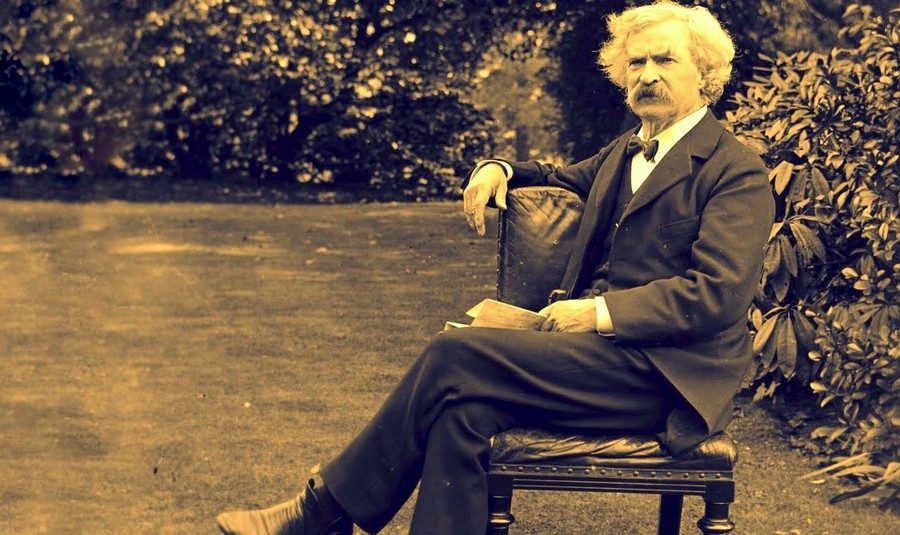
The Bible is full of interest. It has noble poetry in it; and some clever fables; and some blood-drenched history; and some good morals; and a wealth of obscenity; and upwards of a thousand lies.
— Mark Twain, Letters to the Earth
The Bible is full of interest. It has noble poetry in it; and some clever fables; and some blood-drenched history; and some good morals; and a wealth of obscenity; and upwards of a thousand lies.
— Mark Twain, Letters to the Earth
I want to believe that the Evangelical Christians I sit next to at high school football and basketball games are good people. I want to believe that they are nice, thoughtful people who care about their families and neighbors. I want to believe this . . . I really do, but it is coming increasingly evident that many of my Evangelical neighbors are assholes.
Many of my Evangelical neighbors routinely attack, savage, and denigrate gay people, transgender people, unbelievers, and those who support reproductive rights. And if they don’t explicitly adhere to it, they support churches, preachers, and politicians that do. These people say that they are followers of the Prince of Peace, all the while promoting and supporting I.C.E., law enforcement, and military violence. Let me be clear: what and who we support says a lot about what we really believe and value. What does the behavior of my Evangelical neighbors say about them?
Today, I followed several local discussions on Facebook about poverty and people losing their SNAP benefits. Most Evangelical commenters showed that they have no idea what Jesus (or the Bible as a whole) taught about these things. Their comments revealed ugly, selfish libertarian or MAGA political values. It’s hard not to conclude that my neighbors are Christians in name only; that their politics supersede and dominate their moral and ethical values. If behavior matters, the only conclusion I can come to is that many of my Evangelical neighbors are assholes. Want to change my mind? Do better, starting with feeding the poor, caring for immigrants, and putting an end to I.C.E.’s reign of terror. Until then, your Jesus has nothing to offering people like me.
Bruce Gerencser, 69, lives in rural Northwest Ohio with his wife of 48 years. He and his wife have six grown children and thirteen grandchildren. Bruce pastored Evangelical churches for twenty-five years in Ohio, Texas, and Michigan. Bruce left the ministry in 2005, and in 2008 he left Christianity. Bruce is now a humanist and an atheist.
Your comments are welcome and appreciated. All first-time comments are moderated. Please read the commenting rules before commenting.
You can email Bruce via the Contact Form.

Feral/stray cats in are in the news thanks to an Evangelical preacher who shot a cat three times and left it for dead in his church’s dumpster. Local discussions (and several comments on this site which I deleted) suggested killing the cats to get rid of them. Really? Is violence always the answer? Who is to blame for exploding outdoor cat populations? Not the cats. If people take in a pet of any kind, they are duty bound to care for the animal, and that includes not putting them outside to fend for themselves or killing them because they are an “inconvenience.”
Several stupid locals said that feral/stray cats are an existential threat to human survival. OMG, cats have diseases. Yes, they do, and so do humans. Should we euthanize humans if they are sick or have communicable diseases? Of course not. It is unfed, starving cats that tend to be sick. Solution? Feed them and provide shelter when it is cold. No, I fear humans far more than I do cats. Sure, cats can and do get sick, but euthanizing them should be the last resort.
How a person treats animals says a lot about them. Is it surprising that Revival Fires thinks it is okay to kill cats? Of course not. He’s a sociopath who says he loves Jesus. So it is for other people who relish offing cats for no other reason than they exist. They are not good people, and we should stop acting as if they are.
Bruce Gerencser, 69, lives in rural Northwest Ohio with his wife of 48 years. He and his wife have six grown children and thirteen grandchildren. Bruce pastored Evangelical churches for twenty-five years in Ohio, Texas, and Michigan. Bruce left the ministry in 2005, and in 2008 he left Christianity. Bruce is now a humanist and an atheist.
Your comments are welcome and appreciated. All first-time comments are moderated. Please read the commenting rules before commenting.
You can email Bruce via the Contact Form.
Preachers lie, sometimes intentionally. Other times, they lie out of ignorance, often repeating “facts” they heard as a child or in Bible college. One such lie is this: The Bible is the most read book of all time. Most of us likely heard this claim at one time or another, and believed it with nary a thought.
While it is true most American homes have at least one copy of the Bible, this does not mean that it is the most read book of all time. In fact, the Bible is is the least read book of all time. It is the one book everyone owns, but few people actually read it.
No, the truth is this: most Christians do NOT read the Bible from cover to cover. They might read Genesis, Psalms, Proverbs, the Gospels, and a few of Paul’s books, but most of the Bible’s books are never read outside of hearing their pastors read sermon texts on Sundays. Most Christians are nominal practitioners who rarely read the Bible, and their theology is that of the man who preaches to them on Sundays. Is it any wonder the average Christian can’t list, define, and explain the core doctrines of Christianity?
If the Bible is the most important book ever written, why do most Christians largely ignore the text, choosing to let their pastors to speak for God instead of hearing directly from him (I speak from an Evangelical perspective)? I listen to a lot of debates between Evangelicals and atheists. You would think that apologists would yearly read the Bible from Genesis to Revelation, but they don’t. Some do, of course, but many don’t. They are more concerned with studying the passages that reinforce their arguments than they are nurturing their minds and studying the whole council of God.
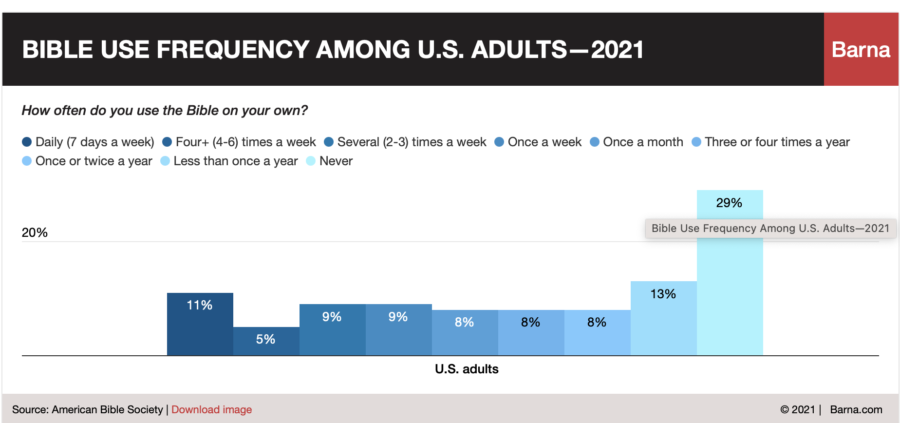
The Bible is a bestseller, but few Christians read all of it. Don’t let them sell you on the notion that it is the most read book of all time. It’s not. Only ten percent of Americans read the Bible every day.
Do you read the Bible? How often? Are you a former Christian? As a believer, did you read the Bible every day? If not, how often did you read the Bible? Did you rely on devotional books, instead? Please share your experiences in the comment section.
Bruce Gerencser, 69, lives in rural Northwest Ohio with his wife of 48 years. He and his wife have six grown children and thirteen grandchildren. Bruce pastored Evangelical churches for twenty-five years in Ohio, Texas, and Michigan. Bruce left the ministry in 2005, and in 2008 he left Christianity. Bruce is now a humanist and an atheist.
Your comments are welcome and appreciated. All first-time comments are moderated. Please read the commenting rules before commenting.
You can email Bruce via the Contact Form.

The Black Collar Crime Series relies on public news stories and publicly available information for its content. If any incorrect information is found, please contact Bruce Gerencser. Nothing in this post should be construed as an accusation of guilt. Those accused of crimes are innocent until proven guilty.
Jason Swick, pastor of Prineville Church of Christ in Prineville, Oregon, stands accused of trying to kill an innocent, harmless cat. Swick claimed the animal was a feral cat, as if that somehow justifies his violent behavior. He could cared for the cat or taken it in. Instead, he picked up a gun, shot the cat several times, and then threw the injured animal in a dumpster behind the church. Fortunately, the cat survived, but is now blind. By the way, the cat, named Pumpkin, belonged to one of his neighbors.
A Prineville church pastor who allegedly shot a neighborhood cat and placed in a church dumpster now faces a first-degree animal abuse charge.
Swick is accused of shooting a cat named Pumpkin several times at his Prineville home in early September before placing the injured animal in a dumpster at the church.
The cat survived the shooting but suffered severe facial injuries that left him permanently blind.
Swick says on his church’s profile page that he is a basketball referee and substitute teacher at Crook County High School. The Prineville Review said state records confirmed he holds an active restricted substitute teaching license.
KTVZ News earlier worked alongside the Prineville Review to investigate the incident, which sparked a protest at the church. We asked the pastor for comment, to which he did not reply. However, he posted to his Facebook page that he believed the cat was feral and had been attacking his family’s chickens. The post later was deleted, but Swick expressed remorse over what happened.
Depending on the circumstances, the charge of first-degree animal abuse can be either a Class A misdemeanor or a Class C felony, the Prineville Review reported. If convicted on the misdemeanor-level charge, Swick could be prohibited from owning any animals for up to five years under Oregon law.
A Prineville pastor is facing community backlash after allegations surfaced that he shot a neighborhood cat and placed it in a church dumpster.
On Tuesday, posts in the “Prineville Information” Facebook group claimed a local pastor shot a cat late Monday night near Bailey Street.
The cat’s owner said they confronted the pastor after the incident. According to the posts, the pastor said the cat had gotten into a chicken coop, and the injured animal was later moved to a dumpster at the church.
A group of protesters showed up at the church with signs, condemning the alleged shooting.
“You can’t go shooting guns in city limits. You’re free to have guns, but, you know, you shouldn’t be going around shooting, you know, bullets can hit somebody or kids or whatever and just do the right thing, you know, like, hey, there’s other ways to get rid of a cat, you know, like scare it off,” said protestor, Matthew Bond.
Bruce Gerencser, 69, lives in rural Northwest Ohio with his wife of 48 years. He and his wife have six grown children and thirteen grandchildren. Bruce pastored Evangelical churches for twenty-five years in Ohio, Texas, and Michigan. Bruce left the ministry in 2005, and in 2008 he left Christianity. Bruce is now a humanist and an atheist.
Your comments are welcome and appreciated. All first-time comments are moderated. Please read the commenting rules before commenting.
You can email Bruce via the Contact Form.

Over the past four months, an Evangelical woman named Terri has sent me more than fifty emails and commented over one hundred fifty times. I asked her five times to please stop emailing me. I also let her know that many of her comments were unhelpful, and, at times offensive. Did this stop her from emailing me? No.
Terri is friendly and polite, but she lacks all sense of personal boundaries and respect. If someone politely asks you not to do something, yet you repeatedly do it anyway, that reveals a lack of respect. Terri will deny being disrespectful or not honoring boundaries, but most readers will likely conclude that sending me fifty emails and leaving one hundred fifty comments — many of which were sent after I asked her to stop — is excessive. Include the comments I didn’t approve, and the total nears two-hundred.
I don’t understand this kind of behavior, mainly because I have never emailed- or comment-bombed someone. What’s the point? I suspect Terri thinks she is duty bound to “share” the truth — her personal interpretations of the Bible — with me, even if I know a hell of a lot more about that Bible, theology, and church history than she does. She likely believes God wants her to share the gospel and the love of God with everyone, even those who have told her they are not interested in what she is peddling. I wish Terri and other Evangelicals would stop behaving like this, but I fear it’s pathological. “Bruce is headed for Hell, and needs Jesus,” zealots think, and God dammit, they are going to irritate the hell out of me regardless of whether I ask them to stop. In their minds, my personal discomfort is the price I must pay for the “good news.” Little do they know or care that their behavior is actually driving me away from Christianity, and I suspect that thousands of the people who read this blog will say the same.
Several days ago, Terri sent me the following email:
Bruce! Just wanted to encourage you here…
Want to encourage me? Send me bags of cash or mind your own business. I told Terri several times that I was not interested in what she had to say about my health. She has no relevant expertise other than the ability to do a web search, so there is no reason I should pay attention to her anecdotal stories and personal opinions. It is evident Terri either doesn’t understand how sick I am or doesn’t care. Or she could be one of those Christians who thinks it is their calling in life to “fix” people. I regularly see a primary care doctor, neurologist, endocrinologist, dermatologist, gastroenterologist, and a podiatrist. I have had a full-day work-up for multiple sclerosis (MS) at Toledo Hospital and a comprehensive examination for fibromyalgia at the University of Michigan. These and other medical professionals treat me for gastroparesis (lack of proper bowel function), endocrine pancreatic insufficiency (pancreas doesn’t produce digestive enzymes), peripheral neuropathy (nerve pain), fibromyalgia (which causes widespread muscle pain and fatigue), degenerative spine disease (think, my spine is literally falling apart), Morton’s neuroma (nerve inflammation in both feet), high blood pressure (well managed), diabetes (well managed), increasing memory loss (early-stage dementia? God, I hope not.), tinnitus, vision problems (my vision flipped from nearsightedness to farsightedness), bladder and bowel incontinence, and four bouts of basal/squamous cell skin cancer.
Most of these diseases are incurable. All that my doctors can do is encourage me and treat my symptoms. My primary care doctor — who has been treating me for almost thirty years — admits that I am his enigma — perplexing, challenging, difficult to treat.
I live with constant pain, from my head to the bottom of my feet. I require a cane to get around home, and a wheelchair or walker when I (rarely) have the opportunity to go to town. I have lost more than one hundred pounds, and I am plagued with frequent bouts of nausea and vomiting. And then comes nighttime; you know when most people go to sleep. I too lie down to sleep, but it takes me HOURS to fall asleep — with narcotic pain medication and cannabis — thanks to horrible pain from my neck and spine to my legs. Sure, if I took a lot more Hydrocodone and cannabis, my pain would be less, but I would sleep all the time, and this blog you are reading would be no more. I must choose between the two.
Typically, I get up in early afternoon. After getting up, I use the bathroom, dress, and wait for Polly to come home from work at 3:20 pm. We talk a bit, eat dinner, and then I watch a sports news program. Afterward, if I have any steam left, I start to write. I usually have three to five hours to maintain this blog and publish content. Some days (increasingly so) I don’t have the physical wherewithal and mental acuity to meaningfully write. On these days, I spend the night reading, watching TV, and listening to podcasts. If I am able, I try to do household chores or take care of smaller projects around the house. Three years ago, I reignited my love for post-war Lionel O-gauge electric trains. I threw myself into the project, hoping to build a train layout in an upstairs room for my grandchildren and I to enjoy. Sadly, it’s been almost two years since I navigated the stairs to work on the 12′ by 12′ layout.
Knowing these things, do you really think I want to receive medical advice from you, especially when you have no relevant expertise nor do you know me will enough to invade my personal space to give me advice? Readers such as Carolyn, my editor, Zoe, ObstacleChick, Geoff, Ben, or Troy, to name a few, have been my friends for a long time. They have invested a lot of time in reading my writing and supporting my work. None of them offers me unsolicited medical advice. At best, they might send me a link to an article, asking me if I had seen it, but that’s it. They know what I need is love, respect, and understanding, and not uneducated, unprofessional medical advice.
a beautiful thing happened in our city a few months ago…a man who lived alone, and who was an atheist, became very sick. He was all alone, no family to take care of him, and so he decided to pray for 3 days straight. At the end of it, he found himself healed!! He’s doing great now!!
This story sounds like a sermon illustration; a fictional story meant to prove a point. If this really happened, I would love to interview the man. I want to know what sickened him. Did he take medication or see doctors? Who was the doctor, so I can interview him too. I want to know if he thinks this man was miraculously healed.
Further, how does Terri KNOW it was her God who healed this man? Satan, a divine healer too, could have healed the man. How does she know that the man was healed as the direct result of three days of non-stop prayer? All we have is a story told by an Evangelical Christian who has spun other fantastical stories before this one. I didn’t believe those stories, and I don’t believe this one either. My unbelief can be easily remedied by providing sufficient empirical evidence to justify the healing claim. I am ready to start a betting pool on whether this evidence will be forthcoming. My money is on “no!”
Terri refuses to accept that most of my physical maladies are incurable. All doctors know to do is treat my symptoms. I have had major surgery twice, five outpatient surgeries, and endured several experimental procedures. There’s not anything else that can be done for me (though I may need surgery on my spine again). So I understand the compulsion some Christians have to offer unsolicited medical advice or prayers. That said, I have made my desires clear, so this unwanted email tells me that what I want or need doesn’t matter to Terri.
God is no respecter of persons…if He did it for him, He will do it for others, too. That’s hope!!
Which God? If the woman who sent me the email worships the Christian deity, I ask again, which Christian God since there are so many? Terri knows I am an atheist, so God talk has no effect on me other than to irritate and annoy me. That’s why Evangelicals are typically given one opportunity to comment. I approve ALL first-time comments, but I encourage Evangelicals to say all they need to say in their first comment. Preach away, but you will likely only have one opportunity to put in a good word for Jesus. I gave Terri a lot of space to spread her viewpoint, but eventually I had enough. I asked her to write one final comment, which I would turn into a post. No edits, no moderation. Say what you want, but that’s it. What did Terri do? She sent me a link to a video she wanted me to post. I, of course, refused.
I love it when Evangelicals say that “God is no respecter of persons,” when the Bible reveals a deity that is very much so, starting with God initially choosing the Jews as his covenant people over the Gentiles. The doctrines of election and predestination also show that God is certainly a respecter of persons.The Bible is littered with examples of the triune God playing favorites.
Further, I am an atheist, so claims of God’s existence fall on deaf ears. Personal testimonies and subjective experiences have no power to explain the existence of the Evangelical deity. These are faith claims, a faith I do not, nor will ever, have.
Does the Bible reflect a God who heals people with respect to who and what they are? Of course not. If God is no respecter of persons and prayer can affect healing, why do MOST Christians go through life unhealed? Churches are filled with praying sick people.
Having said all of that, I will make a wager with Terri’s God. “Jesus, you supposedly healed a sick atheist, so I know you can heal me. If you heal me, I will immediately profess faith in you and spend the remaining days of my life worshipping and serving you. I will shutter this blog, and do all I can to preach the gospel.” The ball is in Jesus’ court. “Heal me, Jesus, and I am yours. If not, I will continue on in my atheist ways, confident that you are a myth, a figment in the imagination of countless Christians.” Think Jesus will heal me? Imagine what a trophy I would be if Jesus healed me, leading to me confessing faith in him. I won’t hold my breath, stop taking medications, or cancel my doctor’s appointments. Stupid I am not. If I have learned anything in my sixty-eight years of life, it is this: Jesus is not the Great Physician and prayer is worthless outside of giving the appearance you are doing something meaningful for people, when you actually are not.
I hope Terri “hears” me. Same goes for others who think my health problems are opportunities for them to put in a word for Jesus. I am NOT interested, and the more you ignore my wishes, the farther you drive me away from Christianity. As of the writing of this post, I can’t think of one reason why I would ever want to become a Christian again. I know I will receive several emails/comments threatening me with judgment and Hell. Whatever — such threats have no effect on me — and I mean none.
Saved by Reason,

Bruce Gerencser, 69, lives in rural Northwest Ohio with his wife of 48 years. He and his wife have six grown children and thirteen grandchildren. Bruce pastored Evangelical churches for twenty-five years in Ohio, Texas, and Michigan. Bruce left the ministry in 2005, and in 2008 he left Christianity. Bruce is now a humanist and an atheist.
Your comments are welcome and appreciated. All first-time comments are moderated. Please read the commenting rules before commenting.
You can email Bruce via the Contact Form.

Originally published in 1896. Written by Tom Mann, a nineteenth century socialist. As thoughtful readers will quickly see, this essay still applies today. Used with permission from marxists.org.
I MAKE no apology for writing this chapter upon Preachers and Churches. In our day every institution is open to criticism, and rightly and necessarily so; and although—if this should meet the eyes of preachers—many of them will doubtless consider it presumption on my part to attempt even to deal with such a subject, let it be so. We live in England, and not in Russia—plutocratic England, it is true, but with Democracy getting a good grip. And if by writing this I simply lay myself open to criticism, it may still be the case that I shall have served some small purpose by helping to make clear what it is we object to in orthodox preachers, with their orthodox doctrines and congregations. It cannot be that I am wholly correct—it may be I am very wrong; but feeling strongly upon the subject, and often indulging on Labour platforms in sentiments identical with those I have here given expression to, I now venture (upon invitation) to place before another audience the views I hold, as well as those I condemn.
At the outset, I desire to say that I am fully alive to the fact that there are CLERGYMEN, MINISTERS, SUNDAY-SCHOOL AND BIBLE-CLASS TEACHERS, who cannot be covered by the general terms of censure I have made use of in what follows. I am happy in possessing the close friendship of not a few who, I am quite sure, are not merely as devoted as any men and women on earth to the cause of truth and righteousness, but strive continuously to make right-doing prevail in every sphere of life. But it is just these who, more than others, feel and know what a terrible responsibility rests upon preachers and teachers as a whole; and who also know, to their sorrow, how shamefully deficient the Churches are in supplying the much-needed correction, and stimulus, and light.
The Churches set up a claim to be the moral and spiritual guides of humanity, to whom all men should look for guidance as to their conduct in this life, and qualifications for life hereafter. The question I propose to examine is: Do they fulfil these functions?
In a complex society like ours, where the average person, on reaching girlhood or boyhood, must perforce begin work of some kind to obtain a maintenance, a very large share of one’s time, thought, and energy must of necessity, under present conditions, be devoted to the mere work of obtaining a living. Indeed, it is the paramount question, by the side of which all others fall into comparative insignificance. Consequently, if guidance is needed anywhere, it is in connection with the means whereby a livelihood is to be obtained. The virtues—including honesty, sobriety, and obedience to superiors—are all emphasized in the Sunday schools, Bible classes, and churches; exactly how to apply them being, of course, too great a task.
A GENERAL CONDEMNATION OF “SIN,” and urgent advice to “flee from the wrath to come,” and find salvation by reliance upon the sacrifice in the crucifixion of Jesus, sums up the teaching of the average school, church, and chapel. Where does this land a man? Judging by a lengthened experience, I unhesitatingly declare that I find that the average church or chapel goer, who is influenced primarily by what he obtains from its functions, becomes a narrow, saving, squeezing creature, taking little or no part in the vigorous life of the community, but very commonly becoming, by his isolated action, a source of weakness in any real democratic movement. If he takes part in municipal or political life, he usually does so on the flimsiest party lines. He generally attributes the cause of the poverty of the poor to their utter degradation, caused by their dissolute habits, brought about by their unchecked evil tendencies, the human heart being desperately wicked and deceitful above all things. Very rarely is he connected with a trade union. As a rule, he is most loyal to the injunction, “Servants, obey your masters,” and will side with his kindred “brethren” to blackleg against his fellows.
The tricks of trade he necessarily becomes familiar with; and, like a business man, he not only indulges in them, but becomes an expert thereat. He will attend a prayer-meeting and bless God for the good things of life, and pray for the salvation of the poor sinners in the slums, and will take, as evidences of God’s blessing in return, the possession of a few more shares that will pay ten per cent.; and if fifteen per cent.—why, the more cause for thankfulness, of course! Let none tell me I am concocting a case; such men can be counted by thousands. And why? Because that upon which they have been fed is devoid of real vitalising force. Instead of giving moral discernment to enable a man to understand how, where, and when moral or, if you will, religious principles should be applied, the preachers land him in a complete fog. Beholding those who are held in high esteem in the Churches, that they include the bankers and stock-jobbers, and the company promoters and capitalists and landlords, he follows them rather than the simple carpenter’s Son. Between such select and exalted personages and mere Labour agitators, trade unionists, Socialists, &c., there is, as surely there ought to be, he concludes, a great gulf.
The Church is in a helpless backwash having lost the true courage, mental and moral vigour, power of discernment, and hence capacity, to apply what humanity now demands. The parsons, clergymen, and ministers are, for the most part, a feeble folk, who, daring not to lead, are therefore bound to follow.
Other men labour, and in the course of years the Church slowly is dragged along; for the pioneers of righteousness we must look elsewhere than to so-called Christians. The man who is truly religious wants no driving to do his duty. He does not try to make all manner of excuses for the exploiters of the industrious community, and pile up the trifling misdeeds of an unfairly handicapped proletariat. A TRULY RELIGIOUS BODY OF MEN, whose religion enabled them to understand between right-doing and wrong-doing, and furnished them with the requisite courage to face all foes, would never be content with the sunny complacency of the average parson in the midst of the life-destroying conditions of our industrial centres.
Shame, say I, and a thousand times shame, upon so feeble a religion as that which can tolerate the awful social life which exists in London at this very time. There are not less than four hundred thousand persons in London alone in a state of semi or actual starvation. There are among these at least a hundred thousand adult males out of work; tens of thousands of women, having no one to rely upon to support them, but in multitudes of instances being responsible for children (or aged or crippled relatives) in addition to themselves, who, over and over again in the course of a year, are deprived of the means of obtaining a livelihood; tens of thousands of children setting off to the Board schools every morning with less than a tenth part of that which is necessary for physical sustenance. Scores of miles of streets, with wretched dens in the background, furnish enormous rents—to whom? To the men of the world? No; to the rich members of your congregations, the great subscribers of your salaries O preachers! who turn up at your church or chapel service and follow you in praying, “Thy kingdom come; Thy will be done, as in heaven, so upon the earth.” Can they, do you think, believe that there is anything in heaven corresponding to the wretched slum-dwellers of Whitechapel or Spitalfields? Are there any in heaven corresponding to these Christian rent-takers, who wax fat at the expense of the downtrodden? What are you ministers and plutocratic members of the rich churches and chapels doing to make earth like heaven? Why, it would need an entire change in the basis of society, and the means whereby incomes are obtained. Are these religious plutocrats and preachers trying to change the basis of society, so that better conditions shall prevail? Assuredly not. On the contrary, they are determined opponents of those who do try to make such changes.
The fact is, preachers and congregation are bound hard and fast in a system that is grossly materialistic, utterly soulless in good, and without a single noble aspiration. The Hobbs and Co. Liberator phenomenon indicates how completely swamped is the average Nonconformist soul. Not only did it make haste to get rich, but by the most damnable means that the most cunning Jews and Gentiles combined could devise. Morality! Religion! Where is the religion or the morality in taking ten per cent. usury? Yet who among the orthodox in faith and practice objects to ten or more per cent.? Honesty! Righteousness! Who that believes in the doctrines of Jesus can uphold an industrial system whose very basis from top to toe is ten per cent.?
“THE MAN THAT WILL NOT WORK, NEITHER SHALL HE EAT,” is an apostolic injunction; but how many ministers or members of our swell churches and chapels believe it? “Yes, but even Hobbs and Wright worked,” some will say. Ah, so they did; as did also Mr. Charles Peace of burglar notoriety—the latter with less scoundrelism than the former.
The average preacher or church-goer does distinctly believe, not only that it is right to eat without working, but to get fed, clothed, housed, insured, and buried into the bargain. Who among them condemns as a religious duty the taking of interest and rent? And if these are defended, and I can get sufficient interest or rent to keep me and mine without working, what religious principle comes in after that to say I must work?, Or, am I to work like the Yankee millionaire—on six days a week endeavouring to amass the biggest fortune on record, entirely irrespective of how many will be ruined; and on Sunday attending church, receiving the blessing of the minister, and helping to carry the collecting-plate to show how godly I am? If ever Deity was insulted, it is by these devourers of widows’ houses, who receive direct sanction and approval from orthodox exponents of orthodox religion. Let none rise to say, “Oh, but we would never endorse the enormities of the Liberator Company.” If not, where, then, would you stop? The whole shoal of interest-takers and stockbroking gamblers are specimens of the same type in embryo. Not so successful as the millionaire, perhaps—why? Because they lacked opportunity. Never had the brains to scheme like the others, and the courage to come down a resounding crash at the end. Why? Because they hadn’t had time to go far enough. The difference isn’t in kind; it is only in degree. As in the time: of Nahum, so now, to describe London we must indeed say, Woe to the bloody city! it is full of lies and robbery.”
I do not state or imply that all this is done hypocritically; what I do say is “that the truth is not in them.” Christians need to be “born again.” Orthodox religion is acquiescing in an irreligious condition of Society. Christianity is made part and parcel of the national commercialism, and wholly subservient to the individualistic acquisitiveness of the age. The Fatherhood of God and Brotherhood of Man have come to be mere threadbare phrases when used by an ordinary religionist. Church or chapel is regularly attended, not indeed to obtain guidance out of the industrial and social wilderness, but to maintain tradition and keep up appearances. Some Christians positively believe, doubtless, that religion consists in church-going, hymn-singing, and muttering over the words found in the Prayer Book, or offered up by the minister; failing to realise that these are but the means to an end. If they are used as the end itself, then indeed does moral darkness assert itself.
It does appear to be the case that with industrial England, as with pastoral Israel, in the time of Amos, the outward ritual is made the chief concern. At that time the Mosaic ritual was jealously attended to, but the message was “I HATE, I DESPISE YOUR FEAST-DAYS, and I will not smell in your solemn assemblies. Though ye offer Me burnt offerings, I will not accept them; neither will I regard the peace-offerings of your fat beasts. Take thou away from Me the noise of thy songs; for I will not hear the melody of thy viols. But let justice run down as waters, and righteousness as a mighty stream” (Amos v. 21-24). This is a sweeping condemnation of fashionable church-going whilst the state of Society is unsound. See verse 11 of the same chapter: “Forasmuch therefore as your treading is upon the poor, and ye take from him burdens of wheat: ye have built houses,” &c.
Now, it was not the custom even in brutal Israel for one man to literally knock another down in order to take his wheat from him. There were more refined methods of exploitation then as now—though, doubtless, modern civilisation even in Christian England, could give the old Jews many points, and beat them at legalised robbery; and it is this legal robbery that is here condemned as much as any other kind.
But nothing puts the case more clearly than the condemnation by Jesus of the orthodox professors of religion of His time (see St. Matt. xxiii. 13, 14):
“But woe unto you, scribes and Pharisees, hypocrites! for ye shut up the kingdom of heaven against men: for ye neither go in yourselves, neither suffer ye them that are entering to go in. Woe unto you, scribes and Pharisees, hypocrites! for ye devour widows’ houses, and for a pretence make long prayers therefore ye shall receive the greater damnation.”
No language could be stronger, and yet this was directed against the respectably religious of that day. These Pharisees have their exact counterpart to-day in England.
I know the risk I run by any attempt to deal with the subject of future salvation. But with a keen remembrance of the influence orthodoxy exercised over me—of the years of unrest, of the flimsiness and mimicry, with its pretences of solemnity and make-believe solidity,—I feel bound to deal with the subject. I know many young men who have striven hard to find “salvation”; and with blind guides to lead them, many years were spent in finding what ought to have been reached in a few months. The talk about the one thing needful under orthodoxy (it will be noted that I continually guard myself by referring to “orthodoxy”) means nothing more than fixing attention upon Jesus as the Saviour, He having been sacrificed to reconcile mankind to the Father. I make no comment upon this doctrinal point. What I want to expose is the demoralising effect produced by the individual being taught that salvation for him consists in reflecting upon and believing in his acceptance with God, because of Christ’s sacrifice, irrespective of the life he leads. “No one says this,” some will cry. Yes; but, indeed, IT IS SAID AND TAUGHT IN NINETEEN CHURCHES OUT OF TWENTY, and the effect is to cause the individual to think of himself or herself, and to value, out of all proper proportion, his or her own personal salvation. Selfishness begins this, and with selfishness it usually ends. Whilst one can admire the energy put forth and the trouble taken in the voluntary street-corner preachers and singers, one can only pity those who speak, as well as those who may in any way be influenced by what is said. A million times over is the same story told—personal salvation by faith in Christ. It seems to me it would be a truly religious act if all such received a severe castigation for wasting so much time trying to assuage the sorrows primarily brought about by a vicious industrial system, instead of boldly tackling that industrial system itself.
Salvation surely consists in living in accordance with Divine harmony,—in loving order and living it,—in hating disorder here on earth, and striving might and main to remove it so that earth may be more like heaven. Oh, the unworthiness of followers of Jesus being primarily concerned about their poor little souls! He that seeks to save his soul on these lines will lose it; but he that will lose his own life by working for the salvation of the community—all such must be saved. Up! off your knees, young men! Let us have more effort directed to the removal of evil! Don’t go continually begging of God to do that which you ought to do! This world is wrong, and wants righting, and you and I are responsible for doing our share towards righting it. What horrible villainy have you been guilty of, that half your time needs be taken up in praying for forgiveness? The man that loves righteousness will seek to live righteously, and all such are already saved. His duty is to be at work removing the cause of wrong-doing.
A little less time spent at orthodox mission meetings, and more time spent in helping on effective industrial organisation, to ensure right-doing in the business of life, is sadly needed just now. This orthodox mission work is exactly what our exploiting plutocrats rejoice in. It is so gracious of them to give an occasional ten pounds to keep a mission going, that they may with reasonable safety exploit an additional twenty from their employes, and still receive the praise and blessings of the faithful.
“Go to now, ye rich men, weep and howl for your miseries that shall come upon you. Your riches are corrupted and your garments are moth-eaten. Your gold and silver is cankered; and the rust of them shall be a witness against you, and shall eat your flesh as it were fire. Ye have heaped treasure together for the last days. Behold the hire of the labourers who have reaped down your fields, which is of you kept back by fraud, crieth: and the cries of them which have reaped are entered into the ears of the Lord of sabaoth” (St. James v. 1-4).
What have our LANDED ARISTOCRATS AND CAPITALISTIC PLUTOCRATS who go to church and chapel regularly, to say to St. James? Dare they claim to be better than those whom James condemned? If so, in what way? And if not, are they not condemned by the book in which they pretend to believe? Not that I am affirming that every rich man is necessarily a candidate for hell. What I do contend is that, be we rich or poor, if our mental and moral standard is such that we continue to support the present hellish system,—which the ordinary capitalist upholds, and is sanctioned in upholding by the average Church,—then we are violating every genuinely religious principle.
I am not condemning religion, but the lack of it. Religion to me consists of those ethical principles that serve as a guide in all matters of conduct—social, political, and industrial alike; and the essence of the whole thing is this: the choice between a life whose actuating motive shall be self, either in acquiring wealth, renown, prestige, or power, and a life which shall have primary regard for the well-being of the community as a whole. To do this is to engage in making it possible for “His kingdom to obtain on earth as in heaven.” If I am asked, “Do I think that all that is necessary is a perfected industrial machinery on Socialistic lines?” I say emphatically, “No! I don’t think that is all.”
I do distinctly believe in the necessity for Socialism out and out, and that it is my duty to work for its realisation. But I know also that something more than good machinery is necessary, if really good results are to be obtained. I desire to see every person fired with a holy enthusiasm to put a stop to wrong-doing. Before this is possible, individuals must submit themselves to much and severe discipline. The baser sides of our nature must be beaten down that the higher and nobler side may develop. Regard for the brethren (brethren meaning all) must be the mainspring of our action; the development of the highest possible qualities in ourselves is undoubtedly a religious duty, but for this chief reason—that we may be of the greater service.
“He that would be greatest among you, let him be servant of all.”
This to me is the ideal test and standard. As Jesus was the servant of mankind, so I, as follower of Jesus, must learn to be of use. The irreligious man is not the only deliberate maker of mischief, but equally so the indolent and useless man. Swedenborg has well said—
“All religion has relation to life, and the life of religion is to do good.” Further: “Heaven consists of those of all nations who love God supremely, and their neighbours as themselves. Hell is the assembly of the selfish—of all who love themselves supremely and gratify their lusts at any cost to others.”
The astounding anomaly of our time is the complete separation of religious principles from every-day industrial life. Spiritual pastors teach the young to regard God as the common Father; and when the young become of age to reflect upon the shameful inequalities created and maintained by our social system, they are discouraged by their elders from trying to alter it, and are treated as agitators and destroyers of the peace.
Honesty demands a frank statement that the so-called religious of our time are AFRAID TO APPLY THE PRINCIPLES OF JESUS. They make a pretence of championing His cause; but in reality the Socialist agitator and the Trade Union organiser is doing far more than the preachers and the Christians, the Missionary Societies and the Bible Societies to make Christ’s gospel prevail. The Churches are afraid of Socialism. Why? Because the wealthy in their congregations are anti-Socialists. If any say this is not so, then it will not be difficult to give an effectual reply by quoting instances where the minister has seen the light and dared to proclaim the truth, and where the men who “have great possessions” (relatively) have very soon taken their departure. I have heard of complaints from one or two such ministers that they not only lost the employer class by their boldness, but that they did not succeed in securing the adhesion of any counteracting proportion among the workers. There is less to be surprised at in this than some seem to think. The Churches having gone astray worse than lost sheep; are not likely very easily to win back Democracy. Whether they will ever do it or not is an open question.
The clergyman is undoubtedly at a serious discount as an adviser. “Serve him right,” say I. Nor will he ever redeem his position except by honest effort on behalf of Democracy. Not that Democracy will suffer materially if this is not done. The greatest trouble is past. Democracy is learning how to provide for itself, and never was the Democracy so truly religious as now. And it is gradually getting more so. This religious evolution will increase as the bad environment is altered on one side, and the ethical gospel is lifted up and followed truthfully on the other.
I know that many preachers contend that industrial and economic matters are nothing to them; theirs is a religious work, and men must be left to themselves to find out how to apply religious truths. “If they were to take sides, it would mean the break-up of the Church,” and so on. To endorse a religion apart from principles that are to guide our every-day behaviour is monstrous. If one’s religion does not compel one to take sides in favour of a righteous basis of society, the sooner it ceases to encumber the earth the better for all concerned. A minister who can’t find time to make up his mind as to the direction in which he should travel on industrial and economic matters, will probably not find time to be of any practical use to the world, nor yet to the denomination to which he may belong. I am fully aware of the fact that by DECLARING IN FAVOUR OF SOCIALISM, many who might have been disposed to consider the possibility of some mild action favourable to Democracy, now stand off. To such let me say: I have purposely avowed myself a Socialist here, so that those who read this may know what to expect from those on whose behalf I can speak. We do not want, and will not have a parson’s patronage, or goody-goody advice. If there is to be a rapprochement it can only be by the parson getting off his high horse, stopping his goodyism, and meeting men and women frankly as such. If he doesn’t, he’ll get left high and dry for a certainty.
I am not here demanding that every parson who is to be of use shall be an out-and-out Socialist right off. I aim telling him that we workmen who happen to be Socialists are adding largely to our numbers every month, that the whole trend of modern effort in our Trade Unions, Co-operative Societies, Town and County Councils, and Parliament is distinctly socialistic, and if parsons and ministers want to stop it, they had better refurbish their weapons. I can easily understand that some genuine men among the clergy will be disquieted by wondering whether the Socialists are coming round their way for a general sharing-out arrangement, and so they are slow to make a move. Such is the enlightenment that exists in these quarters! Let me hasten to reassure all such that if they are able to subscribe to the following very mild statement of John Ruskin, they need not be seriously alarmed:—
“So far am I from invalidating the security of property, that the whole gist of my contention will be found to aim at an extension in its range, and whereas it has long been known and declared that the poor have no right to the property of the rich, I wish it also to be known and declared that the rich have no right to the property of the poor” (“Unto this Last”).
That surely should be a self-evident proposition to the mind of a moralist, but it goes rather a long way, as it would mean nothing less than a righteous distribution of wealth. It is to be hoped that no preacher will ask what business is this to him. Surely “Thou shalt not steal” is emphatic enough, and when we add Carlyle’s trifle to it, “Thou shalt not be stolen from,” it gains a little in clearness. The Church will doubtless concern itself in a few generations to come about such an elementary subject as the enforcement of honesty. We workmen contend that honesty of distribution should become a fact. Forty-nine-fiftieths of present-day poverty, and the bulk of the crime and villainy that now disgrace our country, would disappear, if the Society thieves were to disappear.
But timid Christians and their preachers are likely to reply that, “to bring about such a change is impossible; human nature won’t admit of it.” If not, what becomes of the Lord’s Prayer: “Thy kingdom come … as in heaven so upon the earth”? IF THIS IS A PIOUS FRAUD, please be frank enough to say so. Some of us, when we say the Lord’s Prayer, do indeed mean it, amongst whom I am glad to be one. I am not willing to be included with those cowards who say it is impossible of realisation. Whatever is right we are bound to work for, even if its fruit is in the dire and distant future. We believe that the Lord’s Prayer is not only realisable, but we are of those disciples who will make it so. This done, the question of a “living wage” will be settled.
As yet in this Christian land we haven’t been able to establish a living wage, even when it means nothing more than a sufficiency of material necessities to maintain life. Many in connection with the Churches have recently said that a living wage is impossible, i.e., that it is impossible in this “religious” country to see that each of God’s children, our own brothers and sisters, shall be as well fed as a horse. Let Carlyle again be heard:—
“There is not a horse in England, able and willing to work, but has due food and lodging, and goes about sleek-coated, satisfied in heart. And you say, ‘It is impossible.’ Brothers, I answer, if for you it be impossible, what is to become of you? It is impossible for us to believe it to be impossible. The human brain, looking at these sleek English horses, refuses to believe in such impossibility for Englishmen. Do you depart quickly; clear the ways soon, lest worse befall. We for our share do purpose, with full view of the enormous difficulty, with total disbelief in the impossibility, to endeavour while life is in us, and to die endeavouring, we and our sons, til we attain it, or have all died and ended!” (“Past and Present”).
This is the correct spirit in which the modern crusade against our social villainies is to be conducted. It is especially the work of the Church to set the pace. It ought, but we don’t expect it will; and yet, I feel sure that those young men and women who are certain to be touched by the devotion and fervour of our modern crusaders, will not require much converting to our side. They are too noble to remain in the ranks of the inactive and selfish. They, too, will come forth to join in the noble work of social reconstruction. We have a glorious and an inspiriting work in hand—nothing less than the purifying of the industrial and social life of our country and the making of true individuality. For, let it be clearly understood, we Labour men are thoroughly in favour of the highest possible development of each individual. We seek no dead level of uniformity, and never did. Our ideal is: “From each according to his capacity, to each according to his needs.” We can’t reach that right off; but when we have done so, we shall not be “far from the kingdom.”
To engage in this work is to be occupied in the noblest work the earth affords; to do it well, we want not only men and women of good intention—the Churches have these now—we shall want men and women of sound sense who will understand the science of industrial economics, as well as of the highest standard of ethics. To mean well is one thing, to be able to do well is a better thing, and we cannot do well except by accident, unless we know something of the laws that underlie and control the forces with which we shall have to deal. By way of indicating what we hope to reach, it may prevent fear and trembling if I say it is neither more nor less than that set forth byJOHN STUART MILL,
in his “Autobiography,” where he says:—
“The Social Problem of the future we considered to be, how to unite the greatest individual liberty of action with a common ownership in the raw material of the globe, and an equal participation for all in the benefits of combined labour.”
Nothing very awful in that surely, and yet there is sufficient to revolutionise modern Society! What does a really religious man care how far it goes? To him the one important question is, “Is it right?” Does duty demand that he shall endorse it and work for its realisation? To me all other duties sink into comparative insignificance. I will yield to none if I know it in facing the straight path, and honestly endeavouring to walk in it, and therefore I dare not take my eyes off this big problem.
Much has already been done in removing barriers. The work of the Trade Unionists for the last sixty years has borne good fruit. In the early years of the present century, Capital had complete sway. Unrestricted industrial competition was the accepted gospel universally applied in Great Britain. In Parliament the landed aristocracy had complete power. In industrial life, the then infantile but now powerful plutocracy had undisputed control. The law was against combination, consequently there were few Trade Unions. Neither was there anything in the nature of Factory Acts. And what was the result? Our industrial history of that period is the blackest page in England’s life. Not only men, but women and children had to work fifteen to sixteen hours a day. Children, too, of six, even five years of age, were called to the mills at five o’clock in the morning; if they were a minute late, an overseer with a slave-driver’s lash stood there to thrash them and the girls and women like dogs. Some power of revolt existed, and this country owes more than it thinks to the revolutionary course of the early Trade Unionists. We still have England’s industrial prestige maintained by child labour at ten and eleven years of age.
In thousands of instances the standard of life is such that when a man is in full work, so little does he earn that the wife and mother must not only get up herself at five o’clock in the morning, but must also wake her children, and TAKE THE INFANT OUT INTO THE RAW WINTRY AIR to leave it with some nurse, while she, the mother, must go to the mill, reaching there at six, to take her stand by the men, work all day, and return home at night to commence house duties, and this because the family would starve if she did not. Oh, Church people! if ever a crusade were needed it is here in England now. The honour of our country is left with us to guard. For humanity’s sake, let us see to it that we wipe out these accursed blood-red stains.
There is much to be proud of in Britain’s history, but whilst such conditions remain we cannot wait to comment upon the work done in face of so much waiting to be done? Who shall do it? Every man and every woman is expected to contribute a share. The social salvation of the entire community is the religious duty in which you preachers and people are called upon to engage.
Oh! rich women of the Churches, have you no social political duty? You, who spend so much on your own persons, have you no care for the body of Society? And you women of the middle classes, who have a great power, will you not use that power to wipe out these stains on our national and Christian character? If you take up a determined stand in connection with the Churches, they will be compelled to become active. The work will be done with or without you, but quicker with you than without you.
Women! who shall one day bear
Sons to breathe New England air,
If you hear without a blush
Deeds to make the roused blood rush
Like red lava through your veins,
For your sisters now in chains,
Answer! are ye fit to be
Mothers of the brave and free?
To the women already in the Socialist movement, I can say with full assurance that you are stimulating and ennobling the men, as well as doing your own share of ardent advocacy of sound principles. These few remaining years of the nineteenth century shall yet see great and glorious changes made in the removal of the causes that produce poverty, and therefore crime and suffering. To help in this work should be our greatest desire and chief delight, and the success of this work will mean: International solidarity, and world-wide fraternisation.
Bruce Gerencser, 69, lives in rural Northwest Ohio with his wife of 48 years. He and his wife have six grown children and thirteen grandchildren. Bruce pastored Evangelical churches for twenty-five years in Ohio, Texas, and Michigan. Bruce left the ministry in 2005, and in 2008 he left Christianity. Bruce is now a humanist and an atheist.
Your comments are welcome and appreciated. All first-time comments are moderated. Please read the commenting rules before commenting.
You can email Bruce via the Contact Form.

I came of age in the Independent Fundamentalist Baptist (IFB) church movement of the 1970s. After high school, I enrolled for classes at Midwestern Baptist College in Pontiac, Michigan — a strident IFB institution. While attending Midwestern, I met a beautiful, darkhaired IFB pastor’s daughter. We married and embarked on a ministerial career that took us to churches in Ohio, Texas, and Michigan. One constant in our lives was the Bible. We believed the Bible was a supernatural book; written by God, the Bible was inerrant and infallible. For most of our adult lives, we were King James Only, believing the KJV was God’s word for English-speaking people. Further, we believed God “preserved” his Word throughout history, guaranteeing humanity that they would always have the perfect Word of God.
Midwestern offered rudimentary one year classes in Biblical Greek. Taught from the perspective of King James Onlyism, the focus was on the underlying Greek texts that gave us the King James Bible. I planned to take Greek my senior year of college, but we withdrew before I could take the class. Whatever I learned about Biblical Greek I learned on my own. The same can be said for Hebrew. I was able to cobble together a plethora of books and software that helped in my study of Greek and Hebrew, but I never considered myself proficient in either language.
I determined early on that I would know the English Bible well. I spent 20,000 hours reading and studying the Bible. This seemed like a good approach to take, but I now know that not being proficient in the original languages hurt my ability to understand exactly what the Bible said. Contrary to what many IFB preachers will tell you, competency in Greek and Hebrew are essential to understanding the Bible. At the very least, pastors need to have books and software that will help them dig out the actual meaning of the text. Never consulting the original languages, make no mistake about it, will bite a preacher in the ass, especially if he has educated congregants who can spot his ignorance.
Christians wrongly assume that pastors are properly educated in the Bible. Go look at the average curriculum at an Evangelical Bible college, and you will quickly learn that pastors-in-training take a lot of classes that have nothing to do with preaching and teaching the Bible. Church marketing, anyone? Most Evangelical preachers graduate without receiving instruction on all of the Bible’s books. Imagine “preaching the whole counsel of God” without taking classes on all the books of the Bible. Talk about being ill-prepared for the work of a pastor. Colleges cover up this lack of comprehensive training by offering Bible survey classes. Anyone who has ever taken a survey class knows how shallow they are, offering very little knowledge of the text.
Is knowing Greek and Hebrew essential to preaching and teaching the Bible? Yes. And a hundred years ago sects and churches understood this. Pastors took several years of Greek and Hebrew to adequately prepare for the ministry. Those days, for the most part, are long gone.
The good news is that the Internet gives people access to tools that can help them understand the English Bible and its underlying original texts. Church members can verify the truthfulness of their pastors’ sermons by using these tools, but I suspect more than a few preachers won’t like congregants checking up on them. Many pastors believe their sermons come straight from God, so you can imagine how challenging something they preached might be viewed as a challenge to their pastoral authority. This is especially the case in the IFB church movement.
Are you a former Evangelical pastor? Were you conversant in Biblical Greek and Hebrew? Are you a former Evangelical church member? Did your pastor know and understand Greek and Hebrew? Did he regularly mention the original languages in his sermons? Please share your experiences in the comment section.
Bruce Gerencser, 69, lives in rural Northwest Ohio with his wife of 48 years. He and his wife have six grown children and thirteen grandchildren. Bruce pastored Evangelical churches for twenty-five years in Ohio, Texas, and Michigan. Bruce left the ministry in 2005, and in 2008 he left Christianity. Bruce is now a humanist and an atheist.
Your comments are welcome and appreciated. All first-time comments are moderated. Please read the commenting rules before commenting.
You can email Bruce via the Contact Form.

The Black Collar Crime Series relies on public news stories and publicly available information for its content. If any incorrect information is found, please contact Bruce Gerencser. Nothing in this post should be construed as an accusation of guilt. Those accused of crimes are innocent until proven guilty.
Clyde Thomas, a retired Seventh Day Adventist Baptist pastor, stands accused of numerous child sex crimes. Astoundingly, Thomas was arrested for indecent exposure and taking nude photos of a female in 2012. Thomas continued in the ministry after this arrest.
News outlets in Catoosa County, Georgia, are reporting that 77-year-old Clyde Duane Thomas has been charged with inappropriately touching three underage girls. Thomas was jailed at the Catoosa County Jail, and is now out on bond.
Thomas was an Adventist pastor in Michigan and Texas, and retired from Florida.
“The mother told law enforcement that her eldest daughter told her about Thomas giving the girls ‘back rubs’ that then led to being touched in inappropriate areas, according to the affidavit. The family was supposed to go to a wedding that Thomas would be at, and the eldest daughter told her mother she didn’t want him to harm her younger siblings, according to the affidavit. The 3 victims were interviewed and the affidavit says a detective was able to obtain an arrest warrant against Thomas.”
Thomas was arrested on September 26th. He was charged with:
Grooming a minor x3
Child molestation x5
Aggravated sexual battery
Enticing a child for indecent purposes
A 2012 docket shows him as having been involved in an indecent exposure incident, taking nude pictures of a female in public—after which he appears to have continued his ministry.
Being charged is not the same as being found guilty. However, law enforcement does not make an arrest without credible evidence.
Bruce Gerencser, 69, lives in rural Northwest Ohio with his wife of 48 years. He and his wife have six grown children and thirteen grandchildren. Bruce pastored Evangelical churches for twenty-five years in Ohio, Texas, and Michigan. Bruce left the ministry in 2005, and in 2008 he left Christianity. Bruce is now a humanist and an atheist.
Your comments are welcome and appreciated. All first-time comments are moderated. Please read the commenting rules before commenting.
You can email Bruce via the Contact Form.
The Black Collar Crime Series relies on public news stories and publicly available information for its content. If any incorrect information is found, please contact Bruce Gerencser. Nothing in this post should be construed as an accusation of guilt. Those accused of crimes are innocent until proven guilty.
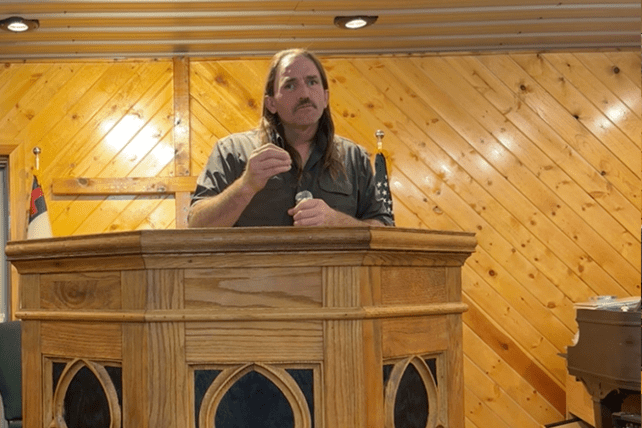
Silas Shelton, pastor of Blanchester Community Ministries in Cincinnati, Ohio, stands accused of child rape and sexual battery. Shelton is also facing arson charges. Blanchester Community is affiliated with the Southern Baptist Convention.
The Cincinnati Enquirer reports:
An Ohio pastor was charged with child rape two years after he opposed a book series he said wrongfully encouraged children to “explore their sexuality.”
Silas Shelton, 52, who lives in Warren County and serves as a pastor at Blanchester Community Ministries in Clinton County, was arrested on Oct. 15. He faces charges including child rape and sexual battery after a detective said he abused a minor over a period of about six years.
In August 2023, he spoke at a Little Miami Local School District meeting to voice concern about the sale of the “Heartstopper” series at the district’s Scholastic Book Fair, according to previous Enquirer reporting. The books prominently feature gay characters.
“I tell you, I got sick reading that stuff,” Shelton said at the time. He also lamented that parents “aren’t allowed to talk about the health risks of kids being gay.”
Shelton is being held on a $2 million bond in a Clinton County jail.
He pleaded not guilty to all charges, according to online court records. For each charge, a county website listed a September 2019 date as to when each violation is alleged to have occurred.
The Wilmington Police Department, which announced his arrest in a news release on Oct. 16, said it wanted to limit the amount of details released out of respect for the person impacted.
Bruce Gerencser, 69, lives in rural Northwest Ohio with his wife of 48 years. He and his wife have six grown children and thirteen grandchildren. Bruce pastored Evangelical churches for twenty-five years in Ohio, Texas, and Michigan. Bruce left the ministry in 2005, and in 2008 he left Christianity. Bruce is now a humanist and an atheist.
Your comments are welcome and appreciated. All first-time comments are moderated. Please read the commenting rules before commenting.
You can email Bruce via the Contact Form.