Reverend is a title people should look down on, not up to.
— Christopher Hitchens
I am an ordained Baptist preacher. I am also ordained through the Universal Life Church, and the Church of the Latter Day Dude. I have every right to claim and use the “Reverend” title. However, I never used the title. I despised the attention the title gave me. I just wanted to be an everyday Joe; a first among equals in the church.I asked congregants to call me by my first name, Pastor Bruce, or Preacher. I preferred the latter. If I was anything. I was a preacher. Besides, it saved me from hearing people horrifically butcher my Hungarian last name — Grr-IN-sir (though there are a few Gerencsers who pronounce their surname Grincer.
Years ago, I wrote a letter to the editor of the Bryan Times. When my letter was published, it showed my name as The Reverend Bruce Gerencser. Give me a break. A call to the editor let him know that I preferred no title. He was somewhat surprised since many local pastors wanted or demanded the Reverend (and/or Doctor) title be used.
I was content to blend into a sea of working-class people, ministering to their needs without nary of thought about what they called me.
Bruce Gerencser, 69, lives in rural Northwest Ohio with his wife of 48 years. He and his wife have six grown children and thirteen grandchildren. Bruce pastored Evangelical churches for twenty-five years in Ohio, Texas, and Michigan. Bruce left the ministry in 2005, and in 2008 he left Christianity. Bruce is now a humanist and an atheist.
Your comments are welcome and appreciated. All first-time comments are moderated. Please read the commenting rules before commenting.
I am a diehard Cincinnati Reds fan. Come hell, high water, or a losing season, I watch or listen to every Reds game. Currently, John Sadak and Jeff “Cowboy” Brantley call most of the games on TV. Every Sunday fans are treated to the singing of God Bless America. I either mute or fast forward through the sound — a minor annoyance, to be sure, but an annoyance, nonetheless.
Today, Sadak called the singing of God Bless America a “Sunday Tradition,” to which I politely 🙂 replied bullshit! The singing of “God Bless America” is a post 9-11 innovation. This sound may have had a unifying effect twenty-five years ago, but today it is song glorifying militarism and imperialism; complete with military planes or helicopters flying overhead.
The same goes for unfurling a field-sized U.S. flag while a soloist or group belts out the un-singable war song, The Star Spangled Banner. More flyovers too, an ever-present witness to our military might. Little do younger adults know that there was a time when we didn’t worship nationalism and Christianity. Today, we wave the flag of American exceptionalism with nary a thought. Sadak furthers this narrative by implying that singing God Bless America during the seventh inning of Reds game is a Sunday tradition. It is not, and never has been. Singing “Take Me Out to the Ballgame” during the seventh inning six days a week . . . now that’s a baseball tradition.
When I turn on the Reds, I want to watch the game, not listen to masturbatory worship of American nationalism. Sadak might want to consider that many people in the stands and at home aren’t supporters of decades of military interventions and deaths across the globe; people who recognize the need for self-defense, but not wars over natural resources, communism, regime change, and geography; or even worse, wars fought solely based on lies
Count me as a patriotic Reds fan who wants military-free ballgames. I don’t believe for a moment that soldiers are dying in the Middle East so we can enjoy Sunday baseball games at home. Not in my name, I say. I don’t want one drop of innocent blood shed for the “American Dream”, another barrel of oil, or Donald Trump’s war fantasy.
Bruce Gerencser, 69, lives in rural Northwest Ohio with his wife of 48 years. He and his wife have six grown children and thirteen grandchildren. Bruce pastored Evangelical churches for twenty-five years in Ohio, Texas, and Michigan. Bruce left the ministry in 2005, and in 2008 he left Christianity. Bruce is now a humanist and an atheist.
Your comments are welcome and appreciated. All first-time comments are moderated. Please read the commenting rules before commenting.
I came of age in the 1960s and 1970s Independent Fundamentalist Baptist (IFB) church movement, attended an IFB Bible college in the late 70s, married an IFB pastor’s daughter, and pastored IFB congregations for a decade before realizing how bankrupt my religious heritage really was — though the IFB indoctrination and conditioning affected me long after I stopped associating with IFB churches and colleges. In some ways, IFB poison still lies deep in the recesses of my mind, requiring frequent therapy to root out the disease.
IFB churches and preachers are known for what they are against. Lots of rules, called church standards. These rules dictate virtually aspect of life, especially in matters of sexuality. I have come to the conclusion that it is nigh impossible to be a true-blue IFB believer and have healthy attitudes towards sex. IFB preachers are modern day Puritans and legalists, demanding sexual purity from everyone except themselves. (And don’t get your knickers in a bunch preacher. I know the cult’s secrets.) Nudity, in particular, was expressly forbidden, especially on TV, the Internet, and the printed page. NO NUDITY, IFB preachers demand, all the while perusing porn sites and visiting strip clubs to do “research.” 🙂
Let me conclude this post with three stories from our days as IFB parents.
Remember the Sears and Roebuck catalog? When the catalog arrived at the Gerencser home, Polly and I would tear out all the lingerie ads before our children could view it. We felt it our duty to protect our older boys from scantily clad catalog models! Another generation of boys saved from lust, right?
From 1989-1994, the church I pastored at the time operated a tuition-free private school for church children. The school had a library of sorts, made up of castoffs and books purchased at library sales and garage sales. I donated to the library my past copies of National Geographic. Before allowing students to check out the magazines, we went through them and blacked out the nudity. Can’t have boys staring at Aborigine breasts. Another generation of boys saved from boobies.
Finally, I used to subscribe to Sports Illustrated. Every week, my older boys would read the newest issue; well, except for one: the annual swimsuit edition. This edition came at the same time every year, so I would intercept the magazine to keep my sons from seeing it.
One year, the swimsuit edition never arrived — or so I believed. I thought no more of it until I was working on a cabinet light in our bathroom. Guess what I found “hiding” on the top of the cabinet? The Sports Illustrated Swimsuit Edition! One of my sons had hidden the magazine so he could “lust” later. He will remain unnamed. None of us should be judged for what we did as teenagers.
Crazy shit, right? However, these stories are quite normal in IFB churches. Jack Hyles, pastor of the largest church in America at one time, wouldn’t allow women wearing pants to attend worship services. Those wearing pants were required to put a paper dress over their clothing — the mark of shame at First Baptist Church in Hammond, Indiana. Shocking? Just another day in the IFB.
Bruce Gerencser, 69, lives in rural Northwest Ohio with his wife of 48 years. He and his wife have six grown children and thirteen grandchildren. Bruce pastored Evangelical churches for twenty-five years in Ohio, Texas, and Michigan. Bruce left the ministry in 2005, and in 2008 he left Christianity. Bruce is now a humanist and an atheist.
Your comments are welcome and appreciated. All first-time comments are moderated. Please read the commenting rules before commenting.
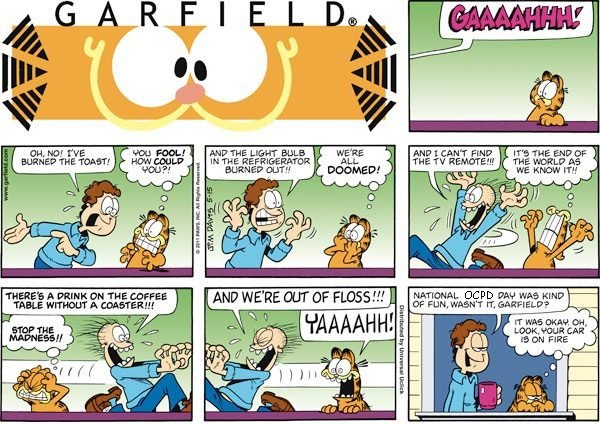
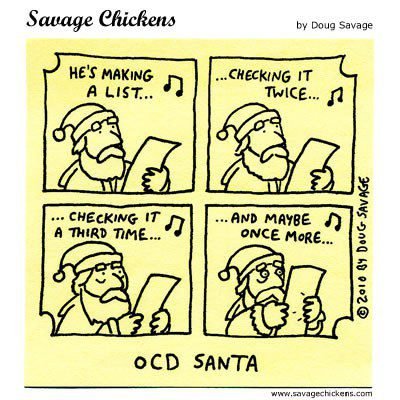
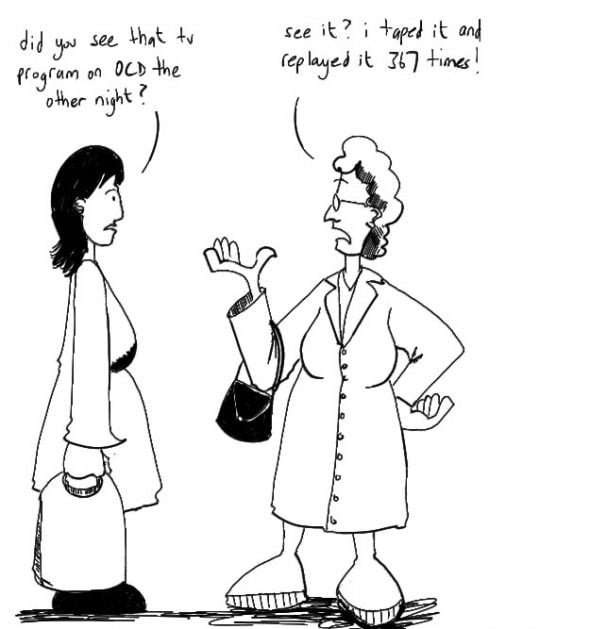
I have battled Obsessive Compulsive Personality Disorder (OCPD) for most of my adult life. While OCPD and OCD have some similarities, there are differences, namely:
People with OCD have insight, meaning they are aware that their unwanted thoughts are unreasonable. People with OCPD think their way is the “right and best way” and usually feel comfortable with such self-imposed systems of rules.
The thoughts, behaviors and feared consequences common to OCD are typically not relevant to real-life concerns; people with OCPD are fixated with following procedures to manage daily tasks.
Often OCD interferes in several areas in the person’s life including work, social and/or family life. OCPD usually interferes with interpersonal relationships, but makes work functioning more efficient. It is not the job itself that is hurt by OCPD traits, but the relationships with co-workers, or even employers can be strained.
Typically, people with OCPD don’t believe they require treatment. They believe that if everyone else conformed to their strict rules, things would be fine! The threat of losing a job or a relationship due to interpersonal conflict may be the motivator for therapy. This is in contrast to people with OCD who feel tortured by their unwanted thoughts and rituals, and are more aware of the unreasonable demands that the symptoms place on others, often feeling guilty because of this.
Family members of people with OCPD often feel extremely criticized and controlled by people with OCPD. Similar to living with someone with OCD, being ruled under OCPD demands can be very frustrating and upsetting, often leading to conflict. (OCPD Fact Sheet)
I have been considered a perfectionist most of my life, a badge I wore with honor for many years, and one I still wear on occasion. As we age — I am almost sixty-nine — we tend to reflect on our lives and how we got where we are today. Self-reflection and assessment are good, allowing us the opportunity to be honest about the path we have taken and choices we have made in life. (My therapist told me that I am one of the most self aware people she knows. Good? Bad? I don’t know.)
When I first realized twenty-five or so years ago that I had a problem — a BIG problem that was harming my wife and children — the first thing I did was try to figure out how I ended up with OCPD. While my mother had perfectionist tendencies, she was quite comfortable living in the midst of clutter and disarray (but not uncleanliness). I concluded that it was my Fundamentalist Baptist upbringing with its literalistic interpretations of the Bible that planted in me the seeds of what would one day become OCPD. I spent most of my adult life diligently and relentlessly striving to follow after Jesus and keep ALL of his commandments. But try as I might, I still continued to come up short. This, of course, only made me pray more, study more, give more, driving me to allot more and more of my time to God/church/ministry. In doing so, the things that should have mattered the most to me — Polly, our children, my health, and enjoying life — received little attention. Polly was taught at Midwestern Baptist College — the IFB institution both of us attended in the 1970s — that she would have to sacrifice her relationship with me for the sake of the ministry. I was, after all, a divinely called man of God. Needless to say, for way too many years, our lives were consumed by Christianity and the work of the ministry, so much so that we lost all sense of who we really were.
Perhaps someday one or more of my six adult children will write about growing up in a home with a preacher father who had OCPD. The stories are humorous now, but not so much when they were lived out in real-time. My children are well versed in Dad’s rules of conduct. Granted, some of these rules such as “do it right the first time” have served them well in their chosen fields of employment, but their teacher was quite the taskmaster, and I am certain there were better ways for them to learn these rules.
My oldest sons “fondly” remember helping me center the church pulpit, right down to one-sixteenth of an inch. Did it matter if the pulpit was slightly off-center? For most people — of course not; but, for me it did. I felt the same way about how I prepared my sermons, folded the bulletins, cleaned the church, and did countless other day-to-day responsibilities. When I took on secular jobs, employers loved me because I was a no-nonsense, time-to-lean, time-to-clean manager. (Is it any surprise that most of my adult jobs were either pastoring churches or management jobs?)
People walking into my study were greeted by a perfectly cleaned and ordered office. The desktop was neat, and the drawers were organized, with everything having a place. My bookshelves were perfectly ordered from tallest to smallest book and then by subject. Dress-wise, I wore white one-hundred-percent pinpoint cotton shirts and black wingtip shoes. My suits were well-kept and matched whatever tie I was wearing. My appearance mattered to me (and still does). Congregants knew they would never find me shopping at the local Walmart wearing a t-shirt and sweatpants.
What I have mentioned above sounds fine, right? Surely, I should have a right to order my life any way I want to. And that would be true, except for the fact that I live in a world populated by other people; people who are not like me; people who are happy with clutter, disarray, and OMG even dirt! It is in their personal relationships that people with OCPD have problems, and, in some instances, they can drive away the very people who love them.
For the first twenty-five years of marriage, my relationship with Polly was defined by Fundamentalist Baptist/patriarchal thinking. It doesn’t take a genius to figure out that such beliefs play well in the minds of people with OCPD. I had high expectations not only for myself, but for my partner and children too. We all, of course, miserably failed, but all that did was increase the pressures to conform to silly (and at times harmful) behavioral expectations. It didn’t help matters that I was an outgoing decision-maker married to a passive, always-conform-to-the-wishes-of-others, woman. While we put on quite a dog and pony show for most of our time in the ministry, behind the scenes things were not as they outwardly appeared to be.
In the early 2000s, I began to see how harmful my behavior was when it came to my familial relationships (and to a lesser degree my relationship with congregants). While it would be another decade before I would finally seek out professional secular counseling, I did begin to make changes in my life. These changes caused a new set of conflicts due to the fact that everyone was used to me being the boss, with everything being according to MY plan. While Polly and the kids loved their new-found freedom, there were times where they were quite content to let me be the stern patriarch. As with all lasting change, it takes time to undo deeply-seated behaviors.
I am not so naive as to believe that I am “cured” of OCPD. I am not. My counselor is adept at pointing out to me when certain behaviors of mine move toward what she calls my OCD tendencies. I have had to be repeatedly schooled in the difference between good/bad and different. For example, young people today generally discipline their children differently from their baby-boomer parents. Read enough memes on Facebook and you will conclude that young parents have lost their minds when it comes to raising their children. What that brat needs is an ass-whipping, boomer grandparents say. What I continue to learn is that people who act differently from me, look different from me, or have beliefs different from mine are not necessarily wrong/bad. Most often, what they really are is “different.” Learning to be at peace with differences has gone a long way in muting my OCPD thinking.
Both Polly and I agree that the last twenty or so years of married life have been great. One of the reasons for this has been my willingness to realize where my OCPD is causing harm and making the necessary changes to end the harm. The first thing I learned is that everyone is entitled to his or her own space. I have every right to order my office, drawers, and space as I want them to be. I no longer apologize for having OCPD. All that I ask of others is that when they invade my space, they respect my wishes. And that works for others too. I have to respect the personal boundaries of Polly, our six children, and our sixteen awesome grandchildren. This is why I do not meddle in their lives. I give advice when asked, but outside of that, they are free to live as they please. Do my children and adult grandchildren make decisions I disagree with, decisions that leave me mumbling and cussing? Yep, but it’s their lives, not mine, and I love them regardless of the choices they make.
The second thing I learned is that it is important for Polly and me to have times of distance from each other. It is okay for each of us to do things without the other. We don’t have to like all the same things. Understanding this has allowed Polly’s life to blossom in ways I could never have imagined. If you had known Polly in 1999 and then met the 2022 version, why you would wonder if she is possessed. From going back to college and graduating, to becoming an outspoken manager at work, Polly is an awesome example of what someone can become once the chains of Fundamentalism and patriarchal thinking have been broken.
The third thing I learned is that my OCPD can be productively channeled, with my personal relationships surviving afterward. Polly loves it when she comes home and finds that I have emptied the cupboards, cleaned them, and replaced everything neatly and in order. The joke in the family is that people want me to come clean their house for them, but they can’t stand being around me when I do. 🤣 In the communal spaces where our lives collide, Polly and I have had to learn to give and take. I have learned that it is okay to leave the newspaper on the floor until tomorrow, and Polly has learned, come holidays, that I am going to clean every inch of the house, including under the refrigerator — with her help, of course. She will never understand why my underwear drawer needs to be straightened up for company, and she will likely never understand the need to clean under the stove/refrigerator four times a year. But, because she loves me, she smiles and says, what do you need me to do next?
My chronic health problems and unrelenting pain have forced me to let go of some of my obsessions. I can’t, so I don’t. I don’t find this giving in/giving up easy to deal with, but I have come to see that life is too short for me to not enjoy the moment even if everything is not in perfect order. That said, I still have OCPD moments, and I suspect I always will. Several years ago, I had a dentist appointment. The dental assistant had me take a seat in the exam room. When she returned, she found me tapping the valance on the blind with my cane. I told her, I have been sitting here for years with that crooked valance driving me crazy. There, it’s fixed! She laughed. Later, she returned and told me that all the valances in the other rooms were off-center too. She said, I never noticed that until you pointed it out to me. I likely will always have an eye for when something is crooked, especially wall hangings and sign lettering. Why can’t the doctor’s office get notices straight when they tape them on the wall, right? Dammit, how hard is it to do the job right the first time! Sigh. You see, OCPD never completely goes away, but it can be managed and controlled, allowing me, for the most part, to have satisfying and happy relationships with the people I love.
Do you have OCPD or OCD tendencies? Please share your experiences in the comment section. I am especially interested in hearing about how Fundamentalist Christianity affected your behavior.
Bruce Gerencser, 69, lives in rural Northwest Ohio with his wife of 48 years. He and his wife have six grown children and thirteen grandchildren. Bruce pastored Evangelical churches for twenty-five years in Ohio, Texas, and Michigan. Bruce left the ministry in 2005, and in 2008 he left Christianity. Bruce is now a humanist and an atheist.
Your comments are welcome and appreciated. All first-time comments are moderated. Please read the commenting rules before commenting.
I’m pretty good at laying flooring. Especially in bedrooms.
💗 KNOWS HOW TO DONDRY WALL – only 1 piece to do I think?
This sounds like a kinky sex position — the DONDRY WALL, I’m game.
….
That’s the biggest things I need from a handyman, but I would like somebody that knows what they’re doing (with experience!) to come in & check out my place! I have cash in hand for the jobs done.
I am experienced and know what I am doing. She wants me to come check out her “place.” And she’s going to pay me!
🫶🏼 PLEASE BE SOMEBODY THAT HAS TIME ON THEIR HANDS RIGHT NOW! I’m trying to get this done in a certain amount of time, so if you work a full time job this isn’t the job for you!! Time is the most crucial here for me 🫶🏼
This is the job for me. I have lots of time on my hands, and I have been known to get jobs done in five minutes or less.
Polly and I laugh together.
I know, I know, we are beyond redemption. Polly has corrupted me. 🙂
Bruce Gerencser, 69, lives in rural Northwest Ohio with his wife of 48 years. He and his wife have six grown children and thirteen grandchildren. Bruce pastored Evangelical churches for twenty-five years in Ohio, Texas, and Michigan. Bruce left the ministry in 2005, and in 2008 he left Christianity. Bruce is now a humanist and an atheist.
Your comments are welcome and appreciated. All first-time comments are moderated. Please read the commenting rules before commenting.
While under the influence of the Spirit I thought . . .
(Inner Monologue)
Why do I feel so funny?
What have I eaten today? When is the last time I have eaten?
Hmm . . . 12 hours.
So my blood sugar is low. No need to check it. It’s in the 50s when I feel like this,
You need to drink a coke and eat something.
Ugh. Will I or won’t I vomit?
Okay, I’ll drink a coke and eat a sandwich.
My mind is now silent . . .
I think I will lie down rest for a moment. And then I think I’ll drink a coke, maybe even two.
To weak now to stand, I fall on the bed.
Weak as I may be, my mind is clear.
Fuck Coke. Fuck Sandwich too.
Sleep. When I sleep I’m not in pain.
I lift my head and nod.
Sleep.
Most nights a different voice says: Wake up. Think of Polly. Think of your family, your grandchildren. Don’t be a selfish prick. You owe it to them to suffer til the bitter end.
Tonight, this voice is silent. My mind is clear. Isn’t all death selfish? Do I owe anyone my continued existence? All I want is for this god damn pain to stop. You know like when you are under anesthesia. Wonderful, pain-free, thought-free sleep.
Sleep.
They say true love endures to the end. Almost, as in the love I share with Polly. But on this night, memories will have to suffice. I want the pain to stop. I want the nightlong-wrestling-with-pain-just-to get-an-hour-or-two-of-sleep to stop.
Sleep.
Just let nature take its course. No one will know but us. Who is talking to us, or is it just me? I’m confused, yet my mind is clear.
Pain.
Sleep.
Soon, nature wins this titanic struggle. Pain always knew that in the end nature wins. Nature always wins.
For in her kingdom, tears gone, crying gone, pain gone. (Revelation 21:4 kinda)
So on this night, with a clear mind, I selfishly choose blessed wonderful pain-free sleep. Tonight must be about me.
Sleep.
(Polly enters my thought)
I feel someone gently pushing on my side, calling out my name, asking if I’m okay.
No, I’m not okay. My blood sug. . . ar is uh . . . low . . . I need a Coke.
I’m cold, I mean really really cold. Unbeknownst to me, I had slept for hours, sweating the whole time, a sweat soaked bed witness to the deed. I’m freezing, as my glucose level continues to drop. Death draws ever closer.
I put my heavy blue terry robe on and lie back down. Just a little rest. Can’t I at least have that tonight?
Someone covers me with another blanket.
You need to drink something. If not a Coke, how about orange juice?
There’s the gentleness of love in her voice, tinged with concern, yet she knows I have long talked of this day, even more so recently. Is it not his choice, and not mine?
I just want to sleep. I’m tired. I can’t stand the pain, the incessant suffering.
I could argue mental incompetency or dementia. Don’t my wants and needs matter?, Polly wonders.
Not at this final moment in time. We all will one day stand at this very point.
A stifled cry, a soft voice, reminiscent of the girl I met fifty years ago, says I understand.
Bruce Gerencser, 69, lives in rural Northwest Ohio with his wife of 48 years. He and his wife have six grown children and thirteen grandchildren. Bruce pastored Evangelical churches for twenty-five years in Ohio, Texas, and Michigan. Bruce left the ministry in 2005, and in 2008 he left Christianity. Bruce is now a humanist and an atheist.
Your comments are welcome and appreciated. All first-time comments are moderated. Please read the commenting rules before commenting.
Previously, I have prevented Evangelical zealots from filling the comment section with proof texts, often without any commentary. Such people think that the Bible is self-explanatory; which is contrary to what the Good Book actually teaches on the matter. Question? If the Bible is self-explanatory, why are there 900 or so Christian colleges in the United States that train people for 4-6 years to preach the self-explanatory Bible? If the Bible is self-explanatory, why do Evangelical preachers hold multiple services every week to teach congregations the Word of God?
With that thought in mind, I have decided to alter this site’s policy on quoting Bible verses in the comment section.
You may now quote Bible verses as long as you do not claim they are supernatural or authoritative. The verses will be treated just like the words of any other written text.
You are required, then, to state why you are quoting these verses. Don’t assume we know. We are not as smart as you are. I received a Men in Black-like mind wipe when I deconverted, so I lost fifty years of knowledge overnight. I don’t know squat compared to you, oh great one!
If you invoke God, the supernatural, or some sort of authority, you are required to give evidence for the existence of God; that this God is the God of the Christian Bible; that the God of the Christian Bible supernaturally birthed the Bible, giving it his authority. The Bible is like no other book, you may say, but such faith claims will not suffice. You must defend your God and his Bible on the fields of Evidence and Reason.
If you cannot do so, your proof texts are not welcome.
Why should any of us care what your holy book says?
Well, it’s God’s Word.
Prove it.
You wrongly assume your Bible’s words have some sort of magical power or meaning to the non-initiated or those no longer in the cult.
They don’t.
Talking about the Bible can be interesting. I enjoy the intellectual exercise. After all, I was a Christian for 50 years — 17 years longer than Jesus was 😂
But, it’s just a book, no different from hundreds of other books I’ve owned.
However, once you claim the Bible is supernatural and authoritative, questions are sure to follow.
I hope you understand,
Bruce Gerencser, 69, lives in rural Northwest Ohio with his wife of 48 years. He and his wife have six grown children and thirteen grandchildren. Bruce pastored Evangelical churches for twenty-five years in Ohio, Texas, and Michigan. Bruce left the ministry in 2005, and in 2008 he left Christianity. Bruce is now a humanist and an atheist.
Your comments are welcome and appreciated. All first-time comments are moderated. Please read the commenting rules before commenting.
Several weeks ago, I responded to an email from a seventy-nine-year-old Christian man named Pat. Here’s what he said:
Wow!!! What writings. Never read anything like them. I am exhausted after going over your blogs. You have accomplished the task of making yourself the center of attention, that I conclude has always been important to you. You position your blogs that you always get the last word in, which gives you a feeling of control and power which also is important to you. You have probably spent a great part of your life manic/depressive, which would be a hard life to live. Probably fought the demons off of homosexuality, may have even given into the temptation. Doesn’t make you a bad person just makes you lost like most of the world, myself included. You would do almost anything to win, but this battle with God will be lost. He is not the god that you speak about in your writings and your experiences within the Church. He is a God of love and mercy. I wish you the best in the days ahead. I hope you find some relief in the health issues you are dealing with. You are still a young man. I will be 79 in a week. You write of your honesty; I am very truthful in my life also and in this note to you, found it to be less complicated that way…Pat
As devout Christians are wont to do, Pat refused to let me have the last word, choosing, instead, to deny every criticism I levied against his email. Here’s what he said, with my pithy, snarky response:
Wow Bruce, yes once again I say wow!!!
Thank you! Usually only my partner says this to me after an invigorating roll in the hay.
Have you done this all your life?
No, I was a virgin when I got married, as was my partner, so our WOW! nights started on our wedding night.
To assume thoughts and intensions of someone from things spoken or written to you that does not fit your narrative. I saw it in almost all of your responses to those that didn’t agree with you. You assume things that certainly may not be true because you believe you see the clear message of what was written. Not always true.
Not always true? Sure, but in your case, my response was spot on. I have delightful conversations all the time with people who have disagreements with me — including Evangelical Christians and IFB preachers. I typically respond to people in kind. You are a “get off my lawn” old man, who thinks his age grants him the right to say whatever he wants. And when you do, you are “shocked” when someone offends your sensibilities by calling you an asshole or a sarcastic prick.
Pat, words have meanings. I took your words to mean exactly what you meant them to say. If you meant something different, you might want to change how you write and the words you use. Will that happen? You’re seventy-nine. What could a sixty-eight-year-old Evangelical-preacher-turned-atheist teach you about anything (except how to have WOW! sex, since you — being a good Christian — only use the missionary position and listen to hymns when fucking. Send me an email for real photos of how to have an old-fashioned Devil-loving time of passion).
When I wrote you, I truthfully gave you my literal feeling of what I was experiencing in those few minutes as I typed.
So what? Do you think you have a hall pass to say whatever you want to unknown people on the Internet, all because you think God/Jesus/Holy Spirit — the three Gods you worship — want you to do so. I am surprised, at seventy-nine-years old, that you haven’t learned to carefully choose your words when speaking to strangers. For example, I so wanted to give you the “Bruce Gerencser Treatment.” Ask around, you will find that this treatment has neutered and given a glossectomy to many a confident, arrogant, filled with the Holy Spook Christians. Few return to try me again, and those who do are summarily humiliated by me or some of my friendly attack kitties.
I refrained from giving you the “Bruce Gerencser Treatment” because I was too tired and worn to give a flying fuck. By the way, readers, what is a “flying fuck?”
When I said “Wow” I was NOT appreciating the profundity of your writing as you assumed.
That was sarcasm, dude. You must have missed that English lesson in fourth grade. Going forward, Pat, if you decide to contact me again or comment on this site, understand that I use humor — sometimes ribald — sarcasm, and snark in my writing. You may be one of those straight-laced Christians who doesn’t like cussing, but this is my house, so I will use colorful language when warranted. And if you don’t like it, you are free to exit stage right, never to be heard from again. And if you don’t, you shouldn’t be surprised if I tell you to go fornicate with yourself.
I was astounded and amazed that anyone atheist or not could write such things against God.
Why? The Christian God is a myth. I no more fear Jesus than I do Thor. And for the record, I don’t write anything against “God.” My focus is on Evangelical Christianity, a living, breathing religion that causes harm to countless people. God has never one time responded to one of my blog posts. He is allegedly all-knowing and all-powerful, but after pissing in God’s cornflakes for twenty years, I have concluded that he either doesn’t exist or approves of what I have to say. Think of that, Pat. Jesus giving me a thumbs up for putting sanctimonious Christians like you in their place.
When I said “I never read anything like them” I was Not recognizing the uniqueness of your prose as you assumed. I was literally saying the truth.
Again, I was being sarcastic.
Maybe I have lived a sheltered life, but I have never read or heard anyone contest against God in the way you have.
Well, you don’t know what sarcasm is, and you most certainly don’t know that many atheists think I am too kind to Christians, or that I am a secret Christian. You really do need to get out more. I have dinner with an Evangelical preacher every month or two. Feel free to ask him the measure of my character. Your strawman of me will quickly combust.
Again, when I said I was exhausted after going over your blogs, I was literally overwhelmed, awe struck and weak in my body.
Wow! I only feel that way after an exceptional night of rolling in the proverbial hay with the love of my life.
If my writing literally affects you this way, I implore you to immediately stop reading it. Don’t have a stroke or die over my words. I couldn’t live with that for five seconds. Jesus will not reward you, Pat, for being a “sarcastic prick.” I’m inclined to think the very dead son of God loves my writing. You might want to take that up with him if you disagree. Oh wait, you can’t. His bones lie somewhere in an unknown grave.
You assumed that I was being sarcastic, even called me a “sarcastic prick”. I can’t imagine even satan calling me that.
Really? That’s a bit of hyperbole, don’t you think. I am worse than Satan? I do work for him, but I am nothing like my boss. That said, I proudly wear his name. Read the Bible, Pat. It’s God, not Satan, who is the evil one. God killed far more people than Satan ever did. He’s an all-round decent bloke. A bit ornery at time, but nothing like a deity that rapes, assaults, and murders innocent people, including babies, fetuses, and zygotes.
Actually, I got a little smile on my face and laughed a little bit at myself. I say that so you don’t assume I am laughing at you. You are no one to be laughed at.
Well, Pat, I am laughing at you. Your emails to me deserve ridicule. I am sure readers will make that clear to you in the comment section. Unlike you, they know how to read and use a dictionary.
When it comes to the words that I spoke about you in my writing I did not speak them of myself. Let me try to explaine. I have loved God since I was little, yes, I believe His word is faithful and true. I believe that God has given gifts thru the Holy Spirit, one of those gifts is the gift of Knowledge. It is in that gift that I wrote about you.
Oh for fuck’s sake, Pat, is this really what you are going with; that your words are the Holy Ghost’s, and not yours; that you have a supernatural gift given to you by a supernatural God that allows you to see me as I am? God is dead, so he can’t “gift” you anything. All you are is an old man who thinks the Holy Spook lives inside of you, giving you the exact words to say to me. Surely, deep down, you know this is bullshit, right? Unfortunately, believing this gives you a license to judge and abuse people with your words. I just happen to be an atheist who won’t let you do so without pushing back.
What evidence do you have that God has given you the gift of knowledge? I assume you are a Charismatic or a Pentecostal. These groups are typically non-cessationist.
No, I don’t know you Bruce, but God does.
What evidence do you have for your claim that “God” knows me? That’s a rhetorical question. You have none. If you think you do, bring it on, big boy, and I will gladly, with a big smile, disabuse you of your ignorance.
The things that I wrote about you I wrote in just a few minutes, not really thought out, just typed them. Only you know if they are true in your life. They can be your secrets, or you can shout them from the house tops or cast them off.
No shit, Sherlock. It was evident that your comments lacked thought (and prayer). No, they are not true, especially your claim that I am or was a homosexual. No, Pat, No! I will not have a roll in the hay with you. I am a one-woman man. I have lots of LGBTQ friends, but unlike you, they know I like to pitch instead of catch.
I have few secrets, Pat. What is it you think I am hiding from my family, friends, or readers of this blog? Use that “gift” of yours to discern what secrets I have. I have one in particular, Pat. If you can sense what that secret is, tell me, and I will admit “you are da man!” I will even send you a $50 gift card to a strip club, celebrating your “gift” from God.
Lots of assumptions on your part of your rebuff of my email, to many to cover in this already too long of a reply.
People only say this when they can’t intellectually respond to me. What assumptions did I make that weren’t justified by your two unsolicited emails to me?
You again might assume that I am writing a false compassion when I say “I wish you the best in the days ahead and that you might find some relief in the health issues you are dealing with.”
Yes, and I have seen nothing in your words that suggests otherwise. Your “I wish you the best . . .” might have been better received had you not spent the bulk of your emails lying about me or making false assumptions about my sexuality.
I disagree with you on all parts of your writings, but I wish you no harm or suffering in the days you have left in this world…Pat
Sure you do. I assume you believe that God will torture me for eternity in Hell after I die, and I suspect, though you may never say it, that you think my chronic health problems and pain are God trying to get my attention before it’s too late. Damn, Skippy, I have the gift of knowledge too. Either that, or I have interacted with scores of Pats over the years. I will let astute readers determine which.
Saved by Reason,
Bruce Gerencser, 69, lives in rural Northwest Ohio with his wife of 48 years. He and his wife have six grown children and thirteen grandchildren. Bruce pastored Evangelical churches for twenty-five years in Ohio, Texas, and Michigan. Bruce left the ministry in 2005, and in 2008 he left Christianity. Bruce is now a humanist and an atheist.
Your comments are welcome and appreciated. All first-time comments are moderated. Please read the commenting rules before commenting.
1971-72 found me attending ninth grade at Central Junior High School in Findlay, Ohio. This was a rough year for me. In the space of a year, my parents divorced, I contracted mumps and chicken pox, and had my first major health problem — unexplained joint swelling, especially in my elbows and feet, which was attributed to “growing pains.”
My parents soon married new people. My dad married a nineteen-year-old girl with a baby, and my mom married her first cousin, a recent parolee from a Texas prison. Life as I knew it was over. A few months later, Dad moved us to Tucson, Arizona, hoping to avoid bill collectors.
In the fall of my tenth-grade year, I went through a short period of rebellion — Independent Fundamentalist Baptist (IFB)-style.
I started dressing down for church, often wearing combat boots, jeans, and white t-shirts to church.
I moved from the front of the church to the back of the church. This allowed me to avoid the critical eye of church pastors. Until it didn’t. One Sunday, Dr. Russell Anderson — of Anderson-Hyles College fame — was preaching at Trinity Baptist Church in Findlay — the church I continued to attend after my parents divorced. On this day, I was sitting in the far back of the church with my friends. We were whispering, passing notes, and horsing around. Our behavior caught Anderson’s attention. He decided the slim, athletic, six-foot redhead was the instigator, and publicly called me out, thinking I would start paying attention to his droning sermon. I, of course, ignored him, and several minutes later, he stopped the service and asked one of the ushers, Ralph Ashcraft — who had two rebellious sons of his own — to sit next to me and straighten me out. This only fueled my anger and rebellion.
One Saturday, I was helping paint the church annex. One of the pastors came in, looked at my fine work, and proceeded to holler at me. I threw the roller in the paint pan and said, “Do it yourself, then.” This did not go over well. The senior pastor tattled on me, and soon the youth pastor tracked me down to let me know I couldn’t speak to THE pastor in such a manner.This continued to fuel my anger and rebellion.
Another weekend, I was hanging out my my friend Sonny. We decided to call a local tow company and have them tow away Sonny’s neighbor’s car. When asked for a phone number, Sonny gave them mine. Our prank failed, but a Findlay police officer was waiting to talk to me when I arrived home.
Later that year, Sonny and I stole his dad’s 1955 Chevrolet one night and took it for a joy ride, including turfing numerous yards. Our exploits made the local newspaper. Fortunately, we were never caught.
In the fall, the church held a youth group hayride at Bob and Bonnie Bolander’s home. As I was sitting there with a group of my friends, dressed in stylish my boots, jeans, and t-shirt, Bob came to where we were sitting and gave us stern instructions. I proceeded to tell him, in glorious rebellious fashion to “fuck off.” That didn’t go well, but it did give me street credit with my homies.
It should have been evident that I was struggling. I was a hurting kid whose parents had destroyed his life. Not one pastor or congregant paid much attention to me, even though the church had become my new family. No one asked how I was feeling or what they could do for me. People weren’t mean; they were indifferent.
And then one night EVERYTHING changed. In a moment, my rebellion disappeared, and God wonderfully saved me. Two weeks later, I confessed before the church that God was calling me to preach. For the next thirty-five years, I devoted myself to loving, following, and worshiping Jesus. I spent twenty-five of those years pastoring Evangelical churches full-time in Ohio, Texas, and Michigan. I was a true-blue follower of Jesus, until I wasn’t. In 2008, I left Christianity. I am now a rebellious atheist and humanist.
Bruce Gerencser, 69, lives in rural Northwest Ohio with his wife of 48 years. He and his wife have six grown children and thirteen grandchildren. Bruce pastored Evangelical churches for twenty-five years in Ohio, Texas, and Michigan. Bruce left the ministry in 2005, and in 2008 he left Christianity. Bruce is now a humanist and an atheist.
Your comments are welcome and appreciated. All first-time comments are moderated. Please read the commenting rules before commenting.
I was diagnosed with fibromyalgia in 1997. Since then, I have added osteoarthritis, degenerative spine disease, gastroparesis, exocrine pancreatic insufficiency, and severe axonal neuropathy to my health resume, along with a plethora of debilitating symptoms that afflict me day and night.
Over the past thirty years, countless people have suggested I do this or that for pain; that they are sure if I will do ___________ that all or most of my pain will magically disappear. Anecdotes abound. I know a person who did __________ and their fibromyalgia went completely away! I know another person who took this or that supplement/magic food, and all their pain disappeared! And so the emails, texts, and social media messages say, day after day, month after month, year after year. Never mind what I want. They just KNOW that if I will follow their anecdotal proclamations, I will be healed.
What follows is a list of things I have tried for pain since 1997:
Prayer
Pleading with God
Asking others to pray for my healing
Pretending I am not in pain
Magnets
Genie massager
Chiropractor
Darvocet (removed from market due to causing heart problems)
Tramadol
Flexeril
Restoril
Amitriptyline
Lyrica
Guaifenesin (off label use)
TENS unit
Diet change
Exercise
Supplements
Hydrocodone
Gabapentin
Steaming hot baths (with magnesium epsom salts)
Distraction
Moved to Yuma, Arizona, hoping the weather would be good for me
Electric heating pads for legs, neck, and spine
Gel boiled water heating pads
Padded bed covering
Weighted blanket
Aspirin and Tylenol
Massage by Miss Polly, the sexy masseuse
Surgery
Therapy
Steroid and lidocaine injections
Physical therapy (a waste of time)
NSAID creams and patches (worthless)
Ambien
Gabapentin again
Flexeril again
Pain medications cut or removed per medical practice policy
Hit other body part to take away pain in extremity
Cannabis
Cymbalta (for neuropathy in legs)
Crying
During this time I read books about Fibromyalgia and chronic pain. I also saw more doctors than I can count: primary care doctor, rheumatologist, neurologist, multiple pain management doctors, and neurosurgeon. I’ve been seen by teams of doctors at the University of Michigan and Toledo Hospital. In 2007, I had a complete day-long work-up for multiple sclerosis (MS).
Here’s what has worked — so far:
Hydrocodone
Aspirin and Tylenol
Massage by Miss Polly, the sexy masseuse
Genie massager (a professional electric massager used in therapy/chiropractor offices)
Hot baths
Electric heating pads
Cymbalta (for neuropathy)
Cannabis (for sleep and nausea, doesn’t do much for pain, outside of helping me sleep)
Distraction (particularly cats, grandchildren, and writing)
As you can see, I have done what I can to alleviate my pain. The “miracle” jar is empty, and no cure is on the horizon. I fully expect to live the remaining days of my life in pain. It is what it is. I can accept that, though it seems other well-meaning people can’t. They are certain that if I will just listen to them and do ___________, my pain will markedly decrease or go away. Their “certainty” turns them into prophets of woo — a term used to describe beliefs involving pseudoscience, superstition, or magical thinking.
Want to help me? Continue to read my writing. Send me an encouraging email or message now and again. Comment on this blog. Donate (see, Bruce is in it for the money). Write a guest post. Promote my blog far and wide. Suggest to me subjects to cover with a blog post. Send Polly a note, thanking her for putting up with my shit. Bethany too. Both of them deserve better.
Thank you for your continued love and support.
Bruce Gerencser, 69, lives in rural Northwest Ohio with his wife of 48 years. He and his wife have six grown children and thirteen grandchildren. Bruce pastored Evangelical churches for twenty-five years in Ohio, Texas, and Michigan. Bruce left the ministry in 2005, and in 2008 he left Christianity. Bruce is now a humanist and an atheist.
Your comments are welcome and appreciated. All first-time comments are moderated. Please read the commenting rules before commenting.
This cookie is set by X to identify and track the website visitor. Registers if a users is signed in the X platform and collects information about ad preferences.
2 years
personalization_id
Unique value with which users can be identified by X. Collected information is used to be personalize X services, including X trends, stories, ads and suggestions.
2 years
external_referer
Our Website uses X buttons to allow our visitors to follow our promotional X feeds, and sometimes embed feeds on our Website.