Over the past few months, an Evangelical woman named Terri has repeatedly emailed me and left comments on this site. I asked her to stop emailing me, which she largely ignored, thinking what she had to say was more important than respecting my wishes. You can read my last two responses to Terri here and here.
Terri’s latest email to me is reproduced below. My response follows.
You emailed me after banning me from emailing you.
I emailed you to send you a notification of my post that mentions you. I do this for EVERY person I mention in a post.
You were not banned from emailing me or commenting on this site. I asked you to voluntarily stop emailing me. You have never been banned from commenting, though I have deleted some of your comments due to duplication or volume. Less is always better, and when a new reader starts leaving a plethora of comments, I am inclined to not post some of their comments. Again, less is better.
I have just one thing left to say.
Now, that’s not true. You have never had “one thing left to say” and that is certainly not the case with this email.
To express my disappointment in the way you brush off extreme violations to human rights, is an understatement.
Please provide evidence for your claim that I “brush off extreme violations to human rights.” I am confident that no evidence will be forthcoming, and longtime readers know the same. No, the real issue is that you are butthurt that I didn’t take your anecdotal stories at face value. Further, I made a lengthy defense of my position on religious persecution. Let me be clear, I have never denied the existence of religious persecution. What I object to is how Evangelicals (and Catholics) glamorize martyrdom, teaching children and adults alike that they may suffer persecution for the cause of Christ. This has led to millions of believers thinking that inconvenience or prosecution for breaking the law are persecution. They are not, as I made clear in my post. Not only that, I provided quotes from the leading scholar on Christian persecution, Dr. Candida Moss.
I responded to you dozens of times, including to your assertions about Christian persecution. I asked numerous questions, most of which you ignored. If you are unwilling to answer my questions or provide justification for your claims, forgive me for thinking you are a troll or an ignorant believer. I am not interested in your opinions or rationalizations. The same goes for your penchant for prooftexting. I am not expecting academic arguments from non-academics or uneducated believers, but I do expect Christians to answer the questions I ask them and interact with what I actually wrote.
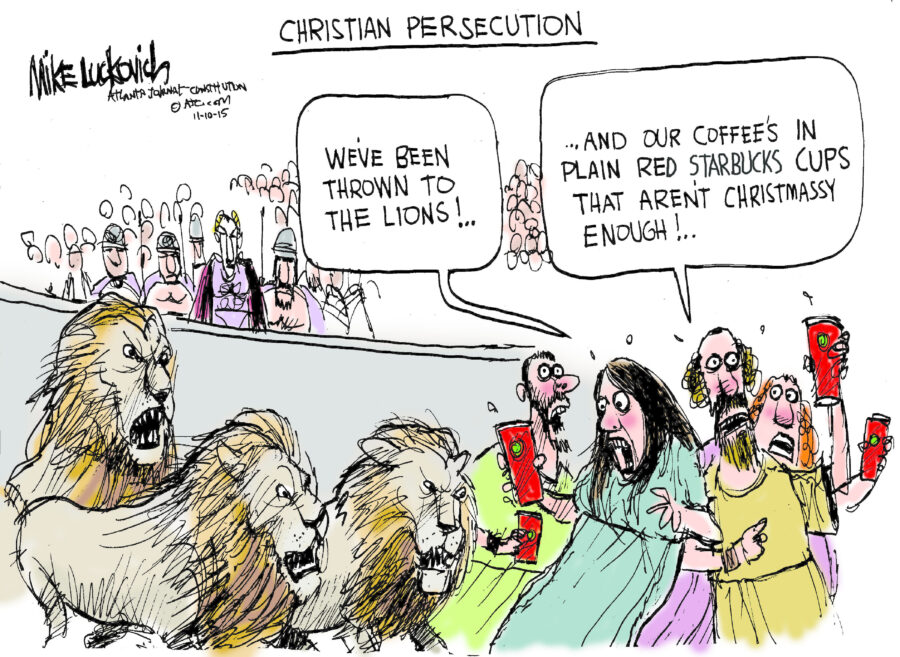
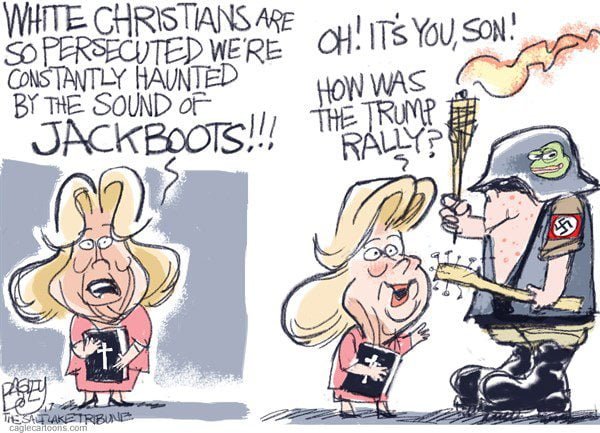
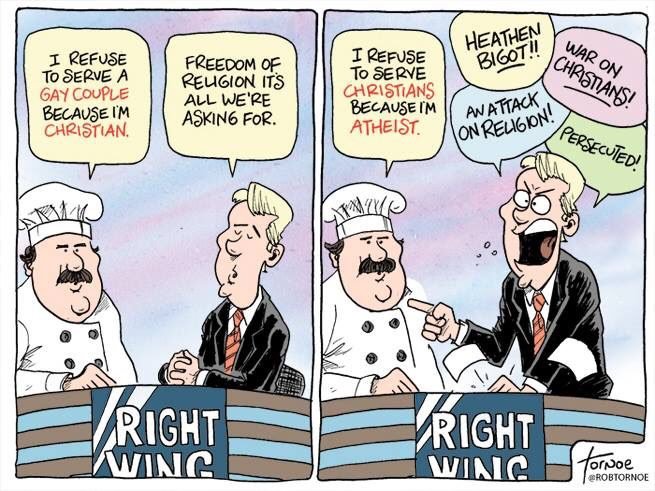
I honestly had thought you were better than that. I was shocked and heartbroken 💔 at the glib cartoons you put up about “You are persecuting me!” after I mentioned something as serious as the wholesale slaughter of innocent people. Whether they be Christians, peaceful Muslims, or whatever, human rights are human rights.
Please see my comment above. The cartoon reflected how I view much of the persecution talk coming from American Christians. Want to change my mind? Engage my arguments. Better yet, buy Dr. Moss’ book, The Myth of Persecution, and give it a careful reading.
You are attempting to paint me in a bad light, all because I challenged some of your assertions. At no time did I say that religious persecution is not happening in the world.
But I guess your humanism only conveniently extends to those whose ideologies you agree with.
*Sigh* You know this isn’t true so I assume you are just expressing your butthurtedness.
That was the most tone-deaf response, to reduce it all to a cartoon flippantly depicting very petty “Christians” complaining of “persecution” for nothing.
It’s a fucking cartoon. The real issue is that you CHOSE not to respond to or engage my post — and this is not the first time you have done this.
You KNOW that was not at all what I was talking about. I honestly never thought you would respond in such a callous way.
No, I don’t, and that’s why I asked you questions.
You don’t really know me, so you have no idea how I will or won’t respond to particular readers. Go back and read my posts and emails and see how many times you ignored my questions.
That’s all I have to say.
I know that’s not true.
I wish you well.
Bruce Gerencser, 69, lives in rural Northwest Ohio with his wife of 48 years. He and his wife have six grown children and thirteen grandchildren. Bruce pastored Evangelical churches for twenty-five years in Ohio, Texas, and Michigan. Bruce left the ministry in 2005, and in 2008 he left Christianity. Bruce is now a humanist and an atheist.
Your comments are welcome and appreciated. All first-time comments are moderated. Please read the commenting rules before commenting.
Recently, I received the following email about Christian persecution from an Evangelical reader:
I have an important question that cannot be ignored…because it is going on today. Christians are being savagely persecuted, limbs being cut off, being beheaded, all across Nigeria and other African nations. There have been more Christian martyrs in this last 30 years alone, all across the Middle East, the Far East and especially in Africa. In the 1990s, under Idi Amin in Uganda, mothers were getting their breasts chopped off so that they could not feed their babies. Babies were being thrown into the air in order to have them fall on a sword and be split in two. Unspeakable violence against innocent people. Christians being told to renounce their faith, or face persecution, torture and death. Why, if there were no transformative, undergirding power in Christ, would people choose torture and death and not recant? Where does such courage come from? If they aren’t getting comfort and fortitude from a greater power within them? These are important questions, and should not be ignored in an honest, unbiased search for truth. If people are truly seeking for truth, and trying to help and support one another on the journey, such questions need to be asked.
Evangelicals believe that, historically, Christians have been persecuted for their faith; that persecution is common experience, a sign of truth faith. This thinking is so deeply embedded in Evangelical thinking, that to suggest that Christian persecution is largely a myth is met with outrage and accusations of minimizing oppression believers have faced over the past two thousand years.
Let me be clear, Christians have, on occasion, suffered persecution for their faith. This can be said of Muslims, Buddhists, Mormons, pagans, and atheists too. When people have beliefs outside of cultural norms, they can face opposition and persecution from people who will not or cannot understand or accept beliefs different from their own. That said, MOST claims of Christian persecution lack evidentiary warrant or are lies. Have you ever had an Evangelical confidently claim that all twelve apostles were martyred for their faith? Sure you have, and this lie has become so fixed in Evangelical thinking that no one bothers to ask whether it is true. It’s not. At best, we have some evidence that suggests two or three of apostles might have been executed, but there is no evidence outside of church tradition for the martyrdoms of all of the apostles.
Few Evangelicals bother to ask WHY these alleged martyrs were killed. Were they really executed because of their faith? No. Much of the persecution believers faced was due to breaking the law, and not because of personal belief. When Christians refused to obey the law, they forced government powers to act; to punish, and if necessary, execute them for disobedience. Ask yourself, why was Jesus executed? Was it because he was a Jew rabbi? Was it because he preached morality and virtue? Or did the Roman government kill Jesus because he was a lawbreaker; a threat to Roman society?
In 2013, Dr. Candida Moss, then a professor at Notre Dame, wrote a book titled “The Myth of Persecution: How Early Christians Invented a Story of Martyrdom.”
The Sunday school narrative of a church of martyrs, of Christians huddled in catacombs out of fear, meeting in secret to avoid arrest, and mercilessly thrown to lions for their religious beliefs is a macabre fairy tale. When Christians appeared in Roman courtrooms, they were not tried as heretics, blasphemers, or even fools. Christians had a reputation for being socially reclusive, refusing to join the military, and refusing to swear oaths. Once in the courtroom Christians said things that sounded like sedition. They were rude, subversive, and disrespectful. Most important, they were threatening. Even if the actions of the Romans still seem unjust, we must admit that they had reasons for treating Christians the way they did. The fact that religion and politics were so intimately blended with one another means that it is difficult to parse the motivations of Roman administrators as either religious or political. But from a Roman perspective and from the perspective of members of most ancient religious groups and political organizations, the Romans had the moral high ground. They were protecting the Empire from the wrath of the gods and its effects. That Christians were executed should not surprise us, this is a world in which people paid the “ultimate price” for seemingly small offenses.
As we have seen in the past two chapters, a close look at the evidence shows that Christians were never the victims of sustained, targeted persecution. Even the so-called great persecutions under emperors Decius and Diocletian have been vastly exaggerated in our Christian sources. In general, when Christians were executed, it was for activities that were authentically politically and socially subversive. In the case of the emperor Decius , it seems that the so-called persecution of Christians wasn’t aimed at Christians of all. It was a way of bringing about social and political unity in the Empire, something more like a pledge of allegiance then religious persecution.
In the chapter titled Borrowing of Jewish and Pagan Traditions, Moss wrote:
Even a brief study of early Christian martyrdom literature reveals that Christians were influenced by ancient Greek, Roman, and Jewish traditions about death. The heroes of the classical world were reshaped into soldiers for Christ. When people admit that Christians were heirs to this legacy, they do so selectively. Many acknowledge the Christian martyrs inherit or at least claim to inherit the mantle of martyrdom from ancient Judaism. The references to and comparisons with the Maccabees provide incontrovertible evidence that Christians saw their martyrs as part of this tradition. This much is acknowledged or at least implicitly acknowledged in most scholarly and religious treatments of the subject.
When it comes to the Greek and Roman influences, however, things are very different. We would be hard-pressed to find any modern denomination of Christianity that admits Greek and Roman heroes and heroines in their canon of martyrs, even if Christians like Justin Martyr were willing to revere Socrates as a Christian before Christ. Why the difference? The distinction is not based on the evidence, but on the way that people think about the relationship between Christians and Jews. For Christians, the Old Testament is believed to contain a series of prophecies about Jesus and the church. If Christian martyrs seem to be like figures from the old and new Testaments, it is because their deaths are fulfillments of prophecies. They are seen as being part of a single unbroken tradition, a single witness to truth.
In the case of Greek and Roman examples, the connection between Christian and pagan martyrs is more problematic. There is no prophetic or divine time between Christianity and Greek and Roman religion and philosophy. On the contrary, the adaptation of paganism and Christianity threatens the idea that Christianity alone has the truth. Those who reject the classical tradition for religious reasons and hold Christian martyrs in high esteem tend to ignore Greek and Roman antecedents to martyrdom.
This is a game of cultural favorites. There’s a theological explanation for the fact the Christian martyrdom stories are similar to biblical narratives of persecution, but there is no such explanation for the similarities with pagan traditions. That Christianity might have borrowed from pluralistic, polytheistic religious traditions is difficult for those who conceive of themselves as part of an unbroken singular tradition. The problem is exacerbated by the fact that Greek and Roman religious practices no longer exist. The idea that Christianity borrowed from or was dependent upon morally questionable failed religions ruffles feathers and prayer books.
The truth of the matter is that as we have seen, Christians adapted their ideas about martyrdom and sometimes even the stories about the martyrs themselves from both ancient Jewish and pagan writers. We cannot help but note the irony here. Christians are thought to be unique because they die for Christ, but the stories by which they communicate their uniqueness are borrowed from other cultures. Clearly Christian martyrdom is one of a number of ancient varieties of martyrdom. Even though early Christians adapted, augmented, and otherwise contorted ancient models in their own stories, they were nonetheless dependent upon earlier literature. To be sure, Christian martyrdom stories depart from classical examples of noble deaths, but toying with, trumping, reversing, and usurping are not the same as inventing. Early Christians consciously and deliberately harnessed the cultural power of Greek, Roman, and Jewish heroes for their own ends.
The letter writer goes on to ask a rhetorical question (in her mind, anyway) that Evangelicals commonly ask me: Would Christians be martyred for lie? The short answer is yes! People are willing to be martyred for all sorts of reasons, including those that have no foundation in truth. Why, then, are some Christians willing to have their heads lopped off for Jesus?
Evangelicals are taught that this present life is transitory; that this life is preparation for the afterlife; that this life is nothing compared to what awaits them in Heaven after they die. Thus, it is not surprising that some Christians are willing to stand for Jesus, even if it means losing their lives. Sure, they will be dead, but they will awake in Heaven, free from the evils of this world. Sadly, those who are martyred will receive praise and honor among their fellow Christians, even though there is no evidence for the existence of the resurrected Jesus. Evangelicals think a dead man is coming to save them. He’s not, and unfortunately, they will never know that. Christians die no differently than atheists. Last breath, lights out, that’s all folks! (Picture the end of Loony Tunes cartoons back in the day.)
Romans 13 commands Christians to obey the laws of the land. If the government prosecutes churches and believers for breaking the law, is it persecution? No. Persecution is when people are punished by the government for their religious beliefs and practices; not when believers refuse to follow the laws the rest of us do and suffer the consequences. If a missionary smuggles Bibles into North Korea and he is arrested and incarcerated for doing so, is he being persecuted? No, he broke the law. The same goes for smuggling Bibles into countries that ban Bible distribution or evangelizing people in countries where proselytization is a crime. By all means do what “God” has laid upon your heart, but don’t scream “persecution” when you are punished for your crimes. Instead, endure your “persecution” as a faithful servant of God, awaiting the day when prayers are answered and your prison door is miraculously unlocked, setting you free. Or you and your Christian supporters can plead with the State Department, your elected representatives, and even the President of the United States to get you out of the slammer. Make sure they emphasize that you are a poor, humble servant of Christ who is being persecuted for your faith. Not a pigheaded lawbreaker; but a meek, mild liar for Jesus.
Religious persecution is real, but it is nowhere near as widespread as Evangelicals suggest. Many Evangelicals have read John Foxe’s classic sixteenth century book, Foxe’s Book of Martyrs. They wrongly conclude that the stories in the book are true, and that persecution is a normal part of Christian existence. The book is, in fact, an admixture of facts and errors, as modern historians will attest. Only Evangelicals treat the book as an infallible account of Christian persecution. In the Independent Fundamentalist Baptist (IFB) church movement I grew up up in, Foxe’s book was considered essential reading, right next to the King James Bible, Strong’s Exhaustive Concordance, and the 1828 edition of Webster’s Dictionary.
Bruce, is there anything you are will to die for? Sure, I am willing to protect my partner, children, and grandchildren from harm, even if it causes my death. I am willing to defend my home if the Huns are at the gate or Herr Trump’s Gestapo is trying to round us up for trip to extermination camps. If I saw someone trying to harm or kill someone else, I would try to intervene. That said, would I die for atheism? Hell, no. If a gun was put to my head and I was given a choice between death and converting to Christianity, I would convert immediately. I wouldn’t “really” get saved, but being a Christian is easy to fake. My partner, Polly, and I have not been to a church service in seventeen years — outside of funerals and weddings. That said, I have no doubt that we could fake being Christians, so much so that we could easily fool preachers. In fact, I am confident that I can still deliver a rousing sermon, give an altar call, and lead people to Christ — all without a “greater power within.”
Were you raised in Evangelical churches? What were you taught about Christian martyrdom? Did your pastors encourage you to read the cult classic, Foxe’s Book of Martyrs? Did you fear that you might be martyred someday? Please share your thoughts in the comment section.
Bruce Gerencser, 69, lives in rural Northwest Ohio with his wife of 48 years. He and his wife have six grown children and thirteen grandchildren. Bruce pastored Evangelical churches for twenty-five years in Ohio, Texas, and Michigan. Bruce left the ministry in 2005, and in 2008 he left Christianity. Bruce is now a humanist and an atheist.
Your comments are welcome and appreciated. All first-time comments are moderated. Please read the commenting rules before commenting.
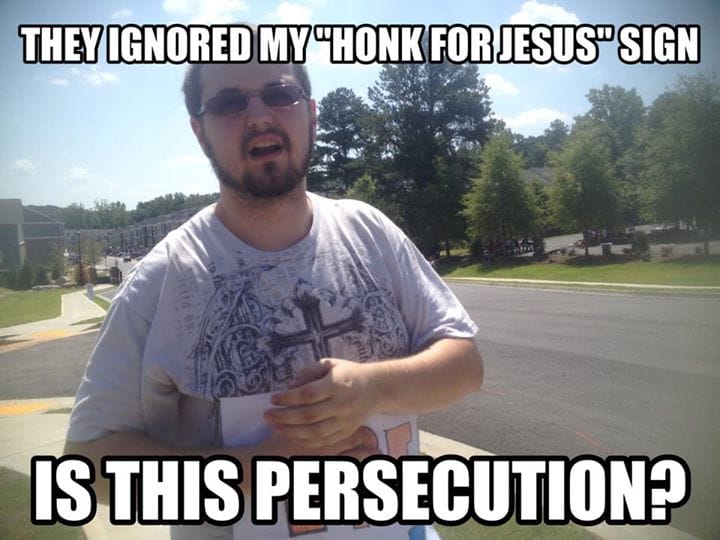
Christians are, without question, the most persecuted religious group in America.
During 12 of the last 16 years under the anti-Christian Obama and Biden regimes (with a four-year reprieve during Trump’s first term), Christians were explicitly and relentlessly targeted by the life-crushing power of the government. If it wasn’t the feds, it was hostile blue states like Colorado, Virginia, New York, and others that did the devil’s dirty work. And if it wasn’t the feds or the states, it was universities, corporations, and the media.
Oh my, poor persecuted Christians. Require them to obey the law, and Evangelicals scream persecution. Evidently, they believe that the laws of the land don’t apply to them, even though the Apostle Paul stated:
Let every soul be subject unto the higher powers. For there is no power but of God: the powers that be are ordained of God. Whosoever therefore resisteth the power, resisteth the ordinance of God: and they that resist shall receive to themselves damnation. (Romans 131-2)
As a pastor, I taught church members that we were duty-bound to obey man’s law as long as it didn’t conflict with God’s law. In Acts 5, we find Peter and his fellow apostles at odds with the high priest:
Now when the high priest and the captain of the temple and the chief priests heard these things, they doubted of them whereunto this would grow. Then came one and told them, saying, Behold, the men whom ye put in prison are standing in the temple, and teaching the people. Then went the captain with the officers, and brought them without violence: for they feared the people, lest they should have been stoned. And when they had brought them, they set them before the council: and the high priest asked them, Saying, Did not we straitly command you that ye should not teach in this name? and, behold, ye have filled Jerusalem with your doctrine, and intend to bring this man’s blood upon us.Then Peter and the other apostles answered and said, We ought to obey God rather than men.
The High Priest demanded that Peter and the other apostles stop preaching about Jesus. The apostles replied: We ought to obey God rather than men. Sadly, many Evangelicals interpret this verse to mean that if any law, rule, or regulation conflicts with what they think God wants them to do, they should obey God, and not man. This errant thinking has led to all sorts of conflict between church and state. I gladly stand with Christians if and when the government demands they stop preaching the Bible. However, this is rarely why church and state come into conflict. No, these skirmishes come when Evangelicals think the government is getting in the way of them doing whatever they want to do. They wrongly believe that their beliefs supersede man’s law — without exception. Years ago, I was friends with a man who started a church in southeast Ohio. He dragged a modular home onto a plot of land and turned it into a church — complete with alterations. I warned him that he would run afoul of building codes, but he ignored me, saying that he was “following the will of God.” This preacher eventually learned that hearing voices in his head is no match for the law. He refused to comply, leading to the county demolishing his ramshackle church building.
In 1989, I started a non-chartered, tuition-free, private Christian school for our church’s children. As an unchartered religious school, our school, Somerset Baptist Academy, was not subject to state education laws. One day, an inspector for the Ohio EPA showed up at our school to inform me that our school fell under the regulations for public water supplies. We were required to test our water every three months for contaminants and submit the report to the state. Was the government “persecuting” us? Of course not. There was nothing in the law and its enforcement that hindered our practice of Christianity.
I was a street preacher for many years. My public ministry on street corners led to frequent conflict with law enforcement and community leaders. I was threatened with arrest more times than I can count. I always stood my ground. Why? The government was trying to stop me from exercising my faith — a clear violation of the First Amendment. I refused to bow a knee to Caesar. Had a police officer demanded I move my car because it was parked illegally, I would have complied. Why? The Bible commanded me to obey the laws of the land.
I never had a problem differentiating between God’s law and man’s law. Sadly, many Evangelicals think that they are free to disobey man’s law anytime they want. After all, it is easy to come up with a Bible verse to justify illegal behavior. This is especially true with anti-abortionists. Many communities have laws regulating pickets at abortion clinics. Anti-abortionists wrongly think that they don’t have to obey these laws, and when arrested, they scream PERSECUTION! Persecution, my ass. They are free to picket the clinics. All they have to do is stand a certain distance away from the clinics, limiting harassment of clinic users and staff.
The same applies to Evangelical pharmacists, nurses, and doctors who object to prescribing abortion drugs. They shouldn’t be forced to prescribe these drugs, but since prescribing them is a job requirement, they have a choice: prescribe or quit. It is not persecution to require them to do their job. We see similar skirmishes over issuing marriage licenses to same-sex couples or baking cakes. If religious beliefs keep Evangelicals from doing their job, they need to choose another profession. It is not persecution if you lose your job for refusing to obey the law or follow your employer’s rules.
Bruce Gerencser, 69, lives in rural Northwest Ohio with his wife of 48 years. He and his wife have six grown children and thirteen grandchildren. Bruce pastored Evangelical churches for twenty-five years in Ohio, Texas, and Michigan. Bruce left the ministry in 2005, and in 2008 he left Christianity. Bruce is now a humanist and an atheist.
Your comments are welcome and appreciated. All first-time comments are moderated. Please read the commenting rules before commenting.
I think there is increased hostility toward Christianity, toward organized religion in general in Washington.
I’ve started seeing a couple of things that are disturbing that I never thought I would see, just in the last few years.
I remember during the Trump administration, we started to see, for the first time ever, a couple of my Democratic colleagues, including some on the Judiciary Committee, who would say things like this: ‘I’m not comfortable with this nominee because I fear that the dogma lives loudly within her.
She was afraid that she was too Catholic and because the Catholic dogma, as she put it, ‘lives too loudly. I thought that was a little unsettling.
….
Relative to not just the founding generation, but pretty much all generations of Americans until very recently, those who are hostile toward Christian beliefs or toward any belief system when it comes to somebody’s worthiness to serve in government. That’s historically aberrational. That’s extreme.
Culturally also, throughout most of our history, we have been a religious nation. We are still a religious nation.
Whatever “hostility” there may be towards people of faith, it is mostly of their own doing. When you demand preferential treatment for your religion or demand that your beliefs be codified into law, you can expect pushback from people who reject your theocratic inclinations. Many of us know that joining church and state leads to loss of freedom and bloodshed. If we want to be the land of the free and the home of the brave, we must not permit theocrats to have their way. We do this by making sure they are never elected to office. I am not talking about religious people, in general. I am talking about Christians who demand everyone conform to their allegedly Bible-based moral, ethical, economic, and social beliefs, threatening punishment (including incarceration and execution) for those who refuse to bow a knee to Jesus, the King of Kings and Lord of Lords.
There was a time when I thought a politician’s religious beliefs were off-limits. I now realize how naive I was. If a person’s religion matters to them, then it is impossible for their beliefs and behaviors not to be shaped by their faith. Surely, most Christians think beliefs matter. And if they do, then it is fair game for people to critique their beliefs. If a politician is a rabid forced birther or thinks LGBTQ people should be rounded up and placed in internment camps, he is unfit to serve the American people.
Gone are the days when politicians such as President John F. Kennedy compartmentalized their religious beliefs.
Because I am a Catholic, and no Catholic has ever been elected President, the real issues in this campaign have been obscured—perhaps deliberately, in some quarters less responsible than this. So it is apparently necessary for me to state once again—not what kind of church I believe in, for that should be important only to me—but what kind of America I believe in.
I believe in an America where the separation of church and state is absolute—where no Catholic prelate would tell the President (should he be Catholic) how to act, and no Protestant minister would tell his parishioners for whom to vote—where no church or church school is granted any public funds or political preference—and where no man is denied public office merely because his religion differs from the President who might appoint him or the people who might elect him.
I believe in an America that is officially neither Catholic, Protestant nor Jewish—where no public official either requests or accepts instructions on public policy from the Pope, the National Council of Churches or any other ecclesiastical source—where no religious body seeks to impose its will directly or indirectly upon the general populace or the public acts of its officials—and where religious liberty is so indivisible that an act against one church is treated as an act against all.
For while this year it may be a Catholic against whom the finger of suspicion is pointed, in other years it has been, and may someday be again, a Jew—or a Quaker—or a Unitarian—or a Baptist. It was Virginia’s harassment of Baptist preachers, for example, that helped lead to Jefferson’s statute of religious freedom. Today I may be the victim—but tomorrow it may be you—until the whole fabric of our harmonious society is ripped at a time of great national peril.
Finally, I believe in an America where religious intolerance will someday end—where all men and all churches are treated as equal—where every man has the same right to attend or not attend the church of his choice—where there is no Catholic vote, no anti-Catholic vote, no bloc voting of any kind—and where Catholics, Protestants and Jews, at both the lay and pastoral level, will refrain from those attitudes of disdain and division which have so often marred their works in the past, and promote instead the American ideal of brotherhood.
That is the kind of America in which I believe. And it represents the kind of Presidency in which I believe—a great office that must neither be humbled by making it the instrument of any one religious group nor tarnished by arbitrarily withholding its occupancy from the members of any one religious group. I believe in a President whose religious views are his own private affair, neither imposed by him upon the Nation or imposed by the Nation upon him as a condition to holding that office.
We now have political leaders who think the United States is a sectarian Christian nation; and that the Bible should be the law of the land (except those pesky verses about adultery and greed). Their beliefs ARE relevant and they deserve scrutiny and critique. Some religious beliefs are so egregious that they should keep people from holding office. If a politician can’t separate their religious beliefs from their public duties and responsibilities, they have no business being an officeholder.
Evangelicals, in particular, have become so hostile towards secular values, that they can’t rule justly. They will continue to push their personal religious beliefs regardless of what their constituents want or what our laws demand. Unable or unwilling to compromise, how can such people rule well? If they don’t give a shit about what most Americans think, appealing only to their peculiar interpretations of the Bible, how can they possibly be good public leaders? This, by the way, applies to Democrats and Republicans alike. While it is primarily Evangelical Republicans who are in bed with Jesus and demand a theocratic state, Democratic politicians can and do invoke religious beliefs when they shouldn’t.
I understand this is a complex issue, but I refuse to give politicians a pass on their religious beliefs. Will I vote for people of faith? Absolutely. I just want to make sure that they can differentiate between their duties to God and duties to man. They were elected to serve the people, not God or the church. If they can’t separate the two, then I am of the opinion they are unfit to hold office.
Bruce Gerencser, 69, lives in rural Northwest Ohio with his wife of 48 years. He and his wife have six grown children and thirteen grandchildren. Bruce pastored Evangelical churches for twenty-five years in Ohio, Texas, and Michigan. Bruce left the ministry in 2005, and in 2008 he left Christianity. Bruce is now a humanist and an atheist.
Your comments are welcome and appreciated. All first-time comments are moderated. Please read the commenting rules before commenting.
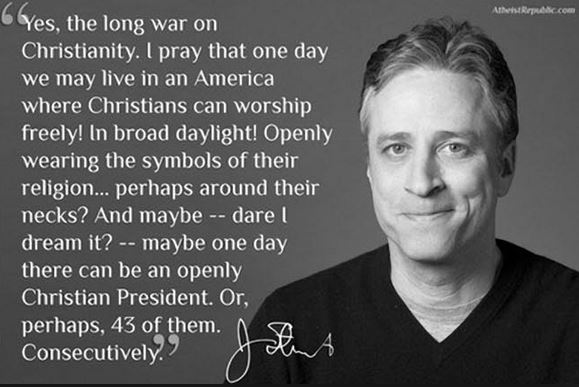
Listen to Evangelical preachers and, if you didn’t know any better, you would think White Republican Evangelicals were being executed in the town square. Claims of persecution are increasingly frequent from True Christians®, yet there is no evidence for such claims. What is happening, of course, is that Evangelicals — who are used to having a seat at the head of the cultural table and being the arbiters of what is and isn’t moral and ethical — are facing increasing challenges to their unwarranted, undeserved, preferential treatment. People who actually read and understand the history of the United States know that Christianity is a usurper, a ruler who has never been crowned king. Tired of religionists meddling in their lives and affairs of state, secularists are now demanding that Christians — Evangelicals, conservative Catholics, and Mormons, in particular — pack up their theocratic sideshow and go home. Preach and believe what you want, Christians, but keep it on your side of the wall of separation of church and state, secularists say. Worship God to your heart’s content, but whom we consenting adults fuck where, when, and how is none of your business. The same goes for the hot-button culture war issues that excite Evangelical passions. Ron DeSantis, who promises to make the culture wars central to his 2024 presidential campaign, will most assuredly claim that good, White Christians are being persecuted for their beliefs.
While certainly there are individual instances of persecution, such unjust treatment is rare and certainly is not the result of some sort of systemic, organized assault against people of faith. People are free to worship their chosen deity as they wish. No one, I repeat NO ONE, is hindered one bit from worshiping whom, when, where, and how they want.
I was an Evangelical pastor for twenty-five years. And I wasn’t just any old Evangelical preacher. I was an outspoken, in-your-face, meddler in the private lives of others and in the daily machinations of government and public education. I was, in every way, a Grade-A pain in the ass. When my preaching, beliefs, and behavior were challenged, I thought I was being persecuted for my faith. Was that really the case? Let me give you several examples, and you decide if the responses I received were indeed persecution.
For a number of years, I was a street preacher. I would go to fairs, community events, and outdoor activities and preach AT people. This behavior, of course, irritated the hell out people who just wanted to have a good time without being reminded of their “wickedness” and need of Baptist “salvation.” Sometimes, this would bring me in direct conflict with law enforcement. I was threatened with arrest more times than I can count. Was I being “persecuted” for my faith?
Several times a week, I would travel to nearby communities with a group of church members and children from our Christian school and do what I called “street ministry.” The group would hold signs with Bible verses on them and hand out tracts to passers-by while I stood on a nearby corner and “preached.” I saw myself as a modern-day Paul or John the Baptist — one crying in the wilderness. My ministry to the lost Christians of Newark, Zanesville, Lancaster, and points in between, caused a lot of controversies. I was threatened with arrest, and several local educators told me that they were going to have me investigated for using school children as part of our group. Was I being “persecuted” for my faith?
One year, I got into a squabble with the Ohio EPA. After I started Somerset Baptist Academy, the EPA showed up, saying that now that the church had a school, its water was considered a public water supply, requiring quarterly testing. Thanks to a gracious financial gift from Polly’s parents, we had a new well drilled. The previous well was considered a surface well, less than 25 feet deep. I thought, surely a 225-foot well would satisfy EPA requirements. Unfortunately, the new well was too close to the property line. The EPA threatened to order us to drill another well, but I stood my ground against those evil, communistic socialists out to destroy a gospel-preaching church. In the end, they bowed to my threatenings. Was I being “persecuted” for my faith?
As pastor of Our Father’s House in West Unity, Ohio, I decided to fight attempts to legalize alcohol sales in the town. West Unity was one of the last dry communities in Ohio. Boy, oh boy, did I wage war against those pagans who wanted to turn our beloved little corner of Nirvana into a hell hole! I enlisted several church members and other churches in my holy fight against evil, and when the votes were counted, Satan was defeated. Never mind the fact that I had thoroughly trashed my image and reputation among the unwashed, uncircumcised Philistines of the world. I cared not. All that mattered was showing everyone that my God and church were a power to be reckoned with. Several months later, I received a legal notice from the Ohio Attorney General saying that I was being investigated for allegedly breaking campaign regulations. Someone in West Unity had reported me for violating the law. I was found guilty and ordered to pay a fine. Was I being “persecuted” for my faith?
I could tell numerous other stories that illustrate what I believed was “persecution” by people who disagreed with my beliefs and actions. But, was I really being “persecuted?” Of course not. Yes, police officers were wrong — most of the time — to threaten me with arrest. I had a First Amendment right to be an asshole. Their response to me was out of ignorance of the law, not a desire to persecute me. Yes, I had countless people get in my face over my public street corner preaching. Were they persecuting me? Of course not. When you drag your theology into the public square and demand everyone worship your God and follow his laws under penalty of death and eternal damnation, people are going to get upset. While I had every right to preach my beliefs, my targets also had the right to respond in kind.
I learned long ago, that if you poke a bear, it’s going to respond. Sometimes, I poke the Christians bear with my anti-religion letters to the editor of the local newspaper. I know if I say certain things, the bears will be offended and respond. You can read their responses here. These Jesus-loving zealots have no problem with attacking my character and telling lies about me. Are they “persecuting” me? Nope. I don’t feel threatened, in the least.
A Ginger in the Pulpit, Somerset Baptist Church, 1987
Christian persecution in the United States, by and large, is a myth. The same can be said of atheist persecution. If anyone in our republic is being persecuted, it’s gingers. My God, have you read what people say about redheads!?
What was the most unbelievable, amazing magical power demonstrated in the Harry Potter movies? A ginger boy with two friends.
What’s the difference between a ginger and a snake? One is an evil, cold-blooded, venomous, slimy creature of Satan, and the other is a snake.
What’s the difference between a ginger and roadkill? There are skid marks in front of the roadkill.
What’s the difference between the Loch Ness monster and an attractive ginger? There are pictures of Nessie.
What’s red and white and peels? A ginger trying to tan.
How do you get a ginger to start an argument? Say something to him.
You have a gun with two bullets, and you find yourself in an elevator with a deadly viper, a serial killer, and a ginger. What should you do? Shoot the ginger twice.
What’s the difference with a ginger and a brick? At least a brick gets laid.
If Monday were a person, it would be a ginger.
The internet — so gingers can have friends too.
What’s the difference between a terrorist and a redhead? You can negotiate with a terrorist.
How do you get a redhead’s mood to change? Wait ten seconds.
What’s the difference between a redhead and a barracuda? Nail polish.
A ginger guy finds a magic lamp and when he rubs it a genie pops out. The genie is a bit fed up but says, “Okay, you can have one wish. What do you want?” The ginger says, “I want a huge mansion with a thousand rooms and a hundred floors, all made of pure gold.” The genie looks at him and says, “Don’t be an idiot! Do you have any idea how much gold that would take? That’s impossible. You’ll have to pick something else.” So the ginger says, “Okay, I want everyone to stop laughing at me because of my hair color.” The genie says “So this mansion… Do you want ensuite bathrooms?”
Awful stuff. I have no doubt that gingers will someday be rounded up and forced to either dye their hair black or be executed. Now, that’s persecution . . . 🙂
Bruce Gerencser, 69, lives in rural Northwest Ohio with his wife of 48 years. He and his wife have six grown children and thirteen grandchildren. Bruce pastored Evangelical churches for twenty-five years in Ohio, Texas, and Michigan. Bruce left the ministry in 2005, and in 2008 he left Christianity. Bruce is now a humanist and an atheist.
Your comments are welcome and appreciated. All first-time comments are moderated. Please read the commenting rules before commenting.
If you are a Christian or a conservative, your days are numbered.
It is no longer business as usual. Gone are the days when Christians and conservatives who publicly affirm their beliefs and values are left alone, or tolerated. Now they are being hunted down. It is as if they are all walking around with large targets affixed to their backs.
It is now open season on anyone who dares to identify as a conservative or a Christian. And if you identify as both in any sort of public fashion, that is especially going to result in you being targeted by the secular left. Every day things are getting worse in this regard.
It is not full-blown persecution – yet. But it certainly is moving in that direction.
….
As I said, if you are a conservative or a Christian in today’s West, your days are numbered. They ARE after you. And they will not stop until all of us are finally and forever silenced.
That true Christians will be despised, hated, attacked and persecuted is a given. [No, it is not a given, as I’m sure comments will show.]
….
And remember I started this article by speaking about “true Christians”. Fake Christians of course will know nothing about what is being discussed here. They will be getting along with the world just fine. So of course they will not experience persecution. As John R. Rice once put it, “The world never burned a casual Christian at the stake.”
Here I want to deal with the situation in the West. A few preliminary remarks: First, some will scoff when I and others speak of persecution in the West. Sure, we are not being tortured, beheaded and killed for our faith as is often the case overseas.
Not yet, at least. But when a person is forced out of his job because of his Christian beliefs, or heavily fined, or even incarcerated for periods of time, those types of suffering and hardship are very real indeed. I know some of these people, including those trying to feed their families but who have been unable to work for long periods of time because of their Christian beliefs.
The second thing to point out is that we need to see the big picture. We need to have a bit of historical awareness. It is easy to not see aright when we look only to today and to our local situation. But we need to see the bigger picture and what is happening not just now, but over a period of time.
From that sort of perspective, we find that genuine anti-Christian bigotry and persecution is not only happening in the West, but it has been ramping up for decades now. Things really are getting worse in this regard, and if we don’t wake up to what is happening, it may soon be too late for warnings like this to be penned.
For many years I and others have been trying to sound the alarm and alert people to the increasing persecution of Christians, often taking the form of the culture wars. As the culture around us becomes more and more ungodly, immoral and hostile to our faith, we can only expect to be respected less and less and vilified and harassed more and more.
….
As I have said so often now, we have moved from being a Christian culture to a post-Christian culture to an anti-Christian culture. Long gone are the days when we could happily get along with the world and expect their blessing and endorsement of our beliefs and values.
Make no mistake, there still are some churches and denominations in the West today that DO have the full blessing and approval of the world. But they are apostate churches and church leaders. They are those who have long ago sold their birthright for the desire to be loved and accepted by the world.
They are the ones fully on the pro-abortion bandwagons, on the pro-homosexuality and trans bandwagons, and on the interfaith bandwagons. The world loves them because they have the same values and mindset as the world does. They are not counter-cultural as the true church of Jesus Christ will always be.
In denying born babies the right to medical care and survival, Democrats have crosses a line that we knew they had the determination and moral bankruptcy to cross for decades. No doubt they are a delusional group of demon-influenced or possessed individuals, inhuman across the spectrum of their shredded and deficient moral systems. They have strained at the thinning membrane of common decency and finally broke through to commit the greatest outrage for all time. It is classic Saul Alinsky stratagem that models the Hegelian Dialect—create outrage after outrage until society implodes from the stress-overload to their sensibilities. They are prepared to jump into the chaotic aftermath and offer diabolical solutions to the great problem they created.
This is bizarre and unacceptable in a civilized nation. One does not fall lower in character and become more despicable than one who murders a baby. These Democrats have sanctioned the premeditated murder of helpless babies struggling and crying out for the security and love of a mother’s arms. It also violates their oath of office and the Constitution that guarantees every human the right to “life, liberty, and the pursuit of happiness.” If allowed to stand, this barbarous moral failure—no doubt inspired by Satan himself and inserted into the eager conduit of the Democrat Party—will remove the final barrier to cold-hearted, brutal persecution of Christians and political Conservatives when the Dems get back in power. If someone thinks that a bit farfetched, he or she is ignorant of history.
This cookie is set by X to identify and track the website visitor. Registers if a users is signed in the X platform and collects information about ad preferences.
2 years
personalization_id
Unique value with which users can be identified by X. Collected information is used to be personalize X services, including X trends, stories, ads and suggestions.
2 years
external_referer
Our Website uses X buttons to allow our visitors to follow our promotional X feeds, and sometimes embed feeds on our Website.