Tag: Atheism

  • Life in Rural Northwest Ohio: Committing Social Suicide

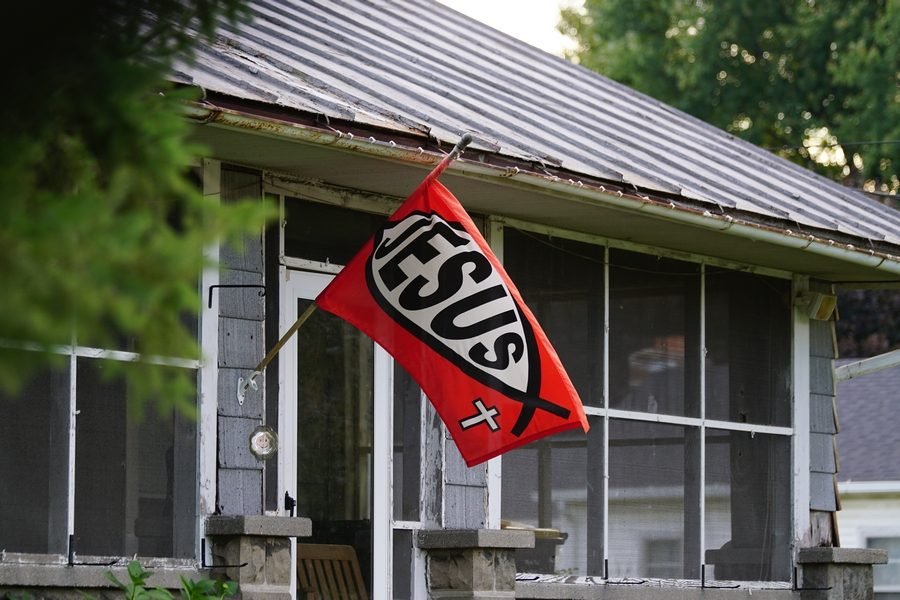
    jesus-flag
    Local home flying the team flag. Go TEAM JESUS!

    I have spent most of my sixty years of life living in rural Ohio. I was born in Bryan, Ohio — a small community in Northwest Ohio. My dad’s parents immigrated to the United States from Hungary in the 1920s and settled down on a hundred acre farm a few miles south of Bryan. Dad and his siblings attended schools in the very district my wife and I now call home. We live in a small spot along State Highway 15. Ney, population 345, has two bars/restaurants and a convenience store/fast station. Dad graduated from Ney High School in 1954. I attended elementary school for several years west of here in the flashing-light, spot-in-the-road town called Farmer. Dad frequently moved us from town to town, unable, for some inexplicable reason, to pay the rent. It wasn’t until junior high that I got a taste of “big” city life.  For three and a half years, we lived in Findlay, the home of Marathon Oil. This allowed me to attend the same school for three straight years. I actually had the same friends from one school year to the next!

    Divorce and Dad moving us to Arizona turned my happy world upside down. At age sixteen, I returned to Findlay for my eleventh-grade year. I then returned to Bryan to live with my mother. Lots of drama, including Mom being locked up in Toledo State Hospital, resulted in my siblings and me being uprooted and moved once again to Arizona. By then, I had dropped out of high school. In the fall of 1975, I moved back to Bryan and took a job working at a local grocery store. A year later, I left Bryan to attend classes at Midwestern Baptist College in Pontiac, Michigan. I returned to Bryan three years later, pregnant wife in tow.

    Polly and I spent much of our married life living in small, rural communities. The churches I pastored were, for the most part, attended by white, working-class people. In 1995, we moved back to the flatland of rural Northwest Ohio. I pastored two nearby churches, moving away from the area to pastor a church in rural Michigan, along with a move to Yuma, Arizona. In the end, like the proverbial bad penny, I seem to always make my way back to Northwest Ohio. In 2007, we bought our house in Ney. Our six children and eleven grandchildren (soon to be twelve) all live within twenty minutes of our home.

    There are times when Polly and I yearn for the big city; for the anonymity that living in such places provide. But, we love our family, and when we bought our home, we committed ourselves to living here until death do us part. This is the place and people we call home. We love the slowness of life, and when we need a big city fix, Fort Wayne and Toledo are but an hour away.

    I write all this to say that my roots run deep into the soil of rural Ohio. No matter how often I fled the scene, looking for excitement and diversity, I always seemed to come right back to where life started for me. Polly was a city girl, but forty years of country living have turned her into a small-town girl who has embraced the rural way of life. Would we live where we do if it weren’t for our children and grandchildren? Probably not. And the reason for this is simple. While both of us feel quite at home in rural Ohio, our beliefs have changed greatly over the past two decades. This change of thinking puts us at odds with most of our neighbors — politically, religiously, and socially.

    Rural northwest Ohio is the land of God, Guns, and the Republican Party. Hundreds of conservative churches dot the landscape, and virtually every public office is held by a Republican. In Defiance County where I live, the Democratic Party has fielded two winners in the last decade, neither of whom is currently in office. Living here means that I must accept  the monoculture of my surroundings, a society where it is assumed that everyone thinks and believes the same way. Someone like me, a socialist/pacifist/atheist, is a rare bird. While I have met more than a few people with similar views (particularly young adults), there are no liberal/humanist/atheist/secular groups or meet-ups in rural Northwest Ohio. People who don’t fit the rural Ohio political and religious mold exist, but few are vocal about their liberalness and unbelief. Why? Doing so would be socially suicidal.

    One of my sons and I were talking about this tonight — about how being an out-of-the closet unbeliever or liberal leads to social suicide. While I am often lauded for my outspokenness about local politics and religion, my position has come at a high cost socially. I have in the past pondered whether, if I had it to do all over again, I would have been so vocal early on about my atheistic beliefs. I know that my outspokenness (and my age and disability) has made me unemployable. I own a photography business. When locals are given a choice between an Evangelical photographer and me, guess what? They usually choose the God-fearing one (regardless of the quality of work).

    Over the past fifteen months, I have made a concerted effort to, outside of this blog, to tone down my public pronouncements. At times, I feel guilty for doing so; feeling as if I am a sell-out or a hypocrite. Everyone should be able to be who and what they are, right? Sure, but small-town life demands at least some modicum of outward conformity to tribal political, religious, and social beliefs. Disobey and you will pay the price. And for my family in particular, I don’t want them being socially and economically punished for who their father is. Some of my children may agree with me, but their futures depend on them not committing social suicide. Rarely does a week or two go by without one of my children telling me that someone at work — a boss, fellow employee, or customer — was inquiring about whether they were related to me. My children have become experts at fielding such interrogations, knowing that they are always free to say, Hmm, Bruce Gerencser? Don’t know the guy.

    ney ohio village limits sign
    Ney Village Limit Sign, Slightly Altered.

    I plan to live the remaining days and years of my life in Ney, Ohio. As a committed liberal and atheist — who also wants to get along and be accepted by his neighbors — I have to find ways to be true to self while at the same time not being ostracized by locals. Everything, unfortunately, comes down to money. My wife and I need to earn money to live. Earning money requires acceptance by local employers/customers. While it would be wonderful to be a street-corner atheist (and some locals think I am way too outspoken, even at presently muted levels), I have to live here, and being one would be social suicide. The violations of separation of church and state are so common is this area that the Freedom From Religion Foundation could spend the next year or so filing lawsuits against local government agencies, schools, and businesses. Yes, I find these violations of the law egregious, and the street-corner atheist in me wants to call out and condemn their sins. But, I can’t, for in doing so I would cause great social harm not only to myself but to my wife, children, and grandchildren. If I made $40,000 a year blogging, things would be different, but as things now stand, I must swim in waters infested with Evangelical/right-wing Republican sharks, and being a lone fish is sure to turn me into a snack.

    I have much hope in the belief that things are slowly changing here in rural Northwest Ohio. Local millennials are not as religious as their parents, and they most certainly don’t hold to the moral and religious values of their grandparents. It is in these young adults that I see promise. It is unlikely that this area will ever be as liberal as the West or East coasts, but I am hoping that there is coming a day when it won’t be social suicide to say that I am a liberal, a socialist, and non-Christian.

    For now, I must choose my battles carefully, hoping that I can safely navigate the dangerous waters of rural Ohio. I have seen progress on this front thanks to my high school basketball photography. I have talked to more locals in the past few months than in the last ten years combined. I want them to see me as a family man, as a decent, kind curmudgeon who also happens to take really good pictures. I know that Google is not my friend, but there nothing I can do about the stories she might tell if someone asks her about Bruce Gerencser. Just last week, one my children ran into several people their age who were once members of a local church I pastored. These young adults have heard the gossip about me and read up on me, thanks to the Internet, but they still can’t understand how it is possible that the man they once called pastor is now a heathen. What happened? they asked, desperately trying to figure out how I ended up where I am today. Lost on such people is the fact that I am, in many ways, the same man I was when I was their pastor. Sure, I am a political liberal and an atheist. But, personality-wise I am pretty much the same guy. I am still a down-home friendly man with a wry sense of humor. I am…Bruce. [My editor commented, Your closing raises some interesting questions. Are you the same guy? I think it is hard for you to claim that you are. Sure, you are still a decent, hard-working man, but you have done an about-face in regard to many of your core beliefs of your prior life.]

    I would love to hear from readers who find it difficult to navigate the waters of their communities. Please leave your thoughts in the comment section.

  • Blessed, Thankful, and Grateful: Three Words I Refuse to Surrender to Christians

    god is my strengthEvangelicals use all sorts of words to describe various aspects of their religion; words such as saved, faith, salvation, grace, redemption, and spirit, to name a few. When unbelievers use these words in other than Evangelical ways, Christians object, saying that these words are theirs; that they have specific meanings and no other meanings are permitted. Never mind what the dictionary says. These words must always be defined according to Strong’s Exhaustive Concordance.

    Blessed, thankful, and grateful are three words that Evangelicals think belong only to them. However, I refuse to surrender these words to Fundamentalists. Every day, I am blessed, thankful, and grateful to be alive. I am blessed to be married to Polly, and I am double-blessed to have six wonderful children and eleven grandchildren. I am grateful my car started today, despite below-zero temperatures. I am thankful that I can still coherently and thoughtfully write for this blog. Every day I am above ground, I have much to be thankful for, all without the need of mentioning the name of the Christian God.

    Therein lies the problem for Evangelicals. They cannot conceive a life of thankfulness and gratefulness without God. Why does the use of these words require a deity? Unlike the Alabama and Georgia football players last night who repeatedly gave God credit for their wins, I choose to express thankfulness and gratefulness to the people who actually do the work. When I sat down today to each a lunch of pork chops, roasted red potatoes, and Brussel sprouts, I didn’t bow my head and thank Jesus for the food. I thanked Polly, the person who labored in the kitchen to prepare this scrumptious meal. The car Polly takes to work wouldn’t start today, resulting in me doing a fair bit of cussing and complaining. Once I got that out of my system, Polly contacted our mechanic son and asked if he could get a battery and install it for us. He gladly said yes, even though at that moment he had four cars up on lifts at the shop and had been installing new batteries all day long. After working ten hours, our son came to our house and by flashlight installed a new battery. I am grateful that he had the skill and time to do it. Who did I thank for our son’s labor? The Christian God? Of course not. He’s never fixed a car for me — ever. I thanked Jaime for taking care of the old folks. He did the work and he alone deserves the praise.

    When I use the word blessed, I don’t mean it the same way Evangelicals do. Christians wrongly think that all blessing comes from God. Countless Evangelicals grew up singing The Doxology:

    Praise God, from whom all blessings flow; Praise Him, all creatures here below; Praise Him above, ye heavenly host; Praise Father, Son, and Holy Ghost. Amen.

    Told over and over that all blessings come from the God who supposedly has the whole world and itty, bitty babies in his hands, Evangelicals become confused when atheists such as myself tell them to have a blessed day or a blessed New Year. They often ask me blessed by whom. I reply that I used the word “blessed” to mean good or happy and that goodness and happiness do not require a God. Billions of good people walk the face of this earth who don’t know or worship the Evangelical God. Billions more live lives filled with love, joy, peace, and happiness, all without giving a tip of the cap to God.

    Of course, Evangelicals turn to the Bible for proof that everything we have in life comes from the hands of the Christian God. Verse after verse tells them that it is God who gives the strength and ability to do what they do in life, and that without God they can do n-o-t-h-i-n-g. Of course, when a snarky atheist such as myself says, fine and asks does this mean that God is also responsible for all the bad that happens in the world? Evangelicals are quick to say, oh no, it is we humans who are totally responsible for bad behaviors — thus showing the inconsistency of their worldview.

    We humans are responsible for most of what happens on planet earth. Good things and bad things alike flow from our minds and hands. Sure, there’s not much we can do about the weather, but outside of that we (or other humans) are pretty much in control of what happens in our lives. There’s no need for any of us to invoke the name of God. Give credit to whom credit is due, and do the same with blame. My children will tell you that one of the things I drilled into their heads was personal responsibility. YOU are responsible for your behavior. It is YOU who are in control of your actions.  My grandchildren are now “blessed” to get this same instruction from their grandfather. When one of them says, I can’t find my shoe/sock/coat/barrette/toy, they know I am going to say, who had it last? 

    I hope you have been blessed by what I have written in this post. If you have, please express gratitude or thankfulness to whomever wrote it. If you think God typed this post, by all means, thank him. If, however, you are a person of reason and common sense, feel to thank the author and finisher of this awesome piece of prose — yours truly, the Pope of Ney, Ohio.

    I hope each of you have a blessed day. Thank you for taking the time to read this post. I am grateful for your continued support. And just think, I wrote those three sentences sans God. I can’t think of one thing I have done today that required God. Blasphemy? Yep! My New Year’s resolution? Blaspheme more, giving all praise, honor, and glory to the gods of skepticism and reason.

    About Bruce Gerencser

    Bruce Gerencser, 60, lives in rural Northwest Ohio with his wife of 39 years. He and his wife have six grown children and eleven grandchildren. Bruce pastored Evangelical churches for twenty-five years in Ohio, Texas, and Michigan. Bruce left the ministry in 2005, and in 2008 he left Christianity. Bruce is now a humanist and an atheist. For more information about Bruce, please read the About page.

    Bruce is a local photography business owner, operating Defiance County Photo out of his home. If you live in Northwest Ohio and would like to hire Bruce, please email him.

    Thank you for reading this post. Please share your thoughts in the comment section. If you are a first-time commenter, please read the commenting policy before wowing readers with your words. All first-time comments are moderated. If you would like to contact Bruce directly, please use the contact form to do so.

    Donations are always appreciated. Donations on a monthly basis can be made through Patreon. One-time donations can be made through PayPal.

  • Christopher Hitchens, My Son and a Story

    christopher hitchens
    Christopher Hitchens

    Guest post by Logan.  You can read his blog at Life After 40: Reflections on Life and Faith After 40.

    I heard today that Christopher Hitchens died on this date [December 16] back in 2011. I was technically still a Christian at that time. But today, I am very grateful for the impact that Hitchens made on me, my oldest son and the world. He is missed.

    With this being an anniversary of sorts, I thought I’d share a little story that involves Christopher Hitchens, my son and the start of my journey.

    The year was 2009. I discovered that my oldest son had bought and read Hitchens’ book entitled God is Not Great. As a Christian, I was offended. “What!? How dare this man write a book with such a title!” I also certainly didn’t like the notion that “religion poisons everything”.

    After discovering the book in my son’s room, I lightly skimmed it but I was literally too scared to seriously read it. I feared for my soul and the potential influence of the book.

    So what did I do?

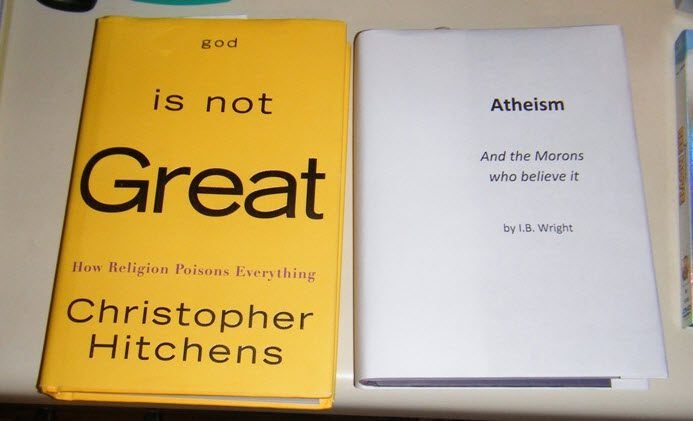
    Using a poor attempt at humor, I printed up a fake book cover entitled “Atheism, And the Morons who believe it” with a fictional author name of “I.B. Wright”. I put the fake cover over a Scott Adams’ book (probably a Dilbert book).*

    I wrote something stupid on the back page cover too, a feeble attempt to support my revised book title. I left my creative work in my son’s room for him to admire.

    So what happened?

    My son took a picture of my handiwork and posted it to the atheism group on reddit.

    atheism morons who believe it

    His post got over 1000 points, which in the Reddit world, is quite a lot. I didn’t know about the Reddit posting for quite a while, but after discovering it and reading through the comments, I was skewered. Severely. And rightly so.

    The text I put on my back cover said: “In Mr. Wright’s latest book, I.B. shows that God is truly good and that through His son, Jesus, the world was rocked by a mere three years of ministry that culminated in Christ rising from the dead, which skeptics have been unable to disprove or rationally dispute.”

    I look back on all of this with embarrassment. Unfortunately, indoctrination shuts off critical thinking, and I was very indoctrinated during my early years. I’m just grateful now that my son didn’t hide his change in beliefs and that eventually, I broke the spell. And as Christopher Hitchens said so well, religion poisons everything.

    Tonight I will raise a glass to the late Hitchens.

    * It was ironic for me to use a Scott Adams book since Mr. Adams is an atheist (which I didn’t realize at the time).

  • Charles Manson — Has Justice Been Served?

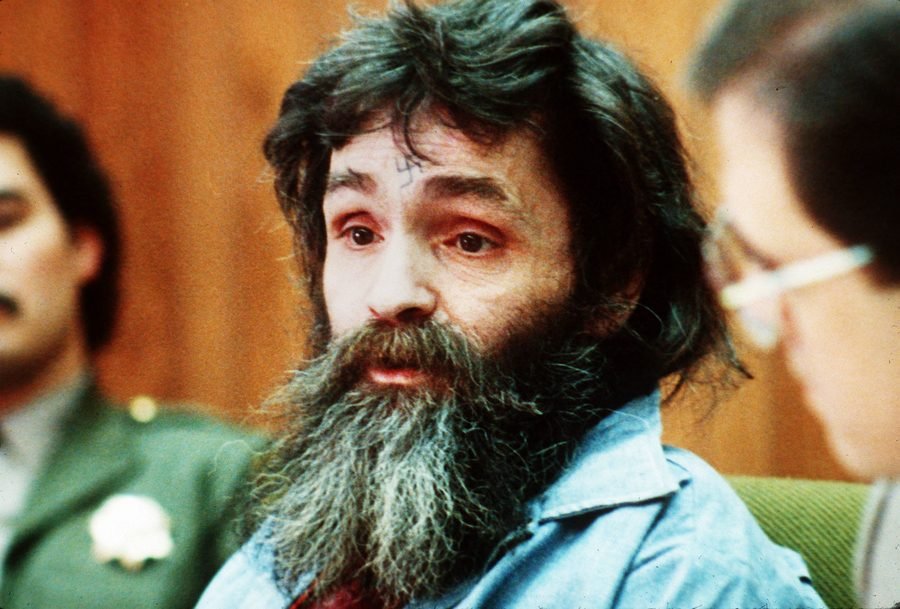
    charles manson

    Guest post by ObstacleChick

    As many have heard, the famous 1960s cult leader Charles Manson died while serving a life sentence in prison. By all accounts, he was a charismatic, dictatorial cult leader whose followers murdered several people and created false “evidence” that the murders were perpetrated by African Americans in order to try to start a race war, after which (somehow) Charles Manson would rise victorious and lead after the chaos. While Charles Manson did not physically commit the murders – his followers did – he was deemed to have been the mastermind behind the crimes and was sentenced to death. When the state of California abolished the death penalty, Charles Manson’s death sentence was commuted to life in prison. Manson died at age 83 of natural causes.

    I first heard of Manson’s death while checking my social media. One of my Christian friends posted a link to the story with her personal comment:

    At long last, justice may be served to him, in death. I’m glad some of the victims’ loved ones are alive to know he no longer breathes, but will become dust, in a state of death, like his long-ago prey. I have a particular disgust for Manson, and the gruesome acts of his followers. He stole so many lives, including those of promising young people who joined his cult, and had their minds and souls hijacked. They are responsible, in the end, for their decisions, but, to an extent, were also victims. America lost part of its innocence in the Manson years, so I consider us all his victims. It may not be charitable to say so, but I am nearly always happy to hear when any despot or cult leader is dead.

    Someone commented:

    I believe he is now in hell and finally getting what he deserves.

    Another commented:

    He was Satan’s own. Now may he go back to where he belongs.

    My first thought was, here we go with talk of heaven, hell, and divine justice again. My second thought was, wasn’t Charles Manson arrested, tried, convicted, sentenced, and imprisoned for life? Is that not what our society deems as justice?

    As one who does not believe in supernatural beings nor in an afterlife, I look to my society’s law enforcement and justice systems to resolve issues involving crime. While no system is perfect, our society’s system works in many cases, and, because it is an evolving society, it is possible for changes to occur within our systems so that they function more efficiently and fairly. However, I realize now that while religious people also are provided the protections of society’s law enforcement and judicial systems, they are also looking to their deity to mete out further justice in an afterlife. Therefore, Charles Manson, for example, has served life in prison for his crimes, and now after his death the Christian God will cast him into eternity in hell where he will burn or rot, depending on one’s definition of hell.

    My friend is a Christian, and presumably many commenting on her post are Christians too. I saw many comments corroborating the concept that “now Charles Manson is receiving justice in hell.” These comments caused me to consider the concept of justice. Do these nice Christian men and women really not consider earthly justice “real justice”? Is God’s eternal justice the only true justice? What if Charles Manson had “gotten saved” before his death? According to these Christians’ religion, Charles Manson would be afforded the same afterlife of eternity in heaven as all these nice Christian people who have not persuaded others to commit multiple acts of murder. If one were to ask these nice Christian people if that is “real justice,” what would their answer be? I daresay many would find themselves in quite the conundrum when pressed for an honest answer.

    Let us consider a few aspects of Christian justice. My friend and presumably many of her friends believe in the concept of original sin and salvation. Each person by birth is a sinner; the wages of sin are death – eternal death in hell; the only way to escape eternal death in hell is to repent of one’s sin, accept Jesus’ sacrifice on the cross and Jesus as one’s personal Lord and Savior, and to be baptized into a new life of service to God/Jesus/Holy Spirit. Anyone may be saved – anyone – including Adolf Hitler, Josef Stalin, and yes, Charles Manson – and anyone who is saved is granted the golden ticket to eternity in heaven. However, anyone who does NOT accept Jesus as one’s personal Lord and Savior will be condemned to eternity in hell. This includes Adolf Hitler, Josef Stalin, Charles Manson, the young man in India who grew up Hindu, the old woman in Kuwait who grew up Muslim, the old man in China who grew up Buddhist, the middle-aged American woman who is an agnostic atheist. Each one deserves and is subject to the same fate: eternity in hell. Does that sound like justice? Adolf Hitler, who orchestrated a massive extermination enterprise, inhabits the same hell as the nice Muslim lady who was unfortunate enough to believe in the wrong type of deity and who never had the chance to hear about or accept the “correct” one?

    It is also interesting to ponder the way Christians learn to overlay their beliefs about supernatural forces onto the natural world. They live in the world, but the world is also inhabited by angels and demons. A person who is “saved” is said to have Jesus living in his “heart.” An unsaved person may be possessed by demons or guided by demonic forces. A guardian angel may save someone from harm. Satan may tempt or guide someone to commit some horrific act. God may intervene to prevent a catastrophe. Christians live in a world where humans commit acts which may or may not be influenced by supernatural forces, where nature may or may not be changed by supernatural forces. There is a constant struggle going on around Christians at all times between the forces of good and the forces of evil. Many Christians believe that if they live a life in favor with God that He will save them from catastrophe, from the forces of evil, from evil acts perpetrated by humans (possibly under the influence of demons), unless He doesn’t physically save them from harm. When He doesn’t, then one must not question His Will, for we humans cannot fathom God’s divine plan.

    I remember living in the world inhabited by angels and demons, God/Jesus/Holy Spirit and the Devil. As a child, I was terrified of the dark. No, not the dark, but by the monsters and demons that inhabit the dark. I was taught that monsters were not real, but that demons and the Devil were real and were eager to prey on the unsuspecting unsaved and ready to tempt the staunchest of believers. As a child I couldn’t discern the difference between fictitious monsters and real demons. We were living in a world surrounded by the forces of Good and Evil locked in a battle for our immortal souls. Then in the 1980s (my teenage years) came the whole Satanic scare in which everyone (Christians, that is) talked about Satanic rituals and kidnappings and sacrifices and pentagrams. All of us Christians were afraid, on alert to battle the forces of evil, while at the same time we were told that all we had to do to overcome demons and Satan was to demand in Jesus’ name that they leave, and that they must obey. Whenever I was scared of the dark, I used to pray that the demons and Devil leave in Jesus’ name. Then I felt better.

    But we have adult Christians who weave their belief of supernatural forces into the acts of human beings. Believing that Charles Manson is under Satan’s control or perpetrating acts that are pleasing to Satan brings the concept of justice to a different level. While non-believers see Charles Manson as someone who chose to lead others to commit horrific murders, Christians see Charles Manson as a tool of Satan, perhaps inhabited by demons or at least under Satan’s control either through Manson’s free will or lack of free will. Non-believers see that Charles Manson was arrested by law enforcement officers, tried by a group of peers, sentenced by a judge, and served life in prison. Christians see this too, but they also anticipate judgment by God and eternity in hell as additional justice later, as if life in prison were not enough. And there is rejoicing among believers that finally Charles Manson will receive the justice he deserves.

    I wanted to ask my friend’s commenters “what if Charles Manson had been saved before his death?” (It’s unlikely, as that turn of events would be too much for a pastor or chaplain to leave unannounced, either so he/she could receive credit or so that other unbelievers could be influenced to turn to the “truth” before it is too late, because, see, God is so great He can even forgive Charles Manson.) But I did not ask, mainly because this friend is one of the few from my evangelical past who knows that I am now an agnostic atheist, and I do not want to cause trouble for her amongst her crowd. But if Charles Manson had been saved before his death, should not good Christians rejoice in his repentance and his eternal glory in heaven with his Lord and Savior?

    I imagine that by the convoluted system of Christian justice, those good Christians would say that yes, they rejoice in the power and mercy of God that he can even forgive the likes of Charles Manson. Conversely, they are glad to see that God, in all his glory as the almighty righteous judge, meted out eternal justice to Charles Manson as he never repented of his sins and accepted the saving grace of Jesus’ sacrifice. It just seems somehow inconsistent with the concept of goodness one associates with religion the glee that Christians were exhibiting over the death – no, the everlasting damnation in hell – of another human being.

    I desperately wanted to engage in conversation on social media, but I refrained and wrote this post instead. In any case, Charles Manson served his life sentence and will never harm another person again, and for that we should be glad.

  • Quote of the Day: We Do Not Need The Forgiveness of God by Robert Ingersoll

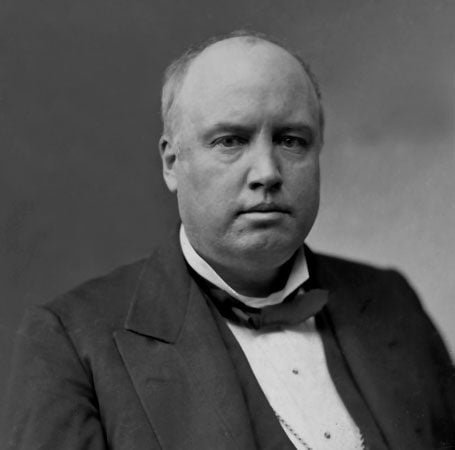
    robert ingersoll

    I do not believe in forgiveness as it is preached by the church. We do not need the forgiveness of God, but of each other and of ourselves. If I rob Mr. Smith and God forgives me, how does that help Smith? If I, by slander, cover some poor girl with the leprosy of some imputed crime, and she withers away like a blighted flower and afterward I get the forgiveness of God, how does that help her? If there is another world, we have got to settle with the people we have wronged in this. No bankrupt court there. Every cent must be paid.

    — Robert Ingersoll, What Must We Do to be Saved, 1880

  • Quote of the Day: The Ugly Side of the Online Atheist Community by Chris Stedman

    chris stedman

    When I was invited to discuss atheism on “The O’Reilly Factor” four years ago, I initially wanted to turn it down. However, I ultimately realized it was a chance to show Fox News viewers a different side of atheism on a network where atheists are usually talked about rather than with.

    It was December, so former Fox News host Bill O’Reilly attempted to paint atheists as bitter anti-religion Grinches on a mission to take Christmas away. I pushed back, emphasizing the value of the separation of church and state as well as atheists’ contributions to the public conversation on religion and ethics.

    In an environment that rewards anger and sound bites, I attempted to humanize my community — one of the most negatively viewed in the country. Afterward, strangers from around the country messaged me to say the conversation helped them rethink their views on atheists.

    But the chatter online took a different, but sadly familiar, tone.

    A number of prominent atheist bloggers criticized my interview, saying I was awful and suggesting I was allying with O’Reilly. The comments were worse. Anonymous posters ridiculed me, saying I should decline future television invitations because I was too “effeminate,” my physical appearance made atheists seem “like freaks” and my “obvious homosexuality” made me an ineffectual voice for atheists.

    I had started an atheist blog almost a decade ago to explore the role of the nonreligious in interfaith dialogue. I went on to write for bigger platforms and appear on CNN and MSNBC to defend atheists against our detractors. But even as I spoke up for atheists, a subset of the community attacked me and my work, including a book I wrote about atheism and interfaith activism. There were some legitimate critiques, and I’m grateful for how they challenged me and helped me rethink some of my ideas, but others were petty and vindictive.

    One of my most frequent online critics — who posted defamatory and false accusations about me — taunted me in ways that reminded me of the playground bullies who attacked me for being queer. He and his supporters frequently called me wimpy, weak, feeble and pearl-clutching, and characterized my work as “tinkerbellism.” When we faced off in a debate sponsored by humanist groups in Australia, he (hilariously) told me that I “sucked.”

    Other bloggers went further, writing posts attacking my personal life; one went after my mother directly. (The author of that post later apologized, thankfully.) While most posts and comments were merely cruel insults, I was also threatened with violence and received death threats.

    I was far from the only one targeted. A lot of online discourse can turn vitriolic, but writing on atheism seems particularly so. A study on Reddit found that its atheist forum, probably the largest collection of atheists on the Internet, was the third most toxic and bigoted on the entire site.

    I’ve watched as many of the activists and writers I respect most in atheism — especially women and people of color — have left the movement, each expressing (privately, if not publicly) that the state of the discourse among atheists was one of the primary reasons they were leaving.

    Beyond the nastiness directed at me, I was even more frustrated with the ways the atheist movement, especially online, has resisted efforts to address racism, sexism and xenophobia among our own.

    ….

    I also felt a gnawing sense of smallness during my years as an atheist writer, exhausted with having to represent a singular identity. When I appeared on “The O’Reilly Factor,” the chyron that appeared below me read, “CHRIS STEDMAN, ATHEIST.” My friends and I had a good laugh about it, but it represented a bigger problem: to be understood as an atheist, I was often asked to reduce myself to just that.

    This is a broad problem. When members of misunderstood communities challenge the stigmas placed upon them, we’re often tokenized and flattened out. Our culture is uncomfortable with people possessing a complex mix of identities, so we try to reduce them to the most digestible version of those identities. This feels especially true online.

    ….

    — Chris Stedman, The Washington Post, I’m an Atheist, but I Had to Walk Away From the Toxic Side of Online Atheism, November 7, 2017

  • Your Purpose in Life is to Testify to the World That God is Great

    atheists have nothing to die for

    Your calling is you are on planet Earth to put a telescope to the eye of the world. That’s why you exist. By your behavior, your parenting, the way you do your job, the way you worship, and the way you handle your things in life, everyone should read off of your life, “God is great.” That’s why you exist.

    — John Piper, Why Am I Here?

    Evangelicals such as Calvinistic Fundamentalist John Piper have a reductionist view of the world. In their minds, the sum of everything is the Christian God. Everything traces back to God. He is the Alpha and Omega, the first and the last, and the beginning and the end. God is in believers, they live their lives through him, and to him go all praise, honor, and glory. This God is a jealous deity, demanding that his followers worship him alone. Worshiping other Gods or no God at all brings upon people his wrath and judgment. This God demands that believers in him devote their entire being to him. He is not only the hub around which everything turns, he is also the rim, tube, and tire. Simply put, from birth through eternity, life is all about God.

    After Evangelicals have spent their entire lives worshiping God, guess what they get to do after they die? More of the same. Believers will spend their days, months, years, and centuries in Heaven prostrate before God, giving him praise, honor, and glory for saving them. Granted, according to the Bible, there will be no more pain, suffering, or death, but surely an eternity spent in repetitious worship will, in time, become b-o-r-i-n-g. Who really wants to spend every moment of every day telling God how awesome he is? Wouldn’t a thousand or two years of devoted adoration be enough for God? We humans love and crave the approbation of one another, but I suspect if all we heard day in and day out was people telling is how stupendous we are, we would finally say, enough! Much like Donald Trump, God never tires of hearing our praises. Keep the praise coming! Tell me again about how hugely awesome I am!

    Realizing that the aforementioned picture of eternity is not too appealing to most people, Evangelicals try to spice up the sales pitch with stories about eternity being a perfected version of now. Remove sin, sickness, pain, death, LGBTQ people, Catholics, Muslims, Buddhists, atheists, agnostics, and Democrats and give everything that remains eternal qualities — that’s an eternity worth dying for. In this Hitlerian-sanitized world, God’s people will have the desires of their heart. Sure, there will be times of organized praise and worship. Can’t forget who made the awesomeness of eternity possible, right? But most of the never-ending time will be spent enjoying the very things we enjoyed on earth.

    While this second version of eternity sounds more appealing, I wouldn’t want to spend eternity living in a place where I can’t enjoy the very things that make this life worth living. Remember, in eternity there will be no family connections. No wife, no children, no parents. All human relationships are dissolved the moment Jesus, the groom, is eternally married to his bride, the church/elect/saved. I can’t imagine a life worth living without Polly, my children, and grandchildren. God, of course, demands loyalty, obedience, and singleness of heart, so I understand why he demands all familial relationships be dissolved. Can’t have anyone getting between individual believers and their jealous God.

    god is great

    No matter how eternity is viewed, everything tracks back to the thrice-holy, triune God of the Protestant Christian Bible. It’s all about him. It has ALWAYS been about God. Think, for a moment. Why did God create humans 6,022 years ago? Why did God cause/allow humans to sin? God created us without sin, yet he lets us be tempted and fall into sin. Why? So he could ride in on his white horse and save us. God could have created humans so they would never, ever sin, yet he chose, instead, to give them the capacity to kill, rape, steal, and destroy (and even commands them, at times, to do so). The only reason I can think God did this is that he wants to feel needed. Surely this is the reason for all the sickness, disease, and famine. Once humans are laid low, then they will cry out for help, and God will be right there to answer their prayers .000000000001 percent of the time; answering just enough petitions to make people think that he is a prayer-answering God; answering just enough prayers to make believers think that their deliverance is more than randomness and chance.

    John Piper would have us believe that the sum of human existence is to give testimony to the greatness of the Christian God. What he fails to answer is the question WHY? Why does the Evangelical God need us to tell him and reveal to others how super-duper he is? Dare we dig too far into this question, only to find out that the reason God needs human approbation is that he is a narcissist; that he is as needy as a cat, demanding to have the back of his head constantly rubbed? God has some deep-seated emotional problems. He would probably benefit from therapy. If this is not so, explain to me why God created humans as he did. Wouldn’t it have been better for everyone if God had left Satan and sin out of the construction plans? Think of how much less work it would be for God if humans were just like him. Christians wouldn’t need to pray, and God wouldn’t have to spend time hearing and not answering prayers. Life, in every way, would have been better if God hadn’t written the “falling into sin” narrative into the script. But, he did. Why?

    The Bible actually gives us the answer to this question in Genesis 3:22:

    And the Lord God said, Behold, the man is become as one of us, to know good and evil: and now, lest he put forth his hand, and take also of the tree of life, and eat, and live for ever

    Sin, oddly, gave Adam and Eve the capacity to be Gods. All they needed to do eat fruit from another tree — the tree of life. If they had eaten this fruit they would never have died; they never would have had any need for the Christian God. Can’t have that! The Gods blocked access to the tree of life. From this moment forward, Evangelicals and their God have been in a codependent relationship — each needing the other. God craves the adoration, worship, and praise of believers, and Christians crave the purpose, meaning, and direction gained from worshiping him.

    To atheists, what I have written above sounds like grade-A hooey — nonsense of the first degree. However, countless people believe the sum existence and purpose of their lives is God. These sincere followers of Jesus trudge through life thinking that they don’t matter; that everything they say or do is for the glory of God. Jesus told his followers in John 15:5: for without me ye can do nothing.

    John Piper illustrates human helplessness this way:

    Suppose you are totally paralyzed and can do nothing for yourself but talk. And suppose a strong and reliable friend promised to live with you and do whatever you needed done. How could you glorify this friend if a stranger came to see you?

    Would you glorify his generosity and strength by trying to get out of bed and carry him? No! You would say, “Friend, please come lift me up, and would you put a pillow behind me so I can look at my guest? And would you please put my glasses on for me?”

    And so your visitor would learn from your requests that you are helpless and that your friend is strong and kind. You glorify your friend by needing him, and by asking him for help, and counting on him.

    According to Piper, humans are paraplegics unable to do anything for themselves. Unbelievers, of course, rightly laugh at such a notion. We know differently. Our experiences tell us that many varying factors influence our actions; that we can live life fully and happily without belief in God. In fact, many Christians know this, yet pretend otherwise when at church or in conversations with fellow believers. Common sense says that we are not helpless. And once people realize that they are not helpless, guess what? They no longer have a need for God. This is why the John Pipers of the world spend significant time telling people that they are hopeless, helpless sinners who need God in their lives. Instead of helping people become better, many Evangelical preachers spend their lives reinforcing the codependent relationship between addicts and their dealer. Jesus, then, becomes like a snort of coke, causing believers to become high on (and addicted to) God. As long as the supply of drugs flows, addicts will continue to praise the awesomeness of cocaine. This is why churches have so many activities during the week. Churches have midweek services so congregants can make it to Sunday. Wednesday night church becomes a snort of Jesus to get believers through the week. The same can be said of Bible studies, youth group, special meetings, Christian exercise programs, Christian concerts, etc. All of these things are meant to keep Evangelicals high on Jesus. After all, without cocaine, uh, I mean Jesus, believers can do nothing.

    As an atheist, I too have a drug of choice. Instead of turning to formularies of a Bronze Age religious text, I choose instead to get high on life. This life is the only one I will ever have. I have no thoughts of heaven, hell, or eternity, choosing instead to focus on the here and now. I say, LIFE IS GREAT. Yes, with life comes pain, suffering, disappointment, and loss. On balance, though, today is an awesome day to be alive. It sure beats the alternative.

    Let me conclude this post with the piece of advice I give on my ABOUT page:

    You have one life. There is no heaven or hell. There is no afterlife. You have one life, it’s yours, and what you do with it is what matters most. Love and forgive those who matter to you and ignore those who add nothing to your life. Life is too short to spend time trying to make nice with those who will never make nice with you. Determine who are the people in your life that matter and give your time and devotion to them. Live each and every day to its fullest. You never know when death might come calling. Don’t waste time trying to be a jack of all trades, master of none. Find one or two things you like to do and do them well. Too many people spend way too much time doing things they will never be good at.

    Here’s the conclusion of the matter. It’s your life and you’d best get to living it. Some day, sooner than you think, it will be over. Don’t let your dying days be ones of regret over what might have been.

    About Bruce Gerencser

    Bruce Gerencser, 60, lives in rural Northwest Ohio with his wife of 39 years. He and his wife have six grown children and eleven grandchildren. Bruce pastored Evangelical churches for twenty-five years in Ohio, Texas, and Michigan. Bruce left the ministry in 2005, and in 2008 he left Christianity. Bruce is now a humanist and an atheist. For more information about Bruce, please read the About page.

    Bruce is a local photography business owner, operating Defiance County Photo out of his home. If you live in Northwest Ohio and would like to hire Bruce, please email him.

    Thank you for reading this post. Please share your thoughts in the comment section. If you are a first-time commenter, please read the commenting policy before wowing readers with your words. All first-time comments are moderated. If you would like to contact Bruce directly, please use the contact form to do so.

    Donations are always appreciated. Donations on a monthly basis can be made through Patreon. One-time donations can be made through PayPal.

  • Losing My Religion by ObstacleChick

    guest post

    Guest Post  by ObstacleChick

    Growing up in a small town on the outskirts of Nashville, Tennessee, I knew that the vast majority of people belonged to some sort of evangelical Christian church. Those who did not were considered the worst type of heathens, ready targets for “witnessing” about the “Good News” of the Gospel. As Southern Baptists, we attended Sunday School and church services on Sunday morning, Training Union and prayer service on Sunday evening, and prayer service (and youth group for teens) on Wednesday evening.

    After my parents separated when I was 3 years old, my mom and I moved in with my maternal grandparents and my great-grandmother. My grandparents were extremely active in the church — Grandpa was a deacon and Grandma taught women’s Sunday school and Women’s Missionary Union classes during the week. Grandma spent a couple of hours each day studying the Bible, referring to her small library of Bible concordances, Bible history books, and books by prominent Christian writers. My mother, a rarity as a divorced single woman in the early 1970s in our community, had a hard time fitting in at church, but work and church were her only places to make friends.

    As a small child, I was taught all the Bible stories in Sunday school. I always had a lot of questions. When I was 5 years old my mom said I pestered her with so many skeptical questions about Santa Claus that she finally admitted Santa was a made-up story for children but not to tell the other kids who still believed. I was very pleased with myself. The same thing happened with the Bible stories — I asked lots of questions: how was it possible for Jonah to breathe while he was in the belly of the whale? What did the animals eat when they were on the ark during the flood, especially the meat-eating animals, if there were only a pair of each animal? How could plants grow so fast after the flood for the bird to bring back an entire branch? How come there were giants like Goliath but there aren’t giants anymore? Why would God, who is supposed to be loving, ask Abraham to kill his son Isaac just to test his obedience? And why in the world would Isaac just lie down and allow himself to be killed? Why didn’t God like Cain’s offering of produce as a farmer but he liked Abel’s offering of animals as a shepherd – how is that fair? How could Shadrach, Meshach, and Abednego possibly survive a fiery furnace? Finally, my mom admitted that some of those stories might just be allegories in order to teach lessons, but that I shouldn’t go around saying that at church. Again, I was pleased with myself.

    Things may have turned out differently for me if I had not been sent to a fundamentalist evangelical Christian school. There was a rumor that students from our part of the town would be bused to a “bad” section of Nashville, so my grandparents and mom sent me to the Christian school for admission testing. I passed and was enrolled in 5th grade. I hated the dress code — girls had to wear skirts all the time, and skirts must be a certain length or one would be sent home to change. In the handbook, it stated that girls should dress as God made them — “feminine.” I despised that. My mom let me wear shorts under my skirt so I could hang upside down from the monkey bars at recess until a teacher told me that was inappropriate and I was no longer allowed to hang upside down from monkey bars. Boys could but apparently that behavior was unacceptable for girls. We were taught young earth creationism and required to take Bible class with a Bob Jones University curriculum. In middle school and high school, we had Bible class 3 days a week and chapel service 2 days a week. Sometimes it was possible to sneak notes into the Bible to study during chapel if the teachers didn’t see it. There was an annual week-long Bible Conference where guest preachers were brought in for an intensive “soulwinning” week. I’m pretty sure I was “saved” every year at Bible Conference for fear of hell.

    There were a lot of rules at the school, some applicable outside school as well. Any student caught with tobacco or alcohol on or off school property would be expelled; pregnant girls were immediately expelled; being caught attending the local rollerskating rink would result in suspension. There were also the prejudices we learned from school — that certain Christian sects such as Catholics were not “real Christians”; that people who were not part of fundamentalist Christianity were apostates and in need of salvation; and of course, homosexuals were sinful and misguided people whom we must “turn” back to heterosexuality and to salvation.

    I hated this school so much, but I didn’t feel I could tell my family because they were paying for it, and they were so convinced that it offered a superior education, taught values, and would provide an environment away from “bad influences” at public school. But teachers were underpaid and overworked, so the faculty had either been teaching there forever or left within a year or two. New teachers were required to have graduated from Bob Jones University, Pensacola Christian College, or some other fundamentalist-approved school. Students were urged to attend those schools too (though they left me alone when I stated my goal to attend Vanderbilt University and had the test scores necessary to gain admission). To their credit, they did everything to help me with my application, and they never treated me differently intellectually for being female. I know, shouldn’t that be normal in the “real world”? Of course — but for fundamentalist Christians that was a big step.

    Finally in college, I had my freedom. While I did join the Baptist Student Union and went to First Baptist Church Nashville the first 2 years, my church attendance waned. My first big shakeup was when I took a History of Christian Thought class. There I learned that the books of the Apocrypha were canonized scriptures. Canonized! How could Protestants have it both ways, stating that canonized Scriptures were inerrant and inspired by God, yet rejecting certain canonized Scriptures? I had always felt that fundamentalist Christianity was anti-intellectual and was embarrassed around my educated peers to admit that I was part of this branch of religion, but this information about the Apocrypha being canonized scriptures proved that the concept of inerrancy of Scripture was a lie.

    After college I married a man who was raised nominally Catholic, and we attended progressive Christian churches. Even when he declared his agnosticism, he still liked the people at the church and continued attending. Then Chichen Itza happened.

    Our kids were 7 and 5 when we went on a trip to Mexico and visited the ruins at Chichen Itza. We learned about the Mayan culture and about a special ball game in which the winner would be sacrificed to the gods to ensure good crops next season. There were other times when people were sacrificed to the gods, either to appease the gods or to ensure good weather/crops/etc. For some reason, this information hit me like a thunderbolt with the realization that the ancient Mayan religion and Christianity (and ancient Judaism) were no different with regard to blood sacrifice. The god(s) get angry, thus something has to die. This thought made me sick to my stomach. We were taught that somehow Christianity was different, that God is good and love, but no – God was no different from any other gods requiring a blood sacrifice for appeasement. I told my husband that I couldn’t go back to church, even though our progressive church focused primarily on teaching members to be good people and serving the community. I could not support any religion based on primitive blood sacrifice. For a decade I declared I was “taking a break from religion.” In reality, I wasn’t ready to admit that I might be an atheist, because I still felt strong aversion to the word. Atheists, I had been taught, had no values, had no moral compass, had no compassion, had nothing to live for … yet my husband eventually became an admitted atheist and he has some of the best values I have ever encountered. He cares about other people, he has purpose in life, and I am fortunate that he has shown me that an atheist can be an exemplary member of the human race without needing any “gods” in his life.

    Inside, I was tormented with the concept of hell though. What if I was wrong? What if I had removed my children from church and any opportunity to be “saved”? What if I was single-handedly responsible for my children spending an eternity in hell? That thought nagged at me for years. I would push it away, but it came back again and again to haunt me. Yes, an educated, rational person who no longer believed the tenets of evangelical Christianity still had this fear. I started reading books by Richard Dawkins, Michael Shermer, Christopher Hitchens, and other authors. My husband implored me to speak with a pastor friend whom we knew before I turned toward atheism. This puzzled me, but he said he wanted me to have a forum to speak with an educated Christian about my questions before walking away from the teachings of my upbringing. But for me, the door was closed. No amount of Christian apologetics could turn me around. I no longer feared hell, I no longer believed it existed, and I believed that the probability of a god or gods — especially the one depicted by Christians evangelical or otherwise – was near nil.

    I haven’t “come out” to my Nashville family members or to my Catholic in-laws. I told one close friend from childhood who is a progressive Christian, and she didn’t seem surprised. Apparently, only about a quarter of our Christian school classmates remained in fundamentalism and most became progressive Christians. Any atheists have kept that information confidential.

    My teen children are well-adjusted individuals with good values. I have asked them whether they are interested in pursuing any religions, and while they have friends from a variety of backgrounds – protestant Christian, Catholic Christian, Judaism, Islam, Buddhism, no religion — they say they aren’t interested. They don’t even label themselves with regard to religion — my daughter was filling out the common application for college and asked me what she should put with regard to religion, and we settled on “none.” My kids aren’t afraid of hell, they don’t feel that they have to serve an invisible deity, yet they are kind humans who try to do the right thing and help others. Before my mom died a few years ago, she expressed that she hoped that all of her children and grandchildren would be “saved” before she died. I told her that we would all be fine. And they are saved — from the shame and fear inherent in fundamentalist Christianity.

  • Freedom From Religion Foundation: Not Afraid of Burning in Hell Social Media Campaign

    bruce gerencser not afraid of hell

    The Freedom From Religion Foundation is running a new interactive social media campaign called Not Afraid of Burning in Hell. If you would like to participate in this campaign and get your very own digital billboard, please check out FFRF’s website for more information. And if you are not a FFRF member, I encourage you to join today.

  • The Atheist Pig: Outspoken Atheists

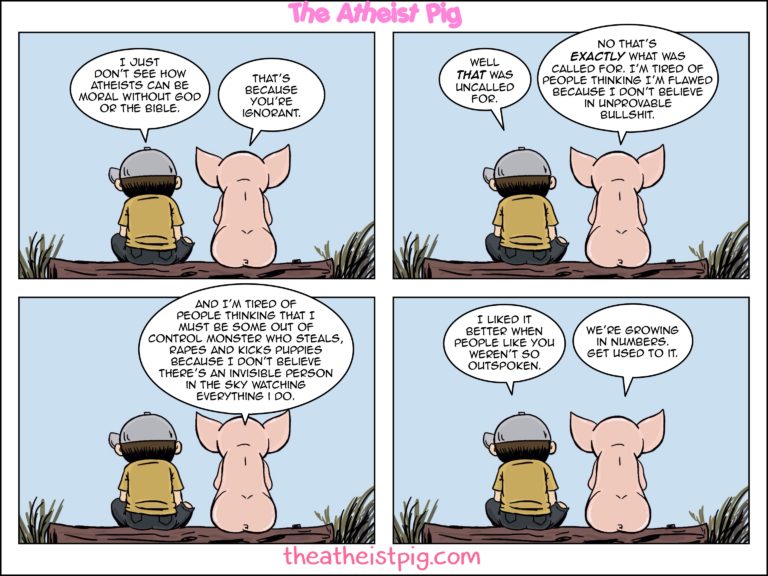
    outspoken atheists

    You can read other Atheist Pig cartoon here.