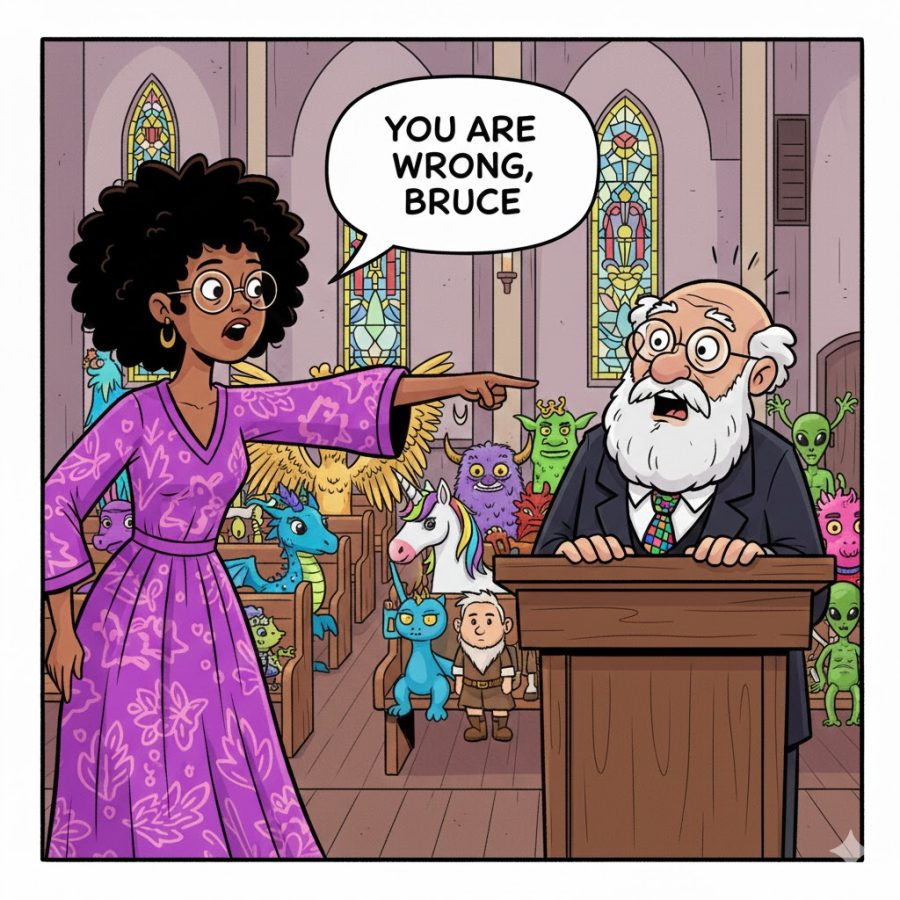
According to young earth creationists, God destroyed the world with a flood that killed every living creature on earth, save Noah and his family. Millions of humans and billions of innocent animals died. There’s no evidence that this story took place, but millions of Christians and Muslim believe it.
Gonorrhea is totally a human-restricted infection, one that has afflicted humans for thousands of years. The disease may have jumped from cattle to humans originally.
Gonorrhea is one of the oldest sexually transmitted infections (STIs) known to humankind. There is some conflict of opinion regarding its exact origin, but according to the general consensus, the disease has been present from the ancient times. A disease resembling gonorrhea was described by the Chinese emperor, Huang Ti (2600 BC) in his textbook. It is believed that the mention of “an issue of seed” in the Book of Leviticus in the Old Testament and the precautions suggested refers to this disease. Gonorrhea was termed “strangury” by Hippocrates (460–375 BC) who claimed that it resulted from the “pleasures of Venus.” Celsus (25 BC–50 AD) was well aware of gonorrhea and its complications. He used to catheterize patients with urethral strictures. The Greek physician, Galen (131–200 AD) coined the term “gonorrhea” and he referred to it as “an unwanted discharge of semen” (gono: seed, rhea: flow)
According to the Bible, only Noah, his family, and the animals on the ark survived God’s genocidal destruction of most life on earth. If gonorrhea is a solely human infection, and there were only eight humans on Noah’s big boat, which one of them had gonorrhea?
Bruce Gerencser, 69, lives in rural Northwest Ohio with his wife of 48 years. He and his wife have six grown children and thirteen grandchildren. Bruce pastored Evangelical churches for twenty-five years in Ohio, Texas, and Michigan. Bruce left the ministry in 2005, and in 2008 he left Christianity. Bruce is now a humanist and an atheist.
Your comments are welcome and appreciated. All first-time comments are moderated. Please read the commenting rules before commenting.
I have been blogging for almost 20 years — 12 years with this iteration. And just when I think I have seen everything, . .
What follows are several emails I received from Terri Beaudry’s email address. I say “her” email address because I am supposed to know that multiple people use the identical email address.
Without commentary, here’s the emails I recently received from Terry’s email address.
Terri’s email address: I’m actually Louise, a close relative who lives in same house. “Eaton” is Terri’s maiden name. I use her email. But I’ve read alot of your stuff, including the “Why?” section. Terri’s super busy, not sure if she’ll have time to write back or respond. I’ll let her know.
Terri’s email address: Louise here. I just read the blog now. I let her know what you said. She said to tell you that the reason she emailed lots is because the comment section was blocked half the time.
Terri’s email address: I was the one you were addressing that blog to, not Terri. As I was the one who sent a comment by email.
If you think that if someone disagrees with you agreeably, in a kind way with good intention, that they are not allowed to express their thoughts without you becoming rude or strangely defensive, then your statement that says, “I am interested in what you have to say” is bogus.
And if you don’t publicly clear it up in your blog so as not to give your readers/commenters a false idea, you are using an underhanded form of censorship and being very unfair and dishonest.
Please do not send me any more links.
Bruce: I responded to you as if you are Terri. She used multiple names when commenting, so I assumed your email was just another name change. So, what I said was addressed to Terri.
I asked her not to email me. It’s simple as that.
Bruce Gerencser
Bruce Gerencser, 69, lives in rural Northwest Ohio with his wife of 48 years. He and his wife have six grown children and thirteen grandchildren. Bruce pastored Evangelical churches for twenty-five years in Ohio, Texas, and Michigan. Bruce left the ministry in 2005, and in 2008 he left Christianity. Bruce is now a humanist and an atheist.
Your comments are welcome and appreciated. All first-time comments are moderated. Please read the commenting rules before commenting.
I recently received yet another email from Terri Beaudry. My response follows.
We over here cannot comment in comment section, because box does not appear. Hence, this email.
The only thing I can tell you is that the problem is on your end. Flush your cache. This fixes most problems. You might also try different browsers to see if your browser is the problem. If you are running security software or plugins, they can cause problems too.
You can also subscribe to receive my writing via email, as hundreds of people do.
I believe you understood that I didn’t want you to email me again. I sent you no less than four emails that asked you to stop emailing me. Yet, here we are again. I suspect you are one of those Evangelical Christians who believes that what you have to say is all that matters. All praise be to Jesus, right? I am an instrument for his using. *sigh*
The recent blog about deconstruction, which states that evangelicals all say that only the destination matters, and that they tell you that you will go to heaven if you believe the right things, isn’t fully true.
This is going to come off as appealing to authority, but I’m the one with the expertise when it comes to Evangelicalism in general, and the Independent Fundamentalist Baptist church movement specifically. Terri, if you have statistical evidence for your claim, please provide it. If not, your limited anecdotal experiences mean little in this discussion. I’m not saying I doubt your experiences. What I am saying is that those limited experiences have given you a warped understanding of Evangelicalism.
Here’s the facts: ALL Evangelical sects and churches put a premium on believing the right things. You can verify this by going to the websites of the major Evangelical denominations and independent churches and reading their official doctrinal statements. You will quickly learn that beliefs matter and they are that which will be used to measure whether you are a Christian,
Perhaps in the circles you ran with, that was so. But IFB and Baptist are a very small part of Christianity as a whole on this planet.
You have no idea what circles I ran in, do you? This information is readily available on this site.
Yes, I started my ministry career as an Independent Fundamentalist Baptist (IFB) preacher. What you seem to not know is that I left the IFB church movement twenty years before I left Christianity. I not only pastored IFB churches, I also worked for Sovereign Grace Baptist, Christian Union, Southern Baptist, and nondenominational churches too. Further, I preached for IFB, GARBC, Southern Baptist, Freewill Baptist, Sovereign Grace Baptist, Assembly of God, Charismatic, and non-denominational churches. And finally, you might want to read the post But Our Church is DIFFERENT! From 2002-2008. our family attended about 125 churches.
The above evidence should be sufficient for you to withdraw your unfounded claim that I was always an IFB preacher. I wasn’t. End of discussion.
And IFB is definitely not mainstream, it’s seen as almost like a cult.
*sigh* What you meant to say is that IFB churches are different from your flavor of Christianity so that makes them a cult. Go read the doctrinal statements of the major IFB institutions. Compare those statements to those of non-IFB Evangelical sects. I think you will find mostly agreement on the core doctrines of Christianity.
There are millions of IFB congregants. Thousands of IFB churches dot the American landscape and worldwide. Add Southern Baptists, who are indistinguishable belief-wise from the IFB church movement, and you end up with a group that is the second largest denomination in the United States. In the 1970s and 1980s, many of the largest churches in the U.S. were IFB congregations.
You may not like what IFB churches believe and practice, but that does not mean they are not mainstream. Again, do some research. Compare IFB beliefs and practices with non-IFB Evangelical churches. You will largely find agreement, except for denominational peculiarities and cultural differences.
Your use of the word cult is downright silly. ALL religions are cults, as any dictionary will tell you. I suspect you are using “cult” in a colloquial sense: IFB churches have beliefs and practices I disagree with, so they must be a cult.
Does the IFB church movement have patriarchal, authoritarian tendencies? Sure, but so do many non-IFB Evangelical sects. You seem to want to single out IFB churches due to negative experiences you have had with them. Evangelicalism as a whole is the problem, yet you seem to want to focus on the IFB church movement while giving the broader Evangelical church a pass.
I’m not saying all the congregants in it are bad people, or that all the pastors within are insincere. But I’ve noticed that alot of people within these churches tend to be less compassionate and more snobbish and judgmental (despising tax collectors and sinners that Jesus would have ate with) than other denominations I’ve been in.
Define “less compassionate” and “more compassionate.” How do you determine these seemingly arbitrary measurements? Maybe you meant to say that ALL churches have people who are less compassionate than other people. This is a human problem, not an IFB one. I met plenty of thoughtful, caring people in IFB churches.
You need to study IFB doctrines — especially separation, both personal and ecclesiastical — and visit a lot of IFB churches to see if your biases prevent you from seeing IFB congregations as groups of fellow Christians who sincerely believe that they are right — just like you do. And as far as caring about people, IFB churches are at the forefront of trying to evangelize the world for Jesus. They “care,” but may do caring differently from your church. Please explain to me how you determine a metric such as “caring” and “not caring.” Or, are you, once again, using your subjective experiences as some sort of objective standard for beliefs and practices?
More “religion” and less relationship with Jesus through the Holy Ghost. More head knowledge than heart.
You don’t know this. In fact, you can’t know this. Again, what metrics are you using to come to this conclusion? Do you really want to say that many IFB church members are unsaved? How did you determine they have “more head knowledge than heart”?
I’m not putting anyone down, it’s just an honest, objective observation.
I’m sure you believe this . . . but you ARE putting down IFB churches, as anyone who reads this article will easily conclude.
Your comments may be honest; meaning you believe these things to be true based on subjective experiences, but objective you are not. How could you be since all you have is a superficial understanding of the IFB church movement?
You yourself wrote in a post that it was typical for ministers in IFB churches to hound male congregants who left by calling them “faggots. That would be unthinkable in normal churches. It actually borders on crazy and is definitely abusive.
I wrote no such thing. I never would since it is factually untrue. The IFB is certainly homophobic, but so is much of Christendom.
What is a “normal” church, Terri? Who decides what is normal? By what standard do we decide what’s normal?
Religion in general is abusive. The differences between sects is a matter of degree. Are IFB churches patriarchal and authoritarian? Yep, but this is hardly an IFB problem. Plenty of the same going on in non-IFB churches
Certainly not what Jesus would do.
You have no idea what Jesus would do. Consider, all we have are handed down contradictory Bible stories written by unknown authors that detail what Jesus would do. Are you “doing what Jesus would do”?
You seem to want to keep the gate, the arbiter of who walks through the Christian gate and who doesn’t. All I see, Terri, is anecdotes and subjective experiences. And that’s fine for you, but when you use these things to judge millions of devoted Christians, you have stopped being objective.
Your experience includes only a small cross-section of the Church at large. ( the Body of Christ). Again, not a put-down, just a factual observation.
I am laughing as I read this. I believe what I wrote above will clearly burn this straw man to a crisp. As you now know, I wasn’t always an IFB preacher. You also know, I actually had a broad church experience. So much for this being a “factual” observation. I am sure you meant to say “opinion” instead.
Thank you for telling me that the church at large is “the body of Christ.” Shucky darn, I didn’t know that. I am not sure why you think you need to “educate” me.
For the record, I wouldn’t recommend anyone attend an IFB church. But, I also wouldn’t recommend attending an Evangelical church either. (Please see Are Evangelicals Fundamentalists?) I am a secularist, a humanist, and an atheist, so my advice is to sleep in on Sundays, eat brunch, drink beer, and enjoy watching football or spending time with your family. This seems better than sitting on hard pews listening to droning preachers, and having to pay for the privilege of being bored.
I wish you well, Terri.
Saved by Reason,
Bruce Gerencser, 69, lives in rural Northwest Ohio with his wife of 48 years. He and his wife have six grown children and thirteen grandchildren. Bruce pastored Evangelical churches for twenty-five years in Ohio, Texas, and Michigan. Bruce left the ministry in 2005, and in 2008 he left Christianity. Bruce is now a humanist and an atheist.
Your comments are welcome and appreciated. All first-time comments are moderated. Please read the commenting rules before commenting.
I recently received the following question from a Christian man named Joel. My response follows.
It’s not true that you can’t be saved.
Is this a general statement or a specific one? Is Joel claiming universal salvation? How does Joel KNOW that it is NOT true that I can’t be saved?” It is clear from the Bible that apostates and reprobates cannot be saved. They have crossed a line of no return.
Further the book of Hebrews says:
For it is impossible to restore again to repentance those who have once been enlightened and have tasted the heavenly gift and have shared in the Holy Spiritand have tasted the good word of God and the powers of the age to come and then have fallen away, since they are crucifying again the Son of God to their own harm and are holding him up to contempt. (Hebrews 6:4-6)
Let’s take a careful look at these verses.
The text says “For it is impossible.” What is “impossible?” To restore a Christian who has fallen away.
Have I been enlightened, tasted the Heavenly gift, shared in the Holy Spirit, tasted the good word of God, and power of the age to come? Yes.
It is clear from Scripture and personal testimony that I was a follower or Jesus. Yet, I am an atheist today. Why is that? The above text answers this question by saying that I have fallen away and crucified Jesus afresh, making a mockery of him.
Hebrews 10:26-30 says:
For if we willfully persist in sin after having received the knowledge of the truth, there no longer remains a sacrifice for sinsbut a fearful prospect of judgment and a fury of fire that will consume the adversaries. Anyone who has violated the law of Moses dies without mercy “on the testimony of two or three witnesses.”How much worse punishment do you think will be deserved by those who have spurned the Son of God, profaned the blood of the covenant by which they were sanctified, and outraged the Spirit of grace? For we know the one who said, “Vengeance is mine; I will repay.” And again, “The Lord will judge his people.” It is a fearful thing to fall into the hands of the living God. (Hebrews 10:26-30)
Have I spurned Jesus, profaned the blood of the covenant, and outraged the Spirit? Have I received the knowledge of the truth? Yes, and this means there no longer remains a sacrifice for my sins. No blood atonement, no salvation.
It is clear from Hebrews 6 and 10, that I am unsaved and can never be saved again.
That verse that says about how it’s impossible for a person who was once enlightened, etc. and who has seen the powers of the come…
You haven’t seen the powers of the age to come, but a somewhat watered-down version of Christianity, where it was taught in IFB seminary that the gifts of the Holy Spirit are not for today. That wasn’t your fault that you were taught that.
Sigh. Joel wrongly believes that I haven’t seen “the powers of the age of come.” Based on this faulty conclusion, Joel believes I was taught a watered-down version of Christianity. He provides no evidence for his claim. Joel just asserts his claim and expects everyone to just trust him.
I suspect Joel is either a pentecostal or charismatic Christian. What Joel does not know is that I was a non-cessationist; someone who believes the gifts of the Holy Spirit are in force and operational today. A cessationist is someone who believes the gifts of the spirit are not for today. That said, much of what goes on in Pentecostal/Charismatic churches is downright heretical. No “miracle” is out of bounds, so healing evangelists report crazy claims.
I attended Midwestern Baptist College in the mid-70s to train for the ministry. According to Joel, Midwestern taught me a watered-down version of Christianity. Maybe, but Joel is unaware of the fact that I left the Independent Fundamentalist Baptist (IFB) church movement in the 80s — 20 years before I deconverted. There goes another straw man up in smoke. I just love setting fire to straw men. 🙂
I think you just got discouraged and went AWOL for awhile.
I left Christianity almost 20 years ago. So much for going “AWOL for awhile.” In other words. my atheism is temporary, and to quote Arnold Schwarzenegger, “I’ll be back.” This is patently untrue. My atheism is not a temporary viewpoint. I will, however, get saved for $5,000,000. 🙂
Joel thinks the reason I left Christianity is because I “got discouraged.” I am sure discouragement played a part, but the primary reason I left Christianity is this: the central claims of Christianity are false. They no longer make any sense to me.
You were seeing a very lukewarm version of “church”.
How could Joel possibly know this? Did he attend any of the churches I pastored? No. Did he know I left the IFB church movement 20 years before I deconverted? No. Had Joel gone to any of the churches I pastored, he would have learned “lukewarm” was not in my vocabulary. I was a committed Christian who took seriously the teachings of the Bible and tried to put my faith into practice every day of the week,
Joel, you might want to peruse the posts on the WHY? page.
I recently received the following email from a reader named Richard. I don’t remember corresponding with Richard before, but he says we have, so I will take his word for it.
What follows is my response.
The challenge you offered in your last blog posting may have been offered tongue-in-cheek, but could have been a serious request on your part: “On April 1, 2026, at 4:20 PM, God is calling every Christian who promised to pray for me to gather together in the Ney Park for a time of worship and prayer. Perhaps, my former best friend, Pastor Keith Troyer, will come and lead this testimony to God’s love, forgive- ness, and healing. Maybe all my former colleagues in the ministry who said they would pray for me will be in attendance too. Throw in Dr. David Tee, John, Revival Fries and other “praying Christians,” why, these mighty prayer warriors will surely deliver me from my afflictions; and if they do, I promise to serve Jesus the remaining days of my life. I will even record a YouTube video testimony of my healing. Total healing, not just my hemorrhoids.”
Whether my challenge was tongue-in-cheek remains to be seen. 🙂 Surely, if thousands of Evangelicals show up in Ney, Ohio at 4:20 PM on April 1, 2026, I will take that as a sure sign from God of his existence. Here’s the Christian God’s chance to make not only a deep, lasting impression on me, but also my family, friends, and readers of this blog.
I’m confident that the Ney Park will be empty on April 1, outside of a few children and adults playing sports — weather permitting. If I am able, I will go down to the park at the appointed time to see if anyone shows up.
We have corresponded before but not real recently. I am 73 years old Bruce, so I have about five years on you chronologically. Neither one of us has all that many years remaining on this sojourn here on this planet. I am one of those individuals who prays for you from time to time, however, I will not be making the journey to Ney, Ohio on April Fools Day of this year.
God wants to see the sincerity of your faith; your willingness to go to the ends of the earth — Ney, Ohio, population 356, — to save the one sheep that was lost. Alas, you and your fellow believers will remain home and pray, leaving me in your sin and degradation.
Imagine what would happen if your God actually healed me from head to toe. Imagine the news reports and blog posts. If I am healed, I will have a complete physical exam, and afterward, I will release all of my medical records to the public, showing, without a doubt that God has supernaturally healed me. I guarantee you that if this happens, it will be one of the biggest stories in human history. Sick, dying man healed and restored to health. Doctors will have no answers for this miracle, and neither will atheists.
I do believe that God answers prayer because He has answered many prayers in the past I have sent His way.
No one can empirically know whether a God answered their prayers. Billions of prayers are prayed to all sorts of deities every day, yet most of these prayers go unanswered. God has a poor prayer track record answering prayers, so why should anyone believe one word in the Bible about prayer? Personal experience and observation say to me that a “God who answers prayer” is one of the biggest cons ever cooked up by religious leaders.
How do you empirically know God answered your prayers? Belief=personal opinion, and I can’t think of any way a believer can justify and prove their answered prayer claims. I accept that you believe that God answered your prayers, but I don’t believe he did.
He certainly is more than capable of healing you totally, but there is some work you must do to aid Him in that process.
Evidently, you don’t believe what your God said in James 5:13-16:
Are any among you suffering? They should pray. Are any cheerful? They should sing songs of praise. Are any among you sick? They should call for the elders of the church and have them pray over them, anointing them with oil in the name of the Lord. The prayer of faith will save the sick, and the Lord will raise them up, and anyone who has committed sins will be forgiven. Therefore confess your sins to one another and pray for one another, so that you may be healed.
The prayer of faith saves the sick. Whose prayer? Whose faith? Not mine. It is the prayer of faith from the elders that saves and heals the sick. Mark 11:24 says, So I tell you, whatever you ask for in prayer, believe that you have received it, and it will be yours. This seems to say that if Christians pray and believe, their prayer will be answered. Evidently, you don’t pray and believe, Richard. If you did, I would be healed. Surely, if thousands of Christians pray and believe, God will heal me. God says in James 5:16, that Christian prayers are righteous and effective. EFFECTIVE, Richard. Are you saying that God is wrong?
No, it seems to me that the blame for unanswered prayers rests solely on the shoulders of Christians. The Bible seems to say to Christians that if they want something bad enough, God will will give it to them. It’s evident, at least to me, that the thousands of Christians who said they were praying for me either lied or are lazy pray-ers. As a former Christian, I suspect most Christians are lazy (or superficial) pray-ers. Too busy to fast and pray for my healing. Here I am, a poor wandering sheep, and God’s sheep finders are too busy eating pizza and watching the Winter Olympics.
All the king’s horses and all the king’s men are unable to put Bruce’s faith back together again. You certainly need a “faith lift” for the petition you have mentioned above to be fulfilled. At the moment, you still consider yourself to be both a humanist and an atheist. “But without faith it is impossible to please Him: for he that cometh to God must believe that He is, and that He is a rewarder of them that diligently seek Him.” Hebrews 11:6 KJV The ball is therefore in your court Bruce.
Sigh, such bad theology, Richard, God is the creator of the universe, the sovereign over all. Ephesians 2 says that salvation is by grace through faith, faith is a gift from God. We have no faith in and of ourselves. God must give is faith in other for us to be saved. We are dead in trespasses and sins, and unless God gives is spiritual life, we cannot be saved. John 6:44 says: No one can come to me unless drawn by the Father who sent me, and I will raise that person up on the last day.
Besides, according to the Bible (and countless believers), I am a reprobate and an apostate. I CAN’T be saved. Does not Hebrews 6:4-6 describe me:
For it is impossible to restore again to repentance those who have once been enlightened and have tasted the heavenly gift and have shared in the Holy Spirit and have tasted the good word of God and the powers of the age to come and then have fallen away, since they are crucifying again the Son of God to their own harm and are holding him up to contempt.
According to this text, I have fallen away and it is IMPOSSIBLE to restore me again to repentance.
So, the ball is in God’s court, not mine.
You cannot be both an atheist and a believer at the same time.
Really? Shocker. 🙂
You must also consider who He is and who you are.
I know who and what I am. However, when it comes to God, I see no compelling evidence for the existence of God. Thus, I have considered who God is: a myth. If you have actual evidence to the contrary, I would love to see it, I am ready and willing to believe, but so far, I have found the arguments for God lacking. I am awaiting the day when an apologist finally convinces me that that the Trinitarian God is true. For the record, I think it is impossible for believers to prove the Trinity — both Biblically and philosophically.
If you are the one trying to order God around to fulfill your request at your venue on your particular date and time, that seems to indicate to me that you want to be God and you want Him to accede to your will.
I know God is busy — so many car keys and parking spaces to find for praying unbelievers— so I talked to the third God in the Trinity, and he scheduled an appearance of Jesus in Ney Ohio on April 1, 2026 at 4:20 PM. One caveat: at least one thousand people who prayed for me must physically come to the park on the appointed day and time. If 999 Christians show up, God will not heal me.
I am not God, and that is why I contacted the Holy Ghost. My healing totally depends on God and at least one thousand prayer warriors. If I remain unhealed, it is not my fault. Name one thing I did, Richard, that would preclude God from healing me?
God resists the proud but gives grace to the humble. See James 4:6 & 1 Peter 5:5.
Ah, here comes self-righteous judgment. You say I am proud, but how could you possibly know this? If you talk to my partner, grown children, and friends, you will quickly learn that pride is not a problem of mine. I have the opposite problem: a lack of self-worth. Do you have evidence, Richard, that suggests otherwise?
God certainly can both heal and save you Bruce, but you must choose to cooperate with Him.
You assume I am resisting God. How could I resist him since the Bible says I am “dead.” Last I knew, dead people can’t do anything. Salvation is of the Lord, right? If this is true, then what part, exactly, do I play in my salvation? If I must cooperate with God, Richard, please share exactly what I must do to be saved?
Hope to see you and thousands of praying Christians on April 1. If everyone shows up, I will become a fool for Christ.
Bruce Gerencser, 69, lives in rural Northwest Ohio with his wife of 48 years. He and his wife have six grown children and thirteen grandchildren. Bruce pastored Evangelical churches for twenty-five years in Ohio, Texas, and Michigan. Bruce left the ministry in 2005, and in 2008 he left Christianity. Bruce is now a humanist and an atheist.
Your comments are welcome and appreciated. All first-time comments are moderated. Please read the commenting rules before commenting.
I am here to report that I am not in the Epstein Files. I searched for my name, but it did not appear anywhere in the files. Boy, was I worried. 🙂 Donald Trump, of course, features prominently in the files, but just remember, he already been found innocent. Besides, Trump was never on Epstein’s Pervert Island. Right? Does anyone doubt Trump’s guilt? I mean outside of MAGA sycophants who wouldn’t believe he was guilty if God himself said he was.
Funny thing about God, the Big Man Upstairs is mentioned over 20,000 times in the files. Jesus is mentioned hundreds of times too. I know, I know, shocking. But, if you think about it, is it really surprising that God is in the Epstein Files? After all, God (Jesus) watched everything that happened on the Island, and did absolutely nothing. And I mean nothing. Think of all the debauchery that took place, perpetrated by rich men and women. Countless minors were abused, sexually assaulted, and raped, often brought to Pervert Island against their will. Yet, where was God? We are repeatedly told by Evangelicals that God is good and loving; that he cares about his creation and is intimately involved in our lives; that he will be there for us in our time of need. I would think being raped by powerful men would be a “time of need,” yes? Yet, we don’t have one report that says God saved any of the children from having their bodies disgustingly violated by men who thought they were above and beyond the law. Of course, it doesn’t hurt having a fine Christian like U.S. Attorney General Pam Bondi protecting sexual predators at every turn. Never forget that Bondi was involved with Epstein’s perverse behavior all the way back to her days in Florida. She is up to her neck in the sewage of complicity, yet she l-o-v-e-s Jesus.
God has much to answer for, but like Trump, he is immune from prosecution. All any of us can do is oppose those who want to advance this evil God’s agenda. Any God who doesn’t care about the abuse of children is a deity unworthy of worship. Worship God if you must, but I shall not as long as he and his followers continue to support evil men doing despicable things to innocent children. This is a seminal moment for Evangelicals, and so far, all I see complicity, excuse-making, self-justification, and deliberate moral and ethical blindness.
Bruce Gerencser, 69, lives in rural Northwest Ohio with his wife of 48 years. He and his wife have six grown children and thirteen grandchildren. Bruce pastored Evangelical churches for twenty-five years in Ohio, Texas, and Michigan. Bruce left the ministry in 2005, and in 2008 he left Christianity. Bruce is now a humanist and an atheist.
Your comments are welcome and appreciated. All first-time comments are moderated. Please read the commenting rules before commenting.
In 1 Kings 18, we find the Prophet Elijah doing battle with the prophets of Baal. No need to tell the whole story. It’s enough for me to say Elijah won the battle and slaughtered all of the prophets of Baal. Elijah prayed one prayer, and BOOM! God sent fire from Heaven! Awesome, right? In John 14, Jesus told his followers that they would one day do greater works than he did. Surely this is a promise for believers today, too. Surely through the power of the Holy Spirit they can do great works. If this is so — and the Bible says it is — I want to propose a surefire way for God to heal me and restore me to the health of an active, athletic twenty-five-year-old man. Are you ready, Christians?
I have been blogging since 2007. Over the past twenty years, thousands of Christians have told me “I am praying for you!” Monday, I had melanoma surgically removed from my neck. My nurse was a friendly young woman; a delight to talk to. She was chatty, and so was I. She learned that I had recently been diagnosed with severe axonal neuropathy, leading to severe nerve pain in my legs. She replied, “well I sure will be praying for you.” I smiled, and said, “Thank you. I appreciate it.” No need to offend, but I sure have heard that line a few thousand times, both as a Christian and as an unbeliever.
As I was deeply meditating on prayer, God sent me a message straight from throne room of God. The Holy One said that I would be completely healed, right down to my hemorrhoids, IF the following happened:
On April 1, 2026, at 4:20 PM, God is calling every Christian who promised to pray for me to gather together in the Ney Park for a time of worship and prayer. Perhaps, my former best friend, Pastor Keith Troyer, will come and lead this testimony to God’s love, forgiveness, and healing. Maybe all my former colleagues in the ministry who said they would pray for me will be in attendance too. Throw in Dr. David Tee, John, Revival Fries and other “praying Christians,” why, these mighty prayer warriors will surely deliver me from my afflictions; and if they do, I promise to serve Jesus the remaining days of my life. I will even record a YouTube video testimony of my healing. Total healing, not just my hemorrhoids.
Surely, if a thousand or more praying Evangelicals — the one true religion — show up at the Ney Park on April 1, 2026 at 4:20 PM, God will hear their prayers and heal me, right? Right? Thousands of singular prayers have already been uttered on my behalf, without success. Maybe corporate prayers are required for success, but I have been lifted up in prayer by numerous churches over the years. Are their unified prayers not enough? All this praying, and no salvation or healing. What’s up with that?
I will await healing on April 1, 2026. Until then, I have a CT scan of my abdomen and pelvis scheduled, along with an appointment with yet another neurologist in Toledo. I have faith, but my fingers are crossed.
You were once a Christian. You know how we lied when we said “I’ll pray for you.” We meant well, but quickly moved on to other needs. Of the thousands of people who said they would pray for me, it is doubtful that many of them ever did beyond a prayer for me while I was on their mind. If only they had prayed for me every day, God might have healed me.
Bruce Gerencser, 69, lives in rural Northwest Ohio with his wife of 48 years. He and his wife have six grown children and thirteen grandchildren. Bruce pastored Evangelical churches for twenty-five years in Ohio, Texas, and Michigan. Bruce left the ministry in 2005, and in 2008 he left Christianity. Bruce is now a humanist and an atheist.
Your comments are welcome and appreciated. All first-time comments are moderated. Please read the commenting rules before commenting.
Interesting that I asked the AI program to put poor people in the pews. Notice the skin color of most of the congregants. Evidently, poor people=Black people.
The Bible teaches Evangelicals that Jesus is to have preeminence in every aspect of their lives. You would think that this foundational truth would be readily evident in Evangelical churches, but it’s not. Instead, we see a church culture focused on celebrity and consumer culture. Larger Evangelical congregations have turned into religious entertainment centers — complete with bands, smoke machines, and cool, hip worship leaders. While Jesus is still mentioned, the focus is on spiritually energizing the crowd and meeting their felt needs. And people love it, as they flock to Evangelical churches to watch the “best show in town.”
Have you noticed all the titles Evangelical preachers have these days? Not content to be called pastor or preacher, many preachers sport fancy titles such as senior pastor, executive pastor, apostle, bishop, or teaching pastor, to name a few. Most ordained preachers start their careers as a Reverend (Rev) — a person to be revered. Should preachers be revered more than anyone else in the church? Are preachers special in God’s eyes? Should they be honored and respected because of their title? Does God punish people who refuse to give preachers their due? The answer to these questions, straight from the inerrant, infallible Bible, is Yes (as interpreted by Evangelicals, anyway)! I am an ordained Baptist preacher. I am also ordained with the Universal Life church. I hated the Reverend title. When people called me Rev., I typically told them that it was okay to call me by my first name or Preacher. I saw preacher after preacher get puffed up with importance, thinking that they were somehow being uniquely used by God to advance his kingdom.
Evangelicals come by this thinking honestly. Young men are taught that being a God-called preacher is superior to being president of the United States. I was told countless times as a young preacher that my calling was superior to any other career and it was irrevocable. Church members had careers, but Bruce Gerencser had been divinely called by the triune God to preach the unsearchable riches of Christ. This thinking, of course, leads to pride, arrogance, and false superiority.
I know a lot of Independent Fundamentalist Baptist (IFB) preachers who love being called “Doctor.” They expect church members to call them Doctor and their undoctored colleagues to bow in reverence to them. In the IFB church movement, to have a doctorate means you have arrived, that your metaphorical dick is bigger than that of your fellow pastors. Having a doctorate gives one an air of importance and respectability. Go to any of the big IFB conferences, and you’ll find the scheduled speakers list littered with the names of men who have doctorates. But, here’s the thing: the overwhelming majority of preachers sporting a doctorate didn’t earn the moniker. Most likely, one of their preacher buddies, who just so happens to run an unaccredited Bible college, gave them their doctorate. Or, they did minimal coursework at one of many IFB diploma mills. Either way, their doctorate is nothing more than the plume of a peacock. Look, look, look at me, I am special, I am important, I am a Doctor.
Even at the IFB college, university, and seminary level, many of the professors have doctorates that were granted to them by the institution at which they are teaching or some other unaccredited college. I spent twenty-five years in the ministry, and I came in contact with a lot of Doctors. In every case but one, the doctorates were either honorary or “earned” through minimal work done at diploma mills. The only person I knew who had an earned doctorate was Tom Malone — the founder and chancellor of Midwestern Baptist College. Dr. Malone had a Ph.D. in education from Wayne State University.
….
I suspect that most IFB church members don’t have a clue about how their pastor got his doctorate. They naïvely assume their pastor is just like their medical doctor or a professor at the local college. They likely think their pastor went through the rigors of a Ph.D. program and is eminently qualified to teach them the Bible. Little do they know that their pastor’s doctorate is nothing more than a high-five from a friend who operates a college, or a piece of paper given to him after paying a fee and doing minimal course work.
On one level, who cares, right? But, many of these “Doctors” are counseling people with serious mental health problems. A troubled church member goes to their pastor thinking he is qualified to help them. After all, he has a doctorate in counseling, right? He is just as qualified as the psychologist at the local mental health clinic, right? Unbeknownst to the church member, their pastor’s doctorate is little more than words scrawled on used toilet paper.
As Paul Harvey used to say: now you know the rest of the story.
Doctorate-sporting IFB preachers are like Diotrephes in III John:they love to have the preeminence. Go to an IFB church or conference and watch how Dr. Bob or Dr. Jack or Dr. Paul are fawned over and treated like gods. I wonder when these Doctors last preached on James 2:
My brethren, have not the faith of our Lord Jesus Christ, the Lord of glory, with respect of persons.For if there come unto your assembly a man with a gold ring, in goodly apparel, and there come in also a poor man in vile raiment; and ye have respect to him that weareth the gay clothing, and say unto him, Sit thou here in a good place; and say to the poor, Stand thou there, or sit here under my footstool: are ye not then partial in yourselves, and are become judges of evil thoughts?
For it hath been declared unto me of you, my brethren, by them which are of the house of Chloe, that there are contentions among you. Now this I say, that every one of you saith, I am of Paul; and I of Apollos; and I of Cephas; and I of Christ. (1 Corinthians 1:11,12)
According to the Bible, the church at Corinth had become factional, with various groups saying that they were a follower of Apollos, Cephas, Paul, or Christ. In First Corinthians 1:13, Paul asked:
Is Christ divided?
Two thousand years later, we can answer Paul’s question with an emphatic YES! The followers of Jesus Christ have spent the past 2,000 years fighting amongst themselves. Their internecine warfare has caused schisms, splits, and divisions, leading to the establishment of thousands of Christian denominations throughout the world (Wikipedia list of major Christian denominations).
Every Christian Bible has the following verses:
Behold, how good and how pleasant it is for brethren to dwell together in unity! (Psalm 133:1)
By this shall all men know that ye are my disciples, if ye have love one to another. (John 13:35)
For by one Spirit are we all baptized into one body, whether we be Jews or Gentiles, whether we be bond or free; and have been all made to drink into one Spirit. (I Corinthians 12:13)
There isone body, and one Spirit, even as ye are called in one hope of your calling; one Lord, one faith, one baptism, one God and Father of all, who is above all, and through all, and in you all. (Ephesians 4:4-6)
These four verses alone stand as an indictment of modern Christianity. The various Christian sects can’t even agree on basic beliefs such as salvation, baptism, and communion. Jesus said, I am the way, truth, and life, and almost every Christian sect thinks it has the way, truth, and life market cornered. Pick the wrong sect and, according to many sects, you will miss Heaven and spend eternity in Hell being tortured by God.
Evangelicalism, an inherently Fundamentalist religious belief, (please see Are Evangelicals Fundamentalists?) has a unique problem in that its churches are generally a blend of sectarian divisiveness, Madison Avenue advertising techniques, and movie-star devotion to pastors, evangelists, and other “successful” Evangelical leaders. This has led to a cult of personality, similar to that which Paul addressed in the church at Corinth 2,000 years ago.
Drive by many Evangelical churches these days and what do you see on the church sign? Sign after sign will have the pastor’s name prominently displayed. Why is this important? Why is it necessary to advertise the name of the pastor? If the church is one body worshiping the one Lord and Savior Jesus Christ, why call attention to the identity of the pastor? Why don’t churches put the names of the poorest church members on their signs as James suggests in James 2:1-4:
My brethren, have not the faith of our Lord Jesus Christ, the Lord of glory, with respect of persons. For if there come unto your assembly a man with a gold ring, in goodly apparel, and there come in also a poor man in vile raiment; and ye have respect to him that weareth the gay clothing, and say unto him, Sit thou here in a good place; and say to the poor, Stand thou there, or sit here under my footstool:are ye not then partial in yourselves, and are become judges of evil thoughts?
Isn’t giving the pastor top billing on the church sign showing the pastor undue respect? After all, the Apostle Peter said in Acts 10:34 that God is no respecter of persons. God may not be a respecter of persons, but his Evangelical followers sure are. Ask Evangelicals where they go to church, and they are just as likely to say, I go to Pastor So-and-So’s church as they are, I go to First Baptist Church.
In the average Evangelical church, the center of attention is not Jesus, the Word, or the sacraments. The focus is on the man standing behind the pulpit. He is the man of God, God’s messenger, the pastor. In some Evangelical churches, he is also the bishop, prophet, or apostle. He is the main cog in the machine, without which the machine won’t run. If you doubt this, watch what happens when one of these superstar Evangelicals leaves his church. The membership inevitably declines, often because church members don’t like the new guy. Evangelicals then feel “led” to join a different church so they can be “fed.” Rarely will they admit that the reason they changed churches was that they were spiritually and emotionally infatuated with the previous pastor.
Megachurch pastors, in particular, are getting rich off the ministry. It is scandalous how these “profits” of God rake in millions of dollars from the churches they pastor, the books they sell, and outside speaking engagements. Even an atheist can see that these kinds of pastors are not following in the steps of Jesus. Instead of following the WWJD mantra, they are following what would a Wall Street profiteer do?
Whenever I write about one of the Evangelical superstar pastors, people will surely come along and defend him. I have attacked their god, and it doesn’t matter what the Bible or common decency says, they are not going to stand for it. Little do they realize that their defense illustrates my contention that Evangelicalism is a cult of personality.
I would love to be able to say to readers of this blog that I was different when I was a pastor, but I wasn’t. My name was prominently displayed on the church sign. I was the center of attention, the hub around which everything turned. People came to the churches I pastored because they loved my preaching and liked me as a person. When I pastored a fast-growing church in southeast Ohio, people would drive 30-45 minutes to hear me preach. Our church was exciting and growing, and I — uh, I mean God — was the reason.
What drives the cult of personality? Here in the United States, we are enamored with success. We tend to give respect to people who appear to be winners. Even in the blogosphere, we often judge the value of writers by the number of people who read their blogs and follow them on Facebook, X, Pinterest, and Instagram. We forget that these numbers say NOTHING about the person. I have to constantly guard against this. I know my blog readership numbers, page views, and mailing list subscriber numbers are growing. Does this mean that I am “more” successful than I was years ago when a hundred people a day read my blog? Should people respect me more now that thousands of people read my writing? Of course not. Numerical success proves nothing.
Within Evangelicalism, numerical success is everything. Success for a pastor is measured by the size of his penis — uh, I mean the size of his church. The criteria for calling a pastor/church a success is not much different from the criteria used to judge a successful CEO in the corporate world: growing the business and maximizing profits.
The sure sign that a pastor has arrived is when he writes a book telling everyone how he achieved his success. When I was an Independent Fundamentalist Baptist (IFB) pastor, almost every big-name pastor wrote a book detailing how he achieved numerical success. The subtle message was this: God is blessing me and this is why. Do you want God’s blessing? Do what I am doing! Why is it that these successful pastors never write a book years later detailing the fact that “God’s blessing” didn’t last and their penis size shrank dramatically?
American Evangelicals love their conferences. Hundreds of Evangelical conferences are held each year. Who are the speakers? Those who have achieved “success.” These conferences always feature big-name pastors who pastor large, successful churches. When was the last time Evangelical conference promoters had a Bro. Joe, who pastors 20 people on the backside of some hill in West Virginia, come and speak at their conference? It never happens.
One of the reasons people leave Evangelicalism is that they become tired of everything being about the pastor or of the focus being on the methods of the latest hotshot, knows-everything, successful pastor. They sincerely thought that Christianity was all about Jesus. They found out that Jesus was just the window dressing for their pastor’s ambition. Most Evangelical churches, thanks to their leaders, have lost all sight of what it means to be Christian. They proclaim that the Bible is their standard of faith and practice and then ignore its teachings and examples. Christianity should be about Jesus and his kingdom. From my seat in the atheist pew, it seems to me that Evangelicalism is all about the pastor’s kingdom and not the kingdom of Jesus they say they follow.
Your thoughts and experiences are appreciated. Please share them in the comment section.
Bruce Gerencser, 69, lives in rural Northwest Ohio with his wife of 48 years. He and his wife have six grown children and thirteen grandchildren. Bruce pastored Evangelical churches for twenty-five years in Ohio, Texas, and Michigan. Bruce left the ministry in 2005, and in 2008 he left Christianity. Bruce is now a humanist and an atheist.
Your comments are welcome and appreciated. All first-time comments are moderated. Please read the commenting rules before commenting.
The word “deconstruction” is hotly debated these days, especially among Evangelical Christians. Rather than spend energy debating the meaning of the term, Let me explain how I colloquially use the word. Deconstruction is the process of stripping your beliefs bare and reinvestigating the claims that gave rise to these beliefs. The process is a lot like stripping the inside of a house and rebuilding it. This is exactly what I did two decades ago. Long before I embraced atheism, I decided to carefully, thoughtfully, and painfully reexamine my religious beliefs. The early seeds of this process were sown in the late 90s when my politics began to change, as did my beliefs about capitalism and war. I later embraced socialism and pacifism. In 2000, I voted for a Democrat the first time, and I have primarily voted Democrat ever since. As it happens for many former Evangelicals, my deconstruction found its impetus in evolving political beliefs.
I pastored my last church in 2003 and preached my last sermon in 2005. For several years I deconstructed my beliefs, stripping bare the central claims of Christianity. Starting with the inerrancy and infallibility of the Bible, I worked through the major doctrines of the Christian faith, concluding they could not be honestly and rationally sustained.
And that’s the word I want to focus on: honesty. There is only one thing required in the deconstruction process, and that is honesty. As you deconstruct your beliefs, be honest with your observations. I have counseled people countless times over the years about deconstruction. I typically yell them that honesty is key to the process. Meet truth in the middle of the road and do business with it. Don’t try to go around truth, jump over it, or return to where you came from. It’s okay to park in the middle of the road until you have thoroughly examined a particular belief (or practice). You don’t owe it to anyone to “move on.” When, and only when, your questions have been answered, then you can move on to examining another belief. This is what I did until I, with a broken heart — having invested fifty years in worshipping Jesus — admitted I no longer believe.
Deconstruction never leaves you as you are. Rarely do people honestly return to their old beliefs. Sadly, people often return to their old beliefs and practices out of fear or judgment or being ostracized. And I get it. When I deconverted, I lost a lifelong career, most of my friends, and all of my colleagues in the ministry. I didn’t lose everything — but almost. I paid a high price for truth, a price I would pay again today if called on to do so.
Most people who deconstruct end up in churches and religions that put a kinder, gentler face on faith. I don’t know of anyone who deconverted from Evangelicalism after deconstruction who then returned to Evangelical beliefs and practices afterward. I am sure they exist, I just don’t know of any. Some people end up embracing humanism, agnosticism, atheism, and other -isms. The common denominator is that they freely (I know, I know, free will doesn’t exist) chose to embrace different beliefs without conditioning and indoctrination. One of the hardest things for me to admit about my past Evangelical life is that I belonged to a blood cult, and after years of indoctrination and conditioning, I wholly embraced the cult’s deity and became a high priest.
Contrary to what Evangelicals will tell you, life is not all about the destination. The Evangelical house of cards is built on a foundation of a divine payoff after death for believing the right things. All that matters is making it to Heaven after death. I contend that life is all about the journey. Who knows where your journey will take you, but if you are honest throughout your journey, you will end up exactly where you need to be.
Bruce Gerencser, 69, lives in rural Northwest Ohio with his wife of 48 years. He and his wife have six grown children and thirteen grandchildren. Bruce pastored Evangelical churches for twenty-five years in Ohio, Texas, and Michigan. Bruce left the ministry in 2005, and in 2008 he left Christianity. Bruce is now a humanist and an atheist.
Your comments are welcome and appreciated. All first-time comments are moderated. Please read the commenting rules before commenting.
AI (artificial intelligence) is all the rage these days, and its supporters and opposition are increasingly vocal, and, at times, hostile towards anyone who thinks differently. Unbeknownst to most people is that AI has been used to some degree or another for years. I am a former professional photographer, retiring after I could no longer hold a pro camera with a heavy lens level and straight. It was one of the saddest days in my life when I had sell thousands of dollars of camera/studio equipment that had given be so much joy over the years. I used AI-based software to edit photos. Adobe introduced basic AI in its content aware function in 2010. In September 2023, Adobe integrated AI into Photoshop. What’s different now is that non-technical Joe has access to tools that used to require extensive training to master.
This site does not use AI to write text. It never has and never will. AI is used to check grammar before a post is sent on to Carolyn, my editor. All text written on this site — unless it is a guest post — belongs to me. I alone own all blame or praise for anything written on this site.
I do, however, use AI to make graphics for this site. I make no apologies for doing so. Most comments and emails about the AI graphics have been positive. The graphics provide keen insight into the warped mind of Evangelical-turned-atheist Bruce Gerencser. More “warpness” forthcoming. 🙂
Calling me lazy or a destroyer of jobs is not helpful. Neither claim is true.
Thank you for your understanding.
Bruce Gerencser, 69, lives in rural Northwest Ohio with his wife of 48 years. He and his wife have six grown children and thirteen grandchildren. Bruce pastored Evangelical churches for twenty-five years in Ohio, Texas, and Michigan. Bruce left the ministry in 2005, and in 2008 he left Christianity. Bruce is now a humanist and an atheist.
Your comments are welcome and appreciated. All first-time comments are moderated. Please read the commenting rules before commenting.
This cookie is set by X to identify and track the website visitor. Registers if a users is signed in the X platform and collects information about ad preferences.
2 years
personalization_id
Unique value with which users can be identified by X. Collected information is used to be personalize X services, including X trends, stories, ads and suggestions.
2 years
external_referer
Our Website uses X buttons to allow our visitors to follow our promotional X feeds, and sometimes embed feeds on our Website.