I’m not running for office. But if I were, these are some of the lessons I’d take away from what happened in NY yesterday.
1. Authenticity is measurable. Voters can smell a focus group from a mile away.
2. Endorsements from the current Democratic leadership now read like warnings. The establishment wing of the party is no longer a sword. It’s a question mark.
3. Conviction beats caution. The candidates who said hard things about rent, about who pays for what, about Gaza, they won. The triangulators lost.
4. Cost of living is everything. Everything else is wallpaper.
5. The middle is not a strategy. It’s an empty room. Voters reached past the establishment to grab someone who actually believes something.
6. Don’t fear the base. Court it. The Democrats who ran from their own voters lost. The ones who ran toward them won.
7. If you want to lead a party you have to be willing to fight inside it. Mamdani didn’t ask permission. He took the field.
The lesson under the lessons: the country is tired of being managed. People want to be led.
— Hunter Biden, son of former president Joe Biden , as reported by Crooks and Liars
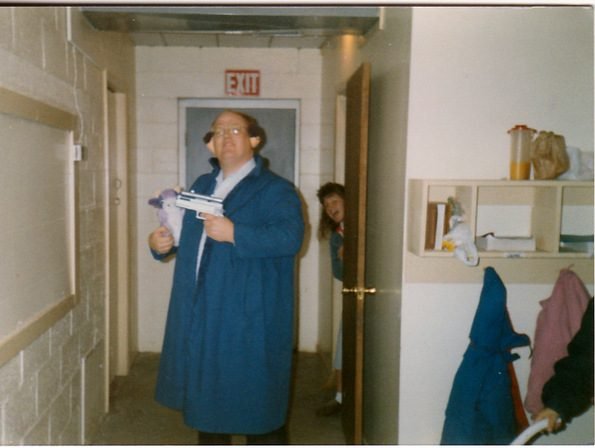
Bruce Gerencser, 1991, Somerset Baptist Academy. Surely everyone can see from this picture that I was a real Christian. 🙂
Environmental Scientist recently asked “[…] have you reached out to these former students and apologized?”
Zoe responded:
Ugh. Heaviness. Sigh.
I remember coming across Bruce’s blog ages ago. Maybe the dinosaurs were still roaming the earth back then? It was a post where he apologized. I cannot recall the specifics, but it was the first time I had ever heard, whether in person or online or in a book, a pastor apologize.
To date, he’s the only one.
I don’t know but I sense that in a way, Bruce’s writing is his attempt to apologize. The weight of sorrow that accompanies decisions made during our former believing days, is ever present. I wish the inventors of Christianity would apologize to me. I wish my ancestors had apologized to me. I am thankful that in my generation, I broke the cycle. Maybe breaking the cycle is our apology.
Zoe is a personal friend of mine. She’s been a reader of my writing from almost day one. I appreciate her friendship and support.
Zoe has seen my highs, lows, and meltdowns. It took me years to learn how best to deal with and respond to aggressive, violent, abusive Evangelical commenters. Years ago, when the pressure got to be too much, I would quit blogging. In late 2014, something clicked for me, and I’ve not stopped blogging since. This does not mean that I’m impervious to the ill treatment I receive from some Evangelical commenters. What’s different is that I have, over time, developed a thicker skin. I’ve also come to understand how deeply indoctrination and conditioning hinders some Evangelicals from having pleasant, thoughtful discussions. Instead, I am viewed as an enemy of Jesus and Christianity, unworthy of kindness and respect. I’ve concluded that many Evangelicals don’t believe the Bible commands governing their behavior apply when dealing with apostates, reprobates, and atheists. Never mind the fact that the Bible has a lot to say about how Christians should treat their enemies.
Over the years, I’ve been as open and honest as I could possibly be. Do I still have secrets; things I’m uncomfortable sharing with the public? Sure, and I make no apology for having them. That said, I’ve done my best to answer questions from friends and critics alike.
In 1989, I started a private school: Somerset Baptist Academy. The school was built on a one room school house approach. With 15-18 students, K-12, this was not hard to do. The focus was academic proficiency instead of grade level. Thus, an eleventh grader might be taking reading with fourth graders. Students were slotted based on academic ability. While this proved embarrassing for some older students, it did provide motivation for them to do better.
Most of the students “fondly” remember Preacher’s weekly timed math facts tests. Every student took the same tests. Passing the tests in a certain amount of time meant students didn’t have to take the tests any more. Eventually, all of the students passed.
Somerset Baptist Academy was an unchartered private religious school. What this meant, practically, is that the government left us alone, even though we were costing the local school district $75,000-$150,000 a year from lost state funding. That said, I faced no problems with the local school superintendent. In fact, he graciously donated desks for our school to use.
SBA was a tuition-free school, with unpaid teachers and staff. Polly and I were the primary teachers, with church members helping in areas they were proficient (i.e. home economics, auto repair, small engine repair).
The school was pass-fail. The goal was proficiency, not grade point average. One third of the students were excellent scholars. The rest of the students had various academic challenges. For these students, public schools had largely abandoned them.
One highlight was the fact that our little school had computers before the public schools did. Thanks to me being a computer geek and my office being in the same building as the school, older students had access to my computers. They were well ahead of public-school students when it came to computers.
We decided early on to focus on core academic proficiency. Teach students to competently read, write, and do maths, they can do almost anything. If you can’t read, write, and balance your checkbook, you are in for a hard life.
The school was started at the same time my theology moved from Independent Fundamentalist Baptist (IFB) beliefs to Evangelical Calvinism. This, of course, affected the theology taught in the school — primarily by me. Order and discipline were important. While corporeal punishment was permitted, I only paddled one student. I had no stomach for paddling other parents’ children. Instead, I would send a note home detailing the infraction, asking parents to discipline their children.
I did, however, use after school detentions as punishment for offenses. And not public school-like detention, either. Students in detention were given work to do after school: pulling weeds, cleaning fence lines, mowing grass, splitting and stacking wood, hauling coal, shoveling snow, cleaning the buildings, and straightening song books for the next service.
Years later, now an atheist and a humanist, I have mellowed out. I have no doubt I would do things differently if I was operating a Christian school today. But, it was the late 80s, and I had a lot of learning to learn and unlearn. I remain a work in progress. Sadly, some readers refuse to grant me grace. The more open I am, the more critical they become. Another reader, which I plan to dispense forthwith, has been sending me emails accusing me of abusing Polly and being a bad husband, totally ignoring the religious and cultural paradigms that were in play, at the time. We were a patriarchal family, willingly so. Same goes for Calvinism, which directly affected how many children we had.
I’m generally self-aware. Both of my therapists have told me that I’m too self-aware; that I’m hyper judgmental of self; that I struggle with guilt. Believe me, I want to be well thought of by others. I don’t like conflict, nor do I want people to be angry with me. But, in the real world, church conflict is common. I pastored scores of delightful people, but I also was shepherd to more than a few troublemaking, judgmental assholes. That’s the nature of the ministry. I tried to do my best, but that was never enough, for some people. I apologized when warranted, but refused to do so when I committed no offense. So it is with students at Somerset Baptist Academy.
Have I apologized to some of the students over the years? Sure. Who they are and what I apologized for is no one’s business except the parties involved. I have had lunch/dinner with several students. I’d say I’m on good terms with ten of the students — all of whom I have met and interacted with over the years. A few years back, I conducted the funeral for the father of four students. I sensed no anger or animosity from any of them.
Half of the students ended up graduating from college, including two of my sons. I like to think Polly and I, along with other volunteers, put students on a better path. It is, of course, up to them to tell their own stories. If if have learned anything, it is this: experiences are personal; and that no two people have the same experience. I would love to have former students share their SBA “war stories,” but these events are over 30 years old. Most of the students understand their five years at Somerset Baptist Academy in its theological, cultural, and tribal context. They view me as a man who was trying to do the right thing; trying to make life better for them. Did I fail? I will it leave to them to say.
To Zoe I say, once again, thank you! ❤️
Bruce Gerencser, 69, lives in rural Northwest Ohio with his wife of 48 years. He and his wife have six grown children and thirteen grandchildren. Bruce pastored Evangelical churches for twenty-five years in Ohio, Texas, and Michigan. Bruce left the ministry in 2005, and in 2008 he left Christianity. Bruce is now a humanist and an atheist.
Your comments are welcome and appreciated. All first-time comments are moderated. Please read the commenting rules before commenting.
Evangelicals love to call themselves “people of the book.” The first church I worked for had an advertising sign that said, “The Blood, The Book, The Blessed Hope.” We believed, as Evangelicals do today, that the Bible was inerrant and infallible — without error and true in all it teaches. Yet, for all their talk about the Bible, most Evangelicals don’t read and study the Bible. Oh, they might read it from time to time, but as far as diligently reading and studying the Bible? No time for that, even though they demand unbelievers obey the Bible, not bothering to read it from cover to cover themselves. If this is not the case, why do Evangelical preachers repeatedly “encourage” congregants to read the Bible, warning them about what God will do to them if they don’t. Some pastors throw in the towel and try to at least get church members to read devotional materials such as “Our Daily Bread.” Every day, Christians read a couple of Bible verses and the devotional commentary for said verses, delusionally thinking that they are “studying” the Bible.
Evangelicals claim the Bible was written by God himself; that it is the most important book (actually collection of books) in human history. Supposedly, the Bible contains everything necessary for life and godliness. This supernatural book tells us how the universe was created and reveals to us the nature of God. Its pages reveal God’s redemptive plan for humanity (or the elect), along with how to have a successful marriage and a happy family. What a book of wisdom and knowledge, right? Yet, most Evangelicals never read the Bible through one time. What’s up with this disconnect? Why do Evangelicals demand the unwashed, uncircumcised Philistines of the world read the Bible when they, themselves, can’t bother to do it?
Here’s what I learned pastoring Evangelical churches for twenty-five years:
First, most Evangelicals want to do what is “right.” They want to read and study the Bible, pleasing both God and the maniac who chastises them every week from the pulpit for not being the bestest (and the most giving and obedient) Christians ever.
Second, life often gets in the way of obey God. Sorry, but that’s just how it is. I was about ten years into my ministerial career before I finally figured out what was going on. Most of the people I pastored were kind, loving, thoughtful people. Sure, I pastored more than a few assholes, but most congregants loved God, loved the church, loved the Bible, and loved me as their preacher. They wanted to read and study the Bible, but after working 40-60 hours a week and taking care of domestic obligations, no time was left for them to devote themselves to the Word of God. Did this make them bad Christians? Of course not. They were tired Christians, not backslidden as I alleged. I was paid to read, study, and preach the Bible. I can’t remember a day as a pastor that I didn’t read the Bible. It was, after all, the most important book in my life. I wanted the Bible to be the most important book in the lives of congregants too, but there were not enough hours in the day for them to do so.
Polly spent much of her life as a pastor’s wife feeling guilty over her lack of Bible reading, study, and prayer. It didn’t help the matter that her preacher husband kept reminding her to be a “good example.” Eventually, I stopped badgering Polly, realizing that she, too, only had so much time to devote to the Bible every day. She wanted to read and study the Bible as her preacher husband did, but after raising six kids in a 12×60 foot trailer, cooking meals for them, washing loads of shitty cloth diapers every day, doing ALL the domestic chores (because her soulwinning husband was rarely home), entertaining church members almost every weekend, being her husband’s secretary (she was happy when computers delivered her from this task), and happily putting out when her husband asked, there was no time left for Bible reading.
For five years, both Polly and I taught in our church’s private school. Polly taught church children how to read, spell, and do basic grammar. Our younger students have fond memories of Miss Polly putting them on her lap and helping them read. These same students have different memories of the man they called “Preacher.” I not only taught in the school, I was the principal. Remember, we were Independent Fundamentalist Baptists, at the time. I was the school disciplinarian. No one wanted to be sent to my office.
Based on what I have already shared, when, exactly, did my partner have time to give anything more than a passing glance at the pages of the Bible? Did this make her a bad Christian? Of course not, even though she felt guilty for not being a sold-out follower of Jesus. Six kids, loads of poopy diapers, cooking countless meals, caring for a 720 square foot hillbilly mansion, and devotedly loving a demanding, driven husband dominated her waking hours. Both of us spent years only getting five to seven hours of sleep a night. In retrospect, it’s a wonder either of us made it out alive.
As a pastor, I came to understand that the only Bible knowledge most church members had was what they gained from my sermons three times a week. I accepted that no amount of preaching was going to add more hours in their days. No amount of cajoling Polly was going to make her devote time she didn’t have to leisurely reading the Bible. I eventually stopped nagging people about reading and studying the Bible. I figured if God wanted them to read more of the Bible he could tell them himself. Overnight, preacher and congregants alike took a sigh of relief, leaving the matter to God.
How often did you read the Bible? Did you feel guilty over not reading the Bible as you felt you should (or as your pastor felt you should)? Did you read the Bible from cover-to-cover? Please share your experiences in the comment section.
Bruce Gerencser, 69, lives in rural Northwest Ohio with his wife of 48 years. He and his wife have six grown children and thirteen grandchildren. Bruce pastored Evangelical churches for twenty-five years in Ohio, Texas, and Michigan. Bruce left the ministry in 2005, and in 2008 he left Christianity. Bruce is now a humanist and an atheist.
Your comments are welcome and appreciated. All first-time comments are moderated. Please read the commenting rules before commenting.
Empathy is the ability to recognize, understand, and share the thoughts and feelings of another person, animal, or fictional character. Developing empathy is crucial for establishing relationships and behaving compassionately. It involves experiencing another person’s point of view, rather than just one’s own, and enables prosocial or helping behaviors that come from within, rather than being forced.
It seems to me, and I suspect to you that empathy is a good thing; that empathy is essential to the progress of the human race. The Bible itself says that empathy (loving your neighbor as yourself) is essential to Christian faith. Empathy leads to and promotes goodness, kindness, and common decency. What’s not to like, right?
I am a child of the Evangelical church, but more than that I grew up in poverty. I experienced firsthand doing without. My upbringing afforded me the opportunity to learn a lot things about life, particularly within the church. I quickly learned that the church cared for its own, but not so much for anyone else. And some churches didn’t even care for their own. What mattered was saving souls, not feeding the hungry, clothing the naked, caring for the sick, and meeting the needs of widows and orphans. What I saw was an incestuous church only concerned with its own wellbeing — increased attendance, increased souls saved, and increased income. Today, megachurches — shrines to Evangelical wealth and power — dot the American landscape, testimonies to a religion far removed from the teachings of Jesus. Empathy is no longer emphasized or encouraged. It should be no surprise, then, that some Evangelical preachers are now condemning empathy. Granted, they are a minority within Evangelicalism, but their influence over the sect is larger than life. And now that the MAGA movement and its prophet Donald Trump have co-opted Evangelicalism, rabid capitalism and right-wing extremism have infested the church, resulting in indifference (apathy, unconcern, hardheartedness) towards suffering and poverty.
Theologically, I was a card-carrying Evangelical, but socially I rejected the church’s indifference towards “the least of these.” My children will tell you that I stressed the importance of being empathic towards the needs of others. Church members will tell you the same. I believed that empathy, compassion, and kindness were central to being a follower a Jesus. Years ago, my mother-in-law, a devout Independent Fundamentalist Baptist, got upset at me over an act of charity I had done for someone else; one that cost me a good bit of money. Mom said to me, “You would give someone the shirt off your back,” as if that was an awful thing to do. (Mom was raised in a family where care and concern rarely, if ever, extended beyond family.) And then, understanding the awful import of her criticism, Mom said, “Well, not that that would be a bad thing to do.”
I am sure Polly and the kids could share stories about how empathy worked out in my day-to-day life. My mantra was simple, “If you see a need and can help, do.” No one is expected to help beyond their abilities. I encouraged people to have a watchful eye for opportunities to be blessings to others.
Did I ever get taken advantage of? Yep, but over time I develop skills that helped me sniff out con-artists. Take the preacher and his son who stopped by our church to get help to make it home from their travels. I quickly discerned this was a scam. How did I know? The old preacher was carrying a $4.99 Dollar General Bible. No preacher carries a cheap-ass Bible. Sorry, I’ve never seen it. The Bible is a tool of the trade for a preacher. No home builder uses a $3 hammer. Quality and durability matter, and so it is for preachers and their Bibles. For the record, my favorite Bible was the calf-skin Oxford KJV. I used to give homeless people money until I found out they were drinking it up at the bar. Going forward, I paid for meals and other needs instead of giving them money. But, even here empathy ruled. My obligation was to follow Jesus and the teachings of the Bible. What people did with the money I gave them was on them, not me. Wisdom is important, but far too often ‘wisdom” gets in the way of help others, and could be used a polite excuse for indifference and bigotry.
Think I am being too harsh on Evangelicals? Consider what is going on in Washington D.C. Evangelicals twice voted Donald Trump into office. Trump quickly rewarded them by appointing largely unqualified Evangelicals (and conservative Catholics and Mormons) to cabinet positions and administrative roles. The no-empathy crowd now dominates our government. Whatever compassion the Obama and Biden administrations may have had (and they were lacking too), it is now gone. Ruthlessness, violence, and indifference are now the norm. Empathy is for the weak, not for them. All that matters is advancing the Project 2025 blueprint. Well that and increasing the net worth of Trump, his family, and his lackeys.
Bruce Gerencser, 69, lives in rural Northwest Ohio with his wife of 48 years. He and his wife have six grown children and thirteen grandchildren. Bruce pastored Evangelical churches for twenty-five years in Ohio, Texas, and Michigan. Bruce left the ministry in 2005, and in 2008 he left Christianity. Bruce is now a humanist and an atheist.
Your comments are welcome and appreciated. All first-time comments are moderated. Please read the commenting rules before commenting.
A “nonce” (number used once) is a security token used to verify that a request to a server is legitimate and intentional. A nonce error means the server’s security check failed, usually because the token expired, was issued to someone else, or was cached incorrectly.
When running a WordPress website, you want to keep it secure so that your forms, content, data, and users are safe from attacks and other malicious activity. One way you can do that is by using “nonces”.
“Nonces” are one-time tokens designed to protect forms and URLs from certain types of misuse, like Cross-Site Request Forgery (CSRF). Basically, a “nonce” is generated for a given user in a given context so that it’s unique to not only the WordPress install and user, but to the action, the object of the action, and the time of the action.
So let’s say a user opens a post to edit in their WordPress dashboard, then decides to delete it. When submitting the request to delete it, WordPress will verify if a previously generated “nonce” expected for this exact WordPress install, user, purpose, post, and time period was sent along. It will then decide if the user’s request can be safely processed. If it can’t, then it will return an error message.
This error mechanism is designed to prevent repeated, expired, malicious, or otherwise unwanted submissions and requests from being processed on your WordPress website — but it can also prevent real users from submitting forms or completing other actions on your site.
I am aware of this problem, It has been an on and off problem for a while. I apologize for any inconvenience this has caused you. This is no minor issue for me to fix, but I plan to dedicate a day or two next week to resolving the problem. I am pretty sure that my theme is the issue, but I won’t know that until I swap out the theme with a new one. I have been using the same theme since 2014. Once the theme is changed, the nonce problem should resolve itself. If not, that means I’ll need to consider caching issues or some other unknown issue as the culprit. WordPress just pushed out a major software upgrade. It is causing several minor conflicts with my theme. Another sign that it is time for me to make a change. One reason I am hesitant is that WordPress has gone to Gutenberg block editing for building themes, a more laborious task, to say the least.
I shall overcome, right after someone backs this truck off my body. 🙂
I appreciate your patience and understanding.
Bruce Gerencser, 69, lives in rural Northwest Ohio with his wife of 48 years. He and his wife have six grown children and thirteen grandchildren. Bruce pastored Evangelical churches for twenty-five years in Ohio, Texas, and Michigan. Bruce left the ministry in 2005, and in 2008 he left Christianity. Bruce is now a humanist and an atheist.
Your comments are welcome and appreciated. All first-time comments are moderated. Please read the commenting rules before commenting.
The fool’s decision to say in his heart that there is no God, then, is an act of the will, not the intellect. Derek Kidner states, “The assertion, There is no God, is in fact treated in Scripture not as a sincere if misguided conviction, but as an irresponsible gesture of defiance.” Fools say there is no God because “they are corrupt” (Ps. 14:1).
This is a critical point with regard to atheism. Atheism is a moral choice of the will. James Spiegel states it well: “Atheism is not at all a consequence of intellectual doubt. Such doubts are mere symptoms of the root cause—moral rebellion. For the atheist, the missing ingredient is not evidence but obedience.”
….
The presence of this general revelation of God in His creation explains why there is no reasoned, philosophical refutation of atheism in Scripture. The evidence is such that unbelief is inexcusable. Indeed, only a fool would reject this evidence.
….
As Spiegel explains, “The ‘wickedness’ of the unbeliever works to ‘suppress’ what is manifest in nature.
….
Every person is a created being who lives in a divinely created world, and that creation—both physical and in terms of the imago dei—makes it abundantly clear that a Creator exists. To reject the existence of God is to suppress the truth that is inherently known by every person as created in God’s image.
….
Atheism is not the result of objective assessment of evidence, but of stubborn disobedience; it does not arise from the careful application of reason but from willful rebellion. Atheism is the suppression of truth by wickedness, the cognitive consequence of immorality. In short, it is sin that is the mother of unbelief.
Atheism is a denial of what atheists—and all persons—know is true. It is essentially an attempt at self-deception. Some, no doubt, have been more successful than others at deceiving themselves, but this is the biblical assessment of their atheism.
What are we to make, then, of the many philosophical, psychological, scientific, and historical arguments atheists consistently present to back their assertion that there is no God? The biblical perspective would suggest that the “skeptical objections are the atheists’ façade, a scholarly veneer masking the real causes of their unbelief—causes that are moral and psychological in nature.”17
So, here is the path to atheism. A person engages in immorality of one sort or another. He realizes by way of conscience or exposure to biblical truth that such conduct is morally wrong and an offense to the true God.
When confronted with the revelation of God in Jesus Christ and his written Word, a sinner can fall before God in repentance and faith or remain unrepentant and continue in rebellion against the Creator. The atheist not only has chosen the latter but also has chosen to justify his choice by proclaiming that God does not exist.
The intellectual arguments denying God’s existence, then, are simply the justification for the moral choice to reject God and live free of moral restraints. E. Michael Jones says it succinctly:
“Those who commit evil will be troubled by its pangs, and in their trouble they have only two alternatives: they can either conform their actions to the moral law or conform the moral law to their actions. The former case calls for repentance, the latter rationalization.”
But is this pattern stated too simplistically? After all, can we really point in every case to some particular immoral act that led the atheist to rejection of God? In other words, does the Bible’s description match reality? First, there may not be any one specific moral failure that leads a person to atheism. It could be an accumulation of failures or simply a growing desire to be free to live immorally or at least without the restraints, disapproval, and threatened judgment of a living, holy God. Such thoughts and desires, of course, cannot be easily detected, but they are still immoral.
Second, while most atheists present their decision to reject belief in God in terms of intellect and reasoning, some are quite forthright and explicit in confirming that their journey began with immorality. For example, former Church of Christ minister John Loftus admits his turn to atheism began with an adulterous affair. Aldous Huxley stated, “We objected to the morality because it interfered with our sexual freedom.”
Regardless of what can be clearly observed in life, the Bible offers the only sure explanation for atheism. It is sin, disobedience, rebellion.
Sigh, I know. Same shit, new day. Everything said above can be summarized with two lies: Atheists suppress the truth in unrighteousness and desire to commit (sexual) immorality. Neither of these claims is true. Besides, as the Black Collar Crime Series clearly shows, the very clerics pontificating about atheist immorality have their own problems, not only with sexual immorality, but with sex crimes.
Shepherds Theological Seminary claims:
The Christian church has felt the attacks and the need to respond to atheists’ philosophical arguments. The church also has felt the heartache of formerly professing Christians renouncing the faith and proudly embracing atheism.
Who are examples of professing Christians who have renounced the faith and PROUDLY embraced atheism?
Just to name a few: Bart Compolo, son of Tony Compolo, prominent sociologist and representative of the evangelical left; Abraham Piper, son of the popular pastor-theologian John Piper; Ken Daniels, formerly a missionary with Wycliffe Bible Translators; Bruce Gerencser, a former pastor in the Baptist Bible Fellowship; and John Loftus, former pastor in the Church of Christ and graduate of Trinity Evangelical Divinity School. In addition to these are many others who have renounced Christianity but would fit better into the category of agnostic—one who says he or she does not or cannot know if there is a God. Much of what is said in this article will relate to agnostics as well.
No, I was never a pastor in the Baptist Bible Fellowship. Not sure where they got that from. Outside of that, I am pleased to be named with Bart Campolo, Abraham Piper, Ken Daniels, and John Loftus. Talk about a rogues’ gallery.
The author of this article lives in deliberate denial of why people, especially pastors and other church professionals, are deconstructing, and often leaving Evangelical Christianity altogether. Contrary to the aforementioned article, there are a plethora of reasons followers of Jesus embrace atheism/agnosticism. Rarely do people deconvert just so they can commit immorality. It is, at best, an exception to the rule. I know a lot of Evangelical-preachers-turned-atheists. Most of them left Christianity for intellectual reasons. This is a fact, as any cursory research will show. The folks as Shepherds Theological Seminary can’t bear to abide by such a thought, so they lie about why people actually deconvert. They can’t fathom someone leaving Evangelicalism for intellectual reasons, so they make up stories about why people deconvert. Perhaps those liars-for-Jesus might want to read what the Bible says about liars. They go where, exactly? The Lake of Fire. The same place the hypocrites at Shepherds Theological Seminary have consigned atheists. And as far as immorality is concerned, either the moralizers at Shepherds Theological Seminary aren’t paying attention to the rampant sexual sin in Evangelicalism or they have their own “secret” sins they are trying to hide by besmirching atheists. Classic “whataboutism,” I’d say. Look over there at those evil immoral atheists, all the while Evangelical preachers are fucking their secretaries, screwing church members, molesting children, and committing the very same immoral behaviors they say atheists are doing.
Bruce Gerencser, 69, lives in rural Northwest Ohio with his wife of 48 years. He and his wife have six grown children and thirteen grandchildren. Bruce pastored Evangelical churches for twenty-five years in Ohio, Texas, and Michigan. Bruce left the ministry in 2005, and in 2008 he left Christianity. Bruce is now a humanist and an atheist.
Your comments are welcome and appreciated. All first-time comments are moderated. Please read the commenting rules before commenting.
Evangelicals make all sorts of claims about God, Jesus, Christianity, and the Bible. Most often, these utterances of certainty are little more than regurgitations of what church members hear from their pastors on Sundays. Unsurprisingly, most Evangelicals don’t regularly read or study the Bible. That’s why, week after week, pastors encourage congregants to read the Bible; to invest time in knowing and understanding the Word of God. Sometimes church members are warned about neglecting the Bible, but these warning often fall on deaf ears. Whatever “Bible” congregants will learn, they will learn it during regularly scheduled church services. Their theology becomes whatever their pastors believe and preach.
Pastors make all sorts of pronouncements from the pulpit, often speaking authoritatively when they have no grounds to do so. Congregants carry these authoritative utterances into the wild, repeating them as if they were gospel. Yesterday, I listened to a young, uneducated Evangelical woman as she claimed that “Jesus is the most attested person in human history.” I laughed as I heard this, knowing she was likely repeating a claim made by her pastor or an apologist. This claim, of course, is a big, fat whopper. While I certainly think Jesus was a historical figure, we know very little about his life. Jesus didn’t leave behind any writings. The gospels were written by unknown authors, decades after the death of Jesus. These gospels tell conflicting stories about the life of Jesus. Outside of the Bible, we have a handful of historical references to Jesus. That’s it. So, to say that Jesus was the most attested person in human history is absurd.
Compare the life of Jesus to that of mine. We know very little about the first thirty years of his life. Most of what we know about Jesus takes place in the last three years of his life. And what we do know often is contradictory. We don’t even know when Jesus was born, whereas the historical record reveals exactly when I was born: date, time, place, attending physician. My life is well attested in oral, written, and photographical form. I am the main subject of this blog, and I have been mentioned in countless books, magazines, newspapers, blogs, and social media sites. When someone does a search on “Bruce Gerencser,” they receive pages and pages of links. It is clear, at least to me, that my life is more attested in human history than that of Jesus. And I suspect the same can be said for many of us. We live in the twenty-first century. We have owned computers and had Internet access for almost 40 years. Data about all of us continues to accumulate, especially for those of us who are public figures. Jesus? We haven’t heard a word from him in two thousand years. All we know about him is recorded in the gospels and a handful of extra-Biblical texts. The most attested person in human history he is not, contrary to what over-confident preachers utter on Sundays.
Bruce Gerencser, 69, lives in rural Northwest Ohio with his wife of 48 years. He and his wife have six grown children and thirteen grandchildren. Bruce pastored Evangelical churches for twenty-five years in Ohio, Texas, and Michigan. Bruce left the ministry in 2005, and in 2008 he left Christianity. Bruce is now a humanist and an atheist.
Your comments are welcome and appreciated. All first-time comments are moderated. Please read the commenting rules before commenting.
Richard decided to go the extra mile to get me to join his religious club by sending me yet another email. My response follows. (All spelling, grammar, and punctuation in the original.)
Greetings Bruce:
God is not intimidated by His human creation at all. An all-powerful being could impose His will on us and cause us to be automatons that fell into lockstep with His every whim. That never was His intent. He wants us to follow Him because we love Him and choose to believe He has our highest good as His primary goal. He likewise gives us the choice to have nothing to do with Him.
It’s evident you have not actually read all of the Bible if you think it teaches libertarianfreewill. I’m more than happy to debate this issue with you, but youmust use the comment section to do so. I’m not interested in carrying on a private discussion with you. By commenting, you will give other readers the opportunity to interact with you too.
If you are unwilling to do so, I will give you one opportunity to say whatever you want to say in a post. I will publish your “sermon” unedited. After that, we’re done. We’re not friends, nor would I want to be based on your insufferable behavior.
Your last e-mail seemed to express disappointment that I did not ask you any questions. God asks Job lots of questions about a whole variety of subjects in Job 38-41. If you really want to answer questions, go ahead and answer those questions. It is obvious that Job suddenly realized how out of his depth he really was when God started to ask him about things that only God had the answers to.
First, the invitation was for readers to ask me questions. All you did is preach, as you currently do in this email.
Second, you make claims for which you provide no evidence. You speak of a deity you assume everyone believes exists. I don’t, so quoting Bible verses ain’t going do much in providing me evidence for the existence of the Christian deity.
Let me address an area that bothered you.I appealed to his sense of propriety and decency, but Richard was having none of that. Instead, he callously said, “Bruce, we all are sick and all of us are suffering from a terminal illness for which we will one day die.” No compassion, respect, or common courtesy. All that matters in Richard’s mind is where I will go after I die.”
As someone who has several chronic health conditions which undoubtedly cause distress and discomfort, you have come to the conclusion that I am hard-hearted and callous by my lack of sympathy.The conditions you currently face may very well someday converge to the point where your death occurs sooner rather than later. I am mindful of this, but you were spot on in that last sentence when you stated “All that matters in Richard’s mind is where I will go after I die. Eternity has no end.It goes on forever.I am very much concerned about that part of you that continues to live on after your sojourn on this planet is concluded.
Claims, claims, claims, Richard, for which you provide no evidence.
You are concerned about my soul; I don’t have one. Do you have evidence that suggests otherwise? Of course not.
Jesus once said, ” For what is a man profited, if he shall gain the whole world, and lose his own soul? or what shall a man give in exchange for his soul?” Matthew 16:26 KJV
You have no idea if Jesus actually said this. Do you have evidence that says otherwise? Of course not.
Bruce, it is very easy to major on the minor instead of minor on what is major.
All of us have our own wants, needs, and desires. Who are you to tell me what is important or not important in my life?
[Masturbatory Bible quotes deleted]
In closing, let me touch on one final theme that you take exception to. You claim that Jesus is dead. If that is the case, how come nobody has been able to produce the body? That would totally destroy the claims that Jesus rose from the dead.
Richard, surely you are not this stupid. Right? Come on, Dude, think. Billions of people have lived and died on our planet. The overwhelming majority of their bodies are nowhere to be found. Why would it be any different for a Jewish criminal named Jesus H. Christ? If the basic Bible account is true, Jesus was executed with two other criminals. After death, Jesus ended up the same place as they did: an unmarked pit grave, never to be seen again.
[Deleted Evangelical lies about most of the apostles being martyred for Christ. This claim is patently untrue. Either Richard knows this and is lying, or he lacks a basic understanding of Christian church history.]
Bruce, I do not write you to put you on the spot in front of an audience. I have a genuine concern for you. Romans 5:8 says, “But God commendeth his love toward us, in that, while we were yet sinners, Christ died for us. May God continue to lead and guide your steps aright!
I’m not concerned with that at all.
I don’t plan to further respond to you. There’s an offer on the table for you to write a post on a subject of your choosing, Feel free to preach away, knowing that this will be the last thing written by you published on this site.
Let’s see if you are respectful enough to honor my wishes. One and done, Richard. I can’t be clearer.
Bruce Gerencser, 69, lives in rural Northwest Ohio with his wife of 48 years. He and his wife have six grown children and thirteen grandchildren. Bruce pastored Evangelical churches for twenty-five years in Ohio, Texas, and Michigan. Bruce left the ministry in 2005, and in 2008 he left Christianity. Bruce is now a humanist and an atheist.
Your comments are welcome and appreciated. All first-time comments are moderated. Please read the commenting rules before commenting.
Here in the sunset years of my life, I have decided to embark on a world-changing endeavor; one that could transform our planet. I am starting a new, yet unnamed, religion; a religion for people who don’t like religion. Yes, sir, a religion for the billions of earthlings who have no interest in the religions cooked up by humans over the past 4,000 or so years. This new religion will be different: a human endeavor meant to make life better for all of us, even Evangelical Christians.
This project is a humorous, snarky — and slightly serious — attempt to show the world a better way. Here’s what I know so far about this earth-shattering, world-redefining religion. First, this will be a no-deity religion. Second, it will be (generally) built upon a foundation of secular humanism — the basic rules of the road for humanity. I have no doubt that some “Bruce” will creep in. I have plenty of thoughts about this project, and I am sure my beliefs will influence this project. The good news is that anyone can start their own religion. The Apostle Paul did, why can’t you? Joseph Smith did, creating Mormonism, the first American-made religion. Surely you can do the same if you don’t like the religion I’m starting. That is what is great about religion. It’s a paint-by-number painting without numbers. Paint away . . .
Here’s what I need from you: what would you like to see in a new religion? I will use data collected from readers to help shape this religion using AI. I have already performed a trial run on this project. Hilarious to say the least. Want to have some fun? Your input — serious or not — is appreciated. This is your opportunity to make a difference, or, at the very least, have some fun with likeminded people.
If you are anti-AI, please don’t. AI is a tool, and that’s how I plan to use it. If you think differently, fine, but I have spent countless hours trying to better understand artificial intelligence (AI) and how to ethically use it. I have lots of opinions on the matter, but I have no interest in having AI wars on my blog. When I one day receive the “mark of the beast,” you can tell me you were right. 🙂 Until then, spirited discussion is welcome. Anti-AI sermonizing is not.
This will be a longterm project; one which I hope to publish to its own website.
I look forward to reading your suggestions.
Bruce Gerencser, 69, lives in rural Northwest Ohio with his wife of 48 years. He and his wife have six grown children and thirteen grandchildren. Bruce pastored Evangelical churches for twenty-five years in Ohio, Texas, and Michigan. Bruce left the ministry in 2005, and in 2008 he left Christianity. Bruce is now a humanist and an atheist.
Your comments are welcome and appreciated. All first-time comments are moderated. Please read the commenting rules before commenting.
Decades ago, I took a philosophy course which dealt with logic. My professor was the son of a pastor, however, he had long since rejected the faith of his father and became a diehard atheist. He somehow knew that I was a Christian and used to love to mock my faith in his class because he was convinced he was the “Enlightened One”! He had a PhD in Philosophy and I had no degree.
The video clip below reveals the superficiality of the atheistic worldview and exposes why it is the weakest of all worldviews! Enjoy!
Talk about a nothing burger. Richard wants me to know that he took a logic course in college. Okay? Not to be too unkind, but, “so what?” If Richard has a working knowledge of logic or philosophy, he doesn’t show it in his emails to me. Instead, he sends me a YouTube video link to a Fundamentalist Christian preacher’s “destruction of the atheistic worldview.” Does Richard seriously believe such superficial pablum will have any effect on me or the readers of this site? I doubt it, though he could be that delusional.
I briefly responded:
And your continued emails continue to reveal the superficiality of the Christian worldview and exposes why it is the weakest of all worldviews!
Checkmate, Christians. See how easy that was, Richard and Frances?
Do better, starting with commenting on my blog instead of sending me unwanted, unsolicited emails. You know I’m sick, so why do you continue to send me unwanted email? Do you really think anything you send me will lead me to faith in the dead Jesus?
Bruce
I know, a bit snarky. 🙂
Richard opined further:
Bruce, the last time I looked at your blog, you indicated that you would finally welcome questions, any questions. The
last line of that blog before you signed your name said:
Quote I look forward to receiving your thoughtful comments and answering them Unquote
I sent you that video in the hope that it would show you the untenable state of the atheistic viewpoint.
Dr. Calvin Smith came up with a better argument for God than any atheist I have ever heard who fails to believe in God. Although my philosophy professor loved to mock me, I did not resent it. I genuinely felt sorry for him.
Bruce, we all are sick and all of us are suffering from a terminal illness for which we will one day die. Matter of fact, the college professor with the PhD I referenced in my e-mail is no longer with us. I prayed for him for many years and I hope that he returned to the faith of his father before he died.
The Jesus I know is alive Bruce. Matthew 7:7-8 is true. Put God to the test and be open to hearing from Him!
Sincerely,
Richard J.
Richard says that his email to me was justified because I asked for questions. He quotes me saying, “look forward to receiving your thoughtful comments and answering them.” See Bruce, you asked for it. What? Was my skirt too short? Never mind the context of the questions post. Richard took this as an opportunity to put a good word in for Jesus while irritating an atheist. Richard, of course, is lying about his motivations. How do I know this? Did you notice how many questions Richard asked me? Count them up. It won’t take long. Richard didn’t ask me any questions. All I see is Sunday school level preaching.
Does Richard really believe that an apologetics video from a young earth creationist ministry would show me the error of my atheistic ways and bring me to faith in Jesus Christ? Really? I am not low-hanging fruit. I am more than capable of turning away Evangelical arguments for Christianity and against atheism, which I would do if Richard bothered to make one. He doesn’t Richard, an Evangelical, confuses preaching and proof-texting with intellectual discussion. I know, I know, Richard has the Holy Ghost, and I don’t, but I think I can handle anything Richard throws my way.
Richard says that atheism is a “worldview.” It is not. Atheism is and shall always be a statement about the lack of evidence for the existence of God (s). It is secular humanism that informs the worldviews of many agnostics and atheists, not atheism itself.
Richard felt sorry for his logic professor from yesteryear. I suspect he feels the same for me. Richard feels sorry for anyone who doesn’t worship his dead Jesus. Again, so what? Someone I don’t know feels “sorry” for me.” OMG! Life as I know it is over!
I tried to ward off Richard by telling him, “You know I’m sick, so why do you continue to send me unwanted email?” I appealed to his sense of propriety and decency, but Richard was having none of that. Instead, he callously said, “Bruce, we all are sick and all of us are suffering from a terminal illness for which we will one day die.” No compassion, respect, or common courtesy. All that matters in Richard’s mind is where I will go after I die. Heaven or Hell? Richard doesn’t care about how his preaching might be received. Richard is doing it for Jesus AND that fancy mansion in Heaven he thinks he will receive after death. Richard goes on to passively-aggressively remind me that the professor with a Ph.D. is now dead . . .hint, hint, where to you think he is now, Bruce? Geez, another day, another threat of eternal damnation. What will I ever do? What time is the game on? 🙂
Richard says he knows his personal vending machine Jesus is A-L-I-V-E! He knows this how, exactly? Richard provides no evidence for this claim, yet he expects me to take his word for it. Sure, buddy.
Every time a Christian tells me to seek God, pray, or “test” him, I immediately do so — without success. Richard suggests that if I will put Jesus to the “test” — whatever the Hell the “test” is — he might save my soul. God is all-powerful and all-knowing. Doesn’t he know exactly what it will take to save me? I don’t need to “test” Jesus. My ears and eyes are wide open. If God doesn’t know what to do, I suggest he contact Richard. He knows what it will take to bring me into the fold.
Saved by Reason,
Bruce Gerencser, 69, lives in rural Northwest Ohio with his wife of 48 years. He and his wife have six grown children and thirteen grandchildren. Bruce pastored Evangelical churches for twenty-five years in Ohio, Texas, and Michigan. Bruce left the ministry in 2005, and in 2008 he left Christianity. Bruce is now a humanist and an atheist.
Your comments are welcome and appreciated. All first-time comments are moderated. Please read the commenting rules before commenting.
This cookie is set by X to identify and track the website visitor. Registers if a users is signed in the X platform and collects information about ad preferences.
2 years
personalization_id
Unique value with which users can be identified by X. Collected information is used to be personalize X services, including X trends, stories, ads and suggestions.
2 years
external_referer
Our Website uses X buttons to allow our visitors to follow our promotional X feeds, and sometimes embed feeds on our Website.