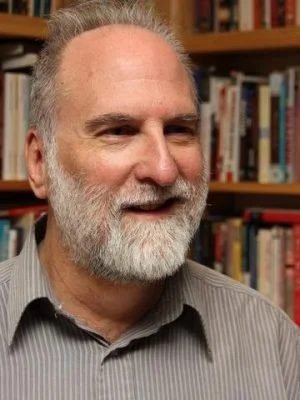
The Sounds of Fundamentalism is a series that I would like readers to help me with. If you know of a video clip that shows the crazy, cantankerous, or contradictory side of Evangelical Christianity, please send me an email with the name or link to the video. Please do not leave suggestions in the comment section. Let’s have some fun!
Today’s Sound of Fundamentalism is a video clip of Rep. Glenn Grothman claiming President Biden and his fellow atheists are trying to take over the United States.
Bruce Gerencser, 69, lives in rural Northwest Ohio with his wife of 48 years. He and his wife have six grown children and thirteen grandchildren. Bruce pastored Evangelical churches for twenty-five years in Ohio, Texas, and Michigan. Bruce left the ministry in 2005, and in 2008 he left Christianity. Bruce is now a humanist and an atheist.
Your comments are welcome and appreciated. All first-time comments are moderated. Please read the commenting rules before commenting.
If you consider yourself an atheist today, or if you considered yourself an atheist in the past, I’d love to ask you some honest questions.
But I do not ask these questions to win a debate. Or to be antagonistic. Or to buttress my own beliefs by exposing alleged weaknesses in your position. To the contrary, I ask these questions so I can better understand your mindset as an atheist.
What follows are my answers to Brown’s seven questions. I will send my responses to Brown after this post goes live.
Before I answer Brown’s questions, I want to share with him my background.
I was part of the Evangelical church for almost fifty years. My parents started attending Tim LaHaye’s church, Scott Memorial Baptist Church in El Cajon, California, in the 1960s. Both made public professions of faith and were devout Christians until they divorced in 1972. Our family attended church every time the doors were open. At the age of fifteen, I went forward during a revival meeting and one of the church’s deacons led me to saving faith in Jesus Christ. Two weeks later, I stood before the church and confessed that I believed God was calling me to preach. Several weeks later, I preached my first sermon.
At the age of nineteen, I enrolled in classes at Midwestern Baptist College, a small Independent Fundamentalist Baptist (IFB) college in Pontiac, Michigan. While at Midwestern, I met a beautiful dark-haired girl named Polly. She was the daughter of an IFB pastor and the granddaughter of a United Baptist preacher. Two your later we married, and on July 15, we will celebrate forty-four years of marriage. We are blessed to have six grown children, thirteen grandchildren, and an old cat named Joe Meower.
After leaving Midwestern in 1979, I started working for a GARBC (General Association of Regular Baptist Churches) church. Over the course of the next twenty-five years, I also pastored two IFB churches, a Sovereign Grace Baptist church, a Christian Union church, a non-denominational church, and a Southern Baptist church, all in Ohio, Texas, and Michigan.
In 2005, I left the ministry, and in 2008 I left Christianity altogether. In early 2009, I publicly professed that I was an atheist. My wife would also later confess that she no longer believed in the Christian God.
Now that I have given a brief summary of my past, let me take a stab at Brown’s questions.
Question One: Would you say that you are (or, were) an atheist based primarily on intellectual study or based on experience? Or did you never believe in God at all?
While my personal experiences as an Evangelical Christian and a pastor certainly played a part in my deconversion, I primarily deconverted for intellectual reasons. My journey away from Christianity began when I concluded that the Bible was not inerrant or infallible. From there, I took a careful look at my beliefs, particularly the central claims of Christianity. I concluded that these beliefs could not be intellectually and rationally sustained. Once I came to this conclusion, I recognized I could no longer call myself a Christian.
Question Two: Would you say that even as an atheist you still have a sense of purpose and destiny in your life, a feeling that you were put here for a reason and that you have a mission to accomplish?
We give ourselves meaning and purpose. There’s no external force — God, the Universe, the Holy Spirit — that gives us meaning and purpose. While I recognized external human forces affect my life and the decisions I make, I am the captain of my ship. I see no evidence of an otherworldly being or force affecting my life.
Do I have a reason for living? Sure. This is the only life I will ever have, so I am in no hurry (most days) to die. I want a better tomorrow for my children and grandchildren, so I work to that end to affect social and political change.
Do I have a mission? Sure. I think Evangelicalism, especially in its Fundamentalist forms, is harmful, causing untold heartache and damage. As a writer, my goal is to tell my story and expose the abusive, harmful underbelly of Evangelical Christianity.
Third Question: Would you say that you are 100% sure there is no such being as God—meaning, an eternal, all-powerful, all-knowing being? Or would you say that, for all practical purposes, you have concluded that this God does not exist, although it is impossible to prove such a negative with absolute certainty?
I am an agnostic atheist. I am agnostic on the God question. I cannot know for certain if a god of some sort exists. The evidence suggests such a being does not exist, but it is within the realm of possibilities that a deity may one day reveal itself to us.
When it comes to specific religions, say the Abrahamic faiths, I am confident these religions are myths.
Because I see no evidence for the existence of a deity, I live my day-to-day life as an atheist.
Fourth Question: Do you believe that science can provide answers for many of the remaining mysteries of the universe, including how the universe began (including where matter came from and where the Big Bang derived its energy), the origin of life, and DNA coding?
I don’t know. Science continues to give us answers to previously unanswerable questions. Whether science ever explains to us what happened before the Big Bang is unknown. Science does adequately explain our world from the Big Bang forward, and that’s enough for me. Unlike many Christians and atheists, I have little interest in philosophical debates about the existence of God and the beginning of the universe. I’m dying — literally — so I choose to live in the present. I am far more interested in balancing our checkbook than I am the Kalam Cosmological Argument.
Fifth Question: Have you had any experiences in life that caused you to question your atheism? Has something happened to you that seemed genuinely supernatural or otherworldly? Or have you been confronted with some information that shook your atheistic foundations, such as a scientific argument for intelligent design? If so, how have you dealt with such doubts to your atheism?
No. One step in my deconversion was giving an honest accounting of the “miracles” and “answered prayers” in my life. My wife did the same. We concluded that we could rationally explain all but a handful of experiences. This was not enough evidence for us to conclude that the Christian God of the Bible did it. Unexplainable? Sure, but I reject the God of the gaps argument Evangelicals often use to explain the unexplainable. I am content with saying, “I don’t know.”
Sixth Question: Are you completely materialistic in your mindset, meaning human beings are entirely physical, human consciousness is an illusion, and there is no spiritual realm of any kind? Or are you superstitious, reading horoscopes or engaging in new age practices or the like?
Yes, I am a materialist.
I see no evidence of a spiritual realm or souls. I believe that new age practices, horoscopes, Tarot card readings, and homeopathy, to name a few, are in the same category as prayers and miracles: unsupported by evidence.
Seventh Question: If you were convinced that God truly existed—meaning the God of the Bible, who is perfect in every way, full of justice and mercy, our Creator and our Redeemer—would that be good news or bad news? And would you be willing to follow Him and honor Him if He were truly God?
I am already convinced that the God of the Bible does not exist, and I can’t imagine any evidence will be forthcoming to change my mind. Thousands of Evangelical zealots and apologists have tried to evangelize me, without success. It has been years since I heard a new argument for the truthfulness of Christianity. As Solomon said, there’s nothing new under the sun. Every few days, I will get an email, message, or social media comment from an Evangelical who is certain they have the remedy for my atheism Alas, they fail every time.
Even if I could be convinced that the God of the Bible is real, I still wouldn’t worship him. Richard Dawkins was right when he said:
The God of the Old Testament is arguably the most unpleasant character in all fiction: jealous and proud of it; a petty, unjust, unforgiving control-freak; a vindictive, bloodthirsty ethnic cleanser; a misogynistic, homophobic, racist, infanticidal, genocidal, filicidal, pestilential, megalomaniacal, sadomasochistic, capriciously malevolent bully.
Such a deity is unworthy of my worship. The only god I worship is my wife. 🙂
If you would like to answer these questions, please send your responses to info@askdrbrown.org.
Bruce Gerencser, 69, lives in rural Northwest Ohio with his wife of 48 years. He and his wife have six grown children and thirteen grandchildren. Bruce pastored Evangelical churches for twenty-five years in Ohio, Texas, and Michigan. Bruce left the ministry in 2005, and in 2008 he left Christianity. Bruce is now a humanist and an atheist.
Your comments are welcome and appreciated. All first-time comments are moderated. Please read the commenting rules before commenting.
“It happened gradually, and then it happened suddenly, as Hemingway would put it,” Pete Hegseth explained.
Hegseth is a best selling author, and co-host of Fox and Friends Weekend. His co-author, David Goodwin is president of the Association of Classical Christian Schools. They write that educational reformer John Dewey advocated progressive teaching in the 1920’s. And in 1935, after they fled Nazis Germany, Marxists from the Frankfurt School of Social Research introduced their views to students at New York’s Columbia University.
“These were all atheists. These were all socialists, or almost all of them were and their goal was social change, and they knew the schoolroom was the place they could do it. And it started with the removal of God,” Hegseth said.
David Goodwin believes the biggest change sidelining Christian education occurred when the U.S. Supreme Court, under Chief Justice Earl Warren, removed God from the classroom.
“They gradually took prayer out of school, they then took the Bible out of school, and they then forbid really any teaching of Christian instruction in school, ” explained Goodwin. “But that was the kind of the capstone of a long effort. It wasn’t the beginning, it was really the end.”
Also, Goodwin and Hegseth contend that progressives intentionally replaced classical Christian education with American nationalism.
“We look at our Pledge of Allegiance – at least we do as conservatives and patriots and say, ‘Hey, that’s a great thing under God.’ Well, the original pledge was written in the late 19th century by a socialist who ultimately wrote it without under God, because the pledge was meant to shift kids away comfortably from God at the center of the class, from the cross, at the center to the flag at the center of the classroom, which was an easier sell to parents at the time,” Hegseth explained. “And now, of course, fast forward to today, and they’re happy to get rid of the flag.”
So, do Hegseth and Goodwin believe that America’s elites possess a well-devised spiritual strategy that transcends politics?
“You see, we fight in terms of politics now and may win incremental battles here or there. What the left understood is they had to go to the heart of what made us who we are. What do we value? What’s our vision of the good life? What do we consider our virtues?” Hegseth explained. “And when they targeted that, they targeted at the foundation of who we really are, really the current underneath the top waters of the stream of cultures, the top waters, the current is paideia underneath, and they targeted that.”
Bruce Gerencser, 69, lives in rural Northwest Ohio with his wife of 48 years. He and his wife have six grown children and thirteen grandchildren. Bruce pastored Evangelical churches for twenty-five years in Ohio, Texas, and Michigan. Bruce left the ministry in 2005, and in 2008 he left Christianity. Bruce is now a humanist and an atheist.
Your comments are welcome and appreciated. All first-time comments are moderated. Please read the commenting rules before commenting.
Today, I received an email from an Evangelical Christian named Karrie. Karrie is a student/professor/employee at The University of Tulsa in Tulsa, Oklahoma. Karrie read all of two posts before emailing me:
Karrie spent a total of five minutes reading my writing before emailing me. While she accessed the WHY? page, there’s no record that she clicked on any post. (Please see Curiosity, A Missing Evangelical Trait.) As her email below will show, Karrie seems to know that I have health problems. Since neither of the posts she read mentions these things, it’s possible she has read other work by me.
Here’s what Karrie had to say:
Hello Bruce, do you believe that God is able and willing to heal you of the sickness you are suffering?
Most people who read this blog know I have serious health problems. I have (in the order of diagnosis) fibromyalgia (1996), osteoarthritis (2000), gastroparesis (2020), and degenerative spinal disease (2021). I also take medications for high blood pressure, diabetes, an irregular heartbeat, low potassium, and low B-12. I am anemic, and since being diagnosed with gastroparesis, I am having problems with my eyes. I was nearsighted for almost fifty years. I am now farsighted, with every eye exam I have (six in the past eighteen months) different from the others. Quite frankly, the only time I wear glasses is when we go out on the town, and this is mainly because I am vain. I stopped driving two and a half years ago due to declining motor function. I walk with a cane, and when covering longer distances, I must use a wheelchair. Throw in peripheral neuropathy in my feet, legs, and hands, and I spend every moment of every day fatigued and in pain. I take numerous medications to combat these symptoms, but unless I want to sleep all the time and be a lobotomized robot, all that narcotics, NSAIDs, and high-powered muscle relaxers do is keep me from wanting to kill myself. And some days, these drugs don’t work very well; those days I wish I could die. Currently, both of my hips are inflamed. I have gotten steroid injections, to no avail. No explanation for the inflammation. I just woke up one morning and my hips hurt. Gastroparesis, an incurable stomach disease, causes unrelenting nausea, bouts of vomiting, and horrific — and I mean horrific — bowel problems. (Yes, I eat right and take fiber supplements, so don’t, please don’t, for the love of Loki, do NOT email me your unsolicited medical advice. I have a team of doctors who care for me. Unless you are Dr. House, please keep your opinions to yourself. I am being nice. Email me anyway and I will set your house on fire.) Next week, I see a dermatologist. I have had three bouts of skin cancer, so I must see a dermatologist every six months. I have several growths that will likely need to be removed. I also have a purplish spot on my right breast that concerns me. I’ve had pneumonia twice, battled bronchitis for years, and almost died from mononucleosis in 1991.
I have given you my medical history so you will understand that I have had health problems since I was a teenager. My wife, Polly, and I married in July 1978. While she remembers a strong-as-an-ox, athletic Bruce, she doesn’t remember a time when I wasn’t battling some sort of health problem. When we were younger, I still had the proverbial tiger by the tail. Those days are long gone. The tiger now has me by the neck and is swinging me back and forth. There will come a day when he will finally succeed in ending my life. Not today, but maybe tomorrow, next week, or next year. I have no illusions about living a long life. My goal on any given day is to get up, move, do a few things around the house, write, and collapse on the couch watching TV before I haltingly and slowly make my way to the bedroom, hoping to get a few hours of sleep. (Typically, I sleep in 90-minute to two-hour segments. Sleep, wake up, sleep, wake up, hoping to get six or so hours sleep.) The goal is quality of life, not length of life. Imagine every time you eat the first feeling you get is not pleasure, but wanting to vomit. This is my life. Fortunately, I take a medication (typically used for chemotherapy patients) that curbs the urge to upchuck — usually in minutes. On those days it doesn’t work? I worship the porcelain God, violently offering it the contents of my stomach. Ain’t life grand. 🙂
Karrie fails to understand that virtually ALL of my health problems can be traced back to the days when I was a devout Evangelical Christian and a pastor. I prayed countless prayers to God, asking for strength and deliverance. These prayers were met by indifference and silence. In 2008, I left Christianity and embraced atheism. While the reasons for my deconversion are many, one reason I divorced Jesus is his indifference towards my suffering and that of billions of humans (and animals). God’s silence and apathy led me to conclude that he/she/it doesn’t exist; that he/she/it is a mythical being who is unable to do anything for me or any other human being.
So, to answer Karrie’s question: do I believe the Evangelical God is able and willing to heal me of the sickness I am suffering? The answer is an emphatic NO!
Evangelicals have had fifteen years to show me compelling evidence for the existence of their deity. None has done so. Outside of quoting Bible prooftexts, pointing to creation, or using lame philosophical arguments, no satisfactory evidence for the existence of God has been provided. Karrie makes no attempt to provide evidence for the existence of her peculiar God. She assumes I know that her deity is the one true God. I don’t. And even if she could provide such evidence, it still doesn’t follow that her God can and will heal me of gastroparesis, fibromyalgia, osteoarthritis, and degenerative spinal disease. I have watched scores of Christians and unbelievers alike horribly suffer and die. I have stood by the bedsides of devoted lovers of Jesus as they draw their last breaths. I have watched them writhe in horrific pain, with God nowhere to be found. You see, from my seat in the atheist pew, the problem of suffering, along with the problem of evil and the hiddenness of God, are insurmountable problems for Christians. I have heard every possible argument regurgitated by Christian apologists, and all of them come up short. You just don’t want to believe, Evangelicals say, but this is patently untrue, as I shall show in a moment.
Here’s a promise I will make to Karrie: if her God instantaneously heals me, without medical intervention, of gastroparesis, fibromyalgia, osteoarthritis, and degenerative spinal disease I will “believe.” The ball is in your court, Jesus. You are allegedly the “Great Physician.” Work your magic, and I will believe. The Bible records stories about you healing all sorts of people from serious diseases. You even raised the dead. And believe me Jesus, I am not too far away from needing resurrection. After I am dead and burnt into ashes that will be cast into the waters of Lake Michigan, perhaps Polly will ask you to recombine my molecules and give me a young, healthy body. That way, she can have some sexy eye candy by her side. 🙂 Do either of these things, Jesus, and I will believe, and I suspect Polly will believe too.
Of course, no healing or resurrection will be forthcoming. Expecting Jesus to do either of these things is akin to me going to my mom’s grave and asking her pop out of the ground fully clothed and with no bullet hole in her chest so we could share a cup of instant coffee (mom’s favorite) and have a chat. Well, we’d share a cup of coffee right after Mom lights up a Virginia Slim. “Butch, I have been hankering for a smoke for thirty years.” 🙂
To Karrie, I say, “with God all things are possible” and “if you ask anything in his name he will do it.” If you are as connected with the triune God of the Bible as your email suggests, surely God will answer your prayer for the healing of the unrepentant atheist Bruce Gerencser. Think of all the souls that will be saved if your God healed me. Why, I suspect my healing would cause reverberations across the world. “Is anything too hard for God?” Karrie, if Jesus can resurrect Lazarus from the dead, surely he can heal a lowly atheist who really, really, really wants to “believe.”
With bated breath, I await my healing. Time is running out . . .
Bruce Gerencser, 69, lives in rural Northwest Ohio with his wife of 48 years. He and his wife have six grown children and thirteen grandchildren. Bruce pastored Evangelical churches for twenty-five years in Ohio, Texas, and Michigan. Bruce left the ministry in 2005, and in 2008 he left Christianity. Bruce is now a humanist and an atheist.
Your comments are welcome and appreciated. All first-time comments are moderated. Please read the commenting rules before commenting.
Today, an Evangelical (IFB?) woman named Donna Flowers came to this site and read one post: Emotionally Manipulating IFB Church Members through Music and Preaching Styles before sending me an email. Afterward, she read the post titled Why I Hate Jesus. Flowers read none of my autobiographical material, showing the curiosity of a dead armadillo in the middle of a rural Texas road on a hot July day. That’s “none” for you who are metaphor-challenged. 🙂
Here’s what Flowers had to say:
My heart goes out to you. I will pray for you that you will turn your life around and go back to the place you decided to walk off from Jesus in your Christian walk. Jesus loves you! Have a blessed day!
Not much to respond to here. I’m inclined to just say “sigh” (Why I Use the Word “Sigh”) and move on, but it’s Monday so I am raring — well actually in a lot of pain and fighting nausea — to respond to several emails and comments I have received in recent days.
Flowers’ email is dripping with Evangelical “love.” You know the kind: cheap, superfluous, and conditional. Her “heart” goes out to “me.” Goes out to who, exactly? Flowers made no attempt to read anything about me besides the two posts mentioned above. She made no effort to understand my story; how and why I became an atheist. Instead, she offers cheap Christian love, the equivalent of “I’m praying for you.”
Based on what she wrote, Flowers evidently believes I am still a Christian; that I am just backslidden. All I need to do is return to the Lord. I just need to find that moment in time where I walked away from Jesus and return to that spot and start serving (preaching?) the Lord again. Is it really that simple? Can I undo the past fifteen years? How absurd. First, my wife is no longer believer. Second, my children are no longer believers. Third, my life is better in every way post-Jesus (except my health, which Flowers will likely attribute to God’s chastisement). Fourth, even if I embraced some sort of religious faith again, I most certainly would not return to Evangelicalism. Never, ever, not in a million, billion, trillion years. Evangelicalism causes harm (as we see in the recent overturning of Row v. Wade) and in its extreme expressions is a full-blown cult.
How does Flowers know Jesus loves me? Did he tell her? By all accounts, I am an apostate and a reprobate. It’s likely I am not elect. I would love Flowers to theologically explain to me how she knows “Jesus loves me.”
Flowers ends her missive by telling me to have a “blessed” day. I shall, all without the God of the Christian Bible. Having a “blessed” day is not contingent on faith. I will gladly explain this fact to Flowers if she’s interested.
Bruce Gerencser, 69, lives in rural Northwest Ohio with his wife of 48 years. He and his wife have six grown children and thirteen grandchildren. Bruce pastored Evangelical churches for twenty-five years in Ohio, Texas, and Michigan. Bruce left the ministry in 2005, and in 2008 he left Christianity. Bruce is now a humanist and an atheist.
Your comments are welcome and appreciated. All first-time comments are moderated. Please read the commenting rules before commenting.
Recently, a man named Bradley Brown left the above comment on YouTube. Brown wants to know if I returned the money I earned pastoring churches when I became an atheist. Evidently, Brown’s Bible doesn’t include the verse that says a “laborer is worthy of his honor” and that a pastor/elder is worthy of “double honor” (pay).
I spent twenty-five years pastoring Evangelical churches in Ohio, Texas, and Michigan. All told, I averaged less than $10,000 a year as a pastor. Two churches paid me no money, one church paid me $26,000 and provided housing, and the rest of the churches I pastored paid roughly $8,000-10,000 a year. Total that up and I made around $250,000 as a pastor.
Not one church provided health benefits or any other benefits. We relied on Medicaid or paid cash for our medical care. We only went to the doctor if it was an emergency. Our children went years between doctor’s visits.
Our hillbilly mansion. We lived in this 720-square-foot mobile home for five years, all eight of us.
Only one church provided us housing. The rest of the time, we lived in rentals or two mobile homes we purchased. For five years, our family of eight lived in 12’x60′ mobile home — 720 square feet. Most years we drove cars that cost a few hundred dollars. We did buy a new Plymouth Horizon in 1984 for $6,000, putting 102,000 miles on it in two years. We also bought a spartan low-mileage 80s Chevy Cavalier for $2,900. We junked it at 176,000 miles.
Every church I pastored had my full attention, as I worked full-time even when I was paid paltry wages. In addition, I worked secular jobs to provide for my family. Every dime I ever made, I earned. So, to answer Bradley Brown, no I am not going to return the money I EARNED pastoring churches.
Bruce Gerencser, 69, lives in rural Northwest Ohio with his wife of 48 years. He and his wife have six grown children and thirteen grandchildren. Bruce pastored Evangelical churches for twenty-five years in Ohio, Texas, and Michigan. Bruce left the ministry in 2005, and in 2008 he left Christianity. Bruce is now a humanist and an atheist.
Your comments are welcome and appreciated. All first-time comments are moderated. Please read the commenting rules before commenting.
Yes, they [atheists] actually do hate God [the Evangelical Christian deity].
Having just penned another piece on the war against God, I of course got the usual angry atheists writing in with their fists flying [likely a gross exaggeration]. They hate it when you dare challenge their derelict worldview. And they always go on about how they do not really hate God. Yeah right. [Are you calling us liars, Bill? Why can’t you accept our stories at face value, just like we do yours?]
Of course they hate God. Their entire life screams out this hatred. And it is no wonder: when they are told that they are NOT the centre of the universe, but only the one real and living God is, that incenses them. That outrages them. Atheists hate it when you point out the truth that there can be only one true God. And the reasons are obvious:
They want to be king, not subject. They want to rule, not be ruled. They want to give orders, not take orders. They want to call the shots, not be told what to do. They want to determine what is true and false, not God. They want to determine what is right and wrong, not God. They want to be independent, not dependent. They want to do their own will, not God’s will. They want to live like the devil, not God. They want to rule in hell, not serve in heaven.
Scripture of course often speaks about atheists. Twice in the Psalter for example they are called “fools” because they refuse to recognise God (Ps. 14:1 and 53:1). Rejecting their creator – and judge – is the height of foolishness. And this is a deliberate, defiant rejection of God.
….
These people are “haters of God”. They know God exists, they know they have moral obligations to recognise this reality and live accordingly, but they refuse to – that is why they hate him so much. They are guilty and they know it.
Atheists do not spend all their time and energy hating on and railing against flying spaghetti monsters for the simple reason that they know there are no such things. But they DO know that God exists, and they hate him for it. If God exists, then they cannot be god.
John MacFarlane is the pastor of First Baptist Church in Bryan, Ohio. First Baptist is an Independent Fundamentalist Baptist (IFB) congregation. I’ve known John since he was seven years old. I attended First Baptist in the 1960s and 1970s. Its pastor at the time was Jack Bennett. Jack’s wife, Creta Daugherty, was the sister of two of my uncles, Paul and Ed.
John writes a daily blog devotional for his church. Typical Fundamentalist stuff, but, on occasion, John will say something that gets my attention or angers me:
John probably wishes I would stop paying attention to him. 🙂 Do better, John, do better.
Yesterday, John wrote a “devotional” titled Problems on the 50-Yard Line, detailing his support for football coach Joe Kennedy. Kennedy, you may remember, is the coach who held prayer meetings after games at the fifty-yard line. Kennedy was asked by school officials to stop doing so. He refused and was subsequently fired. Kennedy sued, and the case is now before the U.S. Supreme Court.
The 9th U.S. Circuit Court of Appeals had last year ruled in favor of Washington’s Bremerton School District, which did not renew Coach Joe Kennedy’s contract after he defied reasonable requests to stop praying with students on the 50-yard line right after games. Kennedy had been singled out for praise by then-President Trump, including in a speech from the Oval Office on Religious Freedom Day, and has been a darling of Christian nationalist organizations and extremist members of Congress.
Joining FFRF on the brief are other national organizations that represent nonreligious Americans, including the Center For Inquiry, the American Humanist Association and the Secular Coalition for America.
The Supreme Court mystifyingly agreed to hear the case, which FFRF is arguing is moot, mandating that the court dismiss the case. After losing in the district court, Kennedy sold his home in Washington and moved approximately 2,800 miles to Pensacola, Fla., FFRF explains. Kennedy and his wife are no longer employed in Washington. The assistant football coach position at Bremerton High School is a year-round commitment that pays just $5,304. These changed circumstances are problematic for Kennedy because a Florida resident cannot sue a Washington school district over its policies.
“Under the court’s precedents, the case is moot,” states the brief. “This is reinforced by the principle that a plaintiff who removes himself from the threat of allegedly unconstitutional policies has mooted his claims for prospective relief.”
After documenting many instances in which atheist and non-Christian plaintiffs have faced procedural hurdles when seeking judicial relief, FFRF asserts that the Supreme Court must apply jurisdictional doctrines uniformly, otherwise it manipulates its jurisdiction in order to benefit preferred litigants.
“If the court asserts it has jurisdiction to decide such cases, it must apply its jurisdiction uniformly to all litigants, and not only to cases involving preferred litigants,” says the brief. “A review of the court’s cases involving religion highlights the need for the court to adopt an even-handed approach to jurisdiction.”
And if the court is inclined to review the merits of this case, it must take into account the harm caused to students who are nonreligious or who are religious minorities when coaches instigate prayer, FFRF stresses. The unique features of the coach-student relationship coerce students to participate in coach-led prayers. This type of religious activity, as FFRF demonstrates with many cogent examples, has harmed students in numerous respects, including by marginalizing nonreligious students and making them susceptible to attacks from other students and members of the community.
Plus, school athletic teams foster an atmosphere of both communal activity among players and also allegiance to the coach. These features, combined with the social pressures exerted when an authority figure engages in religious practices, coerce non-Christian students to participate in Christian prayers.
Coach Kennedy’s religious activity on the 50-yard line was a team activity. He intended to continue to pray with students on the field, as was his prior practice. Kennedy’s post-game prayers were anything but private. They were intended to be team prayers, FFRF emphasizes. This is problematic for students who would otherwise choose not to participate.
Because this case is moot, the Supreme Court should dismiss the appeal for lack of jurisdiction, FFRF concludes. Alternatively, as “it is improper and a gross violation of freedom of conscience to coerce or even encourage student athletes to pray in order to play,” FFRF urges the high court to affirm the ruling of the 9th Circuit against Coach Kennedy.
FFRF Senior Counsel Patrick Elliott is the lead drafter and counsel of record for the brief.
In his “devotional,” John had this to say about FFRF, atheists, agnostics, and, in his words, haters of God and religion:
Throughout the USA, we have seen religious freedoms erode as a small faction of atheists, agnostics, and haters of God and religion rear their vile heads. Even in Washington, a group of preachers and priests joined with the Freedom From Religion crowd to voice opposition to Kennedy. One of those voices was the “Right Reverend Douglas Avilesbernal, executive minister of the Evergreen Association of American Baptist Churches, which includes Bremerton.”
John is a Trumpist and a white Christian Nationalist. He believes the United States is a Christian nation. Thus, he has no problem with the Kennedys of the world violating the separation of church and state or the establishment clause. If Joe Kennedy was a Muslim, John would be outraged. But, he’s not, so Kennedy trampling all over the separation of church and state is fine, by him. Go, Jesus, Go!
John is befuddled by pastors who voiced opposition to Kennedy. I am sure he doubts their “salvation.” However, these ministers rightly understand that we cannot have freedom of (and from) religion without there being a strict, inviolable wall of separation between religion and government. John, seemingly, is fine with mixing church and state as long as it is his religion that is given preferential treatment.
I want John to know that when he goes on rants as mentioned above, I take his words personally. When you attack FFRF, atheists, and agnostics, you are attacking me. You are attacking my family, friends, and neighbors. You are attacking my wife and some of my children and grandchildren. Do better, John, do better. Try acting like a Christian. Jesus said in Luke 6:27-28:
But I say unto you which hear, Love your enemies, do good to them which hate you, Bless them that curse you, and pray for them which despitefully use you.
How many atheists and agnostics have you loved today, John?
Repent!
Bruce Gerencser, 69, lives in rural Northwest Ohio with his wife of 48 years. He and his wife have six grown children and thirteen grandchildren. Bruce pastored Evangelical churches for twenty-five years in Ohio, Texas, and Michigan. Bruce left the ministry in 2005, and in 2008 he left Christianity. Bruce is now a humanist and an atheist.
Your comments are welcome and appreciated. All first-time comments are moderated. Please read the commenting rules before commenting.
When you say homosexuality is an abomination . . . you are saying your gay son and neighbor are abominable.
When you say all non-Christians will go to Hell when they die . . . you are saying your non-Christian mother, son, and neighbor will be tortured by God in the flames of the Hell for eternity.
When you say abortion is evil, sick, and murder . . . you are saying those who are pro-choice are evil, sick murderers.
When you say Christians are idiots . . . you are saying your Christian mother and grandfather are idiots.
When you say people on welfare are lazy, good for nothing bums . . . you are saying your out-of-work cousin with cancer is a lazy, good for nothing bum.
When you say atheism is immoral . . . you are saying that your atheist daughter and cousin are immoral.
You can’t divorce your words from their implications.
Words matter.
Bruce Gerencser, 69, lives in rural Northwest Ohio with his wife of 48 years. He and his wife have six grown children and thirteen grandchildren. Bruce pastored Evangelical churches for twenty-five years in Ohio, Texas, and Michigan. Bruce left the ministry in 2005, and in 2008 he left Christianity. Bruce is now a humanist and an atheist.
Your comments are welcome and appreciated. All first-time comments are moderated. Please read the commenting rules before commenting.
According to an email I received several years ago, my present life is NOT how I present it within the pages of this blog. A Christian man by the name Nathan Smith says I am lying when I say I am happy. He also says my life is absent of compassion, freedom, and happiness, despite me saying differently. Smith challenges my manhood, saying that if I truly was a brave man I would ask a cognitive behaviorist to render their opinion on my written work. You mean the secular psychologist I see every week, the woman who reads my writing and encourages me to keep telling my story?
Smith writes:
Reading your blog doesn’t give any impression that the humanistic life is full of the kind of compassion, freedom, and happiness you say it is. If Christians serve something man-made, then they are simply doing what comes naturally to them as humans; something any true humanist would be able to understand with a lot more compassion than you seem able to demonstrate. If you were free, you would not feel compelled to continue in your devotion to Christ and His Church; albeit in hostility. Moreover, if you were happy, you would not view everything through the lens of this hostility. If humanism were true of Bruce Gerenscer [sic], the battle would have ended when he left the Church, yet here he is still playing the part with fervor.
You will be glad to hear that your new life’s work is questionable without even invoking God or scripture. If you are brave enough, let a cognitive behaviorist evaluate this blog and compare it with your stated reasons for writing it; that way you can hear from the kind of secular, educated, scientific individual you now esteem that you are completely full of it.
I will leave it to you the reader to decide if Smith’s observations ring true.
Bruce Gerencser, 69, lives in rural Northwest Ohio with his wife of 48 years. He and his wife have six grown children and thirteen grandchildren. Bruce pastored Evangelical churches for twenty-five years in Ohio, Texas, and Michigan. Bruce left the ministry in 2005, and in 2008 he left Christianity. Bruce is now a humanist and an atheist.
Your comments are welcome and appreciated. All first-time comments are moderated. Please read the commenting rules before commenting.
This cookie is set by X to identify and track the website visitor. Registers if a users is signed in the X platform and collects information about ad preferences.
2 years
personalization_id
Unique value with which users can be identified by X. Collected information is used to be personalize X services, including X trends, stories, ads and suggestions.
2 years
external_referer
Our Website uses X buttons to allow our visitors to follow our promotional X feeds, and sometimes embed feeds on our Website.